Retiring teacher, coach urges Colony grads to ‘find their 68’
By Jeremiah Bartz Frontiersman.com A football coach using a hockey reference as the centerpiece for his keynote address may


WASILLA — Some guys fly airplanes, some fix them, some design them and others build them.
But it is a rare breed of airman who designs, builds, fixes and flies planes.
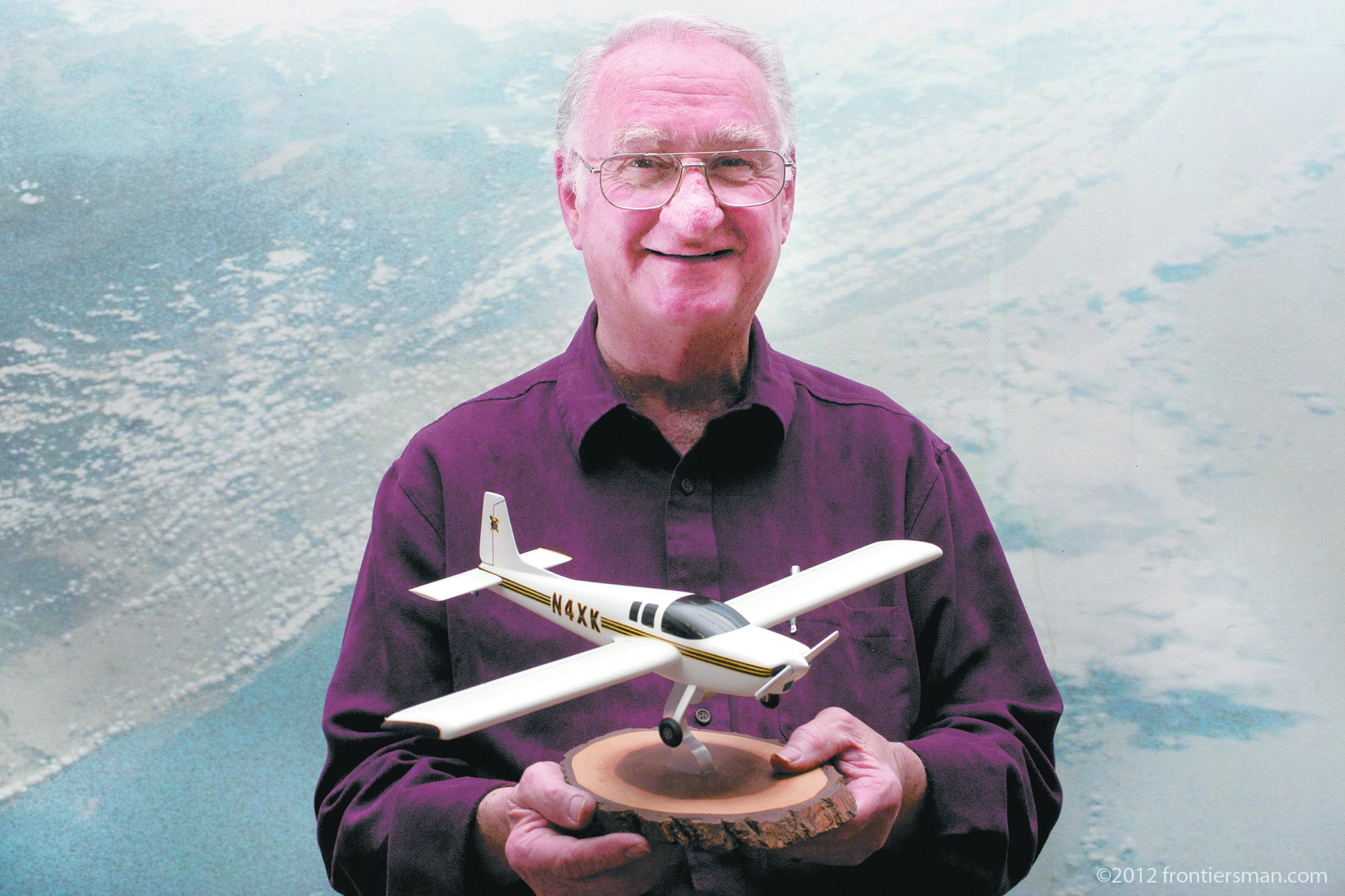
That’s why the Kentucky Aviation Hall of Fame has included Wasilla resident Fred Keller in this year’s class of four inductees. His achievements in the design and construction of experimental aircraft will be honored at a black-tie ceremony and banquet at the Aviation Museum of Kentucky in Lexington, Ky., Oct. 27.
The Kentucky Aviation Hall of Fame is part of the Aviation Museum of Kentucky and Jim McCormick is its chairman.
“We are very happy to be recognizing the work Fred Keller has done throughout his life,” McCormick said. “He is a true craftsman, his work and designs of experimental aircraft are the stuff of legends.”
Keller was born into a flying family in Kentucky in 1942. His father, Andrew Keller, farmed tobacco and corn near Cynthiana, Ky., owned a 1945 Aeronca Champ and was known as the “Flying Farmer.”
He was a boy of about 3 when his father took him for his first plane ride, but Keller wouldn’t take up the sport seriously until he was a man of 23, after moving to Alaska in 1965. While living in Fairbanks, he got his pilot’s license in 1969 and bought his first plane — a 1945 Taylorcraft — the next year.
But after he saw plans for a home-built plane on the front of Popular Mechanics, Keller’s passion for planes took him in a new direction.
“Build your own plane for $450,” Keller said.
In fact, Keller’s work as a designer and builder of home-built planes has turned heads nationally since 1973 when a KR-1 he built won the show’s Best Auto-Powered Homebuilt award that year at the Experimental Aircraft Association’s annual air show in Oshkosh, Wisc. It also was the first KR-1 to compete in the annual homebuilt show, Keller said.
“Back then, you could buy plans, but not kits for home-built planes,” he said.
His craftsmanship and attention to detail turned the judges’ heads again in 1978 when the Vari-Eze plane he built won Best Vari-Eze and Outstanding Workmanship awards at Oshkosh.
Keller said he took a refinished and further refined version of the same plane back to Oshkosh in 1980, where it won the Grand Champion Homebuilt Award. The next year, that same Vari-Eze plane also earned Keller the 1981 Wright Brothers Award.
He said he still gets goosebumps remembering his meeting with Orville and Wilbur Wright’s niece, Ivonette Wright Miller, and hearing her tell the story of running through the fields to get a ride in their flying machine.
“That was just an unbelievable honor to win that,” Keller said.
Again it was Keller’s careful work and attention to detail that enticed Vari-Eze designer Burt Rutan to hire Keller to develop a second, improved prototype of his plane, the Defiant.
Keller’s work on that plane was recognized with the Designer’s Award at Oshkosh in 1981.
“It was a big surprise,” he said.
After winning Grand Champion honors at Oshkosh twice, Keller said he thought he had enough experience to design and build his own plane. Keller’s study of aerodynamics began as a child building model planes.
A less determined man might have been put off his dreams upon discovering his math skills were too weak to pursue his dream of designing a real plane, but not Keller. Instead, he enrolled in a math class at night.
A longtime volunteer in Mat-Su schools who also received the Champions for Children Award for his dedication to public education in 2000, Keller said he used the Science Olympiad program for 14 years to show students math is a useful tool.
“Learn it now. You can use it for your whole life,” he said of his math philosophy.
Keller didn’t enter the Oshkosh show again until 1989, when he roared back with a short takeoff and landing Bush plane of his own design. Dubbed the Prospector, the two-place, mid-wing plane can carry a useful load of 978 pounds, cruises at 145 mph and stalls at 32 mph.
The plane won the Grand Champion Homebuilt award in 1989 at Oshkosh, notching Keller an unprecedented second grand championship. It’s a feat no one has repeated in the 23 years since, he said.
“I designed it, made shop notes and then built it from the shop notes,” Keller said of designing the Prospector.
Contact managing editor Heather A. Resz at 352-2268 or heather.resz@frontiersman.com.

By Jeremiah Bartz Frontiersman.com A football coach using a hockey reference as the centerpiece for his keynote address may

Frontiersman.com With its headquarters in Wasilla, the Frontiersman has been a primary source of news for the Matanuska-Susitna

By Katie Stavick Frontiersman.com The next generation of leaders took flight this week as the Houston High School Class

By Kyle Wilkinson For the Frontiersman Keynote speaker and Carry the Cure President Bill Pagaran’s words boomed through the