Retiring teacher, coach urges Colony grads to ‘find their 68’
By Jeremiah Bartz Frontiersman.com A football coach using a hockey reference as the centerpiece for his keynote address may


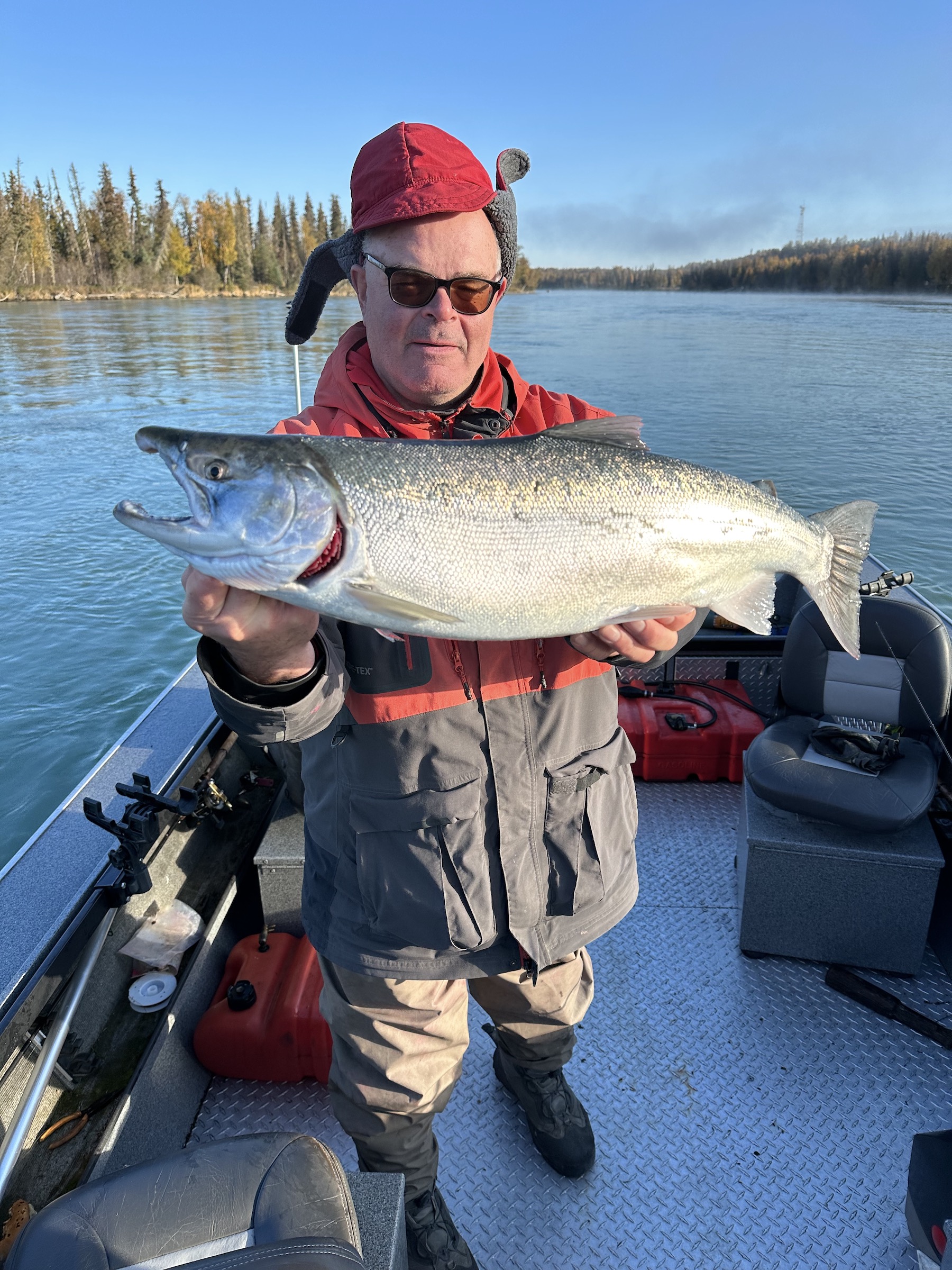
Standing in a boat on the gorgeous green Kenai River, and talking with Pete Imhof about specific methods of salmon fishing, our conversation was interrupted by a fishing rod bouncing around in a rod holder and a chrome missile shooting along the river’s surface behind the boat.
“Fish, fish, fish!” Pete hollered, “Get Him.”
I pulled the rod out of the holder and the battle was on. The fish used the river’s strong current fully to its advantage, but Pete countered, by releasing the anchor and the boat was off in pursuit of the salmon. Even following the fish, it took a while, and a handful of runs, before the salmon could be brought to the river’s surface near enough to the boat for Pete to scoop him with the net.
Once Pete had boated and bonked the fish, and started the process of removing the hook, I was on the motor running the boat back to the anchor buoy. Once the boat was again anchored above the fast / slow water seam where we expected the fish to migrate along the riverbank, we let the diving plugs wrapped with small pieces of sardine out in the current. When the plugs were about 30 feet behind the boat we locked the reels and set the rods back in the holders. The rod tips started dancing as the plugs went to wiggling in the current, and we sat down and continued our conversation.
Pete had invited me to stay at his cabin near the river and fish with him on Sunday and Monday, and it proved an enjoyable opportunity to fish for some large chrome coho using a method I do not usually employ. The salmon we caught, just a bit above tidewater, were ocean-chrome with multiple sea-lice clinging to their sides. Both days our best success occurred early in the morning, as it was starting to get light along the river. Even then, it was a patience game as we sat or stood in the boat and waited for an upstream migrating salmon to attack one of the wiggling plugs. Pete called it, “Automatic Fishing,” as most times the fish would grab the plug, with the rod in a rod holder, and automatically be hooked. A few times the rod would jump from a bite, but the fish would escape without getting hooked. If one of us was holding a rod when a fish grabbed the plug, we invariably jerked too soon, or too hard, and missed the strike. Once the fish was hooked, the game is lift the rod enough to get the fish to the net, while keeping the tension gentle enough to avoid ripping the plug’s smallish treble hook out of the fish’s mouth. Success in landing the salmon was vastly improved by releasing the anchor and following the fish down the river, rather than attempting to pull the fish back to the anchored boat. Most of the time, we released and followed, but at least 3 times we remained anchored, attempted to pull the fish back to our position, and lost the salmon before it could be netted.
A couple hours after sunrise, the bites tended to slow down, but maintaining steady position in a fish travel lane appeared to be the method employed by most anglers on the river. We saw seals swimming up and down the river, and just before, during, or slightly after high tide the seals would be milling around in our portion of the river, and it corresponded, both days, with another short spurt of salmon-catching action. Both pinnipeds and anglers enjoyed the same time-period of success, at the particular spot we were fishing.
On the second day, fellow Mat-Su Valley sportfishing guide, Corey Berg, joined us on the Kenai River, and we each managed to pull a limit of thick-bodied late-run coho from the river. These later arriving fish (compared to Mat-Su coho) enjoy a longer period of ocean-feasting before starting their migration upstream, and consequently grow to a larger average size. Pete considers Labor Day weekend to be near peak timing for catching coho in the lower Kenai River, however, he said with the right weather and water conditions they could be caught much later. According to Pete, most of the lower Kenai River salmon guides migrate upstream to the middle Kenai River below Skilak Lake as the bulk of coho surges upstream during September. While patience is a virtue, coho fishing can remain productive in the lower river through September, and with the right weather and river conditions, October as well. It is certainly a pleasant time to be on the lower river, with a moderate level of fishing pressure, and even more so on weekdays.
The middle river is open for coho salmon fishing through the end of October, however, as I learned last year, an early snowfall and cold snap can sap my open-water fishing enthusiasm. Boat ramps are not near as easy to use, when they become covered with ice from water running off of boats pulled from the river. Best to catch them while the catching and weather is good.
Fish On!

By Kyle Wilkinson Kyle in the outside Our spring bear hunt was bittersweet this year. We’re heading home without

Frontiersman.com Valley athletes earned titles during the Region III Championships track and field meet last week at Colony High

Leila Petersen Palmer Moose Leila Petersen, a member of the Palmer track and field team, has been named a Frontiersman

By Jeremiah Bartz J’s World August would have been the start of my 25th year as an editor at