Retiring teacher, coach urges Colony grads to ‘find their 68’
By Jeremiah Bartz Frontiersman.com A football coach using a hockey reference as the centerpiece for his keynote address may


PALMER — Curling holds a place as one of Alaska’s oldest organized sports, and it is seeing a revitalization.
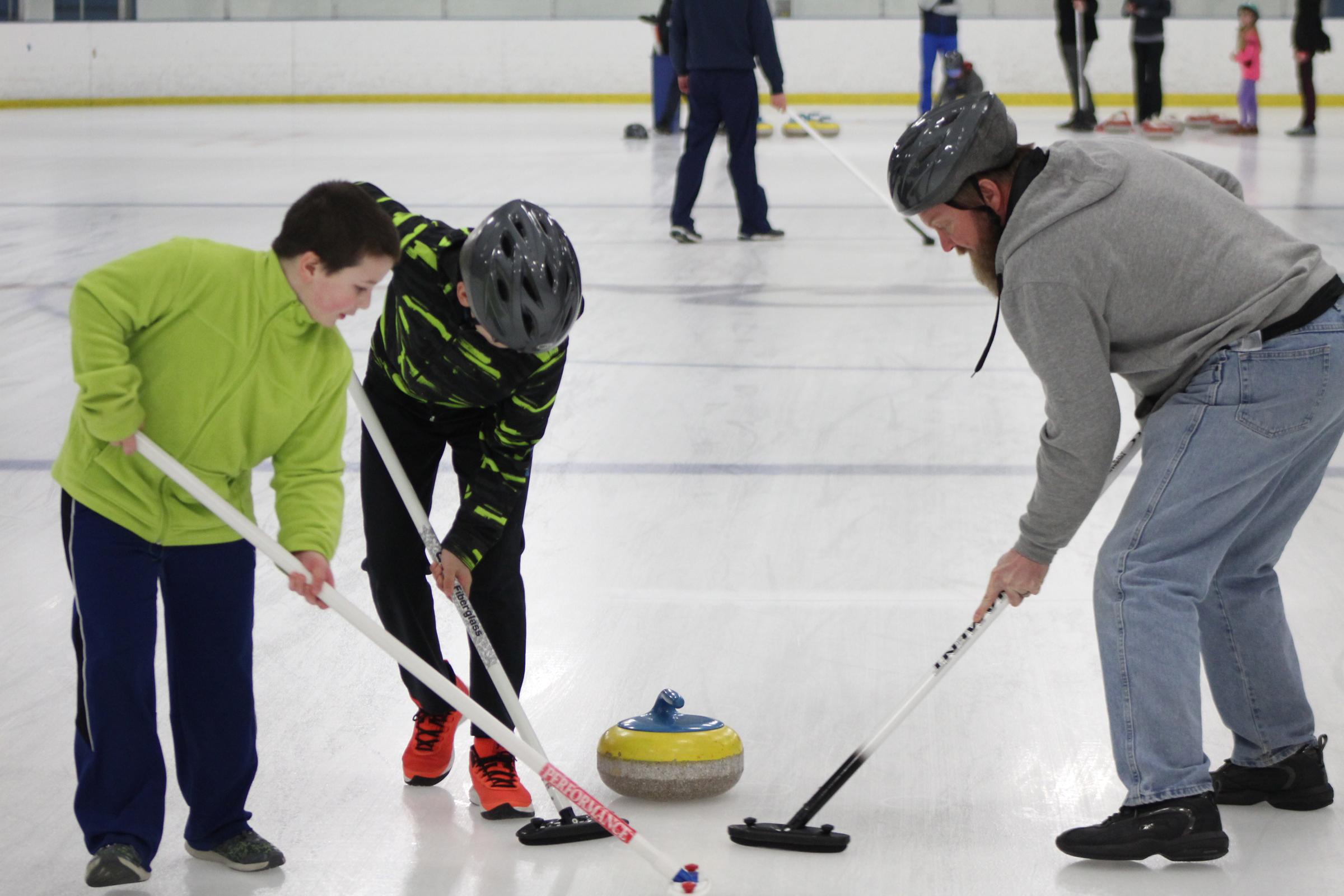
Olympic Curler Jessica Schultz, who was born in Anchorage, and Charles Taggart taught a ‘learn to curl’ event for dozens of amateurs at the MTA Events Center in Palmer on Sunday.
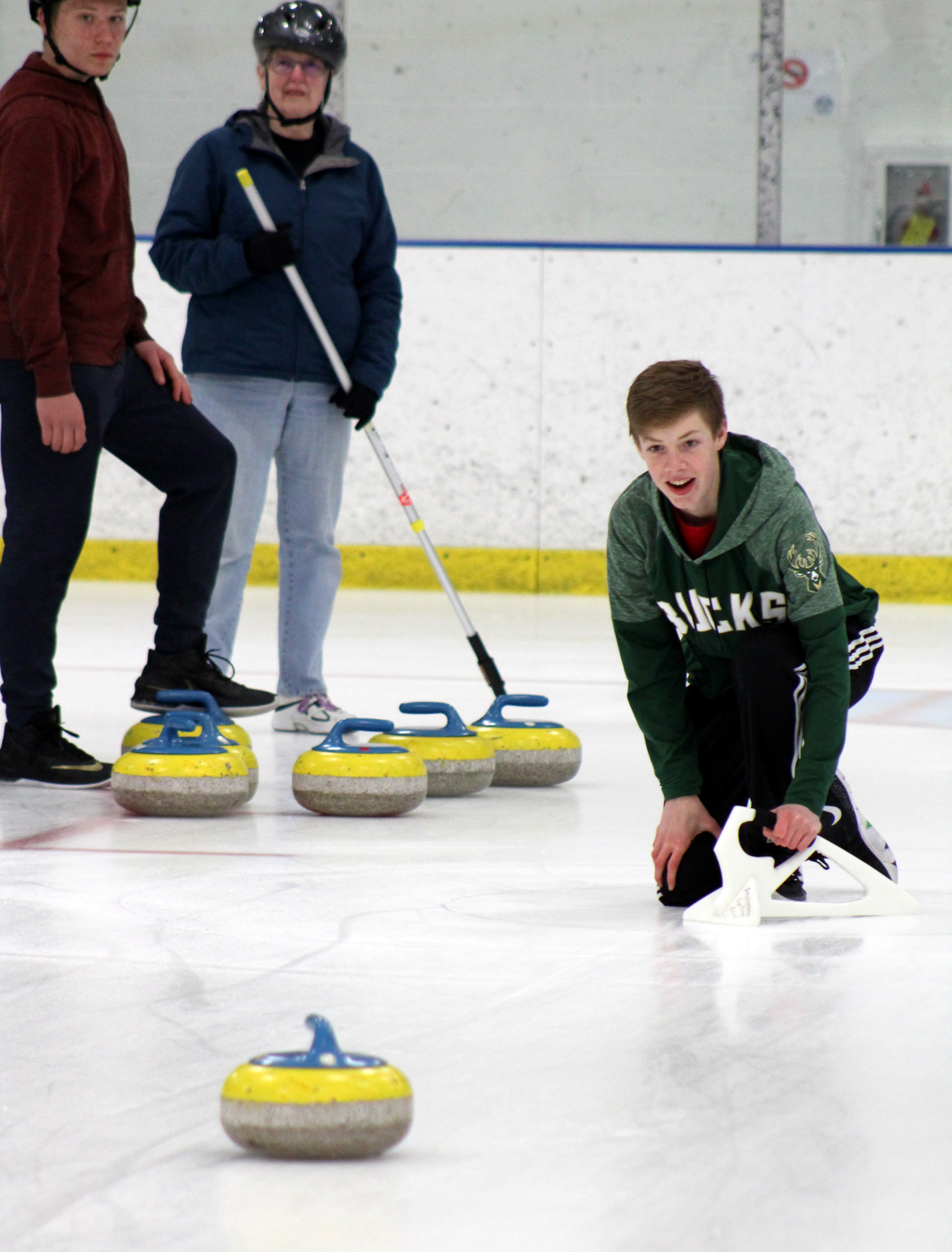
Schultz and Taggart taught curlers from 6 to 60 the dynamics of balancing as you slide down the ice and push a granite stone 146 feet toward a target. Points are scored by the proximity to the bullseye, but gamesmanship is another aspect of the strategy of curling. While curling is not one of the most athletically demanding sports, it requires finesse.
“You get to throw it as hard as you want to and it hits something else and makes a huge collision and granite goes flying all over the place, and if you’re really good at it, yours stays and theirs goes, you take theirs out,” Taggart said. “Ruining everybody else’s good throw is my jam.”
Taggart took a peculiar journey to Palmer on Sunday. Taggart grew up in Salt Lake City, Utah, and was originally a figure skater.
“There was an open house not dissimilar to this one and I took akin to curling a lot more than I did figure skating. I got into it and went to a couple curling camps in Canada and made my own curling team out of a bunch of junior boys and made it to nationals at a pretty young age and got in the competitive circuit,” Taggart said.
Taggart taught Mark Strabel’s two daughters, both barely larger than the stones themselves, to throw the curling stone the length of the ice. Once the stone has been thrown, teammates sweep the path of the ‘pebbled’ ice to create friction for a path closest to the target. While Schultz and Taggart curl competitively, most came to the MTA Events Center to try something new and have fun. Many of the younger participants preferred chasing the stones down the ice with brooms.
“They’re learning something new and the stones are heavier than they are, but they like pushing it around and maybe they have a passion for it and I’m going to support them doing it but, I want to expose them to as many activities as possible,” Strabel said. “When the winds blowing and it’s winter outside and it’s dark, think of something else to do. I’ve got my 3-year-old out here and my 7-year-old and it’s something to do with the family. It’s not intense, it’s more relaxing but there’s a strategy involved in it.”
Sunday’s curling event is a small piece of a larger movement to promote curling nationwide. Schultz grew up in Anchorage and moved to the United States’ curling hotbed of Minnesota to train for the Olympics. Schultz said that when she moved there in 2008, there was only one Olympic training facility in the Twin Cities area. Canadian curlers outnumber Americans 1 million to 200,000, but Alaska has long had ties to the sport. In 1905, one of the first organized sporting events was a curling event in Fairbanks.
“You can start people into from the time that they’re seven-years-old until they’re 95 years old,” Schultz said. “It’s one of those sports once you get interested in it, you’re hooked.”
Schultz has racked up three gold medals at US National Championship events. After decades in the sport, she had grown weary of it and needed a break. Last fall she got a job in Palmer and decided that she was going to launch a campaign to get everyone in the state to curl.
“I moved home in August and ended up getting a job at Body in Balance in Palmer and that’s where I learned more about the community of Palmer and what it embodies and how special it is here and it reminded me of the curling community and what that fosters and so I love Palmer, but the problem is there’s no curling,” Schultz said. “We’re bringing curling to Palmer. It’s going to happen. My goal is to grow the sport across the state.”
Curling, however primitive in nature, is not easy to come by. The ice at the MTA Events Center was coated with a treatment that ‘pebbled’ the ice, making it harder and giving it the texture of an orange peel. Curling stones do not slide on regular hockey ice that has been Zamboni’d. After spraying the ice to pebble it, blocks are nailed into the ice to push off of and a target is drawn at the other end. Curlers push off of the starting block with one foot while the other slides on a teflon slider. The throwers can also use a small stand to balance on as they slide before they release the stone. What is unique about curling is that the strategy of the game make it available for all ages and abilities.
“The goal is to have the people of Palmer try the sport and bring awareness to it as not just a competitive event, it’s a sport that everybody can do. What’s neat about it is you can play with your kids, you can play with your grandparents, you can play with your cousins of all ages. They have wheelchair curling. It’s good for all abilities as well. They have deaf curling. There’s a lot of opportunity for the sport to include everybody and that’s what’s great about it,” Schultz said.
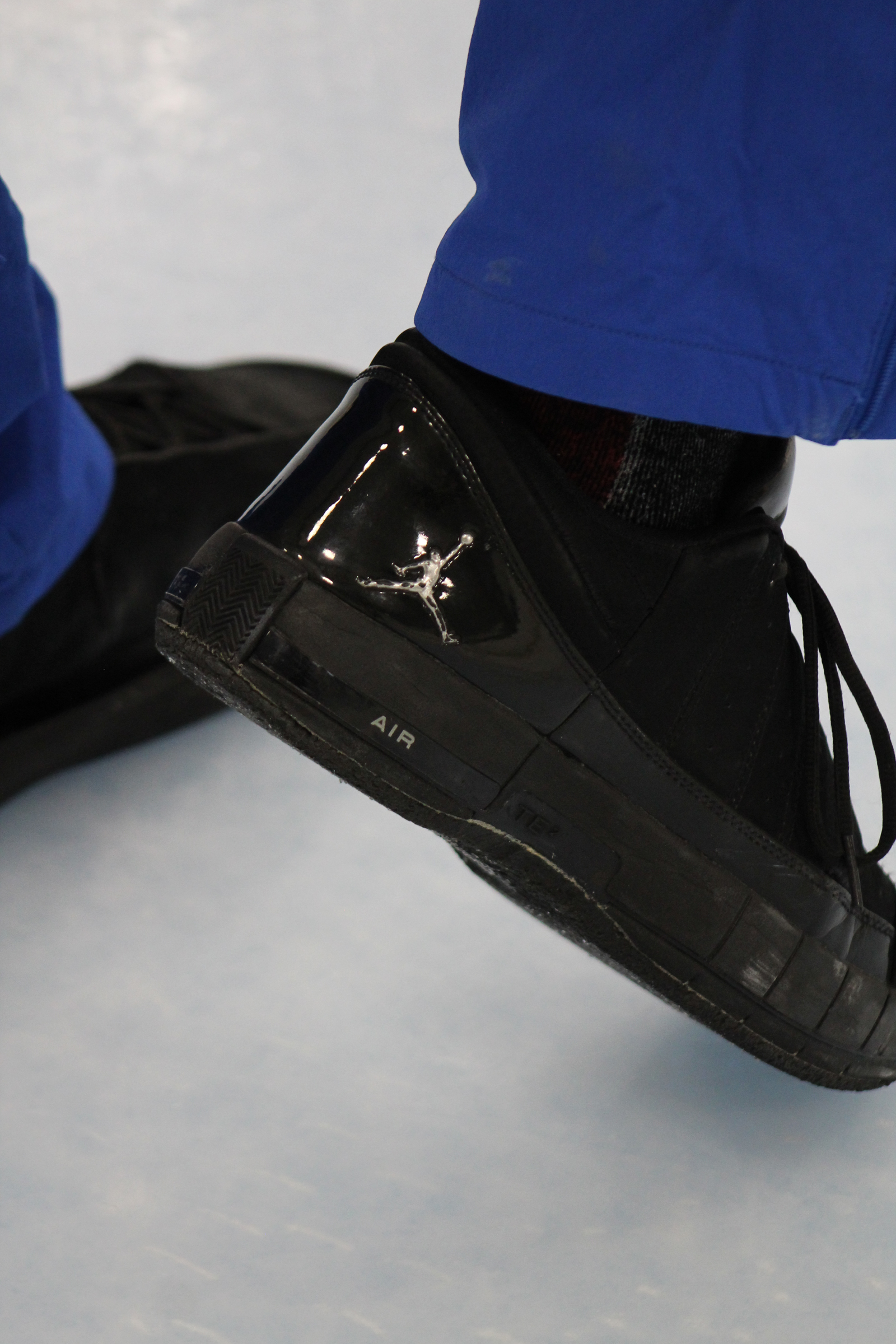
The nature of curling itself, standing around watching stones roll down the ice, lends itself to a community environment. The character of those who curl is not given boundaries of equipment or time constraints. Taggart would throw arena equipment in the back of his truck and drive around looking for ice to throw on in his early days, but has evolved since then. Taggart wore black Jordan brand sneakers to curl, not for fashion, but for functionality. Taggart had his Jordan curling shoes custom made, and they have a plastic bottom on his sliding foot.
“I dig it. It’s a quirky sport so I like to have a little bit of style,” Taggart said.
Schultz said that the Sunday event was a tease to get more people interested. More learn to curl events will be scheduled for the fall when the ice returns.
Contact Frontiersman reporter Tim Rockey at tim.rockey@frontiersman.com.

By Kyle Wilkinson Kyle in the outside Our spring bear hunt was bittersweet this year. We’re heading home without

Frontiersman.com Valley athletes earned titles during the Region III Championships track and field meet last week at Colony High

Leila Petersen Palmer Moose Leila Petersen, a member of the Palmer track and field team, has been named a Frontiersman

By Jeremiah Bartz J’s World August would have been the start of my 25th year as an editor at