Retiring teacher, coach urges Colony grads to ‘find their 68’
By Jeremiah Bartz Frontiersman.com A football coach using a hockey reference as the centerpiece for his keynote address may


State legislators are headed back to Juneau for the opening of the 2024 legislative session Tuesday, Jan. 14. They’ll spend much of the first day in opening ceremonies and unpacking, but work begins almost immediately on a pressing issues.
The Senate Education Committee has a hearing planned for Wednesday on school absenteeism, and the Senate and House Finance Committees can be expected to start work in reviewing Gov. Mike Dunleavy’s proposed Fiscal Year 2025 budget, the fiscal year that begins next July.
The Legislature’s 2024 agenda will be heavy on energy and natural resource legislation, legislative leaders say. What is unlikely in 2024, however, is passage of oil and gas taxes and a bill that sets mandates for renewable energy in the power supply “portfolio” for Southcentral and Interior Alaska electric co-ops, several legislators said.
Also, the governor’s proposal for a large Permanent Fund Dividend for 2024 is getting a cool reception because of the $900 million-plus deficit it would create. Legislators are instead likely to press for a balanced budget with a more modest dividend like that paid in 2023.
Several lawmakers gave a preview of what to expect in a briefing for the Resource Development Council in Anchorage Jan. 11.
Sen. Kelly Merrick, R-Eagle River, said she feels the intense partisanship of previous legislative sessions has started to subside. “Without cooperation we’re not going to get anything done,” she said. Also, that 2024 is an election year where substantial legislation is unlikely is just an excuse for not tacking tough problems, she said.
Rep. Tom McKay, R-Anchorage, said there’s urgency in tackling the pending Cook Inlet natural gas shortage and that the way to do it is with incentives. Oil producing nations like Indonesia tackle this with royalty and tax holidays until companies recover costs.
McKay noted a bill by Rep. George Rausher, R-Palmer, that would remove royalties from Cook Inlet leases. Gov. Mike Dunleavy will introduce a similar bill, but it may be more modest than what Rauscher proposes.
“Alaska needs to be much more aggressive in tackling this. We need to chart our own course,” McKay said. “It we wait for something to happen, it won’t,” he said.
Sen. Click Bishop, R-Fairbanks, said: “We need to crack the code on high energy costs,” which impede economic development, particularly mining projects.” Bishop pointed to Iceland as an example of what energy resources can do when combined with consistent government policy.
Iceland has commercial power rates of less than two cents per kilowatt hour and residential rates of 7 cents or under, in stark contrast with Alaska’s rates that are much higher despite Alaska’s ample endowment of energy resources including renewable hydro, wind and solar.
McKay added that while Alaska has large resources of critical minerals that could reduce the nation’s dependence on China high energy costs pose a significant impediment.
Members of the audience noted Sen. Merrick’s Senate Bill 118, now in the Legislature, that would require the Department of Natural Resources to submit a report to the Legislature with a three-year, five-year and 10-year plan to develop critical and strategic minerals.
McKay also spoke to the need to pass a carbon dioxide underground injection a storage bill this session (the governor introduced this bill last year) “Alaska has the perfect locations for this on the Kenai Peninsula and the North Slope. If we’re ever going to get a gas pipeline we need a place to store carbon dioxide extracted from North Slope gas, and this would be on the North Slope,” McKay said.
The governor’s bill would establish the legal framework for special “Class 6” injection wells that are regulated by the U.S. Environmental Protection Agency. The Alaska Oil and Gas Conservation Commission, which regulates oil and gas wells, has already started work on an application to the EPA for this, but the full legislative authorization is needed.
Sen. Jesse Bjorkman, R-Kenai, expects the Legislature to continue work on workforce development. The Senate Labor and Commerce Committee, which he chairs, held 13 hearings on workforce last session and identified key problems including the need for child care; more effective procedures for drug-testing; low pay and benefits in many occupations and the cost of health care.
Bishop said Alaska need to push alternative clean fuels like hydrogen to be competitive in the coming energy transition. Anchorage now has the third-busiest air cargo airport in the world and supplying airlines with clean fuels will help Alaska maintain its competitive edge. Carbon-free “green” hydrogen can be made by splitting water through electrolysis, but the process requires energy, another argument for developing lower-cost energy, Bishop said.
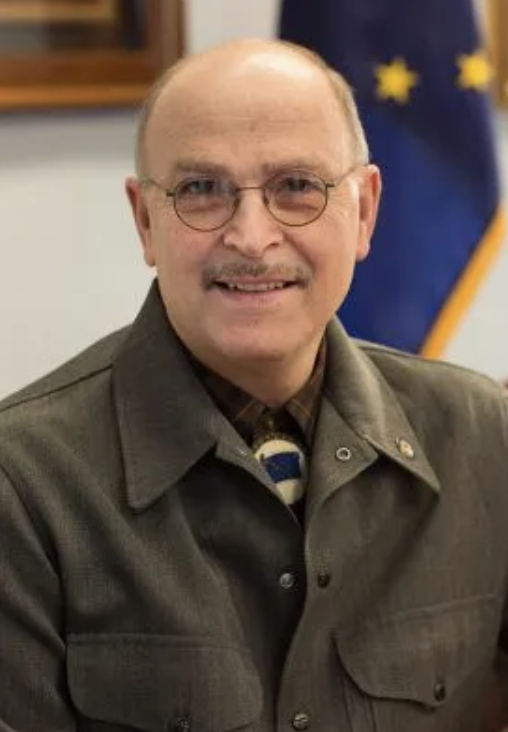

By Jeremiah Bartz Frontiersman.com A football coach using a hockey reference as the centerpiece for his keynote address may

Frontiersman.com With its headquarters in Wasilla, the Frontiersman has been a primary source of news for the Matanuska-Susitna

By Katie Stavick Frontiersman.com The next generation of leaders took flight this week as the Houston High School Class

By Kyle Wilkinson For the Frontiersman Keynote speaker and Carry the Cure President Bill Pagaran’s words boomed through the