Retiring teacher, coach urges Colony grads to ‘find their 68’
By Jeremiah Bartz Frontiersman.com A football coach using a hockey reference as the centerpiece for his keynote address may


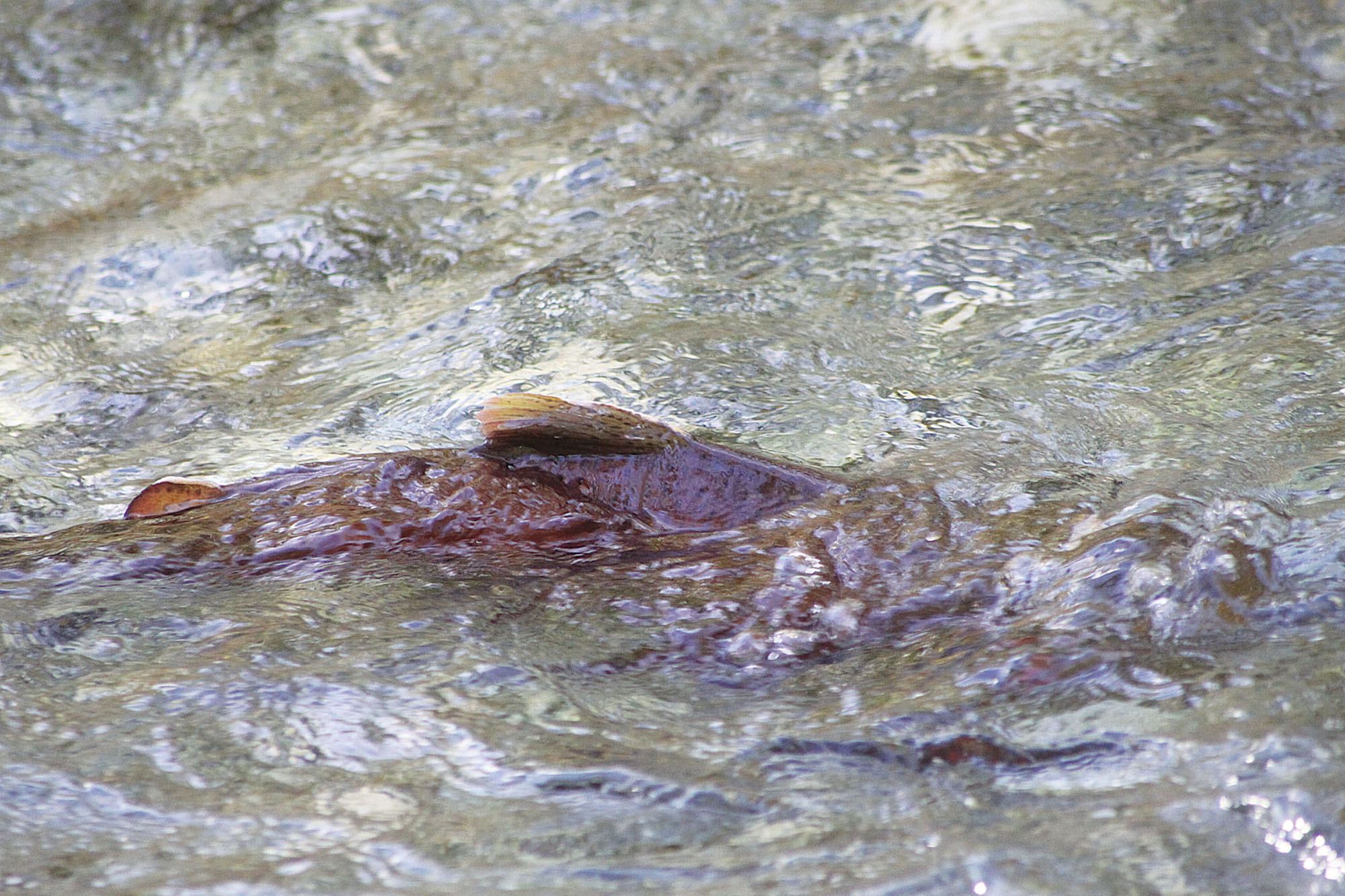
BUTTE — In some ways, the salmon and the all-terrain vehicle couldn’t be further apart.
After all, one is a fish, the other a means of conveyance. Sounds from one are limited to the occasional splash. Roars from the other frequently echo down backcountry roads and trails in the Valley.
However, to Chuck Kaucic, district manager for the Wasilla Soil and Water Conservation District, the intersections are numerous and all-too clear. Kaucic has spent months working to locate the areas where ATV usage and salmon spawning intersect using maps of salmon streams maintained by the Alaska Department Fish & Game overlaid with crossings identified by the borough government.
He’s worked with his own district, the Palmer Soil & Water Conservation District, the Alaska Department of Fish & Game, the U.S. Fish and Wildlife Service, the Mat-Su Trails Council and Alaska Trails on the ATV Salmon Stream Crossing Assessment Project.
In many cases, the crossing themselves are often unknown outside the populations of ATV riders and users who create them. Borough maps show numerous crossings recorded along the main channels of well-known streams, but can sometimes overlook or neglect tributaries. ATV trails, often times the illegal creations of parties of users without permission, can also develop unknown to local authorities, Kaucic said.
“In fact, recently, the last few years trail conditions and the actual environment has been degraded by the advent of side-by-sides,” he said. “We were trying to deal with ATVs and collectively doing a very poor job. When you get to the big mud holes and hunting areas, there’s nothing but figure eights. There’s a myriad of trails going everywhere.”
A widely held approach to mitigating the effects of ATVs on salmon habitat encourages widespread enforcement to keep ATV riders between invisible lines. Another school of thought holds that ATV riders should go wherever they can go, that the only limitation to responsible ATV use is safety. Kaucic puts himself somewhere in between those two camps, though he admits to courting some controversy.
“We’re really breaking trail here,” he said. “I’m hoping this effort stirs up a hornet’s nest. If it’s natural, it should.”
Past research into the issues has kept to safe waters politically, Kaucic said. As a result, the problem of environmental degradation as relates to ATV use has been somewhat under-reported.
“My information both on the waterfront restoration side and the ATV side, within this partnership there are say, eight goals,” he said. “You have an eight and ten-year plan, and it’s year seven.”
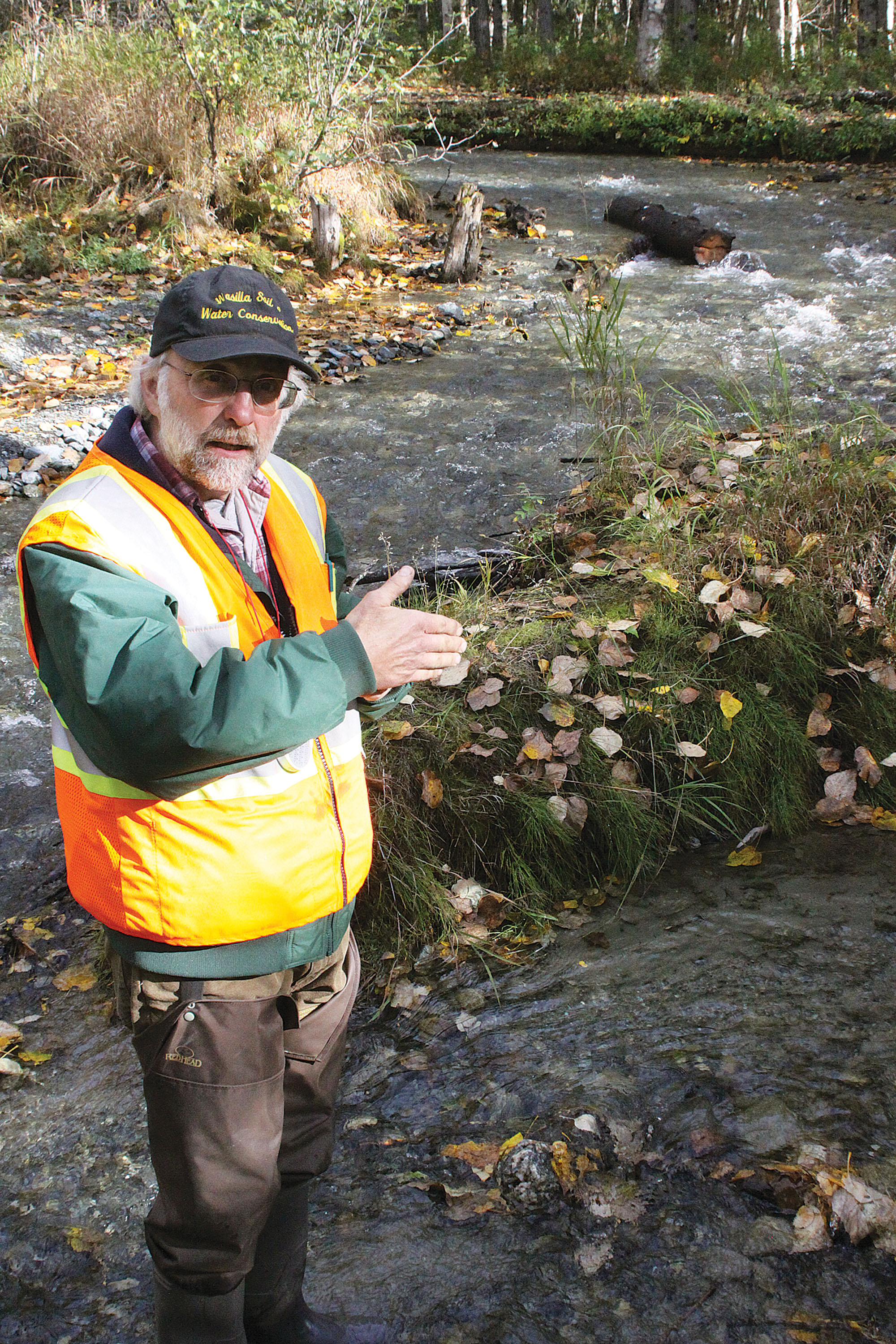
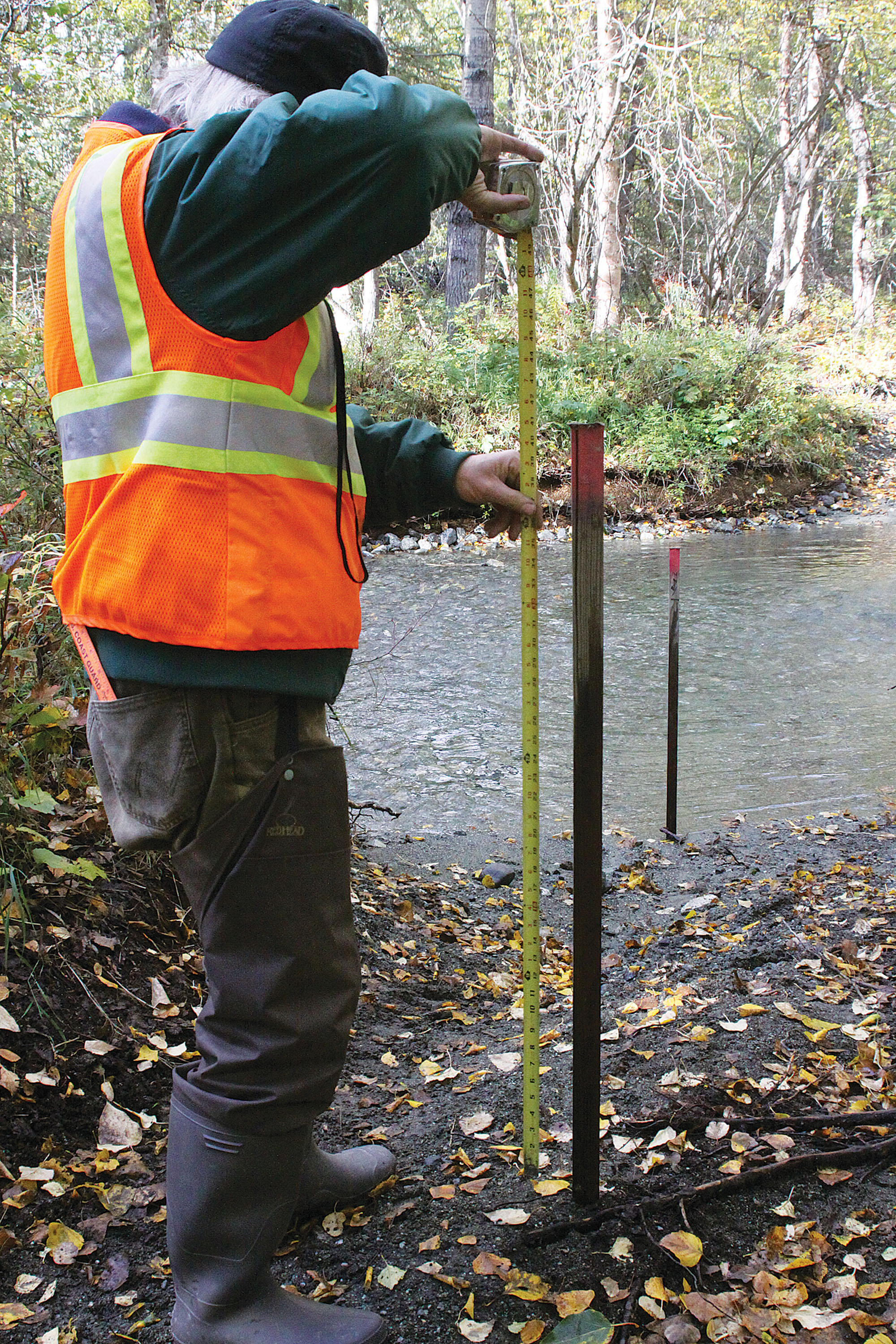
So all through the summer, Kaucic has taken his ATV to tributaries to major salmon streams in the area. As he demonstrated at McRoberts Creek in the Butte Saturday, he hammers two wooden stakes into the middle of scour pools, or areas where ATVs seeking traction have torn into or gradually eaten away at the soil on either side of the bank. Then he records the grade, and how far the scour pools have dug below the level of the topsoil on either side. He counts the gravel at the crossing to determine its suitability for salmon spawning.
The Plumley-Maud Trail cuts across McRoberts here, and while a scour pool on the right bank was still evident, Kaucic counts the McRoberts crossing among his greater success stories. Kaucic and workers used biodegradable fabrics wrapped burrito-style around soil to create what will eventually become a natural-looking bank. At the same time, they’ve put root wads, or clumps of tree roots in place to protect the banks. They sought and obtained a permit to move nearby gravel to reinforce the trail crossing, and whole sections of the bank now appear unspoiled to the untrained eye.
Other trails contrast sharply with his success. At another crossing he’s documented, moose were unable to climb the steep side of the scour pool, so they created a game trail running at 45 degrees to the crossing. In other places, side-by-side users were unable to fit their vehicle over a bridge originally designed for traditional ATVs, so they created another crossing downstream that muddied the water. Water that is too muddy, or gravel that’s been too frequently relocated can no longer serve as a suitable habitat for salmon, according to Kaucic.
“The goal is to create an actual prioritized list of crossings that need repair or need to be tended to,” he said.
With such a list, conservation groups interested in contributing money to maintaining salmon habitat would then have a list of streams that are of the highest priority, Kaucic said.
The alternative, without comprehensive research, has been grim, Kaucic said.
Research also indicates riders claim salmon habitat preservation as a top concern, which is why part of Kaucic’s mission is educational. For example, he’s relatively certain that many ATV riders aren’t aware that state laws require them to have a permit to even drive across salmon streams in the first place.
“I’ve been to Big Lake Community Council, Willow Trails Committee,” he said. “I want to get out there and talk to as many people that have operational trails committees. Me going to a meeting just to go to a meeting is not going to do anything.”
The goal is to accommodate responsible ATV use while at the same time preserving salmon, to preserve both the buggy and the fish. A dearth of borough, state and federal officials means the backwoods can oftentimes belong more to the ATV users than to the officials tasked with enforcing the law, Kaucic said.
“If you’ve been riding on these trails since you were 15 years old, they’re yours,” he said.
Borough officials, like Emerson Krueger, a land management specialist, admit enforcement can be problematic for local, state and federal governments overmatched by the number of users. The Mat-Su Borough has fewer enforcement officials per capita than anywhere else in Alaska, according to Krueger.
“There is only a percentage of trails that are legal, and people are trespassing all the time on public and private land,” he said
The inconstant nature of salmon runs can also pose enforcement problems, Krueger said.
“Sometimes they stop going to places to spawn and sometimes they come back,” he said. “Realistically, there’s a number of different options.”
Kaucic intends to present some of his findings, as well as inform interested ATV users about responsible use, at Mat-Su College in Room FSM 205 at 7 p.m. Thursday. No admission will be required, and the public is encouraged to attend.
Contact Brian O’Connor at 352-2269 or brian.oconnor@frontiersman.

By Jeremiah Bartz Frontiersman.com A football coach using a hockey reference as the centerpiece for his keynote address may

Frontiersman.com With its headquarters in Wasilla, the Frontiersman has been a primary source of news for the Matanuska-Susitna

By Katie Stavick Frontiersman.com The next generation of leaders took flight this week as the Houston High School Class

By Kyle Wilkinson For the Frontiersman Keynote speaker and Carry the Cure President Bill Pagaran’s words boomed through the