Retiring teacher, coach urges Colony grads to ‘find their 68’
By Jeremiah Bartz Frontiersman.com A football coach using a hockey reference as the centerpiece for his keynote address may


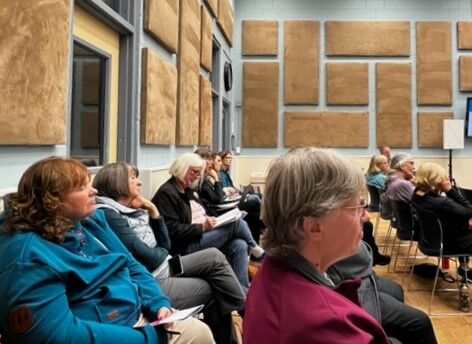
On Thursday, the Library Citizen’s Advisory Committee (LCAC) held its second meeting since formally coming together in August.
Before the LCAC got into discussing the previously selected books for review, there were other agenda items to attend to, including the election of a Vice-Chair, which went to Dr. Reese Everett, an Associate Superintendent for the Matanuska Susitna Borough School District (MSBSD). He, along with the Chairman, Dr. Justin Ainsworth, do not vote on matters pertaining to the LCAC. He then reminded the LCAC of their mission.
“It’s important to emphasize that this group, our primary task is to review the books. Four books selected, the books we will select moving forward, and base them on the Alaska statute,” said Dr. Ainsworth, and that the committee was not there to discuss books on the curriculum.
“This environment was set up for dialogue, set up for discussion. It’s not set up for point-counterpoint, contentious, hostile debate.”
John Ptacin, a lawyer from Anchorage whose firm represents nearly 45 of the school districts within the state, was in attendance to provide legal guidance regarding 1st Amendment issues, but also addressed other legal instructions, such as the Quorum rule. Because the committee has 11 voting members, they will need to have 6 members present in order to have a quorum.
He then reminded the committee that they are there to make recommendations and that the final decision on what happens with the books still ultimately lies with the school board and the Matanuska Susitna Borough School District (MSBSD) administration.
“Your goal and your role is to make recommendations to the school board in this open setting. You want to have a pretty open and honest discussion about these particular books. You don’t want to leave the public with the impression that you have preconceived notions about the books, but that you’re taking a really deep dive into these materials,” said Ptacin.
He then gave a brief overview of ‘The Miller Test,’ which he said is similar to the book rubric and the Alaska statute the committee is to measure the books against to determine if they are indecent as defined by the law. The committee is required to read each book they select for review for context and understanding, then determine if the books violate AS 11.61.128, the Alaska Statute on Distribution of Indecent Materials.
“It’s all essentially the same thing,” he said.
“There is no national standard for what’s obscene. You get to take a look at what these things mean in your local communities. ‘The Miller Test’ asks you to apply community standards and prevailing standards within the community.”
Discussion them opened up regarding the four books the LCAC members were to have read and reviewed, which were “The Lovely Bones,” by Alice Sebold; “The Bluest Eye,” by Toni Morrison; “Drama,” Raina Telgemeier; and “It’s Perfectly Normal (4th ed.)” by Robie Harris.
First up for discussion was “Drama.”
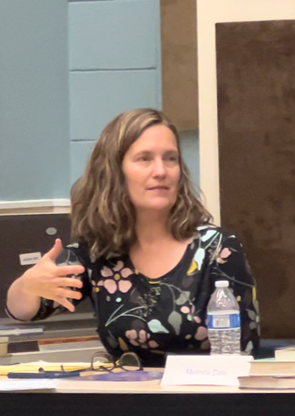
“It is written in the perfect middle school language,” said Melinda Dale.
The committee easily determined that “Drama,” did not fit the Alaska statute, but eight members of the 11 voting members determined that the book was not suitable for elementary students, while the remaining three recommended retaining it for all libraries.
“The Lovely Bones,” was deemed to be a beautiful work, though seven of the LCAC members recommended it be only available for high school students due to the subject matter.
When the conversation moved to “It’s Perfectly Normal,” a children’s book meant to inform preadolescent children about puberty, changes in development, and exploring different definitions of sex, is one of the most frequently challenged books, despite multiple accolades and appraisal for its accurate information and its normalization of body changes and human sexuality. Controversy surrounds not only some of the language within, depending on which edition is read, but also because of its graphic images that some consider inappropriate for the targeted age range.
The LCAC voted 6 to 5 that it did meet the statute for indecent material for students under age 16 before then voting 9 to 2 to recommend removing the book from all libraries.
The book stirring the most discussion was “The Bluest Eye,” by Toni Morrison. A majority of the LCAC had a difficult time with the intense and often graphic nature of the subject matter, which centered on a young African American girl who is victimized and sexually assaulted by her father, leaving her pregnant. The book is not part of the curriculum, however the International Baccalaureate program does use Toni Morrison as part of its studies.
“This had beautiful language and was atmospheric,” said Melodie Wright. “It takes a look through the lens of the African Americans experiencing racism and abuse.”
“It crosses the line. I don’t encourage students to read this. Absolute ‘no,’” said LCAC member Nathan Buck, who said he was appalled by several of the scenes he read. After he read aloud a particularly NSFW passage, a motion was made to not read sections of the book aloud. The motion was tabled until the next meeting due to time constraints.
It too was deemed to have violated the Alaska Statue for Indecent Materials, by a vote of 6 to 5 to remove the book from all libraries, with the 5 wanting to retain the book in high school libraries.
There was some discussion about whether to add an option for the books, such as “The Lovely Bones,” and “The Bluest Eye,” which may be difficult for some readers to a disposition recommending the books be retained in high school libraries for students over age 16, with the stipulation that they have parental permission to check out the book. However, after discussing how that could make things more difficult for librarians logistically, as well as legal precedent pertaining to restricting books to students of certain ages due to content, it was ultimately voted down. Also worth noting is that in Alaska, the age of consent is 16 years.
The LCAC selected as their next books for review “The Kite Runner,” by Khalid Hosseini; “Flamer” by Mike Curato; “The Handmaid’s Tale,” by Margaret Atwood; and “Persepolis,” by Marjane Satrapi.
The next meeting for the LCAC is Thursday, October 12 at 5:00 pm. For more information about the LCAC, please visit www.matsuk12.us/Page/48861

By Jeremiah Bartz Frontiersman.com A football coach using a hockey reference as the centerpiece for his keynote address may

Frontiersman.com With its headquarters in Wasilla, the Frontiersman has been a primary source of news for the Matanuska-Susitna

By Katie Stavick Frontiersman.com The next generation of leaders took flight this week as the Houston High School Class

By Kyle Wilkinson For the Frontiersman Keynote speaker and Carry the Cure President Bill Pagaran’s words boomed through the