Retiring teacher, coach urges Colony grads to ‘find their 68’
By Jeremiah Bartz Frontiersman.com A football coach using a hockey reference as the centerpiece for his keynote address may


PALMER — If you’re a trail user, salmon lover or environmental enthusiast in the Mat-Su Valley, you probably know Kim Sollien — if not personally, then by her work.
As Great Land Trust’s Mat-Su program director, Sollien was recently awarded the 2016 Susan Ruddy Community Conservation Award by The Nature Conservancy in Alaska for working to “promote conservation in Alaska through forging successful partnerships and building consensus in local communities,” according to a June 7 press release.
“People across the Mat-Su have Kim to thank for opening the door to new possibilities for conservation, and saving some long-cherished places in the process,” said Nature Conservancy Alaska director Rand Hagenstein in the release.
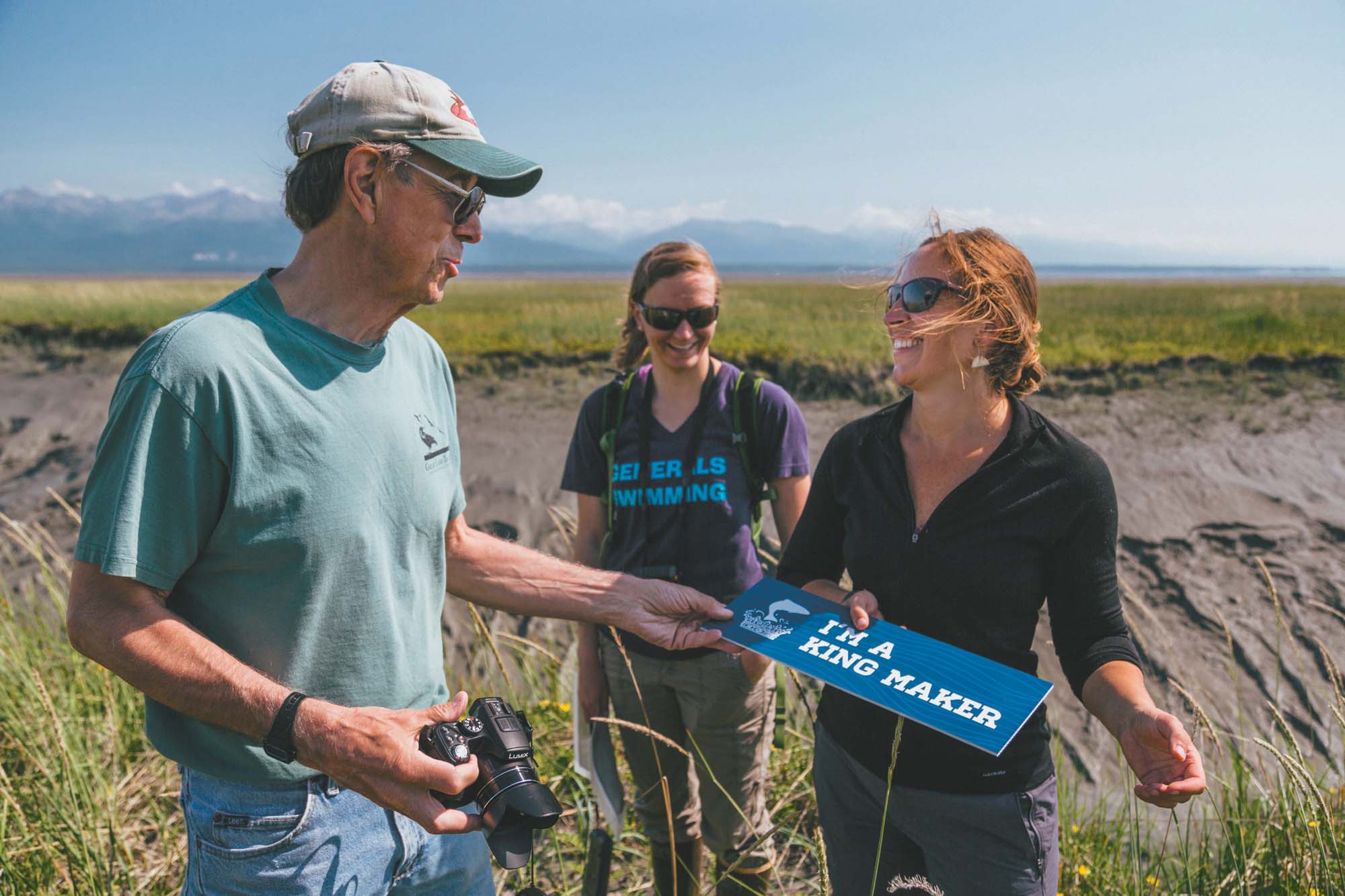
Sollien and her team’s most recent conservation contributions include securing permanent public access to the Bodenburg Butte, disallowing commercial development there in perpetuity; creating a public boardwalk in the Palmer Hay Flats State Game Refuge within walking distance of Machetanz Elementary School; and crowning “King Makers” who work with Great Land Trust to conserve historic homesteads and preserve Alaska’s vital salmon habitat.
“Our whole mission is to conserve the special places people love,” Sollien said in the release. “The heart of our work is community-identified land conservation that benefits the people that live here and love this place.”
Though Palmer has been her home for many years now, Sollien’s journey to the Matanuska Valley was a rather long and indirect one that started with a book.
Sollien grew up in Maine with a penchant for camping and hiking, but not a cultivated understanding of what it meant to conserve land or how things like fossil fuels affected the environment. As a high school graduate, she intended to attend a culinary school in Rhode Island on a scholarship, but at the last minute decided to stay home and attend the University of Southern Maine. She didn’t want to be “too far away” from family, she told herself at the time.
As the semesters passed, Sollien fell into social work, finding a passion for educating young people on tough topics like bullying and sexual consent, as well as helping adult women find hope and justice in abusive situations.
For seven years Sollien remained in that field, with no intentions of leaving the state — until a co-worker encouraged her to read “The Last Hours of Ancient Sunlight” by Thom Hartmann.
The year was 1999 and the book had just come out the year before, throwing out phrases like “ecodamage,” genetic engineering, cheap oil and global famine. Inspired to make change by the text, Sollien sold nearly everything she owned and headed to the Last Frontier to further her education and live a more sustainable life.
As she drove through Eureka and into the Matanuska River Valley, seeing the mountains rise up out of the earth all around her, Sollien said she thought, “This is what it feels like to be home.”
“It was like … really breathing for the first time,” she said.
Soon Sollien found Alaska Pacific University, where she developed grand ideas of turning the campus into a center for sustainable living. These ideas, in part, spurred the development of the Kellogg Campus at Spring Creek Farm in Palmer, where local home school students and graduate students alike now grow their education.
Upon graduating with a master’s degree in sustainable community design, Sollien began a new seven-year life chapter working for the Chickaloon Native Village, where she served as the director of health and social services and sustainable foods coordinator. In the latter position, Sollien helped to start Chickaloon’s Elder Lunch program and managed two community gardens.
In 2009, Sollien applied for a position on the steering committee for the first-ever Salmon Symposium sponsored by the Mat-Su Basin Salmon Habitat Partnership, of which Chickaloon was a member. Through the partnership she found Great Land Trust, which quickly won her over.
She began working for GLT that year, diving in headfirst as a kind of outreach coordinator — because for the technical aspects of the organization, the learning curve was very steep.
Coming in, Sollien said she “didn’t know anything” about real estate transactions, much less how to read conservation easements, which seemed to be written “in a different language.” She didn’t even know much about the needs of juvenile salmon, which have become a huge part of her work.
“Working for a land trust, traditionally, the staff are very specialized,” she said.
But the people on staff at GLT saw something in Sollien, and, more importantly, the network of friends and professional relationships she had developed in the Valley, where they had just opened a second office. Her co-workers suggested she start there, having conversations with people she knew about what GLT was doing.
“We’re only gonna work with a limited number of landowners, because we only have the resources to do that, but all community members benefit from our work because we’re protecting open space,” she said — open space that provides fish and wildlife habitat or farmland that allow residents to continue subsistence lifestyles.
So while other GLT employees were drafting easements and negotiating with landowners, Sollien was out discovering which places are closest to local residents’ hearts and why.
“It’s been really fun to tap into that love, love of place,” she said.
Getting to know the landowners personally, now, too, has been especially rewarding, Sollien said. Since conservation easements can take months to draft and finalize, GLT staff members spend lots of time in conversation with landowners about what the individuals want and what is the most effective way to achieve those goals. In the process, the people involved can’t help but develop meaningful relationships, she said.
“You really get intimate with people about their hopes and dreams and thoughts and stories about the past … and I really love that,” Sollien said.
As Sollien approaches seven years with GLT (the same length of time she stayed with Chickaloon Native Village and in social work before that), she’s not looking to move on any time soon. Now that she’s found the kind of people she wants to work with and for, it’s time to break the pattern.
“I definitely feel like I work with the most talented, caring, passionate people in the world,” Sollien said, tearing up. “It’s because of their talent and their expertise and their work that they feed to me that I’m able to go out and do what I do in the community.”
“I get to stand on the shoulders of giants,” she said.
Sollien and her team’s latest community project is to develop a coastal park near Settlers Bay Golf Course, which will begin once the land purchase has been finalized.
For more information about Great Land Trust and its current projects, visit greatlandtrust.org.
Contact reporter Caitlin Skvorc at 352-2266 or caitlin.skvorc@frontiersman.com.

By Jeremiah Bartz Frontiersman.com A football coach using a hockey reference as the centerpiece for his keynote address may

Frontiersman.com With its headquarters in Wasilla, the Frontiersman has been a primary source of news for the Matanuska-Susitna

By Katie Stavick Frontiersman.com The next generation of leaders took flight this week as the Houston High School Class

By Kyle Wilkinson For the Frontiersman Keynote speaker and Carry the Cure President Bill Pagaran’s words boomed through the