Retiring teacher, coach urges Colony grads to ‘find their 68’
By Jeremiah Bartz Frontiersman.com A football coach using a hockey reference as the centerpiece for his keynote address may


PALMER — Some prominent Mat-Su Valley citizens were among the 250 delegates to Governor-elect Bill Walker’s transition team, which met Nov. 23 and 24 at the University of Alaska Anchorage.
The resident to occupy the most prominent spot was probably Colony High School math teacher and 2009 Teacher of Year Bob Williams who co-chaired the 13-member education committee with University of Alaska Fairbanks Kuskokwim Campus director Mary Pete. Williams campaigned unsuccessfully for Lieutenant Governor during the election cycle, but said the unity ticket of Walker and Byron Mallott drew his support after its formation because of the candidates’ support for public education.
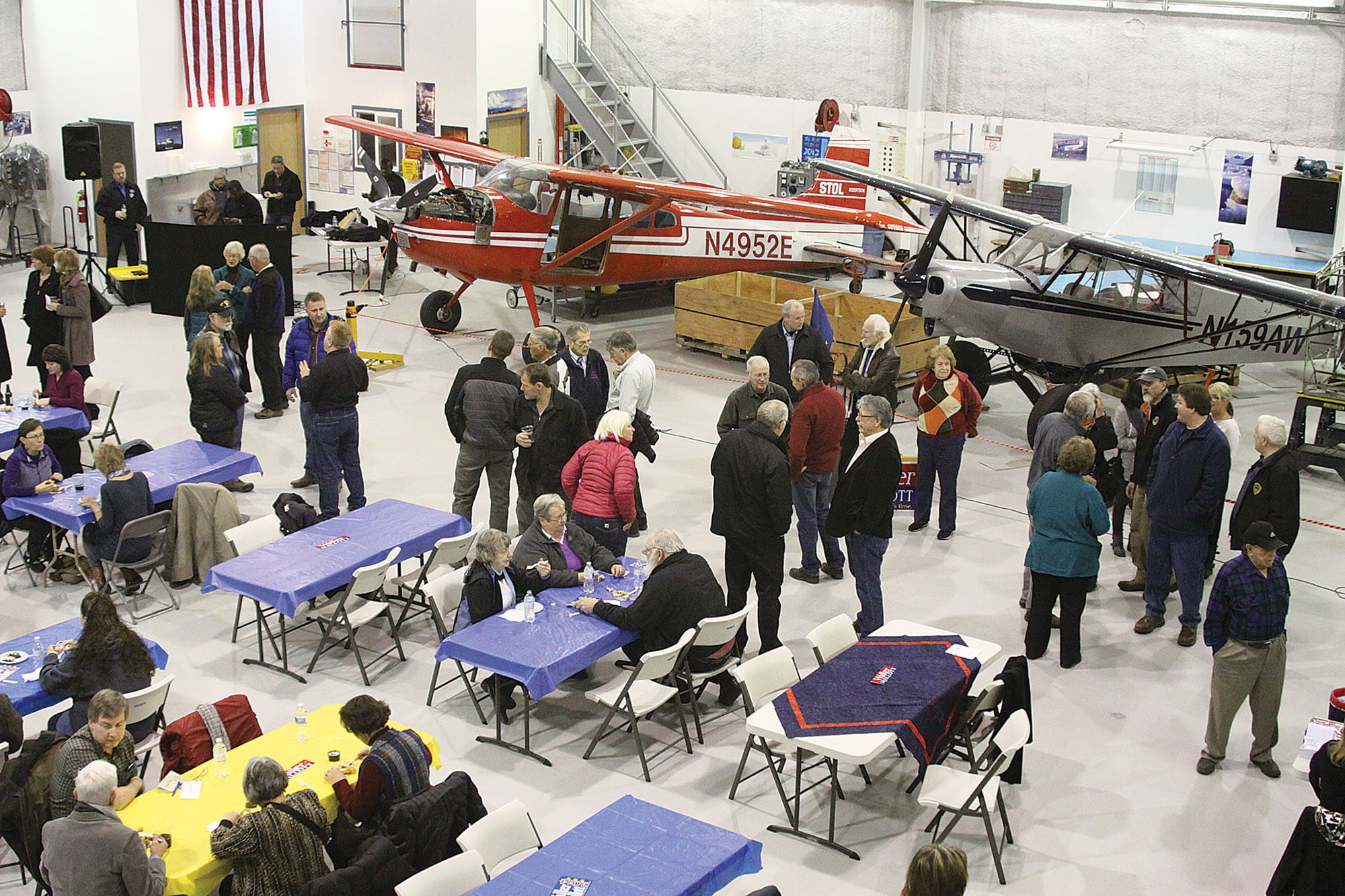
At a celebratory fundraiser in a Palmer airplane hangar — the campaign may be over, but lingering bills remain, according to campaign officials — Williams said the transition team was inclusive.
“I would just say, it was a wonderful cross-section of Alaska,” he said. “We had people from the business community, from the Hmong community, from rural Alaska, from the university. A lot of people looked at education through a different lens.”
Among the issues discussed at the education committee: a reliable funding mechanism for public schools (in the news statewide this week, after a Ketchikan circuit court judge declared unconstitutional one portion of a mechanism for school funding) and integrating the diversity of Alaskan Native languages into education. For example, the state-issued Alaska Performance Scholarship requires students to take a foreign language, and discussion focused around potentially allowing students to use a Native language, like Tlingit, to meet the requirement.
“A lot of times when I go through something, or I’m a part of something, I always ask myself, ‘is this meaningful? Is this making a difference?’” Williams said. “What I can say is that what I went through this weekend was very powerful.”
Former Wasilla mayor Verne Rupright participated as a delegate for the finance committee. The diversity of opinion — as well as the way delegates of diverse positions were able to work together — was impressive, Rupright said.
Rupright, like Williams, lost an election this year, after failing to unseat Rep. Lynn Gattis.
“I think it’s going pretty good, to tell you the truth,” he said. “It’s been a long while in Alaska since people of different philosophical beliefs actually sat together and set aside all the ideological disagreements and focused on what we were asked to focus on.”
“We set aside the things that are not necessarily important things to the immediacy of our survivability here in a downturn in economic climate,” Rupright added.
While Walker and Mallott’s futures are indisputably on the rise, another, more crucial line is falling. The last budget produced under the Parnell administration is based around $119 per barrel, and oil prices — which drive about 90 percent of state funds — have nose-dived to below $75 per barrel. That might spell doom for large-scale capital projects, Rupright said.
“There’s no way out of that,” Rupright said.
Other local members of the transition team were chosen for their role in social issues. MY House Director Michelle Overstreet served on the conference’s Public Safety Committee, and said her organization’s fight against teen homelessness made it a natural fit.
“I think that with about the 30 percent of kids we see leaving home as a result of domestic violence, it made perfect sense,” she said.
Transition officials asked the committee to identify five areas of concern for the administration over the course of the first Walker administration, and endemic domestic violence in the state was one of the areas discussed. They also discussed training and retention among law enforcement agencies, integrating technology into Public Safety communications, judicial issues in Native communities, and recidivism rates, according to Overstreet.
Overstreet’s organization focuses on youth, and the priorities, from her perspective, are clear.
“Support for adequate housing, substance recovery and employment opportunities,” are crucial for the younger demographic, she said.
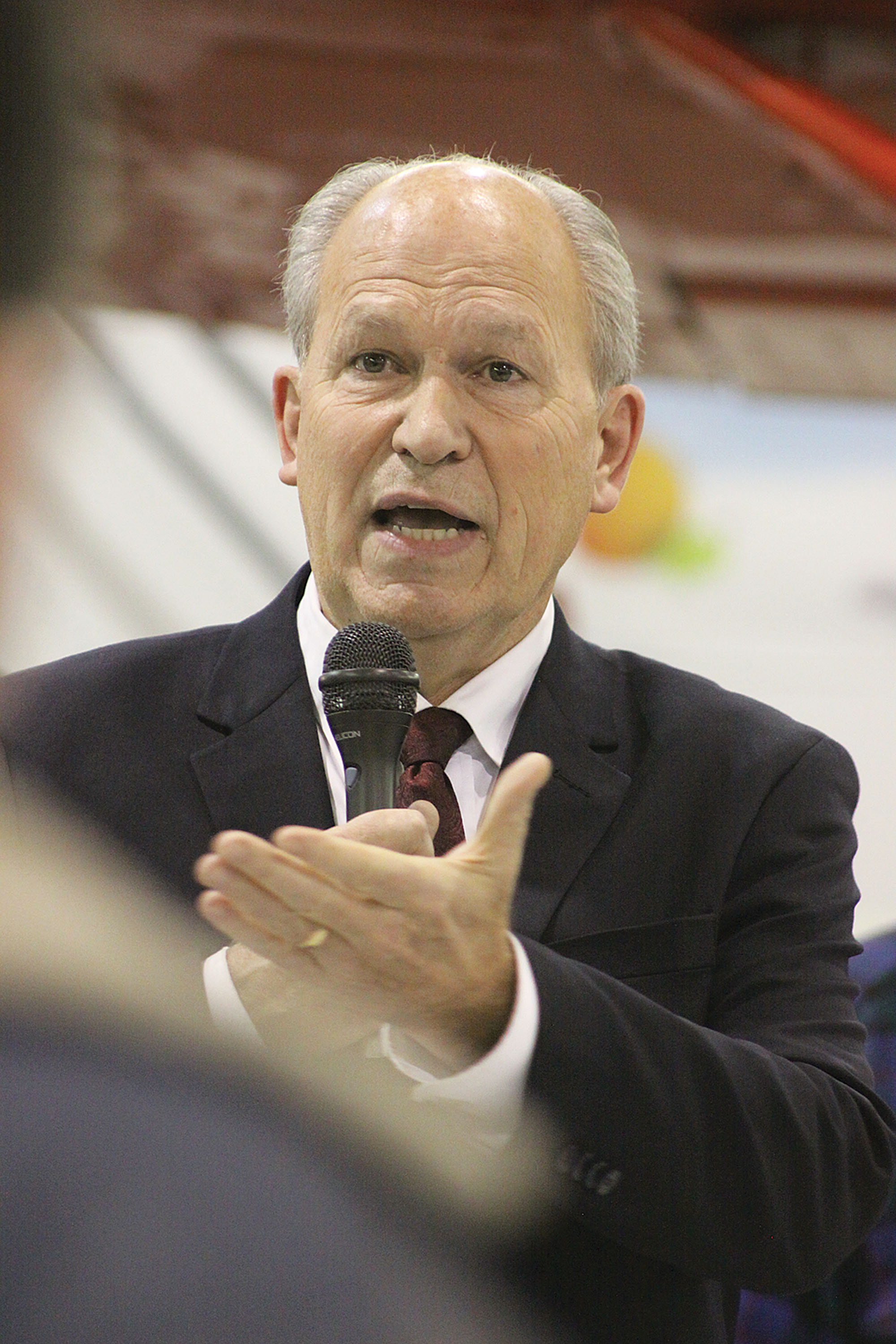
While Mat-Su representatives to the transition conference are a minority, representing about 6 percent of the overall delegates, they’re important, Walker said.
“The Valley is critical,” he said. “With the agricultural opportunities here, it’s very important to hear from people here.”
Unlike the last transition team — convened in the transition between governors Frank Murkowski and Sarah Palin — this transition didn’t include current state employees.
“Instead of breaking it up by department, we broke it up by issue,” he said. “It was really people just talking to people.”
The transition conference’s final report is expected in coming days, and Walker said Nov. 24 he was still waiting to review the report.
“They’re still tabulating that,” he said.
Walker will be sworn in at 11:30 a.m., Dec. 1 at Juneau’s Centennial Hall. The ceremony can be streamed live on 360north.com, ktuu.com, ktva.com, and youralaskalink.com. It can also be watched on the KTUU, KTVA, FOX/ABC, and KTOO television stations.
Contact Brian O’Connor at 352-2269 or brian.oconnor@frontiersman.com.

By Jeremiah Bartz Frontiersman.com A football coach using a hockey reference as the centerpiece for his keynote address may

Frontiersman.com With its headquarters in Wasilla, the Frontiersman has been a primary source of news for the Matanuska-Susitna

By Katie Stavick Frontiersman.com The next generation of leaders took flight this week as the Houston High School Class

By Kyle Wilkinson For the Frontiersman Keynote speaker and Carry the Cure President Bill Pagaran’s words boomed through the