Retiring teacher, coach urges Colony grads to ‘find their 68’
By Jeremiah Bartz Frontiersman.com A football coach using a hockey reference as the centerpiece for his keynote address may


WASILLA — If were up to the baker’s dozen of area residents gathered at Wasilla City Hall Thursday, Matanuska Electric Association would bury its proposed high-voltage transmission lines where they run through the city.
“I agree with that,” said Lisa Ameen. “Our No. 1 recommendation is to bury it.”
Ameen was one of a handful of city and local residents attending the first of two workshops Thursday to identify potential alternatives to MEA’s application to construct 80- to 100-foot towers along the Parks Highway. The electricity cooperative has said upgrading the transmission lines from its Mat-Su Regional Medical Center substation to either the Herning or Cottle substation is necessary to continue to serve the Valley’s most densely populated core area.
But MEA’s plans to build towers along its preferred route, which includes about three miles inside city limits, would ruin the valuable viewshed along the Parks and negatively impact property values, Wasilla city staff and administration has argued.
Thursday’s meetings were the latest in what has become a protracted debate over the lines, with MEA insisting it’s preferred route along the Parks is the cheapest and in the best interest of all the co-op’s ratepayers. MEA also considered five other routes that carry costs ranging from less than $10 million to $40 million. That last number is the most expensive option, which is burying the lines.
And that’s what all those at Thursday’s meeting said they wanted to recommend to the Wasilla Planning Commission, which is scheduled to vote July 9 to either approve or deny MEA’s application to build the towers.
“The purpose for us is to say, if we had our druthers, if we had to go from the hospital substation to either the Herning or the Cottle substation, where would we put it?” asked meeting facilitator Julie Jessen of Anchorage-based HDR Alaska. “We are not experts, we’re not all engineers, we’re not all planners. We’re just citizens.”
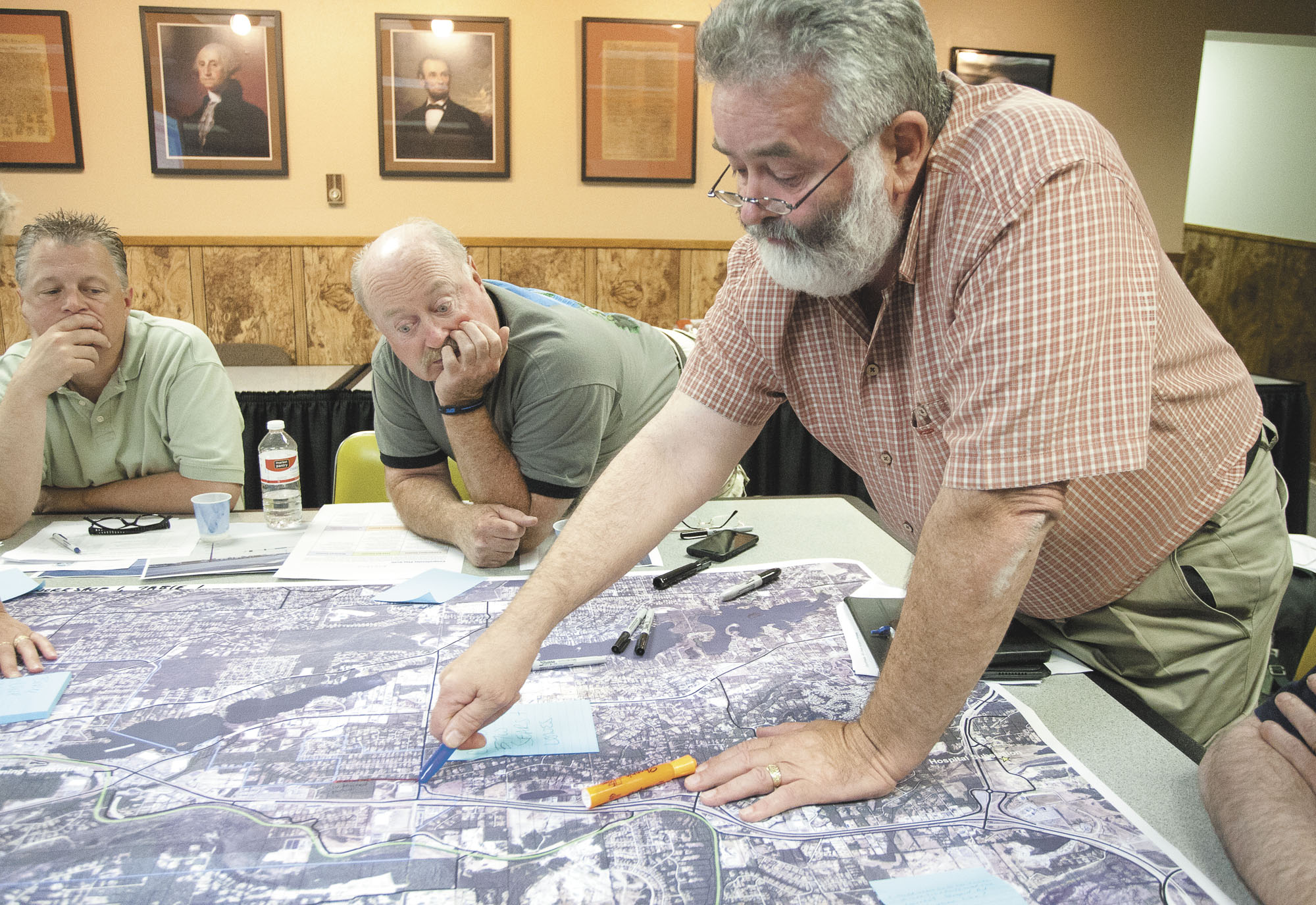
After voicing displeasure with MEA to open the meeting — much because MEA was not represented — attendees broke into two smaller groups each with large maps of the affected area. They were tasked to drawing where they would put the transmission lines if the decision were theirs.
While burying the lines was the most popular option, some like Dennis Smith wondered if the upgrades are really needed and if they could recommend MEA do nothing.
A group including Pat Johnson, Bernadette Rupright and Knik-Fairview Community Council Board President Berkley Tilton also suggested a possible compromise where MEA could still follow its preferred route. Towers would be constructed along the highway to Seward Meridian, where they would then be buried behind Sears, Lowe’s and the Parks corridor, and possibly the rest of the way to the substation.
“MEA testified that they needed to provide for future base (power) for businesses,” Johnson said. “Now, I don’t care if we get another business in Wasilla. They can go someplace else.”
But if the line is going to go in, burying some of it “is a good compromise which I’m willing to live with,” he said.
Along with burying the lines also came considerable discussion about those costs. While MEA estimates it could cost up to $40 million, the residents said they believed that estimate to be inflated. Also, many bristled at MEA’s stance that if its forced to run its lines along another route or bury them, the cooperative may seek permission from the Regulatory Commission of Alaska to pass additional costs on to Wasilla ratepayers.
“I like the idea of Wasilla having the legal authority to say, ‘You’re not coming here, period,’” said Ameen, adding that the upgraded lines would benefit all MEA ratepayers, not just Wasilla residents.
Making only Wasilla pay would be unfair, she said. “You can’t just say only Wasilla ratepayers pay for it if it goes underground.”
While the purpose of the meeting was to potentially identify solutions or routes for the power lines that haven’t already been explored, the consensus was that the easiest solution is for MEA to upgrade lines along its preferred route, but underground. They also emphasized they were OK with a “reasonable and defensible” ratepayer increase.
Contact Greg Johnson at 352-2269 or greg.johnson@frontiersman.com.

By Jeremiah Bartz Frontiersman.com A football coach using a hockey reference as the centerpiece for his keynote address may

Frontiersman.com With its headquarters in Wasilla, the Frontiersman has been a primary source of news for the Matanuska-Susitna

By Katie Stavick Frontiersman.com The next generation of leaders took flight this week as the Houston High School Class

By Kyle Wilkinson For the Frontiersman Keynote speaker and Carry the Cure President Bill Pagaran’s words boomed through the