Retiring teacher, coach urges Colony grads to ‘find their 68’
By Jeremiah Bartz Frontiersman.com A football coach using a hockey reference as the centerpiece for his keynote address may


Forty years ago, Dave Tuttle was simultaneously trying to start a family, begin his career as a insurance salesman, and looking for meaning in his own life when an opportunity presented itself: helping those with substance use disorder through Alaska Addiction Rehabilitation Services, Inc. (AARS).
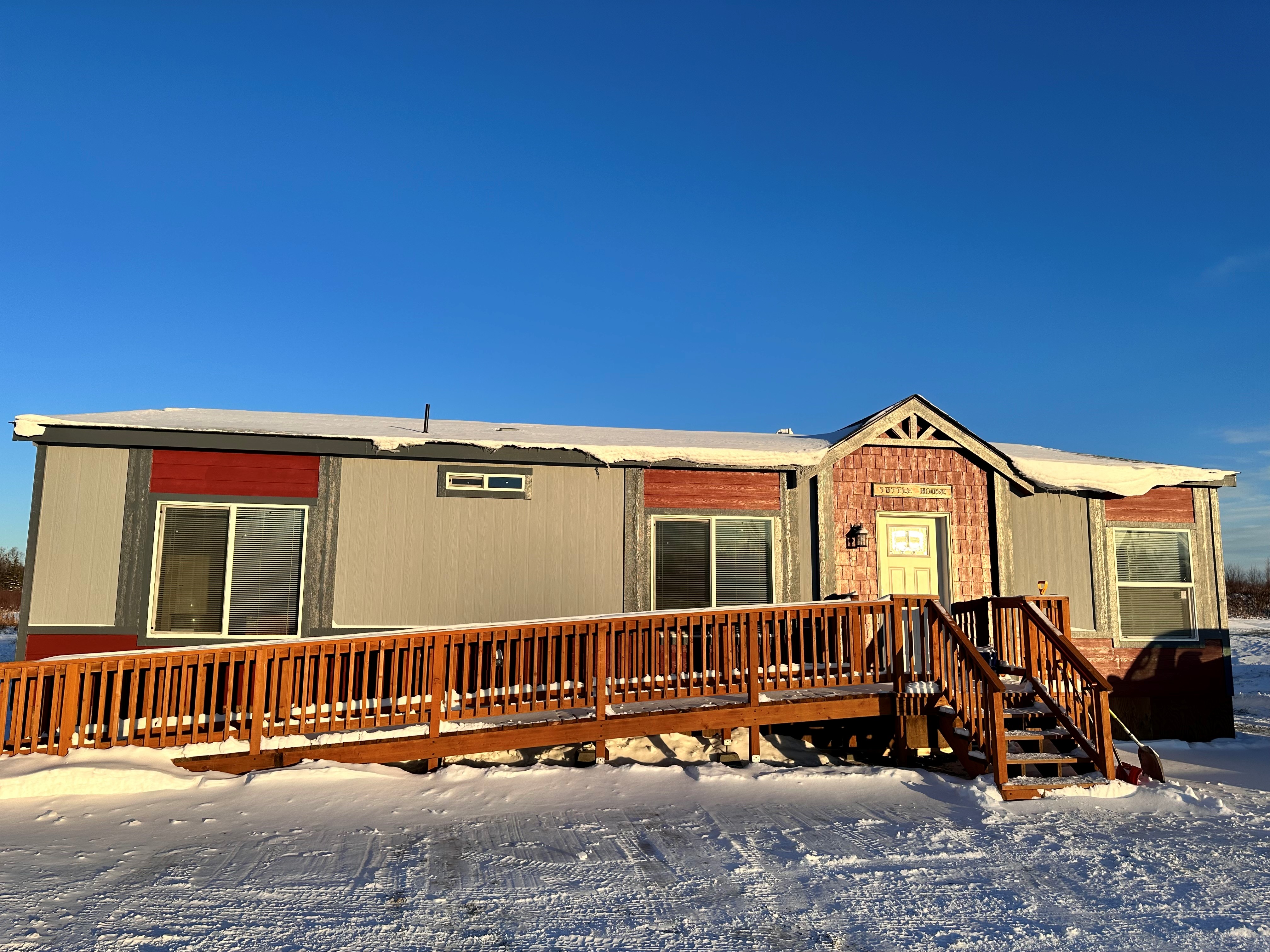
AARS recently recognized and honored Tuttle with the ribbon-cutting of the Tuttle House, a transitional living facility that will accommodate up to five female graduates of AARS facilitating their transition back into the community.
In early 1982, Tuttle met Leonard and Henrietta Nugen, owners of the Studio Club residential treatment center, a small, downtown Anchorage facility with a long waiting list. Tuttle helped the Nugens get health insurance for their substance use disorder clients, and remembers how Leonard was always a bright, colorful personality that “didn’t have too many filters but was one hell of a guy.”
Leonard and Henrietta ended up selling the Studio Club and moving out to Wasilla that same year after brokering a deal on the old Bread of Life Ministry building off the Seward Meridian and Palmer-Wasilla Highway.
“It was an ideal spot for a larger treatment center,” Tuttle remembers. “There was one building for arts and crafts, an engine shop, and residential and office space. Leonard and Henrietta liked how there were different elements and farming areas as a means for clients to express themselves.”
Tuttle said Leonard had talked at length about his interest in expanding on a ‘ranch’ concept that incorporated long-term treatment, 12-step recovery and work therapy options for those struggling to get sober.
“Leonard and Henrietta came up from Oregon where treatment ranches had been getting people sober for years,” Tuttle said. “They both realized short-term, ‘spin dry’ facilities in Alaska weren’t working at keeping people sober, so they started Nugen’s Ranch in Wasilla.”
By 1983, Dave wanted to give back to the community and within a few months was on the Nugen’s Ranch advisory board, helping plan fundraisers and events for the clients. A short time later, the suggestion was made for Tuttle to join the board of directors.
“Little did I know that I would still be doing it 38 years later,” Tuttle laughed.
Tuttle remember that the early days on the board for Nugen’s Ranch were spent looking for funds to keep the lights on.
“We were broke a lot of the time,” he said. “We managed to grow our donor list up to 3,000 people at one point. They were our main drivers. But when word got out that it was looking like we would have to move around 2010, we realized we had to do something else to raise funds, or get off the bus.”
Tuttle said that the Nugen family and staff started looking at properties through Palmer, Wasilla, Willow and finally Point. Mackenzie. The 116-acre property was an ideal spot for a new ranch and a larger facility. Now they needed the money to move.
“I remember we made a lot of phone calls, hosted a Rock-a-Thon, and sold raffle tickets for a Harley to offset the costs of the property,” he said. “One of the highlights of my time on the hoard was helping get funding for the new buildings. When it finally happened, it felt like we were going forward.”
When Leonard Nugen retired a decade ago, a party was hosted for him at Settler’s Bay Lodge. “People from all walks of life from around Alaska showed up and told their stories about how stubborn old Leonard helped them at the end of the day,” Tuttle said. “Leonard, Henrietta and their daughter Karen really changed treatment in the state. It’s that legacy that lives through AARS today.”
This November, after stepping down from AARS’ board earlier in the year, Tuttle will set his sights on a new life of retirement with his family in Arizona. He said his time on the board was a blessing as it ultimately made the difference he was looking for: Seeing people’s lives change for the better. His advice for new board members is to try to commit fully to the mission of giving back to those living with addiction.
“Find a banner that you can wave,” he said. “Something that you’re enthusiastic about and that matters in your life that you really enjoy like I did.”

By Barbara Hunt Palmer Buzz It was 6:43 on Friday morning and the Plant Owner was sound asleep when

By Kyle Wilkinson Frontiersman Memorial Day Weekend was filled with a variety of events in Willow. From live music to

By Kyle Wilkinson For the Frontiersman The Susitna Valley Emergency Preparedness Fair will be held at the Willow Community Center

By Barbara Hunt Palmer Buzz Green-Up happened at exactly 9:34 am on Saturday morning in Palmer. This was