Retiring teacher, coach urges Colony grads to ‘find their 68’
By Jeremiah Bartz Frontiersman.com A football coach using a hockey reference as the centerpiece for his keynote address may


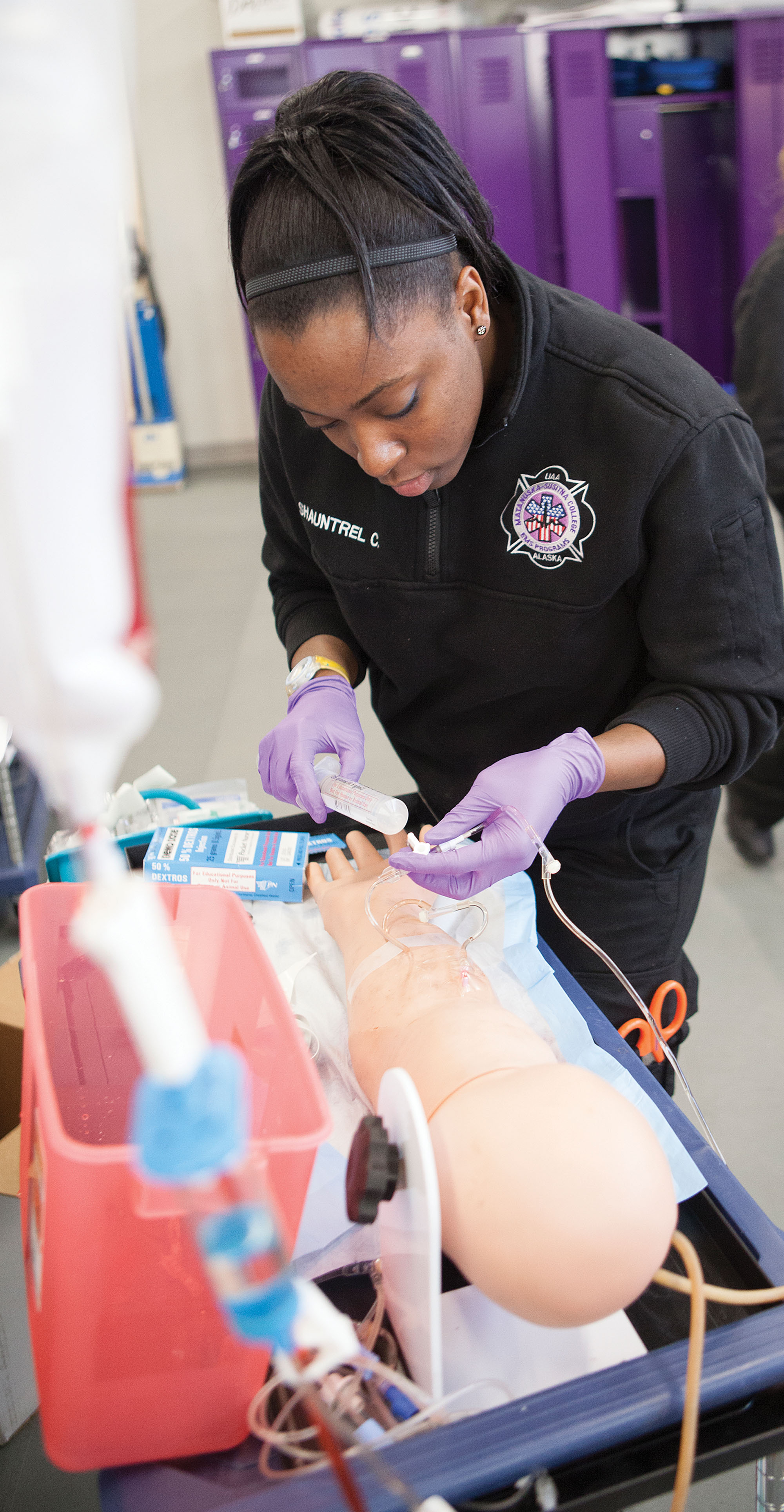
PALMER — Becoming a paramedic has long been Shauntrel Cross’ goal. She enrolled in an emergency medical technician course at nearby King Career Center when she was a junior at East High. Then, as a senior, Cross completed an advanced rescue practices course.
“I’ve just always wanted to do it,” Cross, 29, explained of the career she chose. “I like lights, sirens, helping people, fixing things, working with my hands.”
Cross now studies in the paramedical technology program at UAA’s Mat-Su College campus, pursuing an associate degree that will help her become a paramedic.
“I’m doing this just to go further than being an EMT,” she said. “At a lower level, it was difficult wanting to be able to do more and not being able to because you don’t quite have that skill yet.”
Mat-Su College launched its paramedic program in 2009. The following year, voters approved $3.5 million to expand space in Snodgrass Hall for the college’s nursing and paramedic programs so the Valley nursing cohort could double in size.
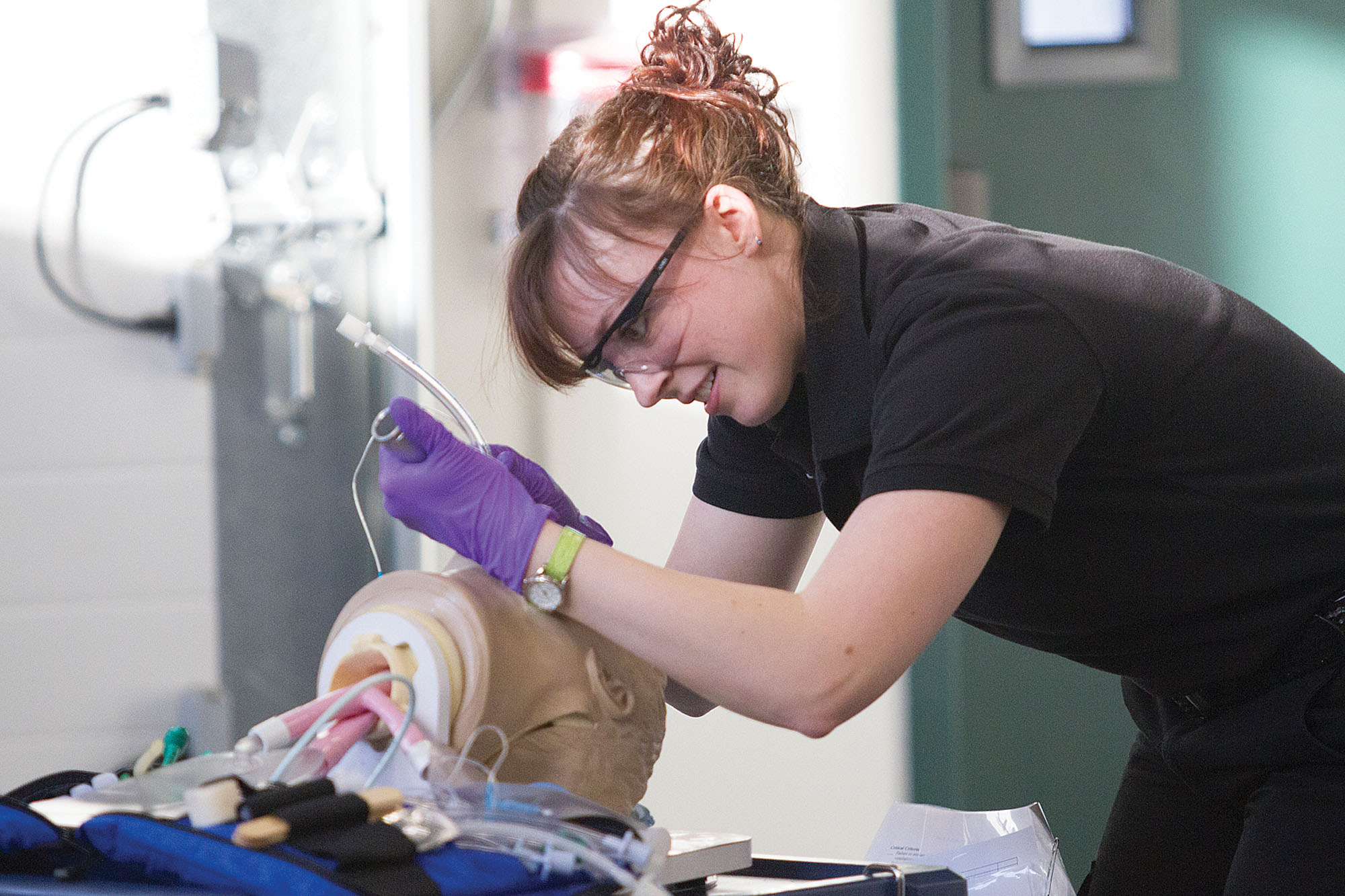
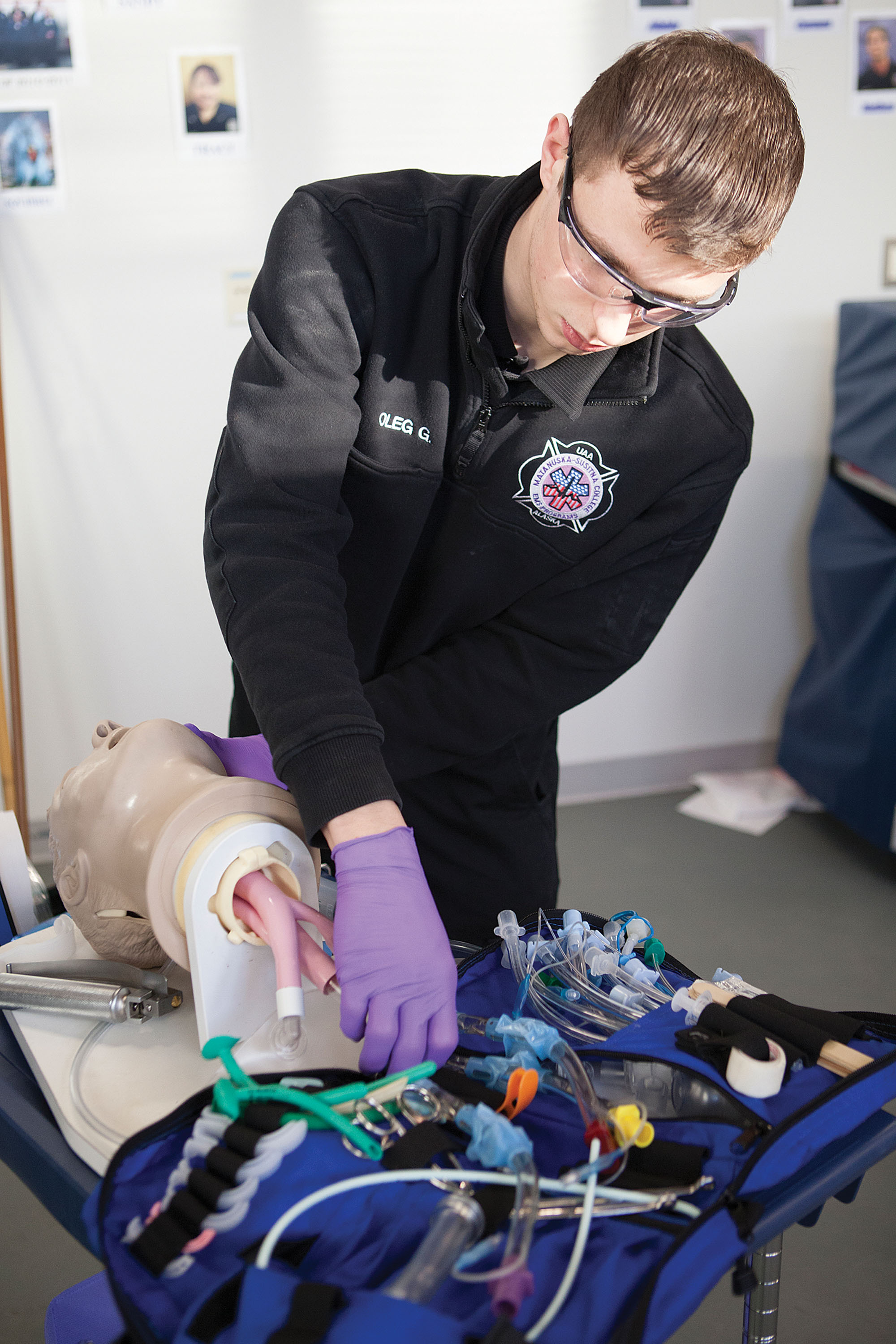
Last year, the paramedic program moved into that 6,400-square-foot space, which includes a bay for a donated ambulance from Mat-Su Borough Emergency Medical Services and full-scale simulators for enacting accident scenarios. Students use the simulators to learn a variety of skills, such as hooking up intravenous lines, fastening electrodes for electrocardiograms or opening a patient’s airway using a laryngoscope and breathing tube.
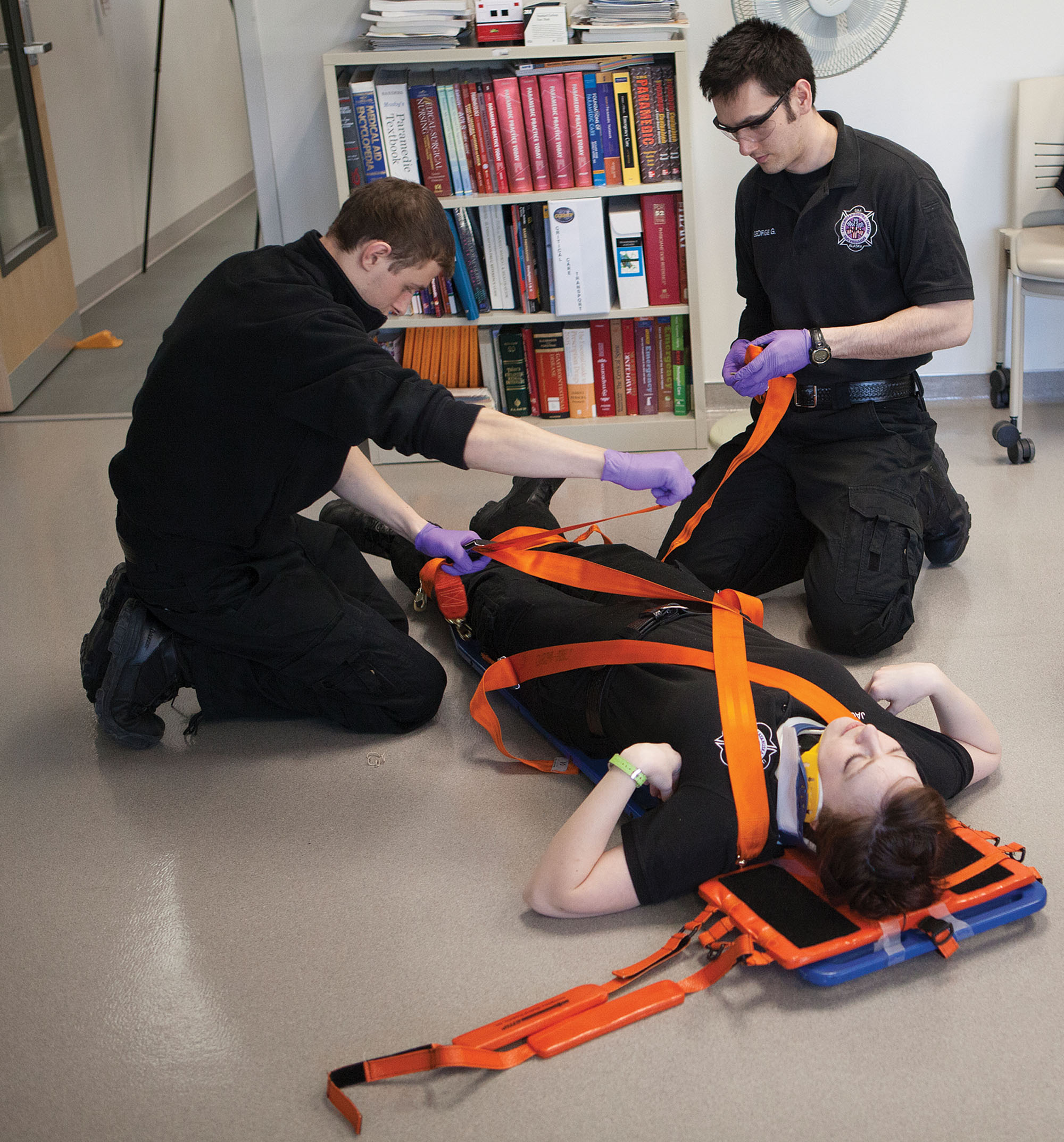
On each other, they practice the proper techniques to immobilize a patient on a backboard and fasten splints and tourniquets. Their instructors prepare scenarios — for example, a car accident, heart attack, childbirth — based on what students have learned, said Kathy Roberts, professor of paramedicine at Mat-Su College.
“These help them put all
the skills together,” she said.
All of the students in the paramedic program at Mat-Su College must have basic EMT certification to be admitted. Prospective students must apply by May, submitting an application, cover letter and letters of recommendation and agreeing to a basic background check, Roberts said.
They interview with a five-person panel and learn in the first week of June whether they have been accepted for the fall semester. Once they’re accepted, Roberts said, they undergo an FBI background check and receive vaccinations and, as part of their lab fee, uniforms.
What’s the difference between a paramedic and EMT?
Emergency medical technician and paramedic are not interchangeable terms. People who have earned the EMT 1 designation have taken classes that teach basic medical skills. They are not allowed to give drugs, insert airways or give injections. With further training, however, an EMT can move up to being allowed to administer an IV, give basic medications, insert an airway and, with the highest EMT ranking, read cardiac rhythms and treat cardiac problems.
Paramedic students receive more in-depth training in the classroom, in videoconferences, during labs and on the job via 160 hours of clinical work each semester in the emergency rooms of local hospitals and places like the Anchorage Fire Department, Mat-Su Central EMS or Chugiak-Eagle River EMS.
“They deliver babies, do intubations, work in [emergency rooms], coronary care and cath[eter] labs,” Roberts said. “They’re all over the hospitals — we just added Mat-Su Regional.”
Their studies culminate in an associate’s degree and include two semesters of studying how the various parts of the body are supposed to work, which instills the knowledge of what can go wrong and why it goes wrong.
They also take English, math and other core classes, and perform a required 480-hour externship that takes them to ambulance duty in places like New York or Texas.
“EMTs are technicians; they’re like sous chefs — they have a recipe to follow and don’t get creative,” Roberts said. “A paramedic is a clinician, like a chef — they have to understand where a recipe came from, what could cause bread not to rise, for example. They’re critical thinkers, creative problem-solvers. They have more knowledge behind what they’re doing, and that’s huge. Paramedics have a much wider scope of skills.”
One of the paramedic students, Justin Ortolano, of Palmer, joined the Butte volunteer fire department seven years ago and became an EMT four years ago.
“I realized EMS accounts for a huge number of our calls,” he said.
He took an entry-level EMT class and worked his way to the top-level EMT rank before coming to Mat-Su College. He says moving up to being a paramedic was the next step and will enhance his job prospects.
“It’s a very respected career,” he said. “I enjoy working on an ambulance and with patients, helping people.”
Ortolano is halfway through his second semester. He’s completed a year of prerequisites: anatomy and physiology, math, English, communications classes. After June 28, he’ll leave to complete his externship and then take the national registry test — the final step in getting his license to be a paramedic.
“Paramedic is the top of the pre-hospital world,” he said. “Directly after paramedic school, I’m going to start the bridge process to RN, registered nurse.”
Shauntel Cross says the most enjoyable things she’s learned have been practicing IV skills — “especially when it’s not on the mannequin, like when we have our live-IV days and we actually stick each other. And using the high-performance CPR mannequin was a lot of fun. It actually will show you if your compression depth is enough. It flashes if your rate’s not fast enough. So it’s not just, ‘Oh, I think I’m doing this right.’ It actually shows you.”
Like Ortolano, Cross wants to use her paramedic skills and license to move deeper into the world of medicine.
“I’m kind of leaning toward industrial medicine, flight medicine,” she said. “I’ve thought that after a couple of years of being a paramedic, I might become a physician assistant.”
Cross says her academic studies—especially pathophysiology and cardiology—provided a foundation that will help wherever she chooses to work.
“There are lots of things to remember, lots of medications,” she said, “but I have a handle on it now.”
Tracy Kalytiak works for the University of Alaska Anchorage in the Office of University Advancement.

By Jeremiah Bartz Frontiersman.com A football coach using a hockey reference as the centerpiece for his keynote address may

By Katie Stavick Frontiersman.com The next generation of leaders took flight this week as the Houston High School Class

By Kyle Wilkinson For the Frontiersman Keynote speaker and Carry the Cure President Bill Pagaran’s words boomed through the

By Jeremiah Bartz Frontiersman.com The community of Palmer is known for a couple of things. At or near the