Retiring teacher, coach urges Colony grads to ‘find their 68’
By Jeremiah Bartz Frontiersman.com A football coach using a hockey reference as the centerpiece for his keynote address may


Alaska is not generally thought of as a manufacturing state. In federal workforce data Alaskans classed as working in manufacturing are usually those in seafood processing plans, printing establishments and, more recently, in brew pubs.
But there are small companies, typically small and headed by tech-savvy entrepreneurs, who have founded firms that make things in the state, often for export.
Some of them are based, or do their work, in Palmer.
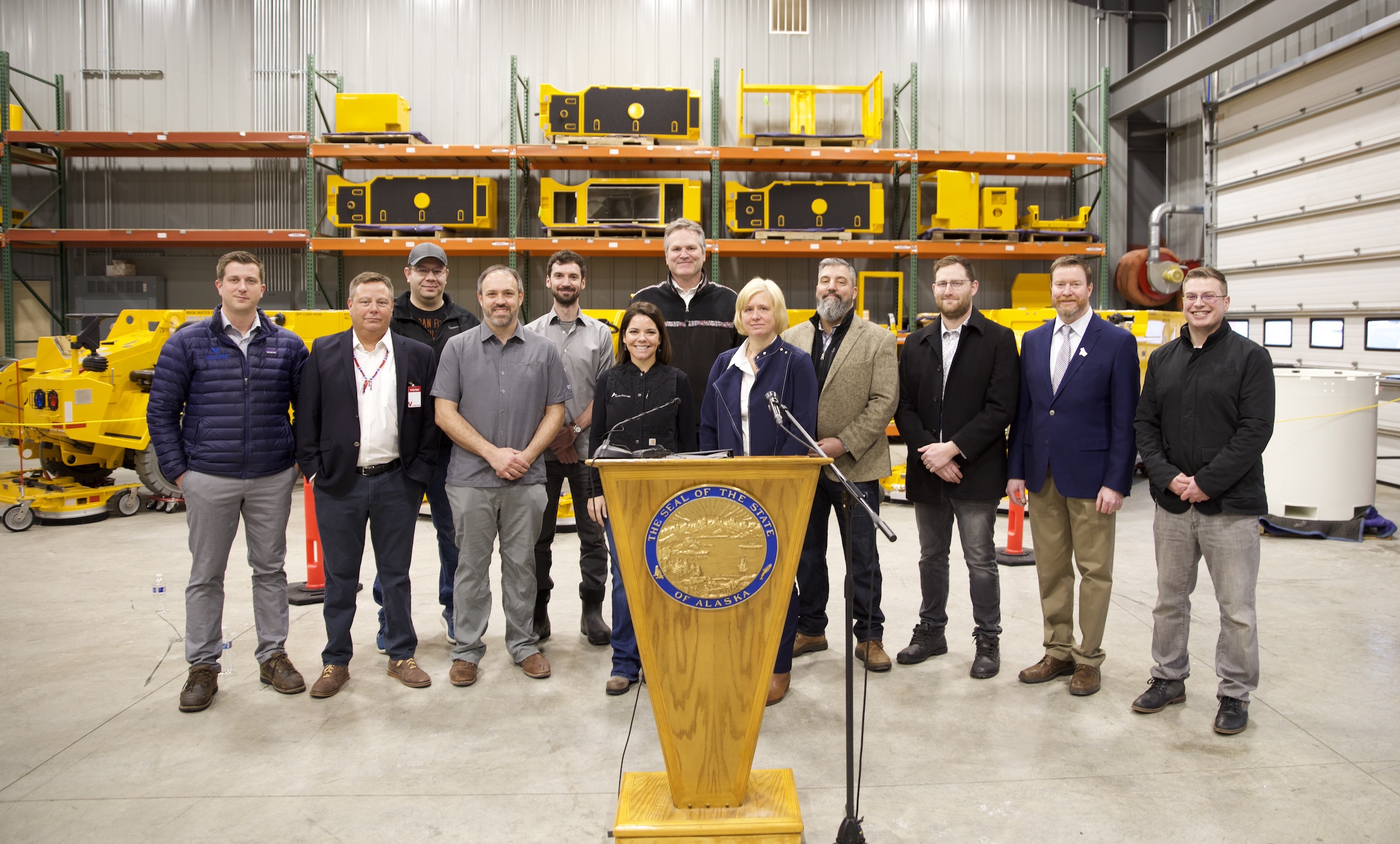
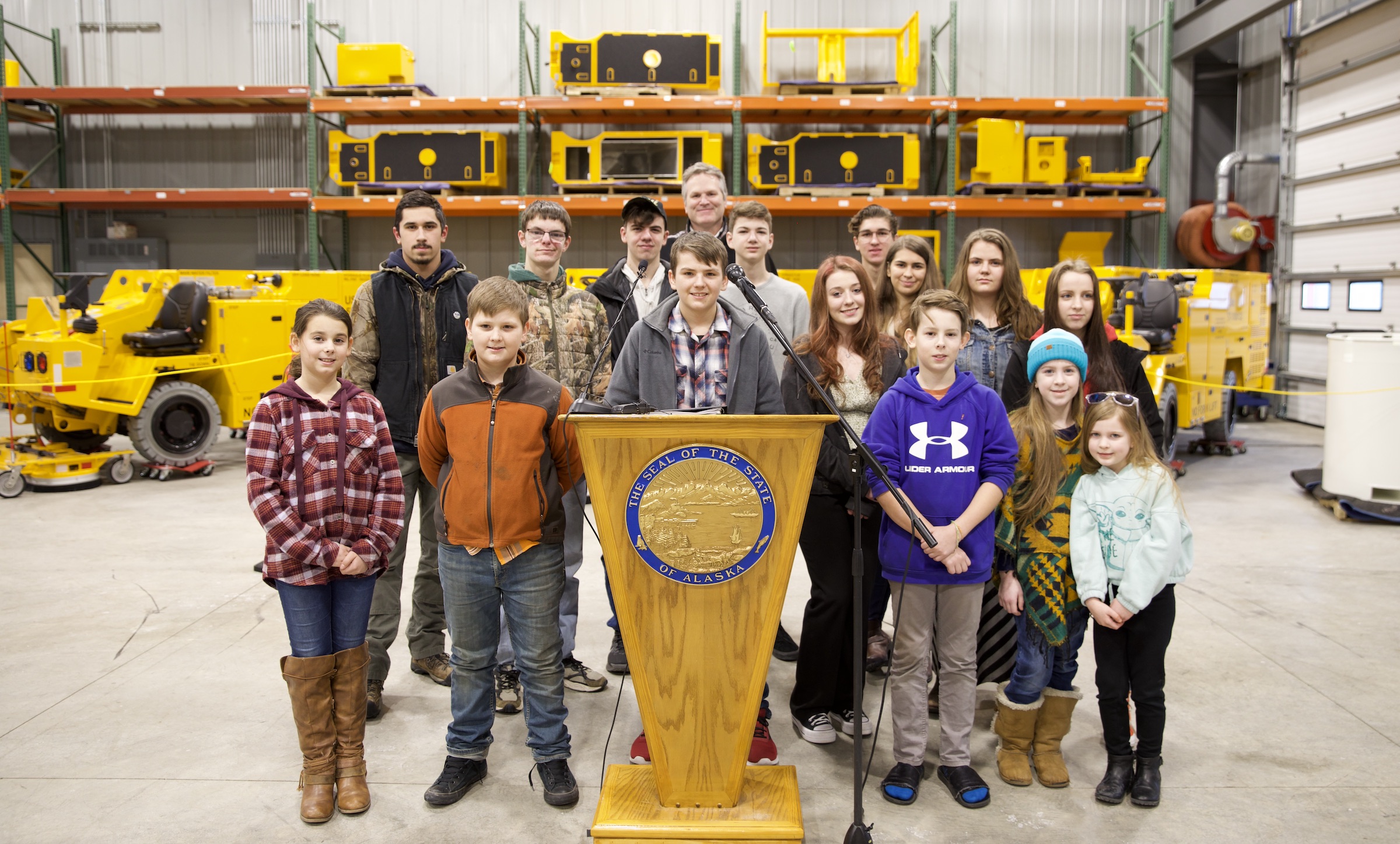
Gov. Mike Dunleavy stopped by one manufacturing site in Palmer on Monday to highlight Alaska companies who are successful in manufacturing.
The governor wanted to celebrate the work of Alaskan entrepreneurs manufacturing and exporting medical, commercial, and industrial products from Alaska, and develop in the state.
“These business owners have overcome the perception that Alaska is too remote for manufacturing. They have used their ingenuity and their ability to capitalize on Alaska’s air cargo access to U.S. and global markets,” said Dunleavy.
The Made In Alaska program, which publicizes locally-made products, has more than 1,000 holders of permits that allow the display of a Made in Alaska logo.
However, the Department of Labor and Workforce Development shows closer to some 600 wage and salary employers in Alaska’s manufacturing industry.
Historically, exporting products from Alaska has faced hurdles associated with shipping costs. Companies highlighted Monday demonstrate the path to breaking these barriers by developing products that are innovative, lightweight and high in value.
Julie Sande, Alaska’s new Commissioner of Commerce and Economic Development, said: “Manufacturing businesses support reliable jobs with solid wages that add economic diversity and stability to our communities and our economy.”
State Sen. Shelley Hughes, who represents the Mat-Su region including Palmer, sees the value of the economic diversity created by Alaska manufacturing.
“I appreciate the governor highlighting manufacturing as an important step toward greater economic diversification in Alaska,”she said.
“The goal of opening up opportunities and expanding our economy to include new — and to strengthen existing — sectors has been a goal of mine during my time in the Legislature. I believe this is the next step in growing our local and state economies through innovative approaches,” Sen. Hughes said.
Visiting Palmer city’s industrial district, Dunleavy highlighted half a dozen businesses in aerospace, aviation, agriculture, outdoor adventure and medical-tech who are working there. All of them build subcomponents of their products or ceramic coat them at TriJet, the sister company to Triverus, which operates the facility at Palmer.
Triverus is known for building new-technology deck cleaners for U.S.Navy aircraft carriers. Triverus also stepped in during the COVID-19 pandemic to manufacture swabs and visors to help supply the state when the supply chain had none to offer.
The company purchased 3D printers and made more than 100,000 swabs for COVID 19 tests when Alaska needed them most.
Recently, a new 3D printer arrived at the plant that is four times faster. The new equipment will be dedicated to printing polymer clips for one of the newest Alaska companies, AlertWet, to begin manufacturing at TriJet.
AlertWet was founded by two engineers working as contractors for Lockheed Martin. Kimberly Gray, an Alaska resident and cofounder, turned a data analytics ability in tracking F-35s to the medical field.
Gray and Edward Ward, the other founder, developed a clip that gathers data from a thin bed pad lined with sensors.
“We saw a way to improve the lives of bedridden people by providing live data to those who take care of them,” said Gray.
“Our enterprise software alerts nurses and health care workers when our disposable intelligent pads are wet,” she said. “Manual checks are often unreliable. Annual treatment of bedsores in the U.S. impose costs estimated at $10 billion. Efficiencies from AlertWet’s technology reduces risk for hospitals and patients.”
AlertWet plans to make the Palmer manufacturing shop into a hub for West Coast manufacturing and distribution of the proprietary clips, said Curtis McQueen, AlertWet’s director of business development.
The company has recently been negotiating with New York and west coast hospitals.
As we focused on our research and development process, thinking through the logistics of material sourcing, it was important for our company to align ourselves with American companies. Not only can we say Made in the USA, but we can also say parts are made in Alaska,” said McQueen, who lives near Wasilla.
Other Alaska commercial and industrial manufacturers celebrated at the event include:
The Launch Company develops standardized hardware connections, ground support equipment, and processes, which help space launch firms get to space faster, cheaper, and more reliably.
The company manufactures fueling fittings and other hardware for rockets, spacecraft, and satellites with some of the components manufactured at TriJet. Customers include well-known names in aerospace, including Virgin Orbit.
The company’s CEO, Ben Kellie, previously worked at SpaceX. The company’s engineering director, Robert Doty, grew up in Alaska and attended the Monday event in Palmer.
Another company featured Monday is Indemnis, which develops parachutes for drones to enable safe operations near settlement. flight over people. Many of the metal components, brackets and mounting hardware for the Indemnis parachutes were manufactured by TriJet.
Yet another company, VH Hydroponics provides customized vertical growing solutions to grow fresh, local produce year-round.
There are two products: a commercial “garden” inside a 40-foot shipping container and a double-door cabinet size garden for smaller producers.
The cabinet garden is exported to universities and soup kitchens in the Lower 48.
Alaskan Cameron Willingham is the founder and CEO. TriJet manufactures shelving components, plumbing and tanks for VH Hydroponics in Palmer.
Two other companies with aviation connections include Airglas, Inc., which started in 1955 and is now the world leader in aircraft landing skis. The company has made 24 ski sets for the Boeing Apache AH-64 helicopters for the U.S. Army and most recently began making pods for external cargo such as survival gear for the military.
Airglas also makes skis and pods for general aviation. Their innovative nose forks for Cessnas are sold worldwide, says General Manager Jim Hammer. Shane Langland, an Alaskan, is the president of Airglas. At TriJet the company does machining work on subcomponents for the hydraulic cylinders of their skis.
Airframes Alaska LLC fabricates bush plane parts and backcountry gear, including Arctic Oven tents. Some components of the tent frames undergo a ceramic coating by TriJet.
AirFrames now employs 100 Alaskans. Company director of manufacturing Eric Jensen attended the Palmer event.

By Jeremiah Bartz Frontiersman.com A football coach using a hockey reference as the centerpiece for his keynote address may

Frontiersman.com With its headquarters in Wasilla, the Frontiersman has been a primary source of news for the Matanuska-Susitna

By Katie Stavick Frontiersman.com The next generation of leaders took flight this week as the Houston High School Class

By Kyle Wilkinson For the Frontiersman Keynote speaker and Carry the Cure President Bill Pagaran’s words boomed through the