Retiring teacher, coach urges Colony grads to ‘find their 68’
By Jeremiah Bartz Frontiersman.com A football coach using a hockey reference as the centerpiece for his keynote address may


Alaska’s 2024 legislative session that ended May 15 was pretty productive, although there were some hiccups. Mat-Su legislators led the way in passage of several key bills.
Freshman Rep. Jesse Sumner, R-Wasilla, was prime sponsor of a bill bringing Pharmacy Benefit Managers, or PBMs, under tighter state regulation.
PBMs handle pharmacy transactions as a kind of broker between manufacturers of drugs and pharmacies along with insurance companies. In recent years PBMs have been accused of excess profit-taking and anti-competitive practices that were squeezing small, independent pharmacies out of business including in Alaska.
Sumner’s House Bill 226 has Alaska joining a number of states attempting to rein in the PBMs. Now that it has passed the House and Senate, Gov. Mike Dunleavy must still approve the bill, however.
Sumner also succeeded with House Bill 203, which streamlines the ability of employers to make electronic payment of wages rather than having to issue paper checks.
Not all of Sumner’s bills passed, however. House Bill 150, establishing a statewide building code, made it to the House Rules Committee but no further. Sumner is a homebuilder and is concerned that some builders do shoddy work and leave homeowners stuck with the tab for repairs.
Rep. George Rauscher, R-Sutton, also played a big part in several key bills that passed. The most important is House Bill 307, changing the state’s regulatory structure for power transmission. This was a bill sponsored by the governor but Rauscher played an important part in its passage as chair of the House Special Committee on Energy.
A major focus for Rauscher, however, was House Bill 223, lowering the state royalty temporarily for new Cook Inlet natural gas. This was intended to encourage development of known gas deposits that are uneconomic with the state’s current royalty.
New incentives like a reduction in royalty are needed because gas fields in the Inlet are being depleted and production is predicted to decline beginning in 2027. Rauscher’s bill passed the House and the Resources Committee in the Senate but stalled in the final day of the session in the Senate Finance Committee.
Without House Bill 223 there are no new incentives for companies to develop known gas resources that are now sub-economic. The result will likely be a decision by utilities in Southcentral and Interior Alaska to begin imports of liquefied natural gas, or LNG.
Consumers in Southcentral Alaska need natural gas because gas now fuels the heating of homes and buildings and most power generation in the region.
There were some big hiccups during the session, such as in education funding, but overall things were orderly and without the kinds of political fireworks that have erupted in recent years.
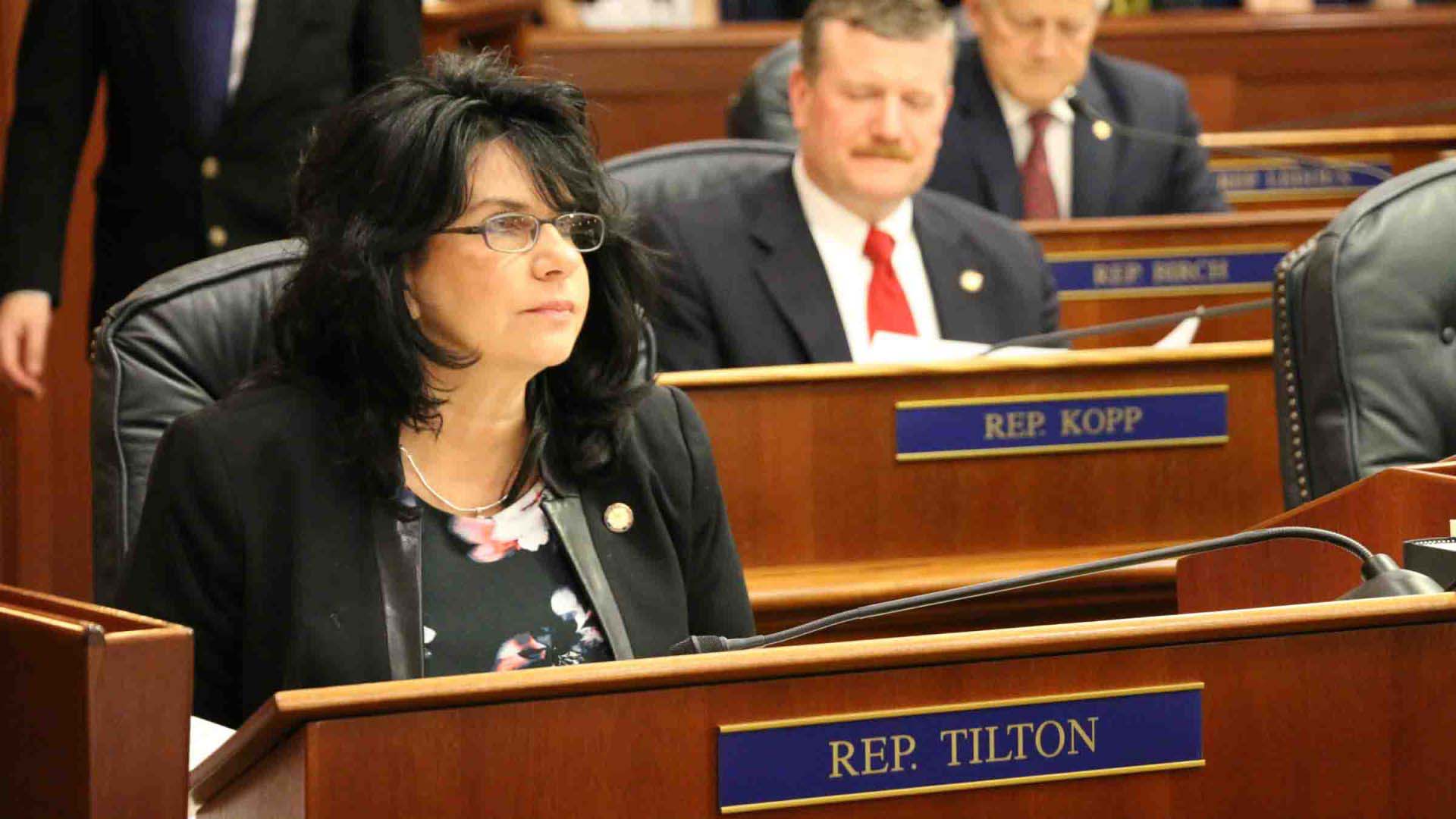
House Speaker Cathy Tilton, R-Wasilla, and Senate President Gary Stevens, R-Kodiak, worked together to keep things running smoothly. Both are experienced legislators.
A state budget was agreed on that funded state agency operations and the University of Alaska at adequate levels, at about $5 billion in state funds. A capital, or construction, budget was approved that totaled about $4 billion including federal pass-through funds.
Agreement was reached on the 2024 Permanent Fund Dividend, or PFD, that was, as expected, a compromise between a large dividend in the budget passed by the state House and a smaller, more affordable PFD in the Senate budget.
The compromise essentially split the difference. There was little pushback from legislators wanting a large dividend, and little reaction from the public.
Also on the PFD, the House turned down a proposed constitutional amendment that would have put a guarantee of the dividend into the state Constitution. This was a politically popular idea but it would have created ongoing problems in funding state operations.
There was little chance that the Senate would agree to it but the fact that the votes for it weren’t there even in the House, which is led by Republicans supportive of large dividends, likely puts this divisive issue to rest at least for the near term.
There was no progress on a long-term fiscal plan for the state but what has emerged is an informal understanding that the finance committees will budget according to funds available and not draw on reserves. That is a “workaround” solution that works for now and that avoids the political problems of adopting a formal plan.
There is actually a spending plan and limit in the state Constitution but it was adopted years ago and is obsolete now.
The one controversy was in education funding when the governor vetoed a bill expanding a formula, the Base Student Allocation, that provides annual funding for school districts. The Legislature attempted a veto override and came within one vote of doing it.
Lawmakers later put a one-time funding increase in the budget but it wasn’t the permanent increase most educators wanted.
The energy bills were major accomplishments. House Bill 307 restructures how the Regulatory Commission of Alaska will regulates long-distance electrical transmission lines. The bill will establish a system of uniform transmission fees for power moved through the Southcentral/Interior “railbelt” electrical grid as well as guaranteed access to the system for independent, mostly private power producers.
This will end the present system of each utility owning sections of the transmission system charging different rates, which is an impediment for independent producers wanting to sell their power.
Another important accomplishment was passage of a bill establishing the legal framework for the state to lease space in depleted underground gas reservoirs and saline acquifers for the permanent storage of carbon dioxide, or CO2.
This would give oil and gas producers a place to inject and safely store CO2 that would be removed from emissions from production facilities.
Capture and safe storage of carbon dioxide will help Alaska producers lower the carbon footprint, making it easier to raise funds from financial groups desiring to invest in projects generating fewer carbon emissions.
On other issues, there were important changes to state-supported vocational education programs including an expansion of the state Technical Vocational Education Program, or TVEP, that supports regional training centers including at the University of Alaska and the state’s Alaska Vocational Technical Center, or AVTEC, in Seward.
Also, an education tax credit program that allows businesses to make tax-deductible contributions to training centers and the university was expanded.


By Jeremiah Bartz Frontiersman.com A football coach using a hockey reference as the centerpiece for his keynote address may

Frontiersman.com With its headquarters in Wasilla, the Frontiersman has been a primary source of news for the Matanuska-Susitna

By Katie Stavick Frontiersman.com The next generation of leaders took flight this week as the Houston High School Class

By Kyle Wilkinson For the Frontiersman Keynote speaker and Carry the Cure President Bill Pagaran’s words boomed through the