Retiring teacher, coach urges Colony grads to ‘find their 68’
By Jeremiah Bartz Frontiersman.com A football coach using a hockey reference as the centerpiece for his keynote address may


**Editor’s note: Mat-Su’s Valley Hospital has been providing health care for 89 years and now operates as the modern Mat-Su Regional Medical Center. The Mat-Su Health Foundation, formerly Valley Hospital Association, has guided its development through the years. The Foundation is approaching a transition with the pending retirement of long-time director Elizabeth Ripley. This is the first of two articles on the Valley hospital’s history and what the future could hold for the Mat-Su Health Foundation.
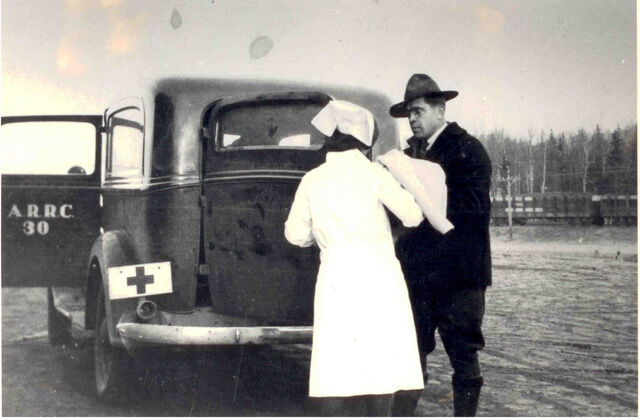
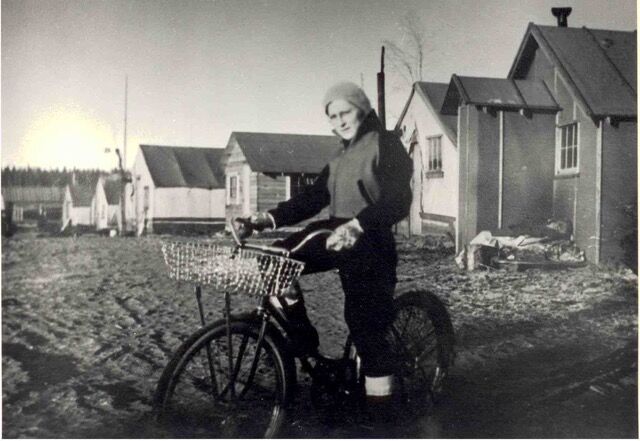
Mat-Su’s hospital has come a long way since a humble beginning in Palmer in 1935, in a tent. Settlers had relocated from Wisconsin and Minnesota to the Matanuska Valley to create Palmer’s agricultural colony.
It was a tough time, in the midst of the depression. There was a measles outbreak, and a child died.
A telegram was sent to First Lady Eleanor Roosevelt, asking for a doctor.
Roosevelt and her husband, President Franklin Roosevelt, responded. An Alaska Railroad physician, Dr. Albrecht, was dispatched from Anchorage. Medical services began, in a tent.
The original settlers knew they couldn’t create a new, vibrant future for their families without health care, recalls Elizabeth Ripley, long-time CEO of the Mat-Su Health Foundation, about those early days. “Even today, economic prosperity and quality of life is dependent upon critical healthcare infrastructure that supports a healthy community.”
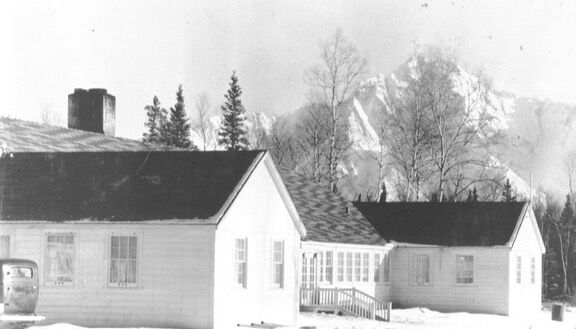
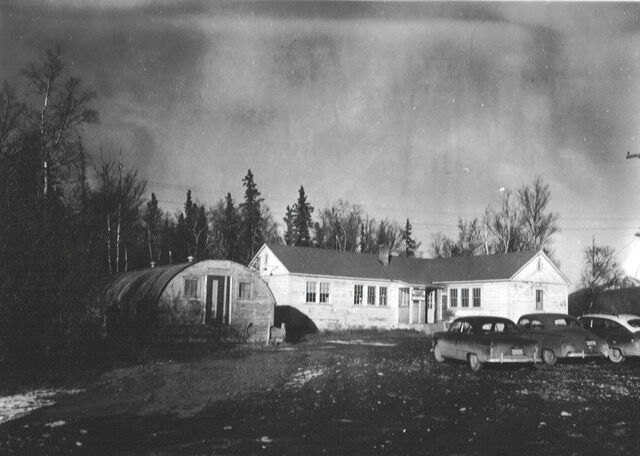
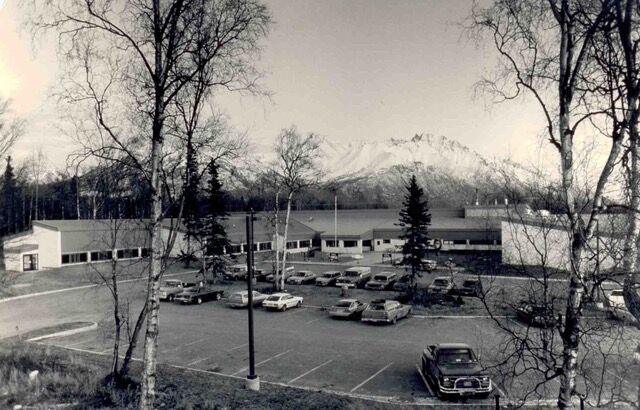
Step-by-step, Valley Hospital was created. Services in the tent were soon offered in a quonset hut and then in a wood frame building in Palmer. Over decades, the hospital gradually expanded to 24 beds in the 1990’s and to 40 beds in 2001.
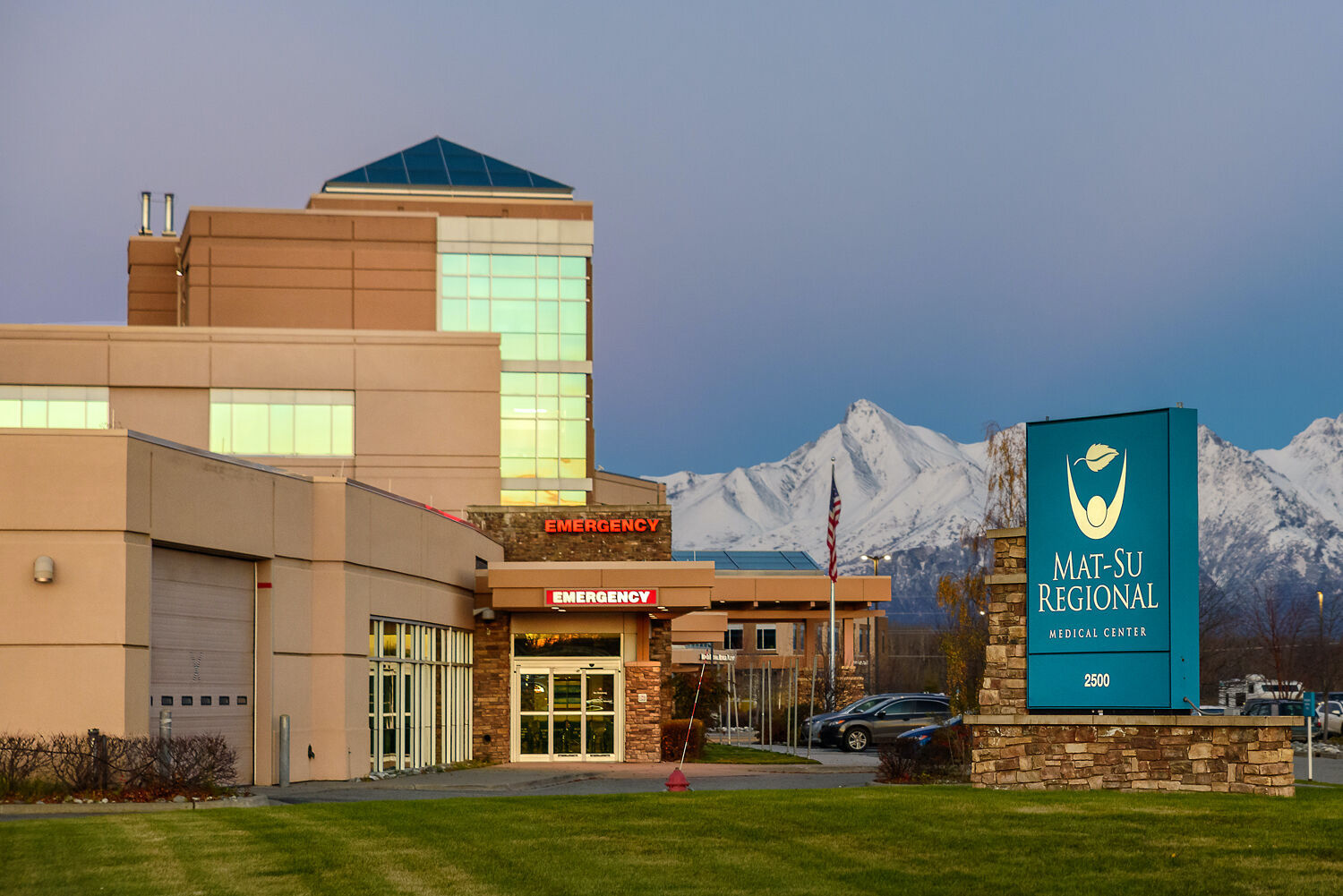
A lot has happened since then to bolster the cornerstone of Mat-Su’s healthcare delivery system. Over time Palmer’s small hospital has become Mat-Su Regional Hospital located now on a 35-acre campus near the Glenn Highway and equidistant between Palmer and Wasilla.
It is one of Alaska’s most modern, and most efficient, centers of care.
It was a long journey, however, and there were bumps along the way including a fire that destroyed the original wood frame hospital in 1946. The community had always been intensely involved with its hospital and its response to the fire showed Palmer at its best.
“When the hospital burned down they rang a big bell. They got everything out before the building burned, every lightbulb, every curtain,” people said, although Ripley was recounting the anecdotes.
Palmer had a volunteer fire department at the time and it was a remarkable demonstration of community spirit. But rebuilding was a formidable challenge, however.
Financial resources were thin, but the Presbyterian Church stepped in to run a national fund-raising campaign, “Pennies for Palmer,” to build a new building and hospital. One of the original Pennies for Palmer certificates is still on display at the Mat-Su Health Foundation office.
As years passed the population of the valley grew slowly. In its early years Valley Hospital, still a community-owned nonprofit, served a small population of farmers, miners and trappers, but Alaska statehood in 1959 brought changes.
Anchorage was growing and the Cold War brought defense-related construction and growth to Elemendorf Air Force Base and the U.S. Army’s Fort Richardson. Anchorage’s population growth soon spilled over to the Valley because people liked the area, land was available, and people could purchase more affordable housing, and the small town character of Palmer was appealing.
Valley Hospital continued to grow, too, with additions to its building and more beds and services.
Things changed fundamentally when the Parks Highway was built. Population growth began shifting from the Palmer area to the corridor along the new Parks highway. Wasilla, which previously consisted of few homes and businesses along the Alaska Railroad, began to gain population, too
Palmer was still the seat of the Matanuska-Susitna Borough, which formed in 1964, but the Mat-Su’s “center of gravity” was soon to move west and north along the Parks.
Valley Hospital was still in Palmer, but the population shift created challenges. With improved highway connections it was soon easier for people in Wasilla and along the Parks to drive into Anchorage for hospital and medical care than to drive over to Palmer via the old road, a segment of the Glenn Highway.
This became a financial problem for Valley Hospital. “Soon we had only a 48% share of the market for medical services,” Ripley recalled. Revenue from services that could have been offered in Palmer was being lost to Anchorage.
The solution, at first, seemed to be moving Valley Hospital to Wasilla, which was becoming the population center. The hospital acquired property in Wasilla near the Parks Highway for an out-patient clinic and in the early 1990s plans were made for a new hospital there, adjacent to where the clinic had been built.
Palmer residents objected to that, however, and the state of Alaska denied Valley Hospital’s application for a Certificate of Need, essentially a state hospital license, for a new hospital in Wasilla because Palmer had not been adequately consulted.
For Palmer, the move to Wasilla seemed like a snub and it would also mean a longer drive to a new hospital.
Building the new Mat-Su Regional Hospital essentially between Palmer and Wasilla on property adjacent to the Parks Highway, was the solution. But it was a challenging process to get the new hospital built.
Finding the location, and assembling the property, was the simpler part, but financing a modern new hospital, which involves tens of millions of dollars, was the real obstacle. This was well beyond the capability of a small community nonprofit, Ripley recalled.
It was a time of soul-searching for people. Mat-Su needed a bigger and more centrally located hospital in its region so it residents wouldn’t have to drive into Anchorage for care.
A modern hospital typically also attracts physicians and other health professionals and leads to practices being opened and more care given locally. But now large amounts of money had to be raised to build it.
The Valley Hospital Association, the nonprofit that owned and operated Valley Hospital, launched Valley Hospital Foundation and turned first to local residents and raised a million dollars, but it was not nearly enough.
There were intense local discussions. Ripley recalls at least 30 community forums held to discuss the challenge before them and potential solutions to raise the funding.
The only realistic option was to find a partner to invest money, she said. That turned out not to be easy.
Ripley recalls that Valley Hospital’s CEO at the time, George Larson, called nine hospital groups in a marketing effort. “Most were not interested,” she said. “Mat-Su seemed a tiny market for health care and too far away,” from where established hospital groups operated, she said.
Providence Hospital, with its major hospital in Anchorage, did show interest, however, and discussions began. It seemed Providence was the only option to get a new hospital, but the downside, Ripley recalled, was that it would essentially be an acquisition of Valley Hospital by Providence with Valley Hospital’s local board losing control.
It’s also likely most medical procedures would have wound up being done at Providence’s hospital in Anchorage, not in Mat-Su. Mat-Su residents wanted as many medical procedures as possible done locally, close to home.
Discussions with Providence never got beyond talking but Larson meanwhile turned up another prospect. It was the Triad Hospital group, a private firm that operated hospitals in the Lower 48
Triad saw the potential for Mat-Su’s growth and came in with an offer of an entirely different arrangement. “They offered us a partnership, with Valley Hospital Association retaining 25% of the ownership,” and with that share of profits being shared, she said. It was an unusual blend of for-profit ownership by Triad with a nonprofit partner, Valley Hospital.
Triad had actually done that with several of its Lower 48 hospitals, although most of them were totally owned. The important thing is that Triad had done this and knew how to make it work, Ripley said. “They came to us with a package,” that had been proven to work, she said.
What really interested the Valley Hospital’s board, however, was the governance structure Triad proposed. Valley Hospital would have only 25% ownership (1% of this was later sold to local physicians) and Triad 75%, but the Board of Directors of the new hospital would be 50-50 and with the chair of the board always from among the Valley Hospital directors.
“The benefit Triad saw was in formally involving the community in the ownership,” Ripley said.
Triad was also very open. “They invited our physicians to call their physicians,” to talk about how Triad operated. It was a confidence-building move.
When the agreement was finally struck Valley Hospital Association reorganized its governance and operating models (the hospital ownership was also transferred to the new joint-venture), which under state law required as 85% vote of approval by the Valley Hospital Association’ members.
After extensive community discussions, the members’ vote came in November, 2002. It was 87% for approval.
Triad followed through on its commitment and build what is now Mat-Su Regional Medical Center with an investment of $110 million.
There was an element of risk for Triad. The partnership was officially created in December, 2003 through a series of extensive legal agreements. “At that point Triad began managing the old Valley Hospital and working on the (state) Certificate of Need (license) for the new hospital. We submitted the CON application in 2003, and it was approved. Then we began construction of the new hospital. The new Mat-Su Regional Medical Center opened in January, 2006,” Ripley said.
There was one other unusual feature in the deal: Valley Hospital Association had an option to expand its ownership from 25% to 35%. Its board decided to exercise the option in 2015.
This also meant that 35% of the hospital’s profits went to the non-profit association, which were to be spent, its board decided, to support a wide variety of health services in the region.
But the association, now doing business as the nonprofit Mat-Su Health Foundation, had to pay for its expanded share of hospital ownership with payments coming from the foundations’ 25% share of profits. Until the debt was paid, money available for local grants was modest, about $7 million a year.
The debt was paid off in 2020, and as Mat-Su Regional grew along with the Mat-Su Borough’s population, the profit share and money available for grants increased.
That is $25 million this year, Ripley said. If things stay on track, and there’s no major disruption in health care, it could continue to grow, she said.
Meanwhile, the hospital grew and services were added. Triad opened the facility with 74 beds on two floors in 2006. The structure for a third floor had been built and it was finished, and the number of beds increased to 125 including a 16-bed behavioral health unit.
The development of Mat-Su Regional Hospital, with the Mat-Su Health Foundation as a partner, is now a story of a promise fulfilled.
“We promised that the community would have voice in our local hospital, that we would share ownership and governance of Mat-Su Regional and that we would invest our tax-exempt share of the profits back into the community to improve the health of its residents,” Ripley said. “Everything we promised has happened and we continue to live into that promise with new services and new investments to improve the health of our citizens..”
There is data backing this up, too: “According to the Robert Wood Johnson Foundation County Health Rankings the Mat-Su population continues to become healthier, which is our goal. That’s our true north,” Ripley said.
Coming next: The future for Mat-Su Health Foundation

By Jeremiah Bartz Frontiersman.com A football coach using a hockey reference as the centerpiece for his keynote address may

Frontiersman.com With its headquarters in Wasilla, the Frontiersman has been a primary source of news for the Matanuska-Susitna

By Katie Stavick Frontiersman.com The next generation of leaders took flight this week as the Houston High School Class

By Kyle Wilkinson For the Frontiersman Keynote speaker and Carry the Cure President Bill Pagaran’s words boomed through the