Retiring teacher, coach urges Colony grads to ‘find their 68’
By Jeremiah Bartz Frontiersman.com A football coach using a hockey reference as the centerpiece for his keynote address may


MAT-SU — Middle school students need not fear falling behind in math class, nor should their future high school teachers worry about having to fill in the gaps.
According to Mat-Su Borough School District Math and Science Coordinator John Gardner, Alaska was one of the first states in the nation to give the Scholastic-published program MATH 180 a test run, with 130 Valley middle school students last year.
On the program website, MATH 180 is described as “a revolutionary math intervention program designed to address the needs of struggling students and their teachers equally, building students’ confidence with mathematics and accelerating their progress to algebra.”
In short, Gardner said, the “intervention” is to get students caught up in math before they get too far behind.
Scholastic Director of Corporate Communications, Tyler Reed, explained the need for such a program.
“Helping students who are behind in math is a particularly difficult challenge, but so important at this stage since Algebra is such an important gateway (and often a stumbling block) on the way to graduation,” Reed wrote in an email.
So far, the program seems have done a good job facing that challenge. Gardner said 250 students are currently enrolled in the program at Colony, Houston, Palmer Junior, Teeland and Wasilla Middle Schools, and also Valley Pathways School, which now has a middle school component.
At the end of last school year, Gardner said, students showed an average year and a half worth of improvement.
“For a program like this to deliver more than a year of growth is pretty amazing,” Gardner said.
MATH 180 is an example of “blended learning,” a phrase used to describe the mix of technology and in-person learning in the classroom. It is similar to the READ 180 program, which has been used in the district for a number of years, Gardner said.
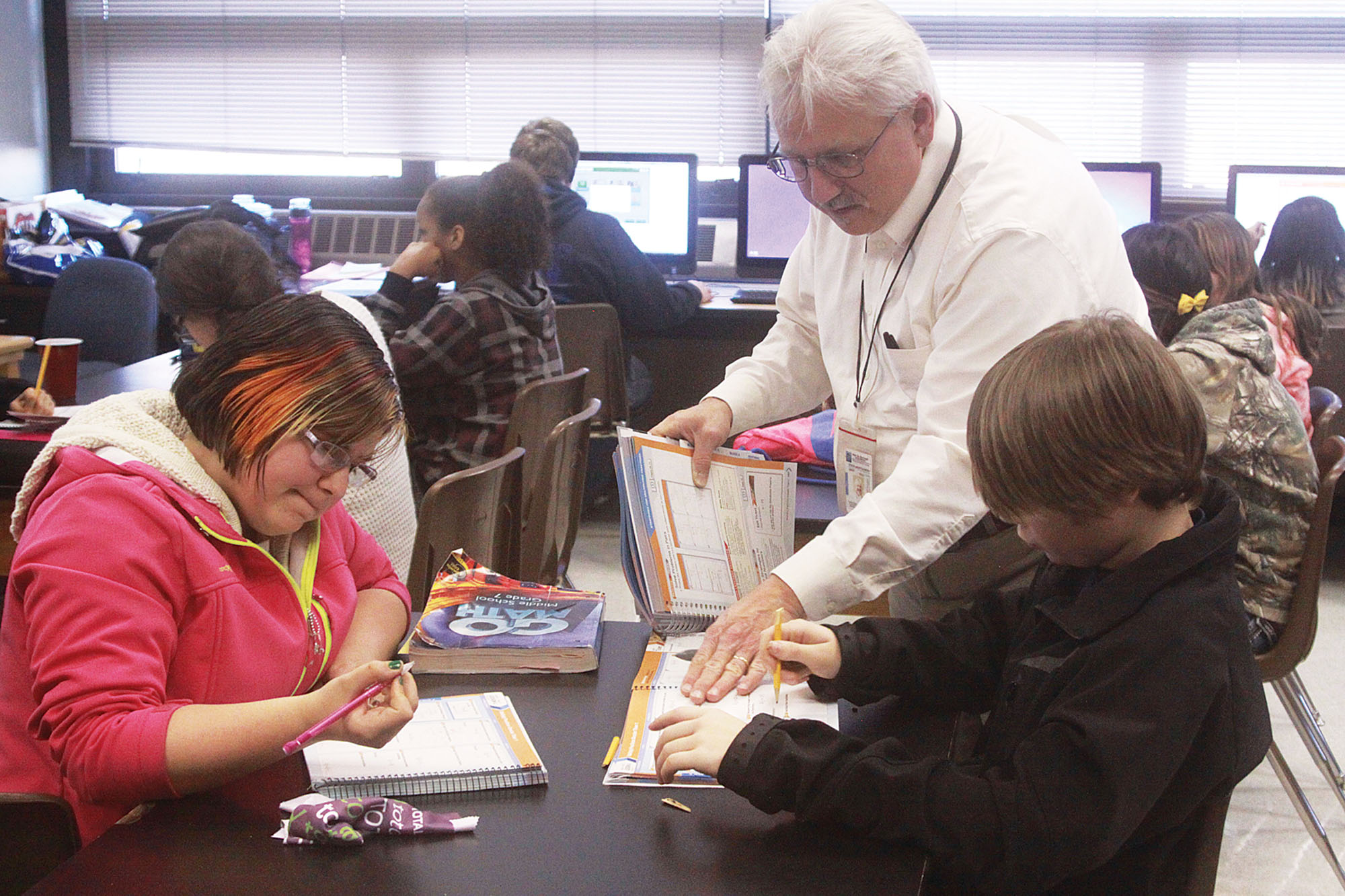
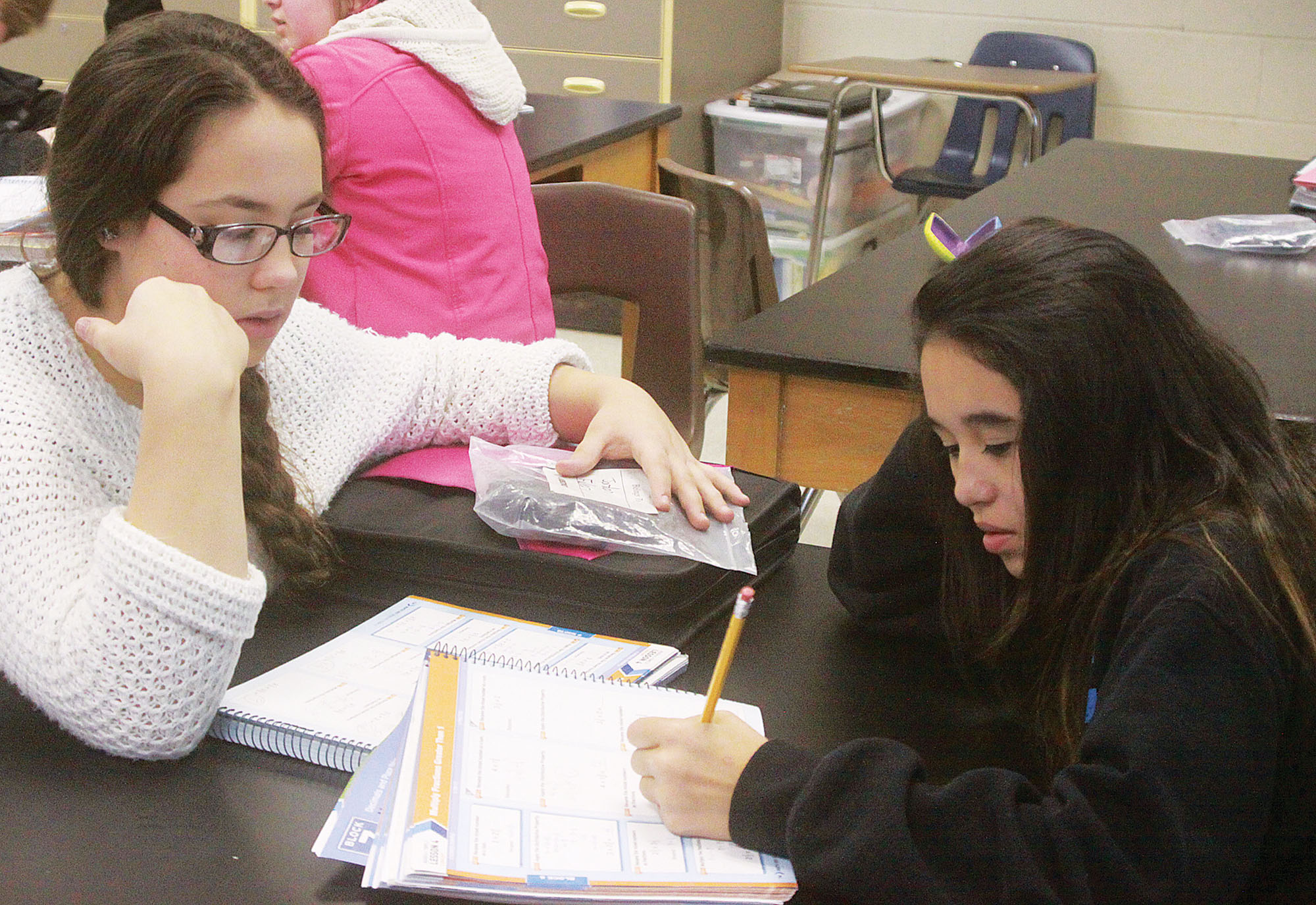
In the math program, students are split into two groups: one receives direct teacher instruction, while the other works at the computer, using interactive software to practice the skills of the current lesson or move onto the next lesson, provided they have demonstrated an appropriate level of proficiency.
The software is designed to measure every student keystroke, Reed said, so it can evaluate student weaknesses and respond. It also delivers data to the teachers to help them tailor their teaching to the individual student.
Palmer Junior Middle School math teacher Steve Montgomery is one teacher in the program. Having taught math for 27 years in West Virginia, Bethel, and for the last 13 years in Palmer, Montgomery has seen the necessity of what he calls “traditional teaching,” and was skeptical of the technology aspect at first.
He quickly became interested in the program, however, after his wife Brenda, who also teaches at Palmer Junior Middle, noticed huge improvements in her students’ skills last year.
“She just raved about it,” he said.
One untold benefit of the software, he said, is that it helps those who also have poor reading skills by speaking the problem aloud. This especially helps with word problems, where a student first has to figure out what mathematical process to use to solve the conundrum.
“That’s the end goal of all math, not that you can just solve a bunch of number problems, but can you apply what you’ve learned,” he said. “With the interactive software, kids can actually do that.”
The learning games associated with the program, where a student must answer so many problems and can also manipulate a character, have also proven successful in nailing down skills first learned in the textbook.
“It takes their mind back through what they just learned, but it’s in a different format, rather than me just teaching it again and again the same way,” Montgomery said.
When his students are on the computer with headphones in, they seem to also have less of a temptation to pretend they’ve understood the lesson just to fit in.
“They’re not looking at their peers saying ‘oh yeah, I’ve got it, let’s go on’ when they really don’t have it,” he said. “That part’s truly individual, just them and the machine interacting with the software.”
The face-to-face interaction is just as important, of course. MATH 180 is particularly good about bringing together various ways to maintain active student engagement, Montgomery said.
To prevent students from taking “mental vacations,” he asks students in the pencil-and-paper group to read the next step in the instructions, answer questions about the instructions and discuss answers to problems. He also asks for a “show of thumbs” to see how well the students have understood, which can be better than asking for a show of hands, he said, since students are sometimes shy and want to be more discreet.
As far as homework goes, students are only required to log on to the server once a day for 15 minutes to work/play in the “Brain Arcade.”
Students take MATH 180 in conjunction with their regular grade-level math class, so they do have other math homework, however.
“This (program) is for the guy or gal that’s, you know, just a little bit behind, and they need an accelerated push to get caught up,” Montgomery said.
The program doesn’t just “intervene” and pump up a students’ math skills, though — it seems to have made math more fun. Gardner said he received loads of feedback last year from students and parents alike, claiming that math had become those students’ favorite subject.
Montgomery mentioned one student in particular in that regard, seventh-grader Kacie Arsenault, who spontaneously came up to him before class last week and said what they were doing in MATH 180 was helping her in her other math class.
There is a bit more frequent testing of the students with the program, Montgomery said, but those tests allow teachers to better or more finely adjust their teaching to student’s current needs.
“The program itself has got a lot of good things packed into it,” he said. “It’s a strong program.”
For more information on MATH 180, visit bit.ly/10RXUGU.
Contact Caitlin Skvorc at 352-2266 or caitlin.skvorc@frontiersman.com.1

By Jeremiah Bartz Frontiersman.com A football coach using a hockey reference as the centerpiece for his keynote address may

By Katie Stavick Frontiersman.com The next generation of leaders took flight this week as the Houston High School Class

By Kyle Wilkinson For the Frontiersman Keynote speaker and Carry the Cure President Bill Pagaran’s words boomed through the

By Jeremiah Bartz Frontiersman.com The community of Palmer is known for a couple of things. At or near the