Retiring teacher, coach urges Colony grads to ‘find their 68’
By Jeremiah Bartz Frontiersman.com A football coach using a hockey reference as the centerpiece for his keynote address may


WASILLA — The city planning commission will receive updates on two long-running city planning issues this week.
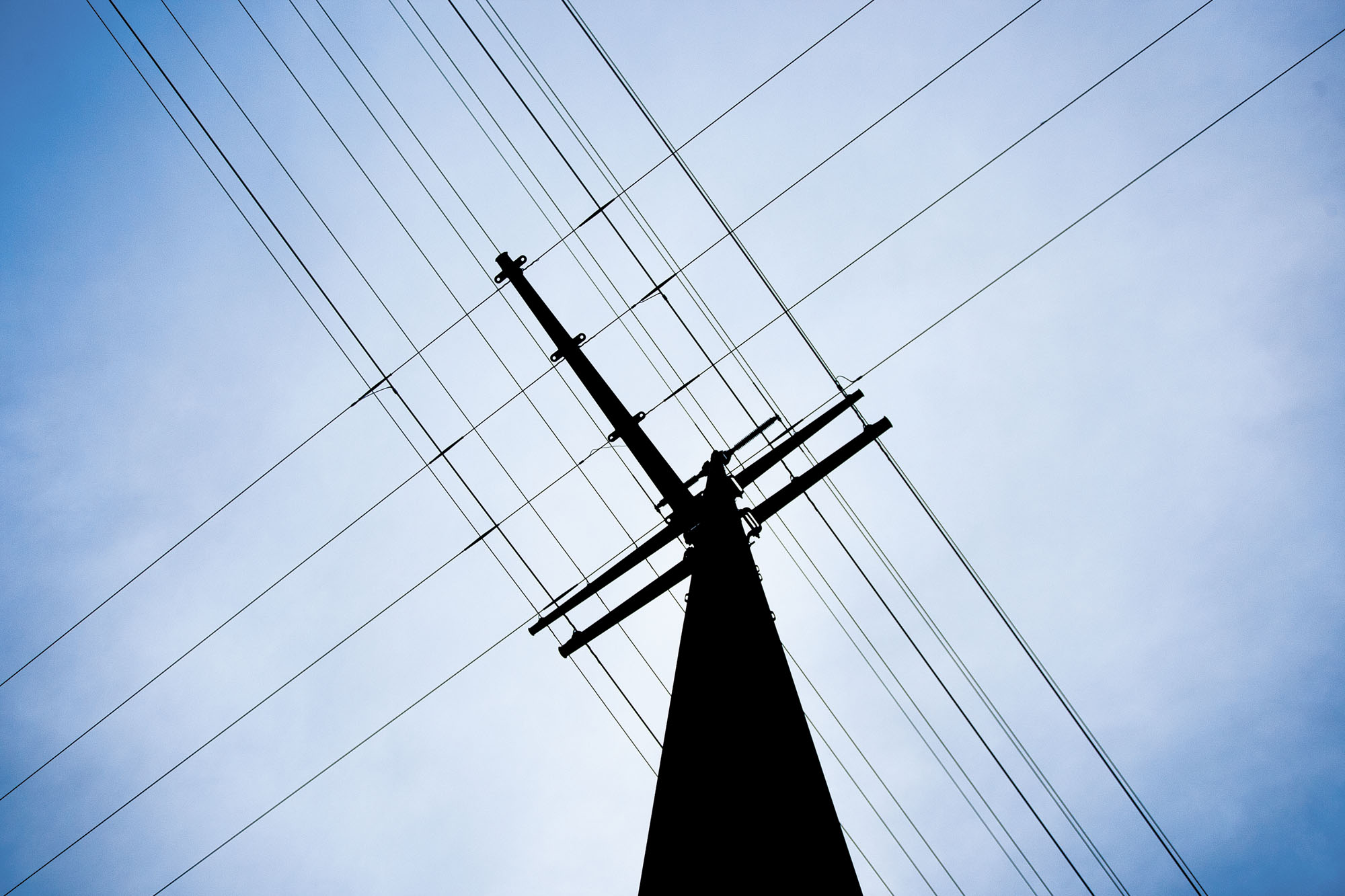
Officials from Matanuska Electrical Association will be on hand to discuss an update regarding routing transmission lines around the city, and department of transportation officials will hear an update on two projects slated for Knik-Goose Bay Road.
The power lines saga in the city of Wasilla stems from the city’s rejection of the cheapest route for the lines, along the Parks Highway corridor through the city center. The denied the utility’s request, saying instead that the high-voltage transmission lines should be buried, or traverse via another route to the Herning Street Substation.
Economic development and population growth mean the substation now operates at 62 percent of its full capacity, MEA spokeswoman Julie Estey said.
“The bottom line is that the city of Wasilla has grown beyond the capacity of the substation,” she said.
The reason substation capacity is set at 50 percent is so that if another service area has to transfer power into the grid, Herning and other substations can share the load, Estey said.
“It potentially puts the whole grid at risk,” she said.
In addition, practical electric line design dictates that power lines loop around the service area, so in the event if one set of wires fails, electricity can flow through the other end.
In the wake of that denial, Matanuska Electric Association CEO Joe Griffith laid out a series of alternatives and related costs.
For example, burying the transmission lines was estimated in 2013 to cost $40 million, Griffith wrote, a cost that was only likely to increase. Griffin said it also is not common practice to bury high-voltage transmission lines due to safety concerns about large areas of electrified ground that would result if the system developed a fault.
MEA has since settled on alternate routes, Estey said. It’s these alternate routes that will be discussed at the planning commission meeting March 5.
“Burying the lines is not an option for us from a financial perspective, and also from a technical maintenance and operations standpoint,” she said.
KGB upgrades
KGB work is designed to improve safety and accessibility to the difficult roadway, according to Department of Transportation and Public Facilities spokeswoman Shannon McCarthy. The road, one of several traffic safety corridors throughout the Valley, was the scene Feb. 5 of the first traffic fatality of 2015 when expecting father Dae Poteet died following a collision with a utility pole.
While more work is planned to upgrade the road, some improvements have been made, McCarthy said. The department has added shoulders, paved paths, reflectors, and driveways for snow removal. While the improvements have made a difference, construction is still required, McCarthy said. Transportation statistics show that while major injury crashes remain relatively steady (nine were recorded in 2012, according to Transportation figures) only a single fatal accident was recorded between 2010 and Poteet’s death, despite the fact that average daily traffic south of Fern Street continues to tick upward toward 20,000 cars per day, driven by residential and commercial development south of the Parks Highway, McCarthy said.
The planning commission meeting is set for 6 p.m., Thursday at the Wasilla City Council Chambers, 290 E. Herning Ave., Wasilla.
Contact Brian O’Connor at 352-2269, brian.oconnor@frontiersman.com, or on Twitter @reporterbriano.

By Jeremiah Bartz Frontiersman.com A football coach using a hockey reference as the centerpiece for his keynote address may

Frontiersman.com With its headquarters in Wasilla, the Frontiersman has been a primary source of news for the Matanuska-Susitna

By Katie Stavick Frontiersman.com The next generation of leaders took flight this week as the Houston High School Class

By Kyle Wilkinson For the Frontiersman Keynote speaker and Carry the Cure President Bill Pagaran’s words boomed through the