Retiring teacher, coach urges Colony grads to ‘find their 68’
By Jeremiah Bartz Frontiersman.com A football coach using a hockey reference as the centerpiece for his keynote address may


PALMER — The halls of a middle school can form a lonely road for the visually impaired if there are no signs to lead the way.
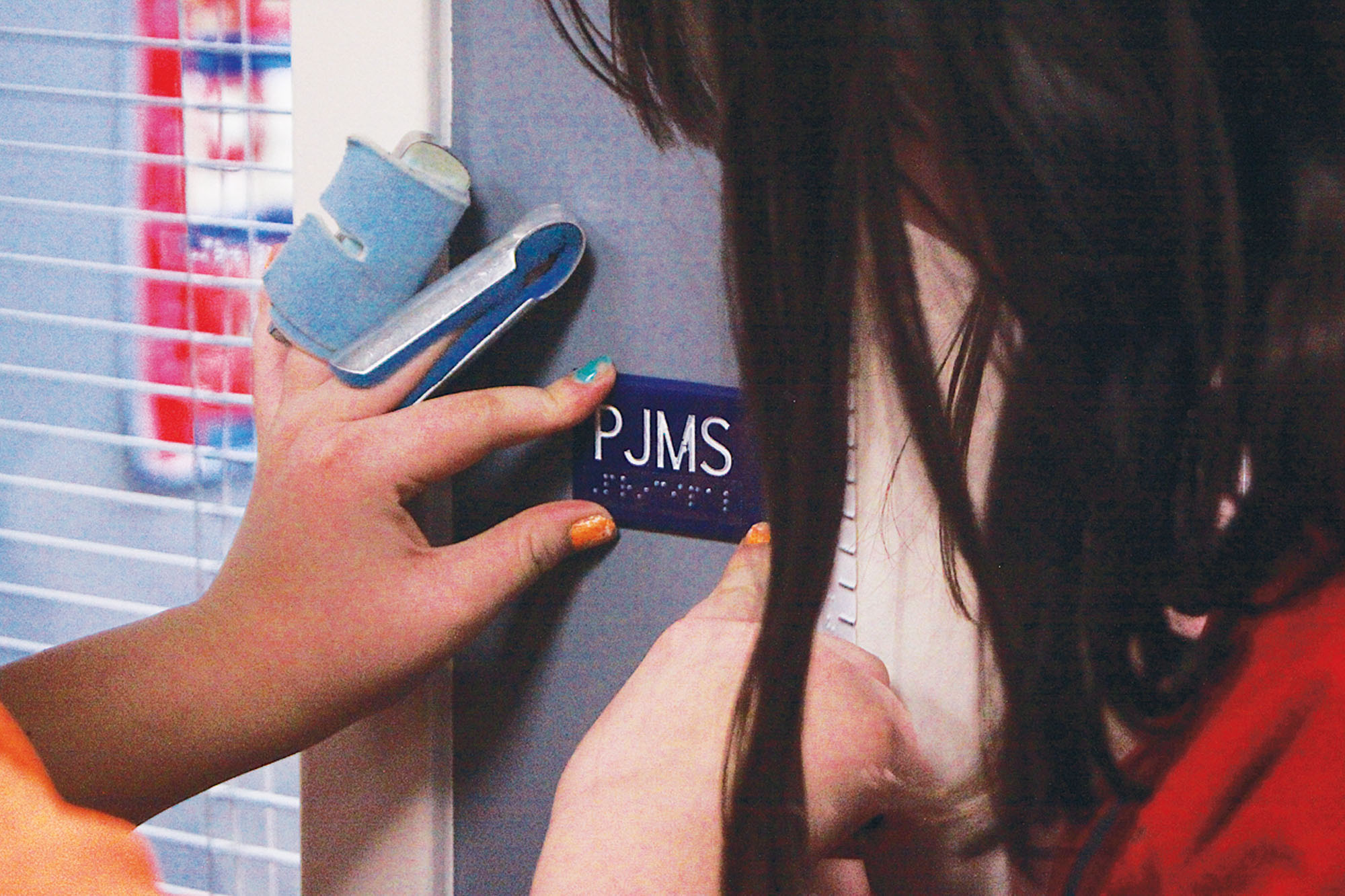
At Palmer Junior Middle School, this was a problem, until recently. When the school was first built, designers didn’t take into account the fact that young students affected by blindness or other major vision issues might attend or visit their public school. No Braille signs had been installed to mark room numbers or offices like the nurse’s or counselor’s for those who couldn’t see or read what every other student could.
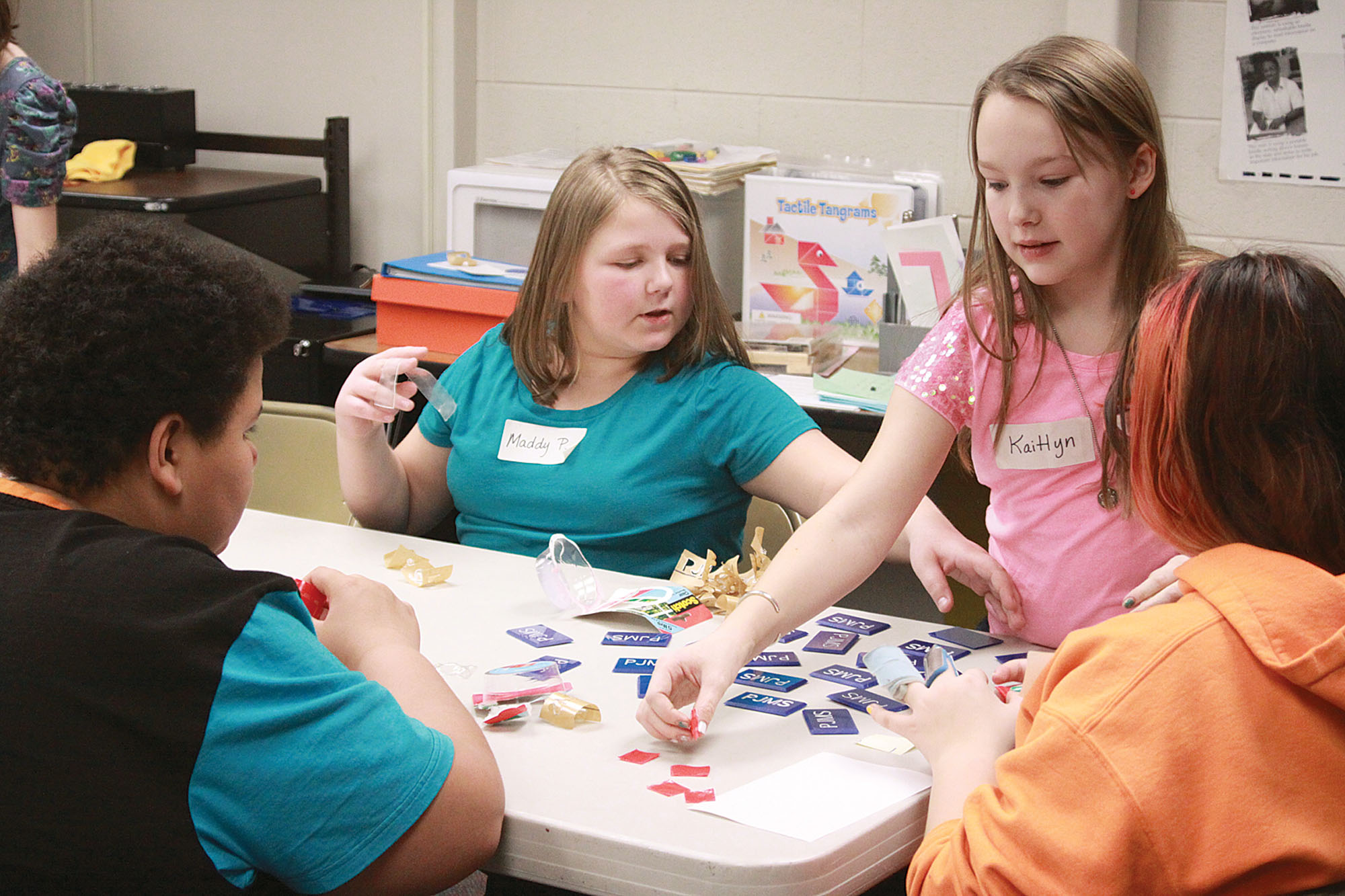
But this year, the stars aligned. On Nov. 20, Houston Middle School students tagged every classroom in their school with a small, red, plastic plaques with ‘HMS’ engraved on it and the room number applied to it in Braille. And just last Thursday, Palmer Junior Middle students did the same at their school, using their corresponding acronym and colors.
“I’m super excited, we’re gonna have Braille in our school!” said Kaitlyn Powell, a typically able PJMS student, as she stuck adhesive to the back of one of her plaques.
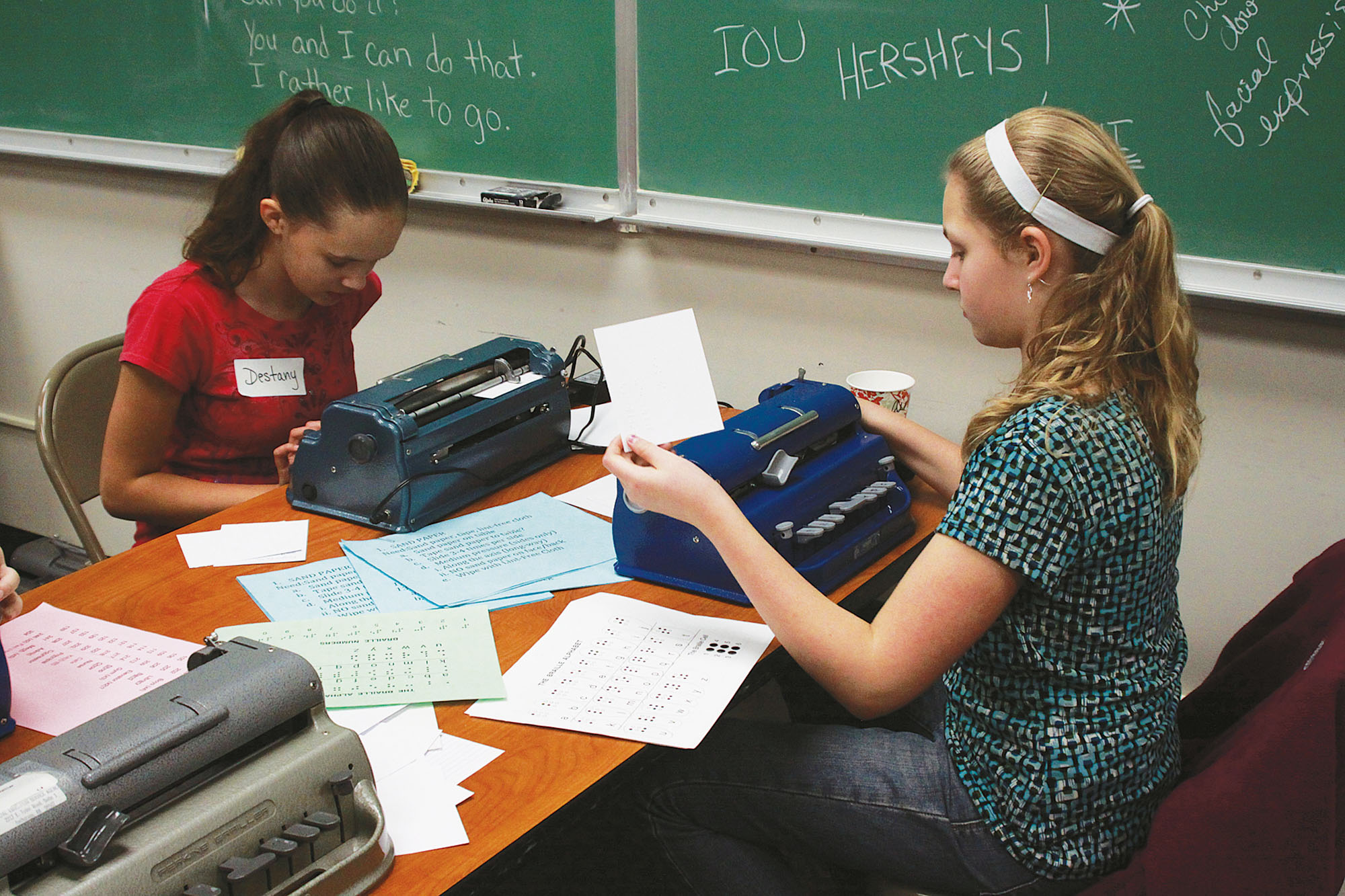
The labeling was a joint effort between students in Houston Middle’s Braille and Cane Club, Palmer Junior Middle’s Braille Club and educators throughout the Mat-Su Borough School District.
Jacinda Danner, Sarah Moreau, Suzette Black and Lindsay Lee all work in the school district’s Program for Students with Visual Impairments. Moreau is new to Alaska this year — fresh from Texas — and currently working on her master’s degree. In her leadership class, each graduate student was required to create an event with purpose related to their field and see it out. After hearing from Danner and Black about the success of their Braille Club since its inception last year at Palmer, Moreau started the club at Houston Middle. From there, an idea was born: The Braille Trail.
“It’s been such a good improvement at our school,” Moreau said, of the club at Houston.
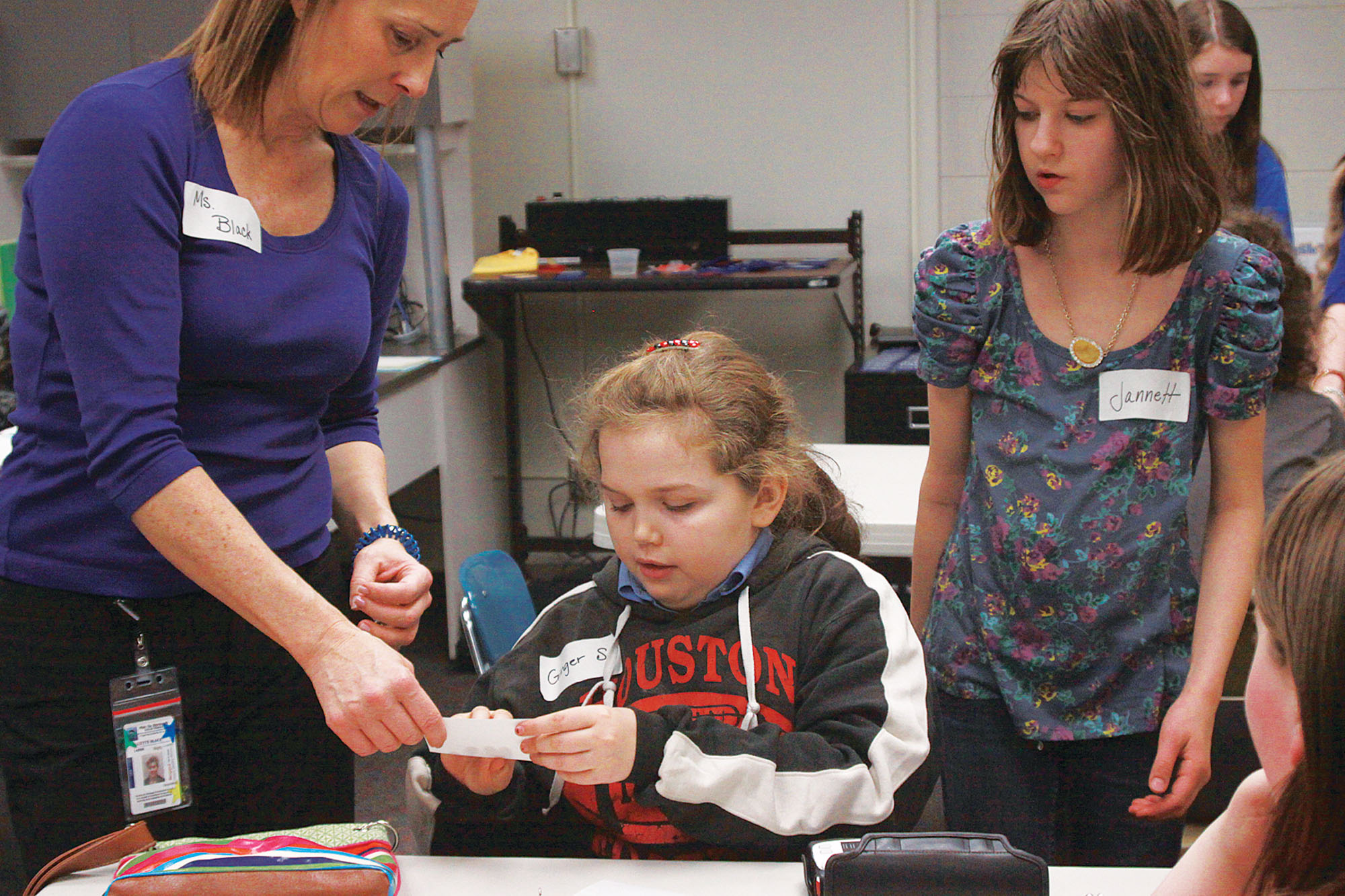
Although Moreau’s main office is at Wasilla Middle, she spends much of her time at Houston with an eighth-grade student named Ginger Shepardson.
According to her friend, Rizen Brooks, who has known Shepardson since they were in first grade, she can only see about 10 percent of what a person with 20/20 vision can see — essentially “your body figure,” Brooks said.
But that doesn’t inhibit her as much as one might think. Moreau said Shepardson is in choir, which sometimes involves both singing and dancing.
“To see her with her peers in that setting is very interesting,” Moreau said. Shepardson learns the music by ear and “we help her with the dance movements.”
Taylor Thompson, a seventh-grader at Palmer Junior Middle, also participates in extracurricular activities that some people might have thought impossible for her.
Thompson said she has been blind as long as she can remember, but at a young age became interested in sports and Battle of the Books. Now, she runs sprint races in track, longer distances in cross-country, and acts as the speaker for her BoB team.
How?
Danner, who has worked with Thompson since she was a student at Butte Elementary, explained.
“Especially when she was younger, I would run with her until she could get a (high school) volunteer,” Danner said. “I would stay with them until they both felt comfortable.”
Danner or the high school student would be tethered to Thompson with a length of rubber — then purple, her favorite color — long and flexible enough for the two to run with their own gait without bumping elbows, and “soft enough that if anybody fell, it wouldn’t hurt anyone.”
Now, Thompson is paired with students in the middle school leadership class, who better match her pace and gait.
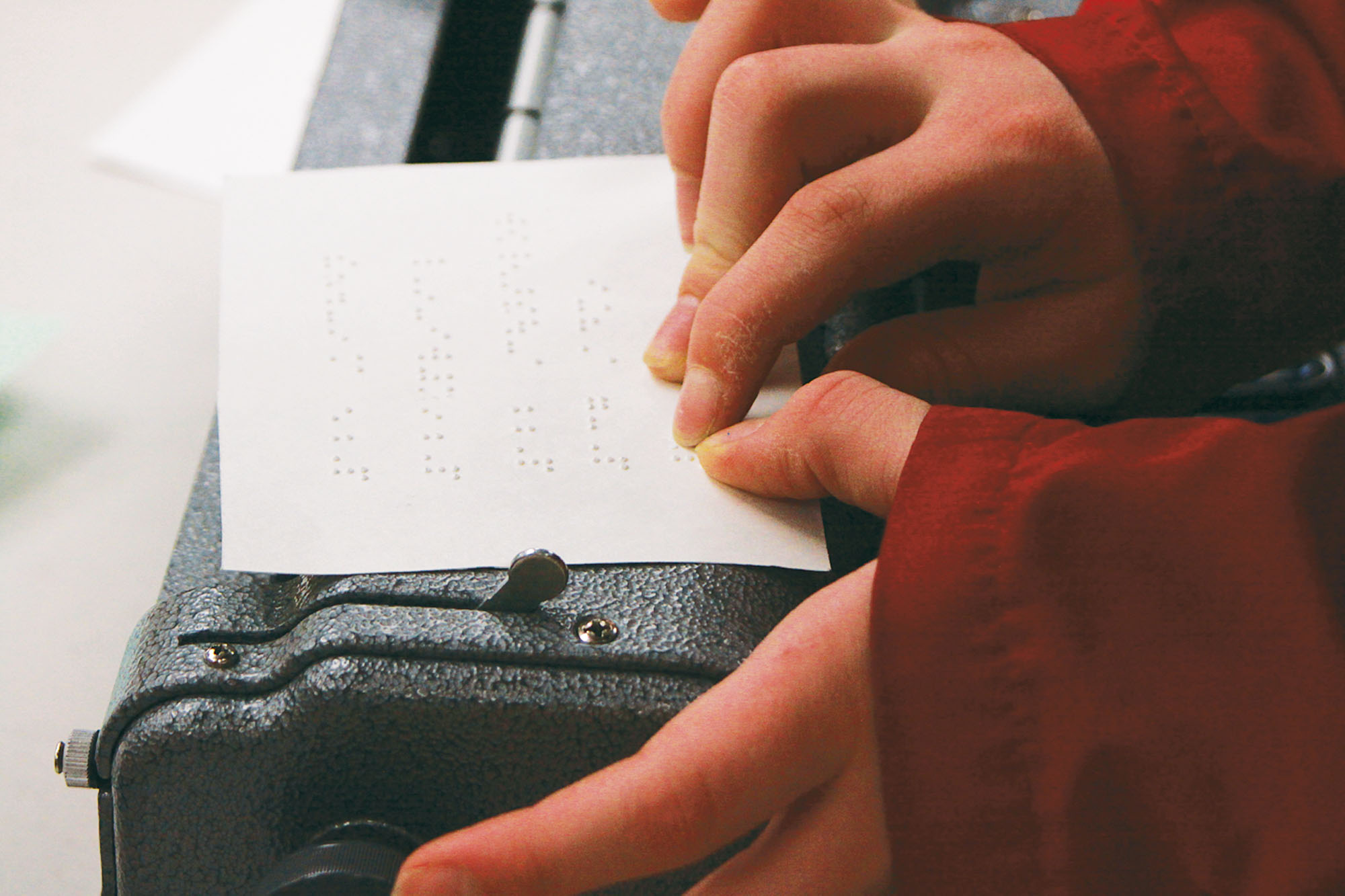
As for Battle of the Books, Thompson has a special computer into which she can insert a thumb drive with transcriptions of the books on file. The computer then raises the corresponding dots where the keyboard would be on a regular laptop so she can read the books in Braille.
“Braille is a code,” Danner said, unlike American Sign Language, which actually has different syntax than spoken English.
“The words might be shorter (in Braille), but everything is represented by something,” even punctuation, she said.
There are six “spaces” to the code in which dots can be placed to represent a specific letter, then combined to represent a specific word.
Since the spaces change, the code can be typed in such an arrangement that produces Braille art.
Brooks and Olivia Johnston, a friend of Thompson’s, said that’s one of their favorite parts about Braille club.
“Taylor wanted me to see how Braille works and last year I had an interest,” Johnston said, as to why she joined the club. “I think people who don’t know about (Braille) should learn about it.”
But perhaps there are other reasons for students to take a closer look at Braille Clubs and their classmates who are members.
“I really like it because it helps bring awareness to the community, and especially to Taylor’s peers in the school,” said Thompson’s mother, Brandee Vandermark, of the PJMS club. “I think it gives them some perspective as far as what a visual impairment is all about and how things need to be adapted.”
Having these clubs also works as a method of anti-bullying, Moreau said. Although Thompson seems to have many friends in Braille Club, for example, she said she still has “lots of moments” in which she feels put-down by other students, especially “if they don’t know my name.”
“It’s sorta hard to adjust to but I’m more used to it now,” Thompson said.
Now she’s looking into cross-country skiing more competitively, too, and was recently inspired by a Paralympics seminar in Anchorage. She said maybe people will see blindness in a new light.
“These kind of disabilities don’t inhibit especially Taylor or Ginger, for example — these kids — from doing anything anyone else can do,” Vandermark said.
For more information on Braille and blindness, visit the American Foundation for the Blind at afb.org.
Contact Caitlin Skvorc at 352-2266 or caitlin.skvorc@frontiersman.com.

By Jeremiah Bartz Frontiersman.com A football coach using a hockey reference as the centerpiece for his keynote address may

By Katie Stavick Frontiersman.com The next generation of leaders took flight this week as the Houston High School Class

By Kyle Wilkinson For the Frontiersman Keynote speaker and Carry the Cure President Bill Pagaran’s words boomed through the

By Jeremiah Bartz Frontiersman.com The community of Palmer is known for a couple of things. At or near the