Retiring teacher, coach urges Colony grads to ‘find their 68’
By Jeremiah Bartz Frontiersman.com A football coach using a hockey reference as the centerpiece for his keynote address may


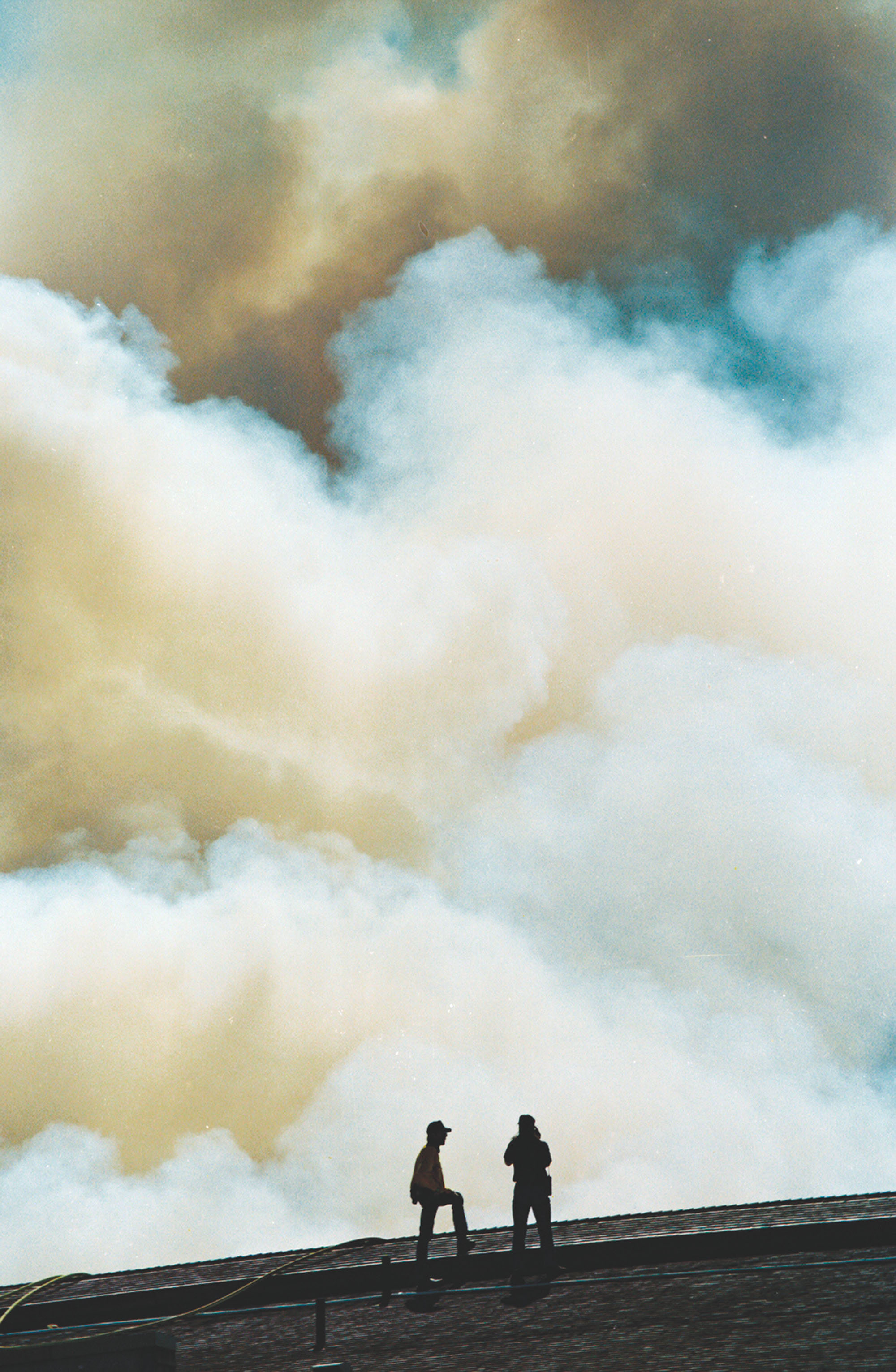
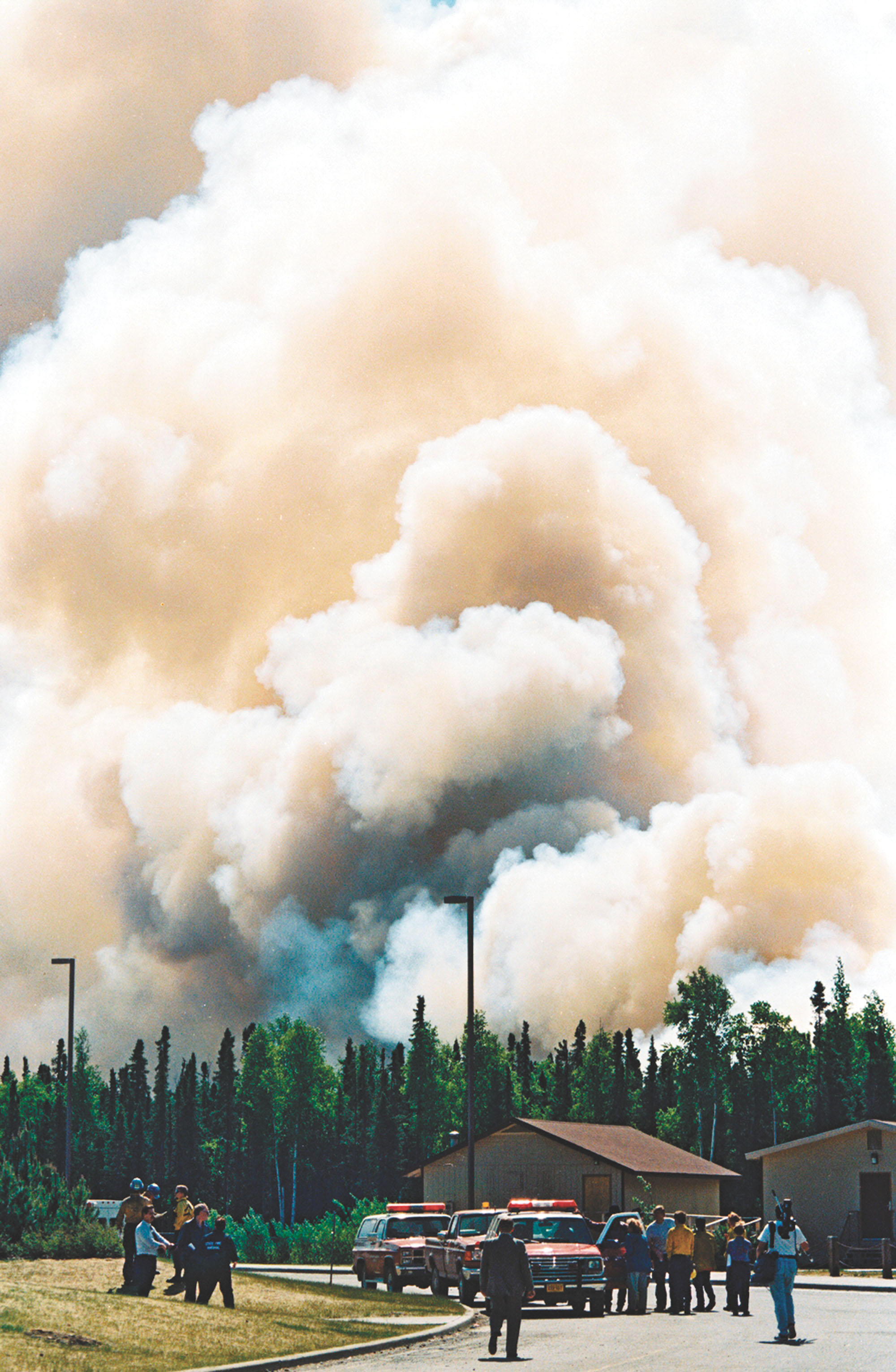
MAT-SU — This week marks the 18th anniversary of the Miller’s Reach Fire, which burned 37,000 acres around Big Lake and Houston and caused more than $10 million in damages to borough homes and property before it was finally contained on June 15.
While some might consider the events of June 1996 ancient history, for many Valley residents the memories of the events surrounding the fire are fresh, and sometimes still very painful.
Bill Gamble, the current chief of the West Lakes Fire Department, was chief of the Big Lake station that day many years ago when the fire broke out.
“From that first evening when the fire blew up, I knew it was going to be bad,” Gamble said. He said at the time local volunteer firefighters were given a “code green,” told they were not needed at the time.
“But it was pretty obvious in just a little while that that was not going to be the case,” he said.
Gamble said he was standing on a small hill near Victor Road in Big Lake, which overlooks the area where the fire began, when he knew they were in serious trouble.
“I turned to the people standing next to me and said, ‘This is not good,’” he said. “I got on the radio and said we needed to activate the emergency broadcast system, to alert people that they needed to be ready to evacuate. The fire was just moving at such as an incredible rate of speed.”
Although it was years ago, Gamble said he remembers it like it was yesterday. “I can’t forget it. It’s just … no pun intended, but it’s just burned into my brain.”
Gamble said the next few days of fighting the blaze were a blur.
“It was what could only be described as controlled chaos,” he said.
He estimated that during the first 72 hours of the fire, he got maybe two hours of sleep, at most.
We asked readers on Facebook what they remembered about the fire, and received many responses. For some, what they remember most was a chance to pitch in and help simply because that’s what needed doing. For others it was all about fear and uncertainty. Running through almost all of the responses is the memory of discovering an inner strength many people didn’t know they had.
Jennora Ward said she remembers too much. “I was young, and it terrified me ... Loading what we could in every vehicle we could. Watching people pulling two trailers at a time and their boat down the Parks heading out of Wasilla.” She added, “Thank goodness I no longer have panic attacks every time I smell smoke.”
Jessica Couturiaux remembers the fire as “The day my life changed forever. My parents, brother and I lost everything. Our family dynamic never really recovered from the fire. Tragic really.”
Even in the midst of a blazing wildfire, life went on as scheduled for some. Deb Bydlon was pregnant when the fire occurred. “I had baby number four while evacuated,” she said. “Instead of taking our newborn home, we got a room at Lake Lucille.”
Stephanie Grimes said she was evacuated from the fire and married all in the same week. “(I) will never forget that,” she said.
There was humor, too. June Ober remembers her husband driving down the road “with his recliner, the TV and washer and dryer on the trailer ... the things men grab when they are evacuated.”
Mary Dempsey Littlefair said, “Hard to believe it’s been that long. Remember (Iditarod musher Martin) Buser stealing, um...er... borrowing the fire truck? That was a laugh in an otherwise horribly bleak situation.”
While the passage of time has blurred evidence of the damage caused by the fire, those who lived through it know where to find the scars.
“That’s one of the reasons I love the spring here so much,” Gamble said. “When things start to green up, it hides those burned and down spruce trees that were killed in the fire. In the winter, you can still see them, though — those remnants — those scars it left behind.”
What bothers Gamble the most is the thought that over time, people might forget the events of 1996 and become complacent.
“If we don’t have another big fire, people tend to forget,” he said. “The Kenai fire has been a big reminder — in a little over a week it took out almost 200,000 acres.”
However the threat in the Mat-Su Valley is still very real, he said. There is plenty of fuel to feed another wildland fire like Miller’s Reach.
“We have the longest stands of black spruce I think in the country,” Gamble said. “All throughout Meadow Lakes, Houston, you’ve got these huge runs of it. And black spruce has the same volatility, the same potential to burn, as the chaparral you see in places like California. It’s just incredible how fast they’ll burn.”
Just last weekend, Gamble said high winds caused four or five downed power lines in the Big lake area, some of which sparked small grass fires. “Fortunately we’d had a little bit of rain, enough to slow it down a little.”
He added, “We could have another Big Lake fire all over again so easy.”

By Jeremiah Bartz Frontiersman.com A football coach using a hockey reference as the centerpiece for his keynote address may

Frontiersman.com With its headquarters in Wasilla, the Frontiersman has been a primary source of news for the Matanuska-Susitna

By Katie Stavick Frontiersman.com The next generation of leaders took flight this week as the Houston High School Class

By Kyle Wilkinson For the Frontiersman Keynote speaker and Carry the Cure President Bill Pagaran’s words boomed through the