Retiring teacher, coach urges Colony grads to ‘find their 68’
By Jeremiah Bartz Frontiersman.com A football coach using a hockey reference as the centerpiece for his keynote address may


PALMER — “Racism is not dead.”
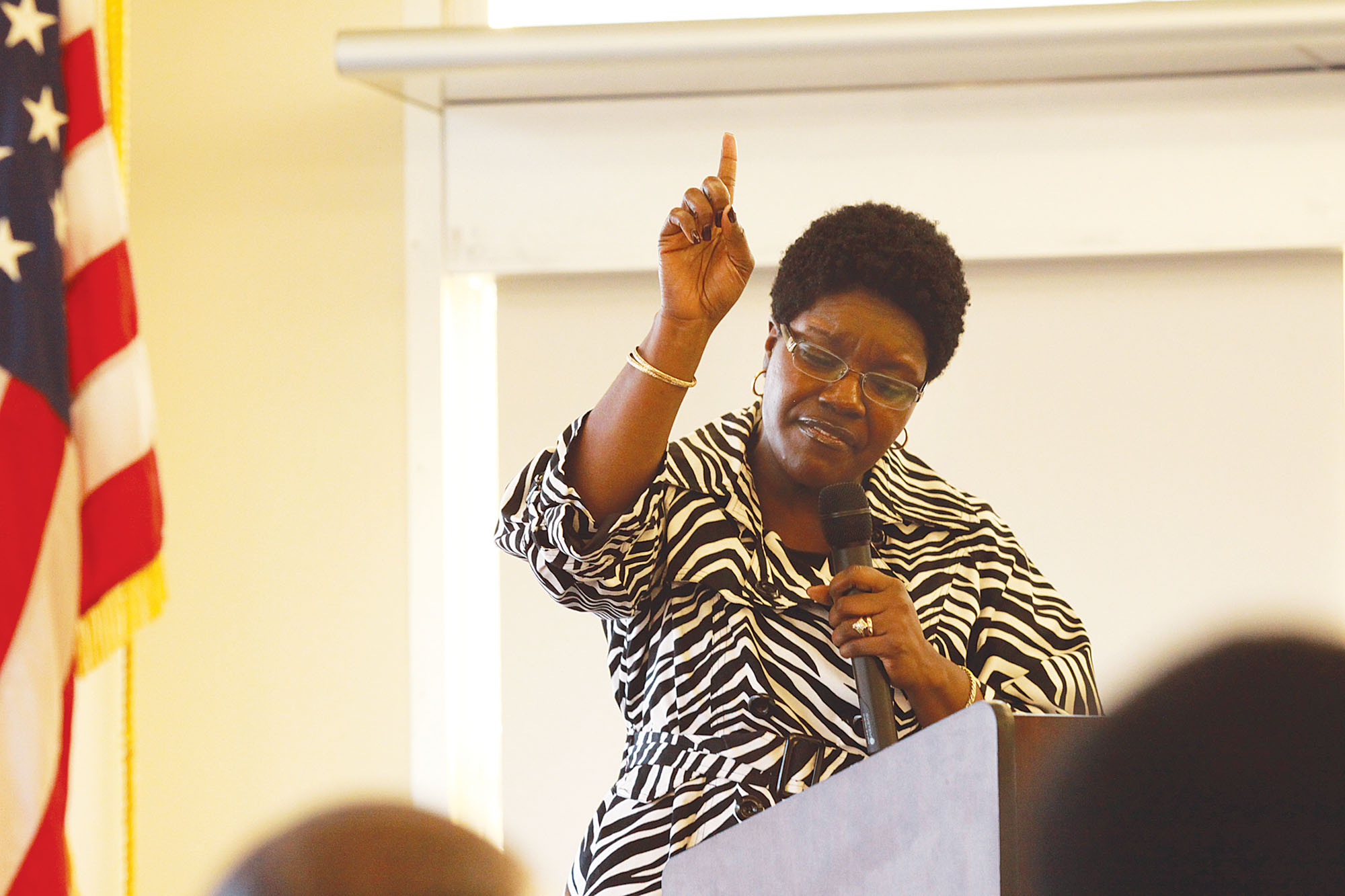
That was one take away from minister Ramsey Price’s speech, which preceded keynote speaker Tamika Ledbetter’s at the celebration hosted Monday by the Mat-Su Martin Luther King Jr. Foundation at the Mat-Su Senior Services Center in Palmer.
“We’ve made great progress,” Price said, addressing the audience. “But you know, no matter how affluent I become, no matter how many degrees I amass, no matter how eloquently I speak to you, you know I can’t get away from this.”
Price rubbed the back of his left hand, and many attendees — black, white, young, old and everything in between — nodded in understanding of the prejudices that still exist, based on skin color.
“In Alaska some would say it’s ‘not as bad’ as down there, we don’t have these things to worry about or wrestle with up here — anybody believe that?” Price asked.
Several people said “no.”
Still others might say racial discrimination is “not as bad” in Southcentral or in the Mat-Su Valley, but again the minister disagreed.
Price gave the audience a couple examples. His son, now an adult in the U.S. Army, was “attacked” several years ago in the Tesoro Taco Bell on the Glenn Highway in Palmer. The attackers said he “had no right” to be in “their restaurant.”
Another time, Price and his wife Mildred (who sang “Calvary’s Lamb” at the celebration, accompanied by her husband) were sitting in their Lincoln in front of Barnes and Noble in Anchorage. A Caucasian man came up to the car and started “ranting and raving.” Price thought the man was in trouble, so he got out of the car and asked, “may I help you?” The man said something to the effect of, “you people have no right to be in my car” and “the only reason you have this car is because of some Affirmative Action program.”
There was another instance, where Price’s daughter was talking to some of her friends in a common area at the University of Alaska Fairbanks, sometime in the last couple years. A young Caucasian man came up to her and said she had no right to be “engaging with white people” because she was “only three-fifths of a person.”
“This is not ancient history, people. That’s why it’s important that we in this room gather on days like this,” Price said.
“It behooves each of us not to put our heads in the sand and act like all is well because it is not.”
Price also mentioned economic “racism” as an issue, as well as, particularly in Alaska, discrimination against Alaska Native people.
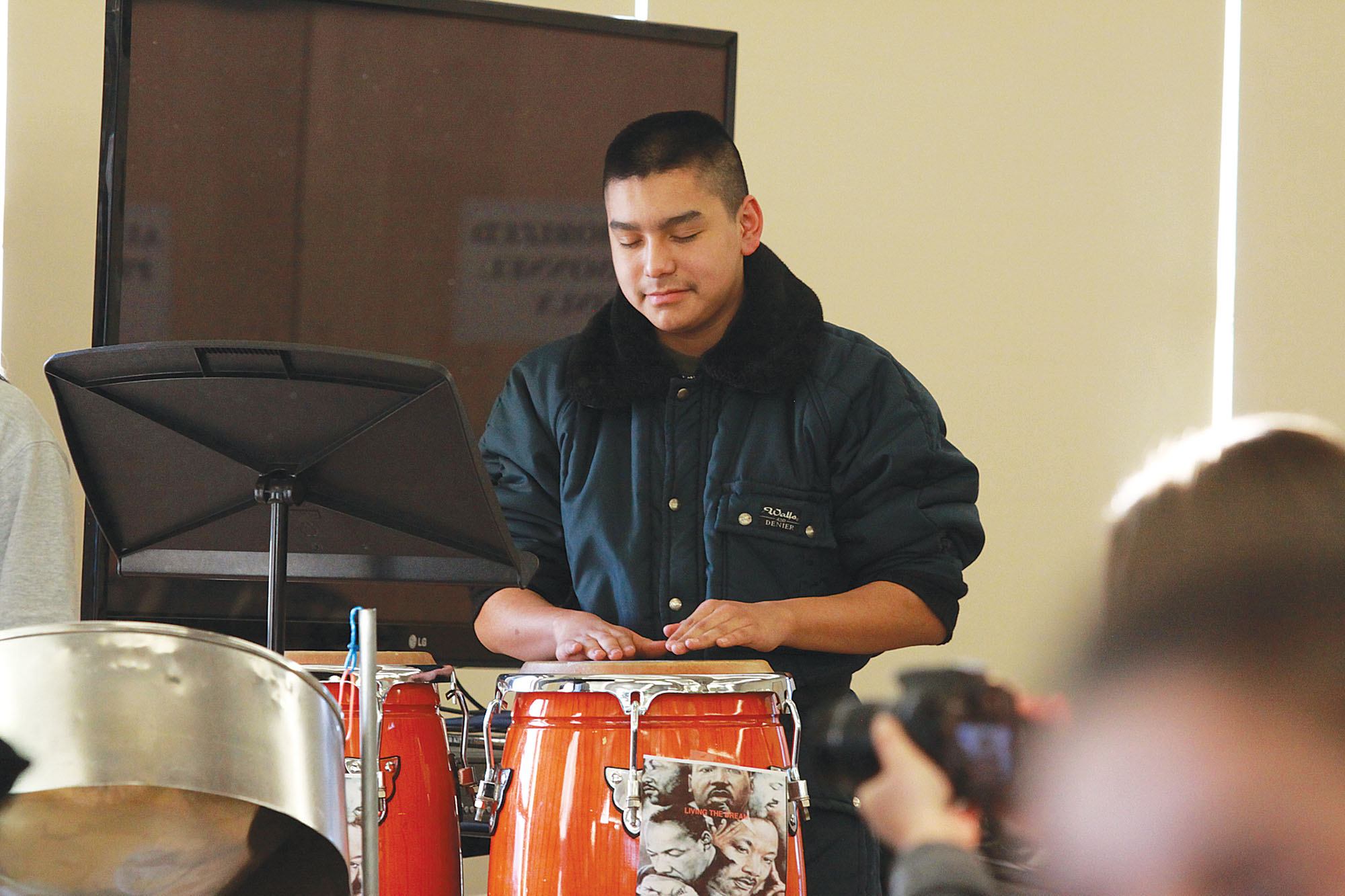
But some discrimination — all of which King fought against, the speakers said — is more subtle. Sherrod Elementary School students paid homage to their deaf classmates and the unhearing community at large by learning a song in American Sign Language, and performing it at the celebration.
Christian singer-songwriter Adele Morgan performed a song Dr. King is said to have enjoyed when he felt “depressed” — “His Eye is on the Sparrow,” also one of Morgan’s favorite hymns — but before she did, she spoke a few words.
Morgan grew up in an Athabascan village on the Yukon River, in which the Alaska Native residents called her “yellow hair,” rather than her name. It bothered her, but she remembered her family’s advice:
“We are all God’s children,” she said.
Achieving equality, however, is just the beginning of Alaskans’ responsibilities, Ledbetter said. “Helping people to use their gifts and abilities and their talents to serve others,” she said, is the next goal.
“We can talk a lot about what’s going on in the world, but the truth is we’ve got work to do right here,” she said, speaking of the Mat-Su Valley.
In an effort to ensure that work actually gets done, Ledbetter offered a delegation of specific duties to specific groups. Mothers she called to tell their children how much they value them, daily; fathers she called to spend time with their children and provide stability; teachers she called to make learning enjoyable by loving what they do; servicemen she called to continue their service; students she called to “show up”; to young adults not in school, she asked for respect for elders and willingness to be taught; “seniors” or “mature Alaskans” she called to share their knowledge; and pastors she called to do what they do every day, she said: care.
And of course, pray.
The audience gave Ledbetter a standing ovation.
Mat-Su MLK Jr. Foundation President Melvin Sage-El added to that list, asking eligible voters to vote, as that right also came to be with King’s help.
In closing, Sage-El asked for one thing from everyone, regardless of background: to seek understanding.
“If you don’t understand why people do things,” he said, “you don’t relate to them, so you’re probably gonna have to just sit down and ask ’em.”
Contact Caitlin Skvorc at 352-2266 or caitlin.skvorc@frontiersman.com.
*This story has been modified (1/21/15) from its original version.

By Jeremiah Bartz Frontiersman.com A football coach using a hockey reference as the centerpiece for his keynote address may

Frontiersman.com With its headquarters in Wasilla, the Frontiersman has been a primary source of news for the Matanuska-Susitna

By Katie Stavick Frontiersman.com The next generation of leaders took flight this week as the Houston High School Class

By Kyle Wilkinson For the Frontiersman Keynote speaker and Carry the Cure President Bill Pagaran’s words boomed through the