Retiring teacher, coach urges Colony grads to ‘find their 68’
By Jeremiah Bartz Frontiersman.com A football coach using a hockey reference as the centerpiece for his keynote address may


Joint Base Elmendorf-Richardson’s 773rd Civil Engineer Squadron will activate the Arctic Valley Mount Gordon Lyon Star on Nov. 24, 2023, marking the 65th annual lighting of the star.
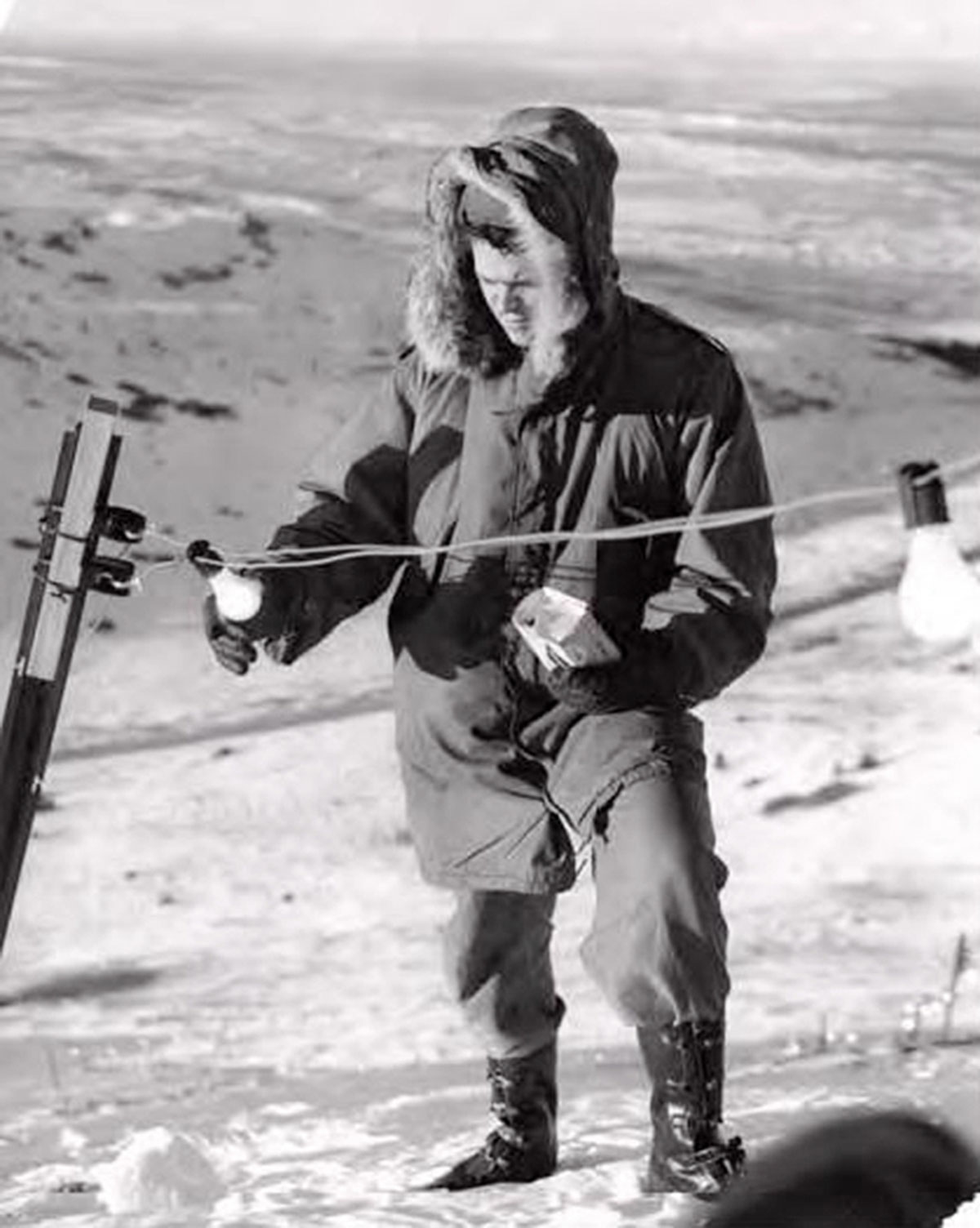
Each year, the star is turned on the day after Thanksgiving—celebrating the beginning of the holiday season—and remains lit until the last Iditarod musher crosses the finish line in Nome in the new year. The star originated in 1958 under the leadership of U.S. Army Capt. Douglas Evert, who originally placed a 15-foot star on the top of the Nike Missile Site Summit gatehouse. In 1970, the star was expanded to 117 feet, making it visible from Anchorage, and it expanded again in 1989 to 300 feet, its present size.
As a key member of the maintenance team working on the star, Preston Murfin, 773rd CES journeyman electrician, is passionate about providing the bright spot for the Anchorage community during the darkest portion of the year. “Speaking for myself, maintaining the star is a source of pride. As exciting as it can be to jump into action when the star needs saving, it’s even more rewarding to see it burning bright all winter long.”
The star sits 4,000 feet above sea level on a steep slope on Mount Gordon Lyon, near the Nike Missile Site Summit. Getting to the star during the winter months requires heavy duty safety equipment and, even so, maintenance can be extremely difficult and risky. The 773rd CES installed a remote module with a transmitter and receiver in 2022 to reduce the maintenance challenges during the star’s active months.
“We conducted maintenance on the star over the summer,” said U.S. Air Force Master Sgt. Michael Barron, 773rd CES electrical systems section chief. “We performed maintenance on the wiring that powers the star, and we added another string of rope lights. We also added anchors to the poles at the bottom of the star in an area that is prone to avalanches.
“There are always concerns with the level of snowfall and the terrain where the star is located. The combined effects make maintenance in the middle of winter an understandable challenge. We are hopeful that our proactive maintenance will reduce the need for a response this year.”
For more information about the transmitter, upgrades, and maintenance on the star please visit: https://www.dvidshub.net/news/428969/773d-ces-gives-arctic-valley-star-new-lights
Information courtesy of 673rd Air Base Wing Public Affairs. For additional information or questions, please contact the office at (907) 551-8995 or by emailing jber.pa.mediaops@us.af.mil.

By Jeremiah Bartz Frontiersman.com A football coach using a hockey reference as the centerpiece for his keynote address may

Frontiersman.com With its headquarters in Wasilla, the Frontiersman has been a primary source of news for the Matanuska-Susitna

By Katie Stavick Frontiersman.com The next generation of leaders took flight this week as the Houston High School Class

By Kyle Wilkinson For the Frontiersman Keynote speaker and Carry the Cure President Bill Pagaran’s words boomed through the