Retiring teacher, coach urges Colony grads to ‘find their 68’
By Jeremiah Bartz Frontiersman.com A football coach using a hockey reference as the centerpiece for his keynote address may


PALMER — Emergency personnel safely rescued three hikers from Matanuska Peak over the weekend during a rescue that began Saturday evening and continued into the day Sunday, authorities said.
The hikers — two 17-year-olds and an 18-year-old — contacted Alaska State Troopers about 7:30 p.m., Saturday to report that they had slipped on ice near the top of the mountain, according to an Alaska State Troopers media release. Troopers alerted responders from the Butte Fire Department, Mat-Su Borough EMS, and the volunteer Alaska Mountain Rescue Group.
The most severely injured of the hikers suffered a broken leg and hypothermia, and was expected to undergo surgery on the leg, said Alaska Mountain Rescue Group spokesman Dean Knapp.
Volunteers spent more than 12 hours working on the rescue attempt on the heels of a two-day required training course, Knapp said. More than 20 volunteers responded to the initial call, and nine went up the mountain, Knapp said.
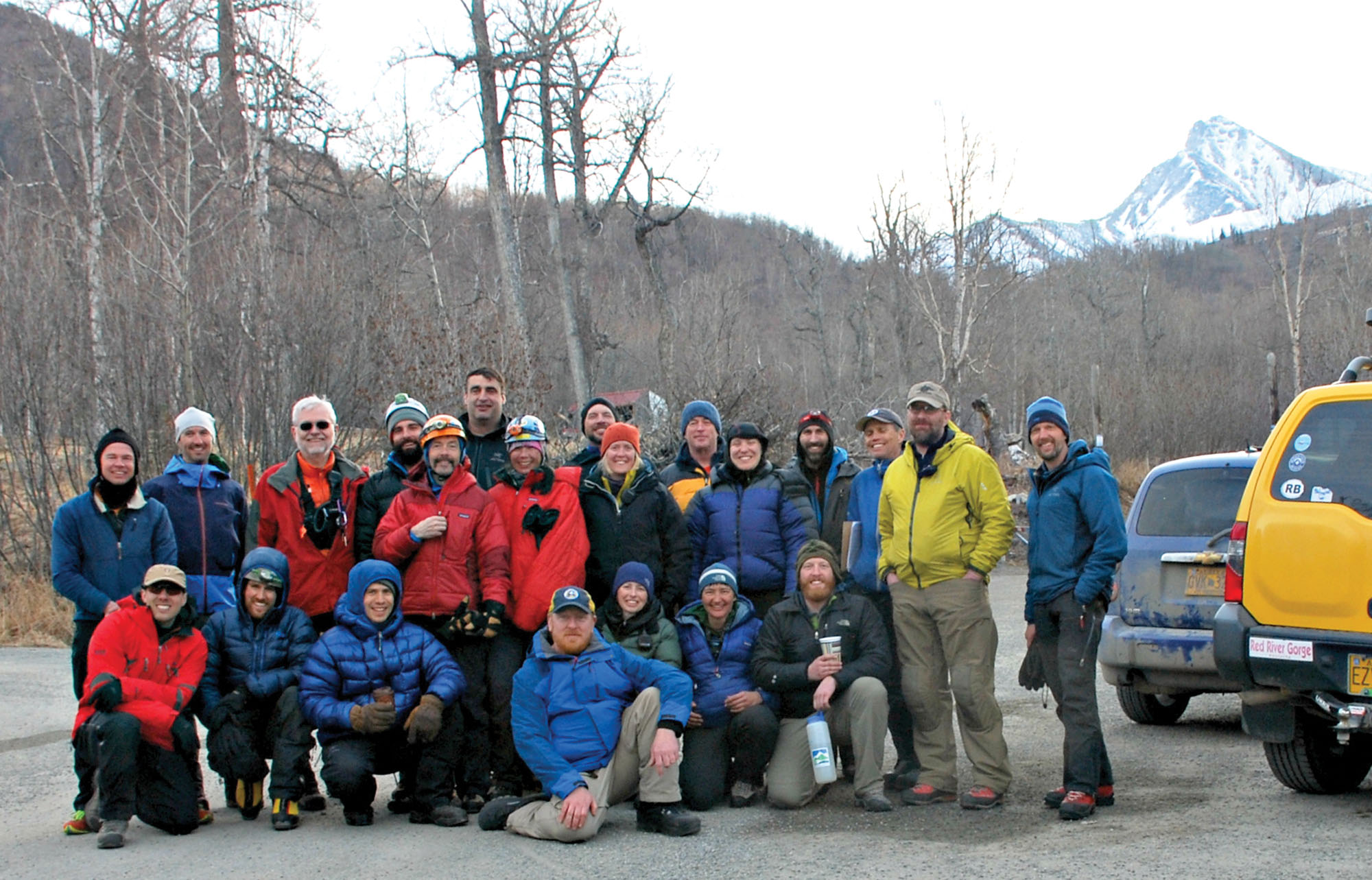
Evaluators had just completed a two-day training course, and chairman Eric Huffman was standing up to congratulate volunteers on passing the course when Huffman’s phone rang. It was troopers, Huffman recalled.
LifeMed helicopters also responded to the rescue call, and began ferrying members of the group up the mountain, Knapp said. Group volunteers quickly identified a landing place slightly below the hikers, and volunteer Carrie Wang made the initial contact about 40 minutes later.
Two of the hikers were able to walk, and volunteer Wayne Todd escorted them down to the landing zone, and from there they were flown to Mat-Su Regional Medical Center, Knapp said. The remaining volunteers put the most severely injured hiker in a stretcher and covered him in blankets and chemical heat packs, Knapp said.
“That was a big operation to lower him to the landing zone,” Knapp said. “We lowered him to a steep snow face, and then we had to traverse. Every time they (volunteers) run out of rope, they have to build a new set of anchors.”
Eventually, volunteers made the landing zone, but there was a problem, Knapp said. The LifeMed pilot who originally responded had hit the flight time limit, and had to fly back to Anchorage for a replacement pilot. Trooper helicopters weren’t immediately available to respond.
When the rescue party made the landing zone with the injured hiker, it was about 5 a.m., Sunday, Knapp said. By the time a replacement LifeMed helicopter from Anchorage arrived, it was 7 a.m., Knapp said.
The replacement helicopter transported the injured hiker to Mat-Su Regional Medical Center. Some time later, troopers’ Helo 3 responded to help ferry volunteers off the mountain, according to Knapp.
The rescue was among the most difficult the group has ever faced, he said.
“This is on the upper end of the scale, because it was at night and it involved every type of raising and lowering technique,” Knapp said.
Residents near the Smith Road-area trailhead for the Matanuska Peak Trail also provided coffee and brownies, and one local resident volunteered his front yard for an improvised lower landing zone, Knapp said.
Between the second day of a required five-year national recertification course and the rescue, volunteers with the group worked about 26 straight hours, officials said. The certification involved a simulated avalanche rescue, and littering a simulated casualty down, then up, a mountain.
The rescue is the third the group has been involved with so far this year, Knapp said. Members previously responded to body retrieval for an Italian hiker wounded on the George Lake glacier above the Knik River, and to a search for a gun tossed from the scene of a shooting in Eagle River.
In general, hikers can avoid using the services of the Alaska Mountain Rescue Group by ensuring their footwear is equal to trail conditions, carrying a headlamp with a strobe mode, even during anticipated day trips, and by wearing bright colors, like orange, red or yellow. Hikers should also leave a planned hiking route with a friend (other officials have suggested posting the plan on Facebook).
“We like to say ‘We don’t want to have to come find you,’” Knapp said.
Contact Brian O’Connor at 352-2269, brian.oconnor@frontiersman.com, or on Twitter @reporterbriano.

By Jeremiah Bartz Frontiersman.com A football coach using a hockey reference as the centerpiece for his keynote address may

Frontiersman.com With its headquarters in Wasilla, the Frontiersman has been a primary source of news for the Matanuska-Susitna

By Katie Stavick Frontiersman.com The next generation of leaders took flight this week as the Houston High School Class

By Kyle Wilkinson For the Frontiersman Keynote speaker and Carry the Cure President Bill Pagaran’s words boomed through the