Retiring teacher, coach urges Colony grads to ‘find their 68’
By Jeremiah Bartz Frontiersman.com A football coach using a hockey reference as the centerpiece for his keynote address may


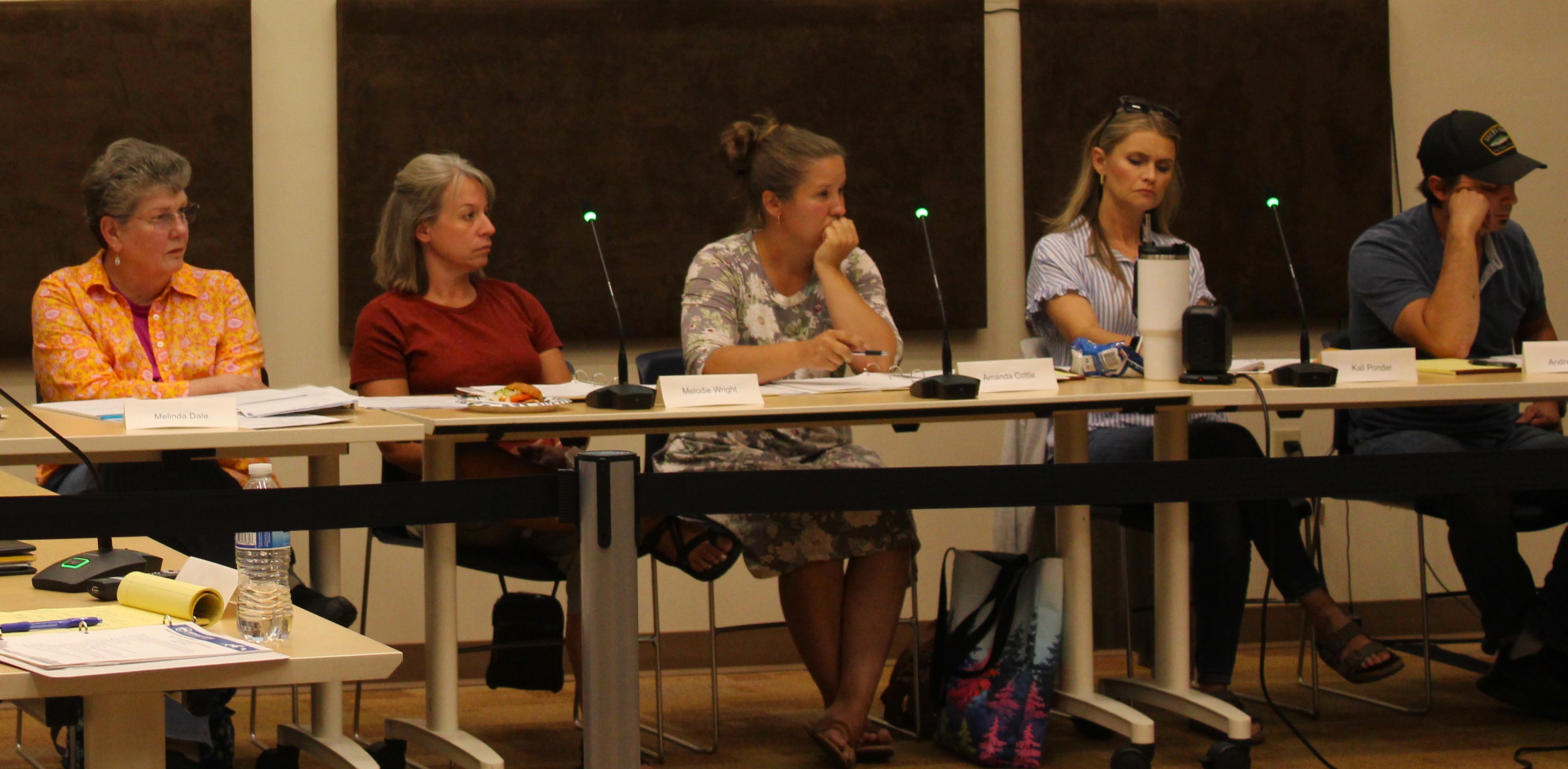
On Thursday, the Matanuska Susitna Borough School District (MSBSD) Library Citizens’ Advisory Committee (LCAC) held its first meeting. The agenda centered around setting up the scope of work the committee members were expected to do, as well as
Dr. Justin Ainsworth, Associate Superintendent of Secondary Schools, oversaw the meeting as the LCAC facilitator until the committee elects a chairperson and vice chairperson.
“I’m here to facilitate and provide structure, and to make sure that we have civil discourse and engage in discussion. This is your committee.”
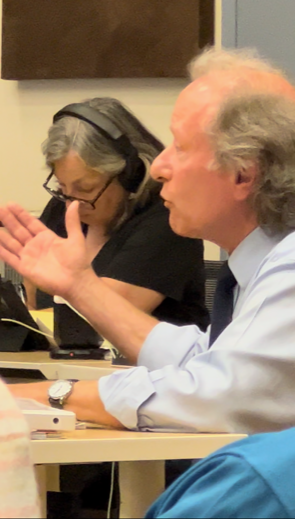
Much of the first meeting was spent on procedures, expectations and responsibilities. MSBSD Attorney Saul Friedman, general legal counsel for district, addressed the LCAC:
“It’s unlikely that there is anybody, certainly in any school in the Valley, that believes that pornographic, indecent materials are being provided to students in the schools, whether in the classroom or in the libraries.” He then laid out what the LCAC was designed to do over the coming months.
“Your purpose through this committee is to decide whether a list of books that have been selected because of some controversy they may have engendered, whether any of those books meet the standard in Alaska law that constitute pornographic or indecent material. That’s your purpose.”
Friedman reminded the committee that they are an advisory committee serving the school board, and that they are to consider the books wholly and in their content and whether or not they meet the criteria as stated under Alaska statue 11.61.128, the law which covers the distribution of indecent materials to minors, something that may be unfamiliar to many until recently.
“This law, which makes it a Class C felony, which is up to 5 years imprisonment, and up to $50,000 in fines, if you’re convicted, relates to the legality of distributing indecent material to minors. There’s no exception in this law for school librarians or educators who are distributing these materials through a school library. In many of the states that have similar laws, there are those exceptions. We don’t have them here.”
Friedman says that piece is relevant to what the LCAC is doing as they read the books on the challenged list, stating that over the past several years, a pervasive ripple of fear and uncertainty has swept through school communities in Alaska, where educators have a fear that complaints could be made against them, asserting that they are guilty of this felony because of book distribution in school libraries.
“The collective wisdom of the school board and the staff here has been a proactive one, to get ahead of the issue here and figure out what the community, through what your committee, the citizens’ advisory committee, advises on these books. Whether they are pornographic under the statute or not.”
Friedman also put into context for the LCAC that the books in question are library books and not part of curriculum or instructional material, and that there is an entirely different process for those materials are viewed in the statutes, in the law, and in the courts.
“Library materials, the use of the library is all voluntary. It’s not mandated. And the courts, especially the U.S. Supreme Court, has looked at school libraries in a very special light.”
Friedman then referred to a US Supreme Court decision from Island Tree School District v. Pico, in which students sued the school board after that school district had ordered that certain books written by celebrated authors such as Richard Wright and Kurt Vonnegut be removed from the district’s school libraries, calling them “anti-American, anti-Christian, anti-Semitic, and just plain filthy.” Some students at the affected schools brought suit against the school board, arguing that the board’s actions violated their First Amendment rights.
“The special characteristics of the school library make that environment especially appropriate for the recognition of the 1st amendment rights of students. And why is that? It’s because a student can literally explore the unknown, discover areas of interest and thought not covered by the prescribed curriculum. The student learns that a library is a place to test or expand upon ideas presented to him in or out of the classroom,” wrote Justice William J. Brennan, Jr. He added that school officials may not exercise their discretion to remove books from a school library based on “narrowly partisan or political” grounds, because doing so would amount to an “official suppression of ideas.”
“So we’re looking at something separate and special in the school district-the school library,” said Friedman. “You’re role, when we look at 1st amendment issues, there’s a thin line that you have to figure out, which side is which with each of these books, which side-is that book protected by the 1st amendment rights of free expression and ideas, and challenges to students to learn, versus pornographic and indecent, which students can be protected against.”
He went on to direct members to the MSBSD Board policies concerning controversial issues, citing the policy that states controversial issues may be discussed in classrooms within specified guidelines such as being relevant and meaningful to matters of concern to the students, all sides are given proper discussion time utilizing established facts, and that it does not violate state or federal law.
“There are challenges to curriculum and instructional materials. They may be based on content which has cultural, religious, or even sexual, or, at times, political overtones, and we look as those as to whether they relate to the curriculum, whether they’re meaningful and appropriate for the curriculum, whether they raise issues that are appropriate for students to know and to explore and to understand,” explained Friedman.
Friedman also talked about public complaints concerning instructional materials, stating that the decisions are made based on educational suitability and not subjected to influences to suppress information or deny students access to ideas with which the school board may disagree.
“There’s got to be more substantial reasons than just because ‘we disagree.’ There’s always going to be disagreements on matters like that.”
Once the legalities were presented, the LCAC went about discussing which books to begin, and that there is an expectation that all of the LCAC members are to read 3 books each month, not just passages.
“Members are expected to read the books in their entirety, to really get the entire context of the book, clues to understand the entire book,” directed Dr. Ainsworth, who recognized that some of the more ‘explicit’ material may be found online, but to read the book in order to foster a productive discussion of the book and the subject matter. He also reiterated that the members are to weigh the books against the criteria of the Alaska statute for indecent materials.
There is also a rubric which the LCAC members will utilize to help determine if the challenged book should be removed, restricted, or retained.
Ainsworth reminded the LCAC to be aware of the ‘Open Meetings Act’ and how it applies to them, while Friedman reminded the LCAC that the public has a right to know how the committee will reach their decisions.
“That’s almost as important as what the decision is,” he said, adding, “How you came to that is important to the validity and credibility to your work. So, for you to be talking with individuals on your own, you don’t want to segment yourself like that. Everybody should hear what they have to say.”
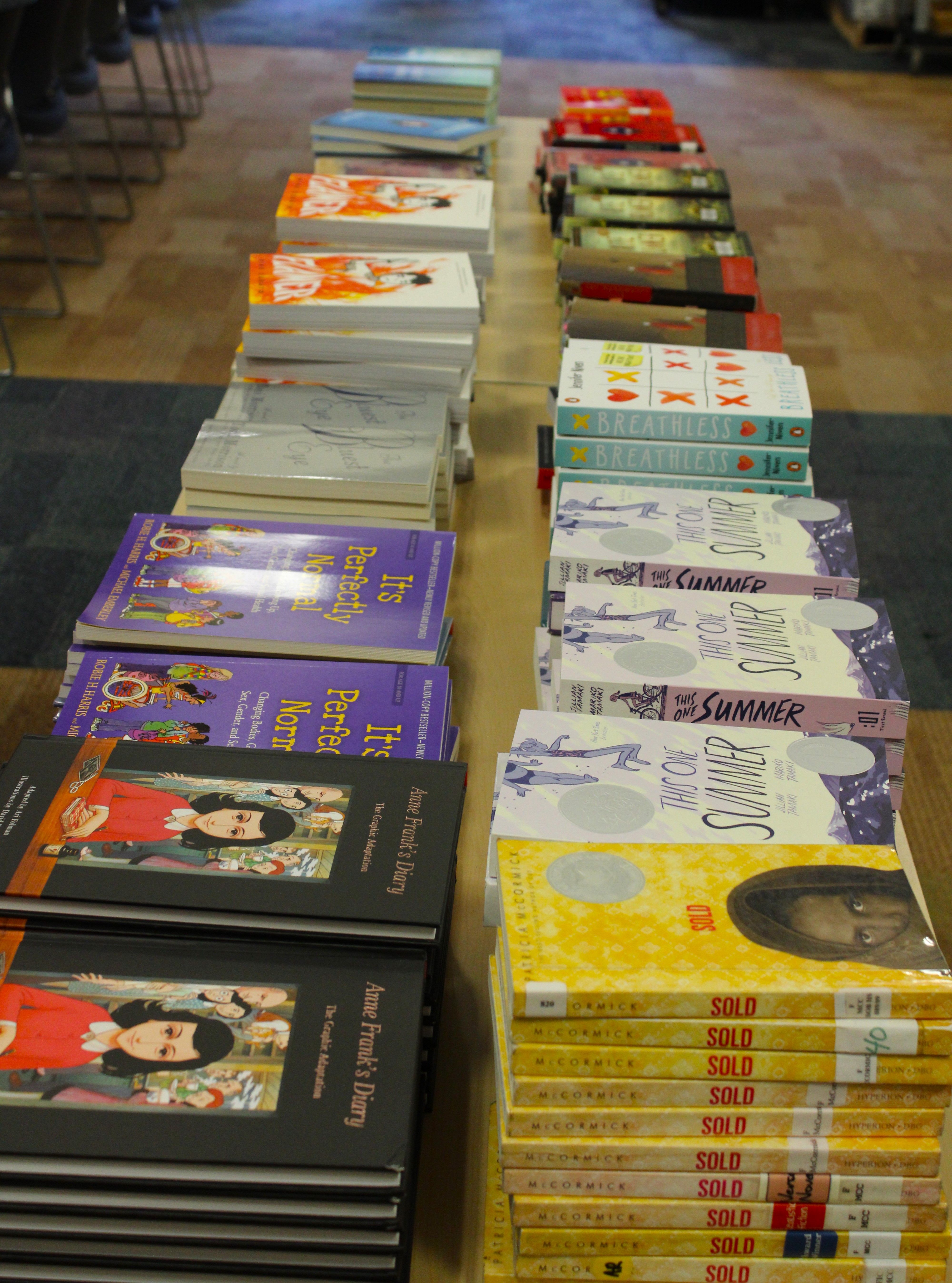
LCAC committee members selected as the first 3 books to review “The Lovely Bones,” “It’s Perfectly Normal,” and “Drama.” If members finish and have time, they also selected “The Bluest Eye,” by Toni Morrison.
“I’m excited to be a part of this committee. We want to make sure that we’re giving our children something that’s a safe environment and a good environment for them to be in, and I don’t want to be the person holding back books that should be on the shelf. I think it’s good that we’re monitoring what is on the shelves, and to be sure that they’re within the legal parameters,” said LCAC member Andrew Shane.
The LCAC will continue to meet on the second Thursday of every month for the duration of the school year. The next meeting will be held September 14 at 5:00 pm at the MSBSD Administration Building in Palmer.
For more information about the Library Citizens’ Advisory Committee, visit www.matsuk12.us

By Jeremiah Bartz Frontiersman.com A football coach using a hockey reference as the centerpiece for his keynote address may

Frontiersman.com With its headquarters in Wasilla, the Frontiersman has been a primary source of news for the Matanuska-Susitna

By Katie Stavick Frontiersman.com The next generation of leaders took flight this week as the Houston High School Class

By Kyle Wilkinson For the Frontiersman Keynote speaker and Carry the Cure President Bill Pagaran’s words boomed through the