Retiring teacher, coach urges Colony grads to ‘find their 68’
By Jeremiah Bartz Frontiersman.com A football coach using a hockey reference as the centerpiece for his keynote address may


“What health initiative deserves your community’s attention in the next 365 days?” That was the question posed by the Mat-Su Health Foundation (MSHF) to Big Lake and Houston recently as residents gathered to participate in choosing and taking the beginning steps for a local community improvement project as part of the first-of-its-kind Community Choice Health Summit here in the Mat-Su Borough.
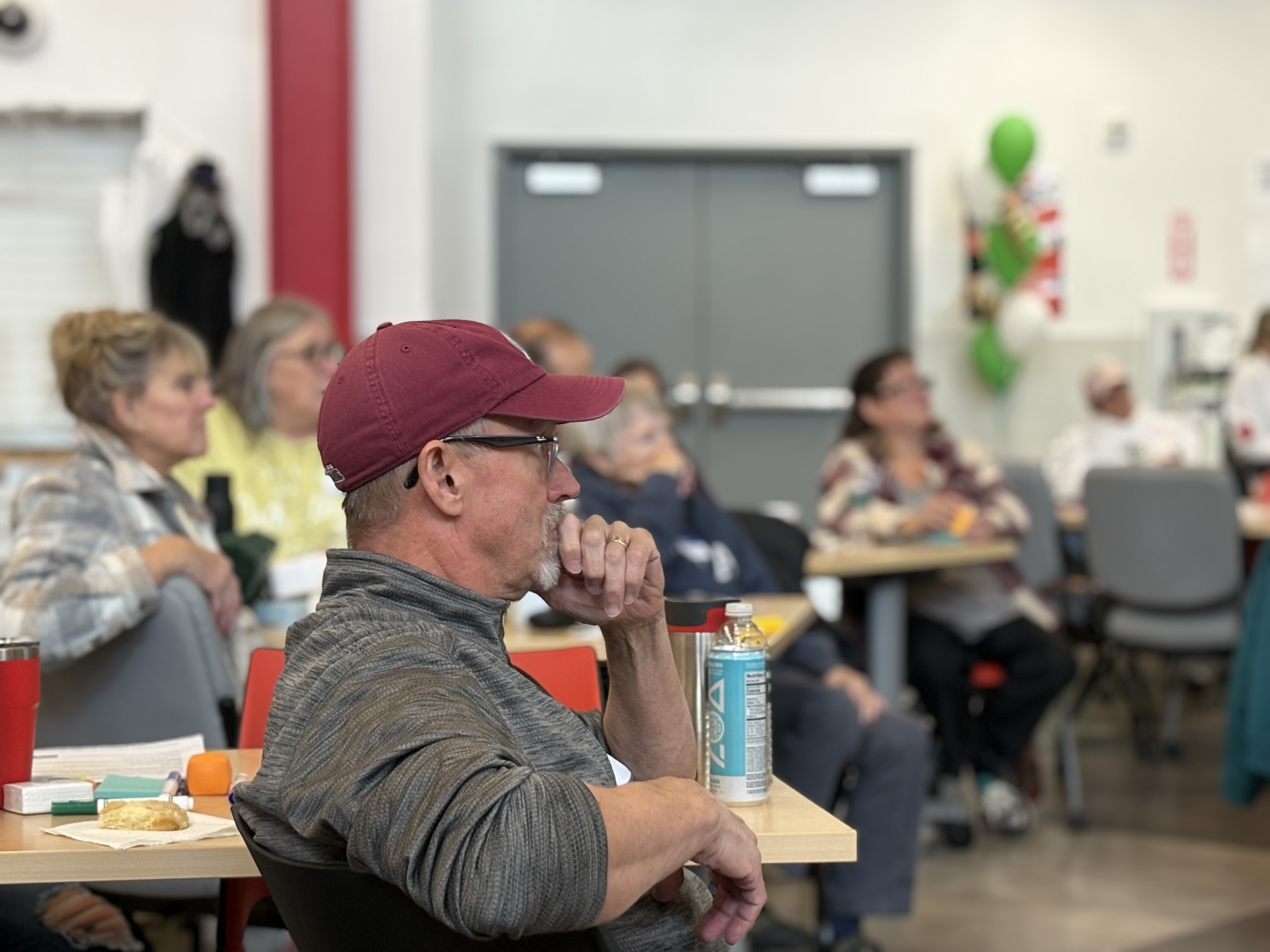
On October 11, a group of residents from Big Lake and Houston gathered at Houston High School to pitch, discuss, and ultimately choose a project designed to improve health and wellness in their communities.
Mirrored after a similar project in Sitka, this pilot project brought together local residents and skilled facilitators to collaborate on what the communities need. Ideas ranged from supporting development of Jordan Lake in Big Lake, to free therapy sessions for teens, developing a community center in Houston, providing transportation for youth to wider community events, to paving the walkways along major thoroughfares like Kenlar Road and Hawk Lane.
“This is an exciting opportunity for residents to decide what they think needs funding in terms of the wellness of their communities,” said Betsy Larson, Senior Director of Community Partnerships for MSHF. “Our hope is that if this goes really well, then we’ll be able to do this in other neighborhoods in the Mat-Su.”
Using Olympic-Style Dot voting, which is akin to rank-choice voting, participants were able select their top three ideas, and were not limited to just the community they call home.
After the votes were counted, two ideas have been selected: in Houston, develop a community center focusing on a space for education, gathering, programs for seniors and youth, and potentially a community garden.
In Big Lake, the winning idea was developing and protecting Jordan Lake Park for all ages and abilities.
From there, participants split into two planning meetings, and were free to attend action groups for whichever project piqued their interest. Lead by MSHF staff, the goal was to set a date and time for a kick-off meeting, select a lead person for the project, and draft a compelling vision statement.
Both projects will have a year to move forward, and new goals have been set for the projects, including the $25K in grant funding for each project, facilitation support at the kick-off meetings, technical assistance, press releases and media outreach to build momentum around the projects, and a one-year celebration party in 2026 celebrating the work done on those projects.
“The Mat-Su Health Foundation is coming alongside you, but the journey to your destination is really your own from here forward,” Telsche Overby, Associate Director, Community Engagement noted during the summit. She said that they will provide support and assistance, working with the different program officers at MSHF, help with the grant applications and assist with reporting and evaluations. “We’ll be checking in along the way.”
It was stressed that projects do not have to be completed, but have a clear trajectory and have results toward completion.
Members also reiterated that just because a project may not have been selected does not mean it should be discounted. MSHF encouraged people who felt strongly about a project to continue forward and even apply for one of the other grants available through the Foundation.
“There’s a lot of momentum around (the) paved pathways and transportation for our youth that crossed the border between communities,” noted Overby. “Don’t forget that the Health Foundation is still here for you, so for people who want to continue the conversation about paved pathways or transportation for youth in this region, we are here and can have those initial conversations.”
“We’re so excited about both communities and thinking about the synergy between both communities talking about and understanding what’s important to other people. We’re very excited,” said Larson.
Amy Gorn, Senior Program Officer, Healthy Families Focus Area with the MSHF, previously participated in Sitka’s Community Choice Health Summit as a community member and believed that the same idea could work here in the Borough.
“I attended one of those events, and joined a project that was completed one-year to the day, and I took away from that the great sense of unity that the community had to pull together,” she said.
Gorn says after speaking with community stakeholders, councils, and others, and talking through the idea, excitement built for launching the project, the MSHF brought in Doug Osborne, health educator with the Southeast Alaska Regional Health Consortium who was instrumental in the success of the Sitka Health Summit, utilized his knowledge and experience to get this project off the ground.
“It’s sustained in Sitka for as long as it did because it’s inspiring, it’s energetic, it’s positive and then they see the results.” She thought that it was a great model to adapt here.
When it came to the planning of this project, Gorn says the MSHF looked at areas where they could use this as an opportunity to connect deeply with a part of the Borough that and where there could be ideas that ideas aren’t always heard. “Knowing that not everyone can access opportunities in the core area, and maybe feel forgotten, this is a great way to establish connections and remind them that are heard.”
Gorn says she is excited not only for the current projects, but if successful, working with other communities in the Borough and giving people a chance to decide on projects, not just the city or community councils.
“The chance for the community to come together, strengthening connections between the MSHF and areas of the Mat-Su, and having some really good meaningful projects come out of this that communities will own. It’s a different way of doing some of our grant funding.”
“People are putting in the considerations and the work to envision something new that benefits everyone. People came in with very clear ideas, and the reception so far has been very positive, that this is needed. It gets people talking.”
“The participatory process of community-generated goals for health and wellness, and to do it in a year’s time is an exciting format,” said Larson.

By Barbara Hunt Palmer Buzz It was 6:43 on Friday morning and the Plant Owner was sound asleep when

By Kyle Wilkinson Frontiersman Memorial Day Weekend was filled with a variety of events in Willow. From live music to

By Kyle Wilkinson For the Frontiersman The Susitna Valley Emergency Preparedness Fair will be held at the Willow Community Center

By Barbara Hunt Palmer Buzz Green-Up happened at exactly 9:34 am on Saturday morning in Palmer. This was