Retiring teacher, coach urges Colony grads to ‘find their 68’
By Jeremiah Bartz Frontiersman.com A football coach using a hockey reference as the centerpiece for his keynote address may


CHICKALOON — Moose Creek hill is special in more ways than one.
Known for the sharp “S” turns and a steep drop in elevation heading north out of Palmer on the Glenn Highway, Moose Creek hill is memorable. But the humble little creek at the bottom of the hill has been known for centuries by Athna peoples as “Tsidek’ etna’” or “Grandmother’s Place Creek,” a place where grandmothers and families could safely harvest fish.
Moose Creek was once a productive salmon stream that supported all five species of Alaskan salmon, according to Ahtna Elders. Fed from glaciers and springs within the Talkeetna Mountains, Moose Creek habitats were diverse and provided all kinds of salmon with spawning grounds and high-quality rearing habitats for each species.
But about 90 years ago, Moose Creek was altered, causing catastrophic changes to the habitat that decimated salmon populations.
A railroad spur was constructed up Moose Creek in 1923 to transport coal from the mine sites along the creek to Anchorage and Seward. The railroad straightened and diked much of the creek, and filled valuable streamside wetlands, in order to increase the space for railroad operations. The result of the alteration was a much straighter and steeper stream channel with faster water, which caused several waterfalls. One waterfall was a complete barrier to upstream fish passage, and salmon habitat was limited to the lower stream by 1970.
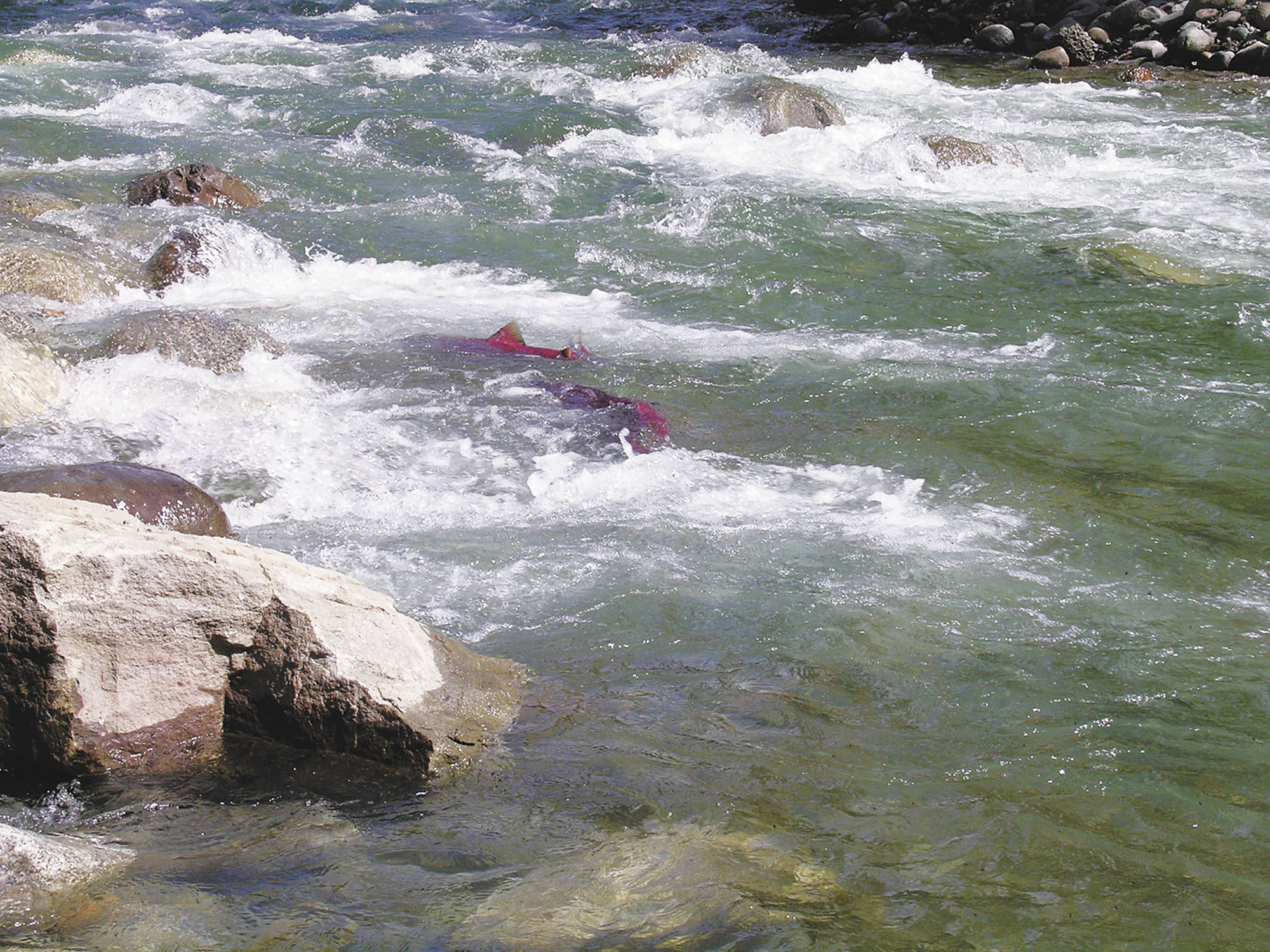
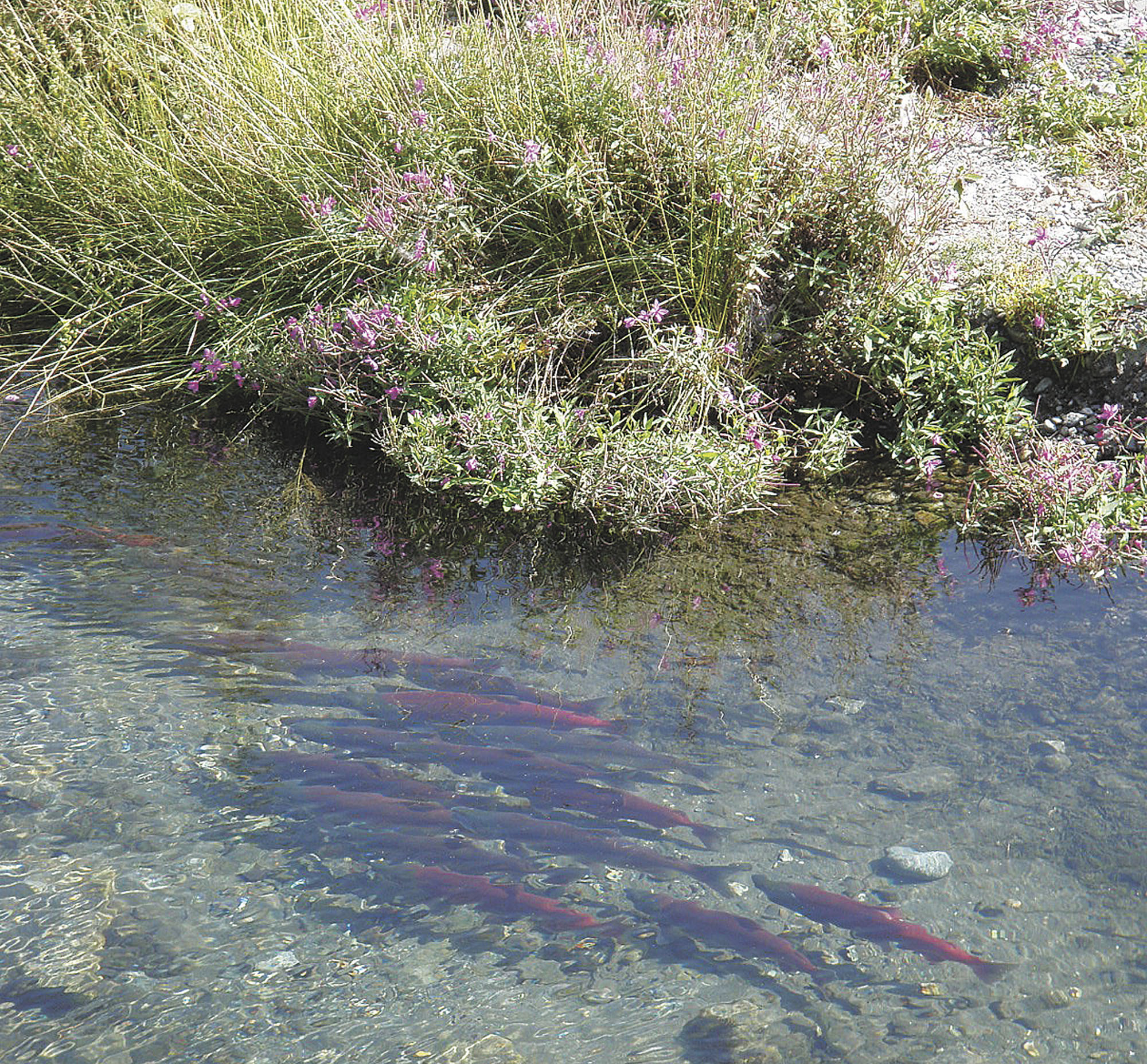
To keep populations healthy and strong, salmon need access to a diversity of freshwater habitats. Adult salmon who come back to spawn may travel many miles upstream and need pools and back eddies to rest as they make their way from the ocean to their spawning grounds. Once they reach their special spawning habitat — likely very near to the exact place they were born — they create a nest to lay their eggs. The ideal nest, or red, contains clean, fine-to-medium gravel with continuous fresh water flow. This ensures that eggs stay oxygenated and don’t get covered in sediment. The eggs incubate for two to six months before hatching into baby salmon (alevin), which continue to stay in the gravel until they need to forage and emerge in the late spring and summer. While the eggs are incubating, if they are silted over, jostled, or squished (such as by a passing ATV) the eggs could die.
Once they emerge from the gravels, the baby salmon (now fry) need habitats with slower currents, undercut banks or wetlands with lots of vegetative overhang so they can find just the right foods and hiding places from predators. The search for the specific habitat at each life stage may require many miles of travel throughout the river system. If there are fish passage barriers like culverts or waterfalls, or the river flow is too fast, young salmon can be stressed and die.
Originally, Moose Creek was a winding slower moving stream, ideal for salmon production. But with many physical changes made by the railroad and coal mining operations from the 1920s to the 1980s, the creek suffered and lost nearly 10 miles of pristine habitat.
Jessica Winnestaffer, the environmental stewardship director for Chickaloon Native Village, weighed in on the habitat loss.
“Without high-quality habitats, sa
lmon may not survive. It’s not like we can just ask the salmon to move to another stream. Their very
evolution as a species is a result of adaptations they have made related to their natal stream,” Winnestaffer said.
In 2002, 20 years after mining stopped along Moose Creek, an Ahtna Tribal Elder of Chickaloon Native Village asked the village’s Environmental Stewardship Department to share history of Moose Creek. The elder also asked them to try to remove the man-made waterfall barriers. This Elder said that, historically, all five species of Alaskan salmon were present in Moose Creek, though at the time, only Chinook and coho could be routinely found in the lower reaches near the mouth.
Chickaloon Native Village, in collaboration with the U.S. Fish and Wildlife Service, National Oceanic and Atmospheric Administration, and other funders and community volunteers, the Tribe began a fish passage restoration project in 2005. The restoration activities focused on moving the creek back to its former “S” shaped channel and bypassing three waterfalls that were impassable to salmon. (To see a video of the restoration project visit bit.ly/1GGu1XN.)
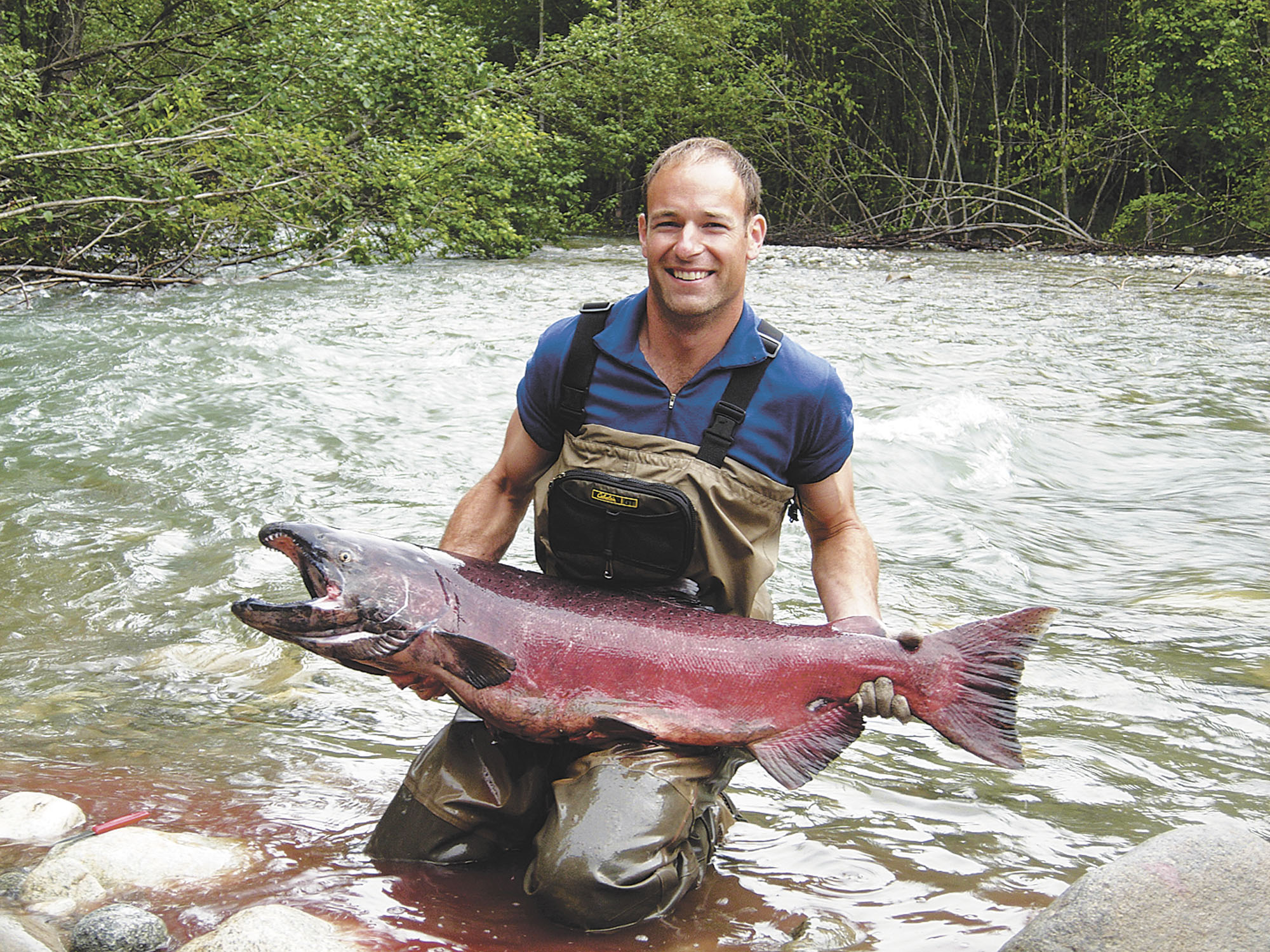
The project was mostly complete by July 2006. Immediately after opening the restored channel around the largest waterfall, several Chinook salmon were seen migrating above the previous waterfall barrier. Annually, Chickaloon Native Village and the Alaska Department of Fish and Game count adult Chinook salmon that return to Moose Creek.
We think Chickaloon Native Village and its staff members are King Makers and should be celebrated for their leadership and stewardship efforts to restore access to salmon habitats on Moose Creek. In addition to the Moose Creek restoration project, the tribe has also taken it upon themselves to monitor the water quality in many streams throughout their ancestral territory between Glacier View and Palmer.
Angela Wade, a Chickaloon Native Village tribal member, explained the tribe’s actions simply.
“As a people we were put here to take care of the land and the animals,” she said. “If we don’t it, will be pretty hard to sustain our culture on bologna sandwiches.”

By Barbara Hunt Palmer Buzz It was 6:43 on Friday morning and the Plant Owner was sound asleep when

By Kyle Wilkinson Frontiersman Memorial Day Weekend was filled with a variety of events in Willow. From live music to

By Kyle Wilkinson For the Frontiersman The Susitna Valley Emergency Preparedness Fair will be held at the Willow Community Center

By Barbara Hunt Palmer Buzz Green-Up happened at exactly 9:34 am on Saturday morning in Palmer. This was