Retiring teacher, coach urges Colony grads to ‘find their 68’
By Jeremiah Bartz Frontiersman.com A football coach using a hockey reference as the centerpiece for his keynote address may


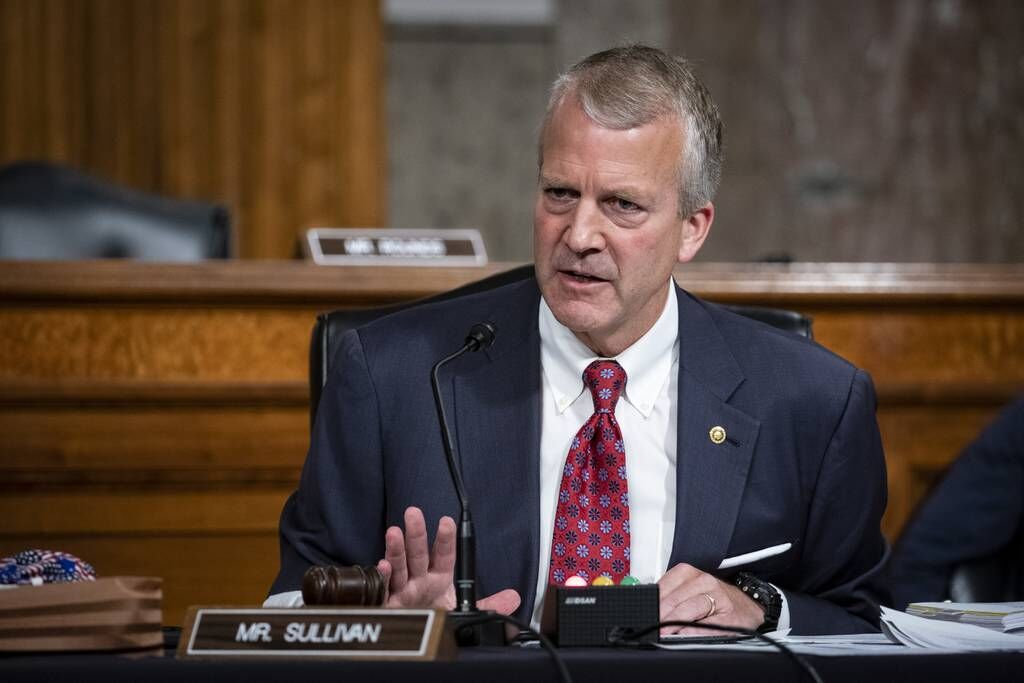
Alaska’s U.S. Senators Lisa Murkowski and Dan Sullivan have introduced the “Don Young Arctic Warrior Act”, legislation to alleviate some of the hardships faced by service members in Alaska.
Sullivan has also offered the legislation as an amendment to the National Defense Authorization Act for federal fiscal year 2023, which will be considered next week in the Senate Armed Services Committee.
In addition to proficiency pay and allowances for basic necessities, the bill increases the Department of Defense’s ability to address the shortfall of behavioral health providers by establishing a graduate program in counseling and social work at the Uniformed Services University of the Health Sciences.
The bill also provides for scholarships and retention bonuses for those serving in the behavioral health field.
“After hearing directly from servicemembers stationed in Alaska, it was clear that action is needed to address hardships they face while moving to and living in our state,” Murkowski said. “The Don Young Arctic Warrior Act, which Senator Sullivan and I named in honor of the late Congressman, will help address financial challenges and adjustment to living in Alaska, while also improving access to mental health providers”.
“We must do more to solve the suicide crisis our military faces. We have learned that financial stress is a major contributor to suicidal ideation, but in Alaska, many servicemembers don’t have anywhere to turn for help. Our legislation recognizes the critical role that Arctic Warriors play in the defense of our nation and alleviates some of the hardships that are associated with living in such a remote and austere location,” she said.
Senator Sullivan said: “Alaska is home to thousands of military service members and more veterans per capita than any other state. The Don Young Arctic Warrior Act, which Senator Murkowski and I are introducing today—our late great congressman’s birthday—is the result of dozens of hours spent listening to soldiers and their families throughout our state, most recently alongside Congresswoman Speier, chair of the House Armed Services Subcommittee on Military Personnel.” It’s no secret that training and living in the Arctic can at times present challenges relative to other duty stations. As a Marine, I have witnessed firsthand the training and toughness required of our military in Alaska. Our legislation aims to provide better access to the resources and support Alaska’s service members and their families deserve in order to thrive in our unique environment.”
As Alaskans know too well, it is more expensive to live in Alaska than most other states, the senators said. The 2019 Epidemiological Consultation conducted at Fort Wainwright found that 27 percent of soldiers experienced worse financial conditions following their move to Alaska.
The Don Young Arctic Warrior Act provisions focus on:
• Arctic Pay: Military members serving in the Arctic “assigned to perform cold weather operations” or “required to maintain proficiency through frequent operation in cold weather” will receive supplemental Arctic Pay of $300 per month.
• Basic Allowance for Internet: Military members currently pay up to $180 per month for internet both on and off base. This allowance will provide $125 per month for the first year after enactment to address the discrepancy in cost, and then will direct the Secretary of Defense to study the cost discrepancy between Alaska and the lower-48 states and adjust the allowance on an annual basis. This will only be for ranks E-5 and below, which have been identified as the population experiencing the greatest financial hardships during their assignments in Alaska.
• Free Flight Home: Military members who are E-5 and below will have access to one free flight during a three-year tour equal to the cost to travel to their home of record.
• Pilot Program on Car Sharing: Directs the establishment of a car sharing pilot program for two years at military installation in Alaska.
• Military Family Life Counselor: Will authorize license reciprocity for non-medical mental and behavioral health counselors to enable the DOD to increase the number of MFLCs in Alaska, and quickly surge capacity when and where needed.
• Uniformed Services University Curriculum Expansion: Directs the establishment of counseling and social work programs at the Uniformed Services University of the Health); directs the expansion of the clinical psychology graduate program at USUHS; directs the establishment of paid pre-doctoral and post-doctoral internship programs to train clinical psychologists to work as civilian behavioral health providers; and authorizes the Secretary of Defense to provide scholarships for behavioral health education, through which the member will incur a service commitment equal at least to their length of school.
• Retention Bonuses: Authorizes the Secretary of Defense to provide retention bonuses for clinical psychologists, social workers and counselors up to $50,000 annually.
• Report on Behavioral Health Workforce: Directs the Secretary of Defense to conduct analysis of the behavioral health workforce and provide to Congress the number of behavioral providers necessary to meet the demand for services across DOD.
• Weapons Safe Storage Pilot Program: Establishes a pilot program to promote safe storage of personally owned firearms. Participation is on a voluntary basis; service members who choose to would be provided locking devices or firearm safes, or both, for the purpose of securing personally owned firearms when not in use.

By Jeremiah Bartz Frontiersman.com A football coach using a hockey reference as the centerpiece for his keynote address may

Frontiersman.com With its headquarters in Wasilla, the Frontiersman has been a primary source of news for the Matanuska-Susitna

By Katie Stavick Frontiersman.com The next generation of leaders took flight this week as the Houston High School Class

By Kyle Wilkinson For the Frontiersman Keynote speaker and Carry the Cure President Bill Pagaran’s words boomed through the