Retiring teacher, coach urges Colony grads to ‘find their 68’
By Jeremiah Bartz Frontiersman.com A football coach using a hockey reference as the centerpiece for his keynote address may


PALMER — Though the Palmer Museum takes donations all year, staff are now seeking specific kinds of artifacts from individuals and organizations around the state.
On February 17, 18 and 21, the museum will host an open house at the Palmer Depot from 1 to 9 p.m., during which the public is invited to donate and help identify people, places and things in historic Palmer photos. There will also be discussions on Palmer history and museum stewardship, plus opportunities to win door prizes and sign up to be a volunteer or member of the museum.
Museum director Selena Ortega-Chiolero said the goal of the event is to encourage community involvement in the collection-building process, increase patron accessibility to collections and educate the public on preservation techniques and philosophy.
“We really wanna generate enthusiasm for the preservation of history,” she said.
The Palmer Museum currently has an archive of 2,200 photos in various print forms and on 35-millimeter film, hundreds of which were donated last summer by the Odsather and Irwin families. Some photos are labeled with dates, names and locations while others are not.
“I think there are a lot of people out there who … feel like they have so much history and they wanna share it but they have no way to do that,” Ortega-Chiolero said.
The upcoming event may also benefit those who are working on research projects, but may have expended their own personal connections in trying to track down information on the content of old photographs. This can happen, for example, when a death occurs in a family, and the responsibility falls to a surviving member to sort through the deceased’s belongings. The survivor may not have identifying information for the photos, and can be at a loss for what to do with items of historical (but not necessarily monetary) value.
“They don’t wanna give them away but they don’t know how to take care of them,” Ortega-Chiolero said.
Museum staff does have that know-how, though, and hopes to share it with residents of the greater Palmer area. Archival boxes and poly sleeves, for example, are of great necessity in proper storage of old or fragile objects.
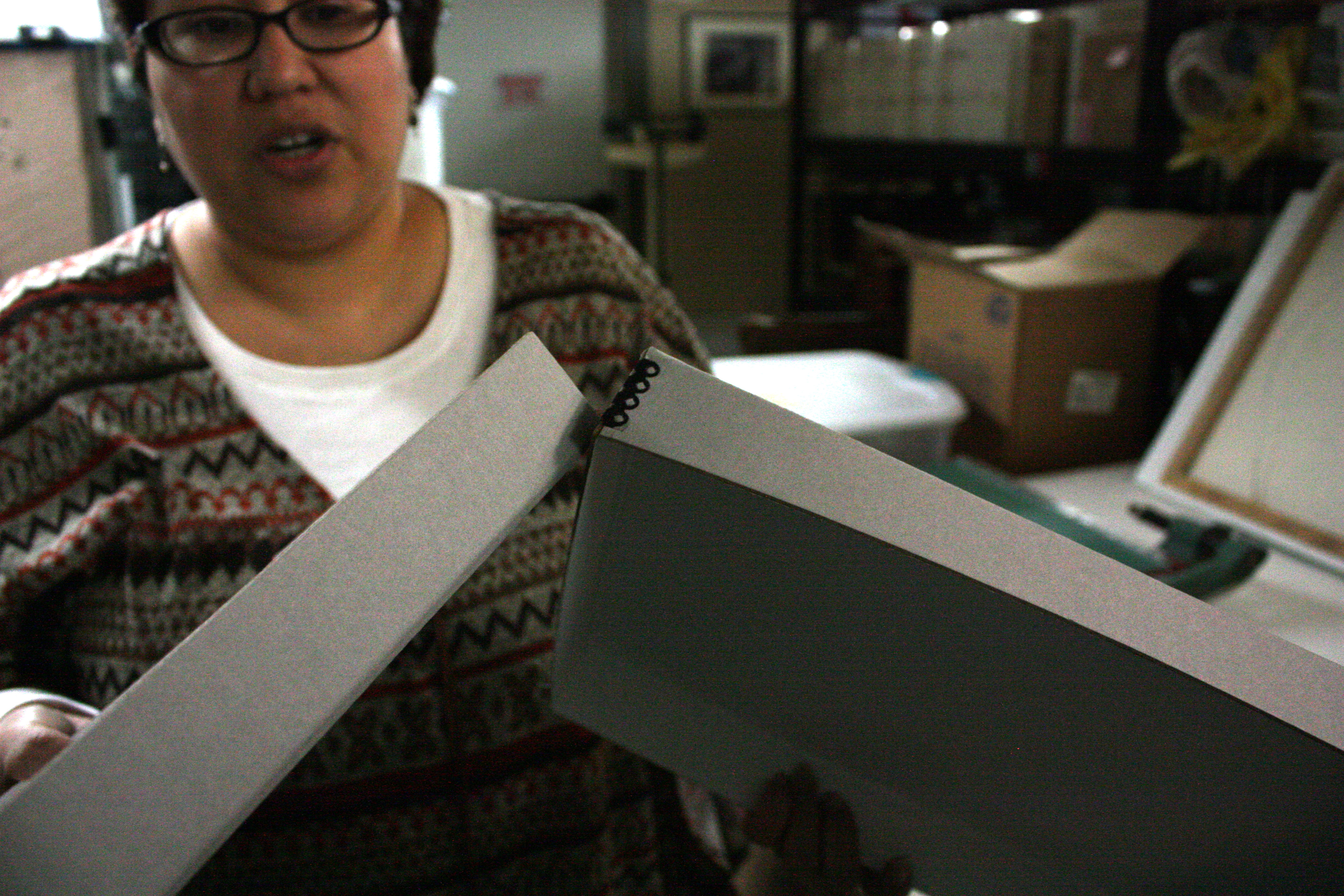
The sleeves — made from polyethylene, polypropylene or polyvinyl — not only protect two-dimensional artifacts from dust and fingerprints, but are thicker than a Ziploc bag, for example, and keep out potentially damaging light rays. The boxes serve the same purpose for larger or three-dimensional artifacts, but are not transparent and are reinforced with non-pinching metal hinges to keep the box from accidentally getting crushed.
The sleeves cost $0.50 to $0.75 each, and the boxes can cost up to $20, so “it adds up,” Ortega-Chiolero said.
“It costs (to preserve things). A lot of people don’t understand that,” she said.
Fortunately for Palmer, grant agencies have been able to help the museum with its various needs in the last year. Thanks to a Collections Management Fund grant administered by Museums Alaska through the Rasmuson Foundation, Ortega-Chiolero has been able to order a high-quality scanner that will produce clearer copies of old photos for a digital Palmer archive, which is also in the works. An Institute of Museum and Library Services grant is paying for development of a new website especially for the museum’s photo archive, which Ortega-Chiolero said should be easier to navigate than some of the other digital archives currently in existence.
As someone who’s worked in a library and watched non tech-savvy people struggle with simply turning on a computer, she’s seen how frustrating it can be for such a person to search an online archive for something unspecific.
“It’s really daunting and it really discourages you from trying to do your own discovery of visual history,” Ortega-Chiolero said.
On the new website, users will be able to search for photos by subject matter, contributor or other broad queries, much like the Kansas-focused jocohistory.org, she said. Contributors will be able to individually determine publication restrictions on submitted photos.
Donors who give photos to the museum at the February open house will receive digital copies on CD, and the originals will stay in the museum’s care, to be shared with the public when an exhibit calls for it or as space allows.
Ortega-Chiolero said it’s important for the people of Palmer to know that what belongs to the museum also belongs to them.
“We may take care of (the photos) but it’s the community’s collection, it’s the community’s history.”
For more information on the museum and the upcoming project, visit palmermuseum.org/local-activities or call 746-7668 during winter business hours, Wednesday through Friday from 10 a.m. to 5 p.m. Selena Ortega-Chiolero can also be reached by email at director@palmermuseum.org.
Contact reporter Caitlin Skvorc at 352-2266 or caitlin.skvorc@frontiersman.com.

By Jeremiah Bartz Frontiersman.com A football coach using a hockey reference as the centerpiece for his keynote address may

Frontiersman.com With its headquarters in Wasilla, the Frontiersman has been a primary source of news for the Matanuska-Susitna

By Katie Stavick Frontiersman.com The next generation of leaders took flight this week as the Houston High School Class

By Kyle Wilkinson For the Frontiersman Keynote speaker and Carry the Cure President Bill Pagaran’s words boomed through the