Retiring teacher, coach urges Colony grads to ‘find their 68’
By Jeremiah Bartz Frontiersman.com A football coach using a hockey reference as the centerpiece for his keynote address may


The top 12 were named and the brackets were set, as voters from around the country made their selections. But this wasn’t a pick for a football tournament. This was all part of Alaska’s annual “Fat Bear Week.” And a winner has been crowned.
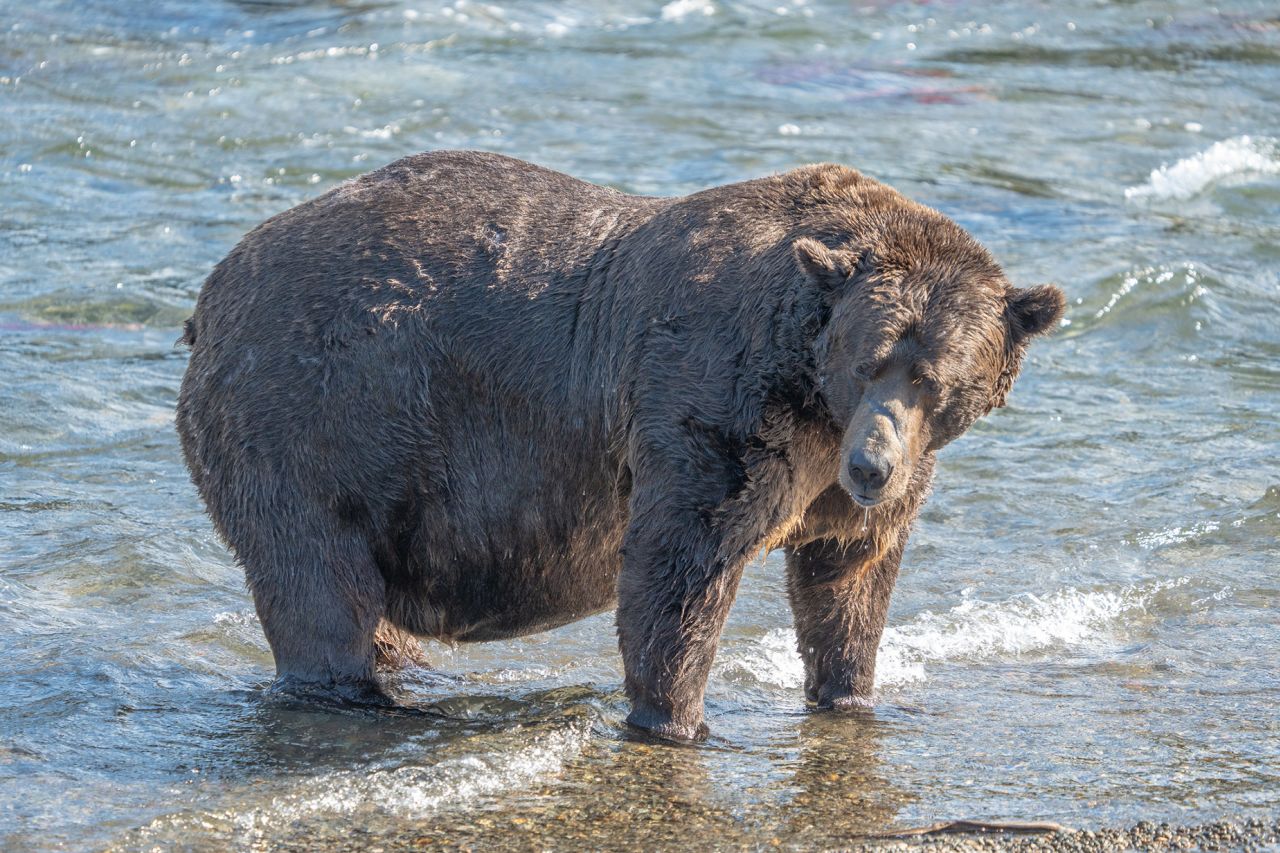
This year’s winner is a defensive mama bear who has successfully raised two litters of cubs and who “often preemptively confronts and attacks much larger bears — even large and dominant adult males,” according to the National Park Service (NPS).
And the winner is…128 Grazer, and she blew the competition away. It came down to Grazer and 32 Chunk. In the end, however, Grazer received 108,321 votes to Chunk’s 23,134 votes, according to Explore.org, which tabulates the online contest for the NPS.
Grazer first caught attention in 2005 as a young cub when she was first identified as one the bears dining in Katmai’s Brooks. “Since then, she’s become one of the best anglers at Brooks River. She can fish successfully in many locations,” the Park Service says.
The year, Grazer was a mama bear flying solo with no cubs to protect, but with her reputation as a fierce mama bear devoted to her littler, the other bears gave her a lot of latitude, allowing her dibs to prime spots and opportunities to fatten up on salmon.
Her closest competitor all the way into the final round was Chunk, an up-and-comer with an “enigmatic” history with other bears.
The male was first identified in 2007 as “an independent, chunky-looking 2.5-year-old bear.” He is a bear of many personalities, sometimes seen playing with other bears, and other times practicing patience while waiting to scavenge leftover salmon. He was often unwilling to challenge other bears for top feeding spots, though.
However, this year, Chunk got more assertive, the NPS said, and it really paid off. Even Bear 747 – the 2022 Fat Bear Week champ – yielded fishing spots and salmon to him. It was enough to get him a low-hanging belly and a spot in the final round.
Meanwhile, last year’s reigning champ, Bear 747, was eliminated in the first round this year, showing that there is no skimping on meals. With winter hibernation looming, it’s truly a ‘bear-eat-bear’ world out there.
Grazer made it through three rounds of voting before facing Chunk, a “mountain of a male” with a “prominent posterior”, according to Katmai.
“Fat Bear Week” began from its humble beginnings as Fat Bear Tuesday in 2014, to over 1 million votes cast last year in 2022, celebrating fat bears and the beauty of Katmai's healthy ecosystem has become a tradition.
“Fat Bear Week” works by allowing fans to vote for one of two bears. The victor then moves on to the next round, to face off against a different bear. Grazer proved to be a real favorite among voters, who were rapt as she “stuffed so much salmon in her face”, Katmai said.
But don’t be fooled by the name—it is by no means a way to fat-shame the brown bears that call Katmai National Park home. For bears, fat equals survival. With winter looming in the air, soon bears will take to their dens for hibernation, where they will not eat or drink until they emerge in spring. During this time, they may lose up to one-third of their body weight as they rely solely on their fat reserves. Survival depends on eating a year's worth of food in six months.
“Fat Bear Week” may have a funny name, but it is also an opportunity for the NPS to educate the public about one of Alaska’s most iconic animals.
In the meantime, Grazer’s prize is bragging rights-she beat out her own cubs for the title, and displaying the resilience and strength is the epitome of Katmai’s brown bears.

By Jeremiah Bartz Frontiersman.com A football coach using a hockey reference as the centerpiece for his keynote address may

Frontiersman.com With its headquarters in Wasilla, the Frontiersman has been a primary source of news for the Matanuska-Susitna

By Katie Stavick Frontiersman.com The next generation of leaders took flight this week as the Houston High School Class

By Kyle Wilkinson For the Frontiersman Keynote speaker and Carry the Cure President Bill Pagaran’s words boomed through the