Retiring teacher, coach urges Colony grads to ‘find their 68’
By Jeremiah Bartz Frontiersman.com A football coach using a hockey reference as the centerpiece for his keynote address may


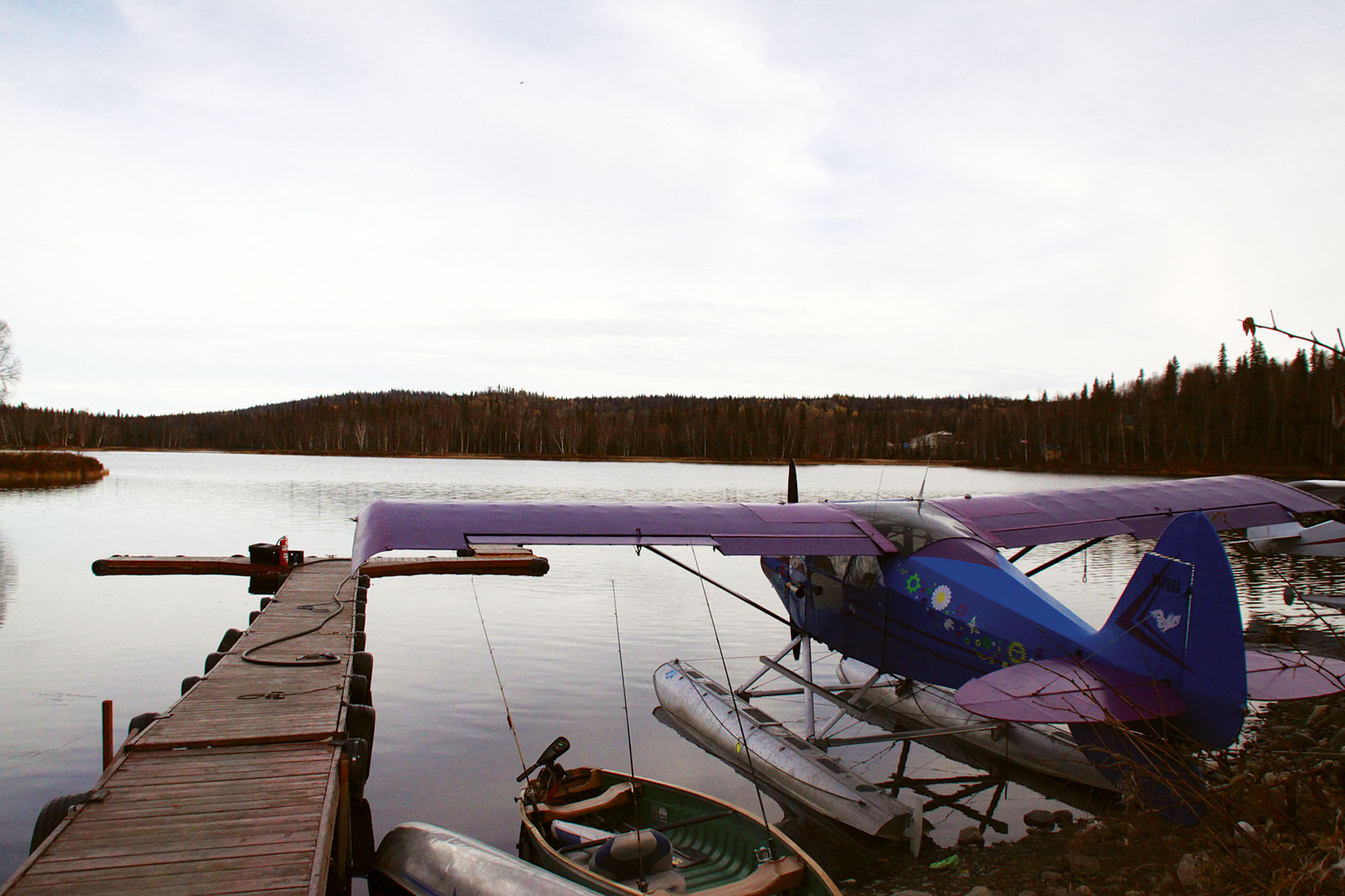
TALKEETNA — More commercial floatplanes will be landing in the Mat-Su in coming years, officials say.
Officials just need to find the best lake.
About 20 Talkeetna residents made the 80-mile drive to Palmer discuss a pair of resolutions by the Mat-Su Borough’s Aviation Advisory Board Thursday. One would have recommended establishing a floatplane base at the Talkeetna Airport and establishing a short-term facility. Another would have asked that a second round of the borough’s Regional Aviation System Plan (RASP) be extended to include the Susitna Valley north of Willow Lake. Both resolutions failed.
Drew Haag, the owner of Above Alaska Aviation, was among residents asking the board to address the measure amid concerns that commercial floatplanes in particular were losing access to take-off and landing zones. The loss of places to land came even as competition for slips at places like Anchorage’s 1,000-plane Lake Hood is intensifying. The last official count listed 23 registered floatplane bases in the Mat-Su borough.
Only two of Talkeetna’s lakes are big enough for use by float planes: Christiansen Lake and Fish Lake. Christiansen Lake is in a Special Use District prohibiting commercial use. Leases were available when Fish Lake operated a floatplane base until this year when K2 Aviation — which owns property at one end of the lake — decided not to renew the lease for Haag’s operation. That leaves Haag’s business (and for that matter any other businesses that might want to use the summertime tourism Mecca of Talkeetna as a base of operations beyond existing capacity) without a place to operate. The absence of a public facility leaves Haag at the mercy of private property owners.
“When you go and look at almost every floatplane base or airport where you have commercial operations, it’s on publicly owned lands,” he said, citing Lake Hood as an example.
That doesn’t necessarily mean something to the scale of Lake Hood is needed in the Susitna Valley, Haag said. What he and other pilots would like is a small-scale operation until funding can be secured for a more expensive floatplane ditch at the Talkeetna Airport.
“The problem here is that we need a public place to operate,” he said. “I’m not suggesting a large regional area.”
Haag isn’t alone. Ernie Koehrer testified via e-mail that restrictions at Fish Lake and among private owners had effectively closed the lakes even for private operators. Some floatplane pilots were turned away over the summer by local air services because of a lack of parking space, Koehrer said.
“I find it incomprehensible that such a very well known and popular tourist region, with a very strong aviation history (wheel and float planes), now no longer can provide any access for public float planes, pilots and their passengers,” he wrote.
Opponents of the measure include Don Lee, who owns a federally registered private seaplane base, and also trains pilots to earn their floatplane certification out of Christiansen though his Alaska Floats & Skis. Lee has operated on Christiansen Lake since 1980. Lee’s operation was grandfathered in prior to the adoption of the Talkeetna Special Use District in 2008. Regulations allow four commercial permits on the lake, but borough officials allowed the other permits to lapse because of an apparent lack of interest, Lee said. The leases on private property on Fish Lake should be enough to keep viable commercial operations afloat, Lee said. He characterized Haag’s proposition as an “end run” around existing regulations.
“This community is very unique in that people are very, very involved in the community,” he said. “Making these SPUDs and development plans and restrictions and these beautiful trail systems, taking meetings and meetings and meetings and hundreds of people were involved. For a town with like 800 people and 80 percent of them at these meetings, helping form the community the way we wanted it to go was a tremendous amount of work, and then someone new comes in and they want to change it all.”
Public money shouldn’t be used to line private pockets, Lee said.
“Being late to the table doesn’t mean that everyone makes room for you,” he said.
Nor is Lee alone. The Talkeetna Community Council voted Monday to oppose the use of Fish Lake as a temporary measure.
The conflict between established commercial operations and user groups and entrepreneurs leaves state officials, like transportation planner Allen Kemplen, caught in the middle. The borough doesn’t contain state-managed float plane base (the northern section of the borough lacks even a publicly accessible refueling station). Nearby lakes long enough for floatplanes also have boaters and other recreational users.
State officials recently separated Willow Lake from Willow Airport management. Willow Lake serves as a multiple-use lake, including the Willow Winter Carnival and Iditarod re-start in winter, as well as boats and fishing in the summer, Kemplen said. Because they can’t guarantee a single-use take-off and landing zone, the seaplane portion of the operations disqualifies the airport from meeting some requirements for FAA grant money, though other money can be used.
Commercial uses are putting pressure on local lakes, Kemplen said.
“Taking a float plane out appears to be something that a significant number of tourists want to do,” he said. “There are a number of remote lodges around lakes accessible only via float planes. As the area grows, as tourism grows, as adventure tourism grows, providing improved access to those remote areas that are not accessible via a road is typically going to be via a float plane.”
The debate comes as the borough searches for potential areas for expanded floatplane use. An August 2008 study identified state-owned Goose Bay Airport, Big Lake Airport, and the borough-owned Seven Mile Lake as the most likely places for a float-plane-focused facility. Additional airport development at mile 121 of the Parks highway, near the state-owned Chulitna Maintenance Station, and a second location along the Chulitna River near the McKinley Princess Hotel might suffice, according to the study. However, both options drew political opposition in favor of the Talkeetna Airport, according to the final RASP airport location study.
The evidence for demand is also largely anecdotal, since DOT doesn’t keep figures on floatplane use, Kemplen said.
Aviation Advisory Board Chair Archie Giddings said the search for a long-term solution for floatplanes has been in the works for at least two decades. When the Wasilla Airport was relocated in 1993, officials used its proximity to Jacobsen Lake, and the possibility of using Lucille Creek to create a float pond, as a selling point. However, the lake runs at right angles to the existing runway, which would require building an air traffic control tower to avoid collisions.
Studies at the time suggested demand could support as many as 100 floatplane slips, Giddings said.
A second phase of the RASP is ongoing, and officials are working to come up with three sites out of 10, Giddings said.
“We haven’t been able to nail one down yet,” he said. “There have been genuine efforts. We just need to come to a conclusion and sort of sort through it.”
Contact reporter Brian O’Connor at 352-2270, brian.oconnor@frontiersman.com, or on Twitter @reporterbriano.

By Jeremiah Bartz Frontiersman.com A football coach using a hockey reference as the centerpiece for his keynote address may

Frontiersman.com With its headquarters in Wasilla, the Frontiersman has been a primary source of news for the Matanuska-Susitna

By Katie Stavick Frontiersman.com The next generation of leaders took flight this week as the Houston High School Class

By Kyle Wilkinson For the Frontiersman Keynote speaker and Carry the Cure President Bill Pagaran’s words boomed through the