Retiring teacher, coach urges Colony grads to ‘find their 68’
By Jeremiah Bartz Frontiersman.com A football coach using a hockey reference as the centerpiece for his keynote address may


WASILLA — Michael Carson of MY House headed up a varied discussion at this month's Mat-Su Opioid Task Force meeting. Included on the Dec. 6 agenda were discussions on the Lazarus Project, re-entry support, needle exchange programs, naloxone and Narcan, school prevention programs and recovery community outreach.
Carson began the meeting sharing some national statistics. He said nationally, there are more prescription opioid users than tobacco users and more substance abuse cases than cancer reported in the United States. In the US, Carson said, someone dies every 20 minutes from substance abuse issues. He said one in seven people have issues and of that number, one in 10 get treatment.
In Alaska, from 2009-2015, illegal prescription arrests have increased 140 percent with a 66 percent recidivism rate overall. That goes to 75 percent for individuals ages 18-24 and fatal overdoses have increased three-fold and heroin use is up ten-fold.
Michael Alter, an emergency room doctor at Mat-Su Regional Medical Center, discussed the Lazarus project. It will focus on the Bridge, a non-invasive, FDA-approved neurostimulator designed to reduce opioid withdrawal symptoms. The device supposedly takes 70-90 percent of the symptoms away, which, Alter said, is pretty amazing.
"We are trying to come up with a plan to coordinate application of this device with medications to ease the detoxification," Alter said. He stressed the need for next day appointments for establishing detox care in an ambulatory setting for a 7-10 day transition period.
Alter said there are plans to find grant funding to purchase around 25 of the devices which cost around $500 each. Alter said there is a good chance that the entire process could be coordinated into a study as it is relatively new. He said all involved are hopeful for a reasonable success rate. The doctor said a social worker student from the University of Alaska Anchorage is interested in coordinating a study that has a good chance of being published.
Although it appears to be a useful device, Alter said it is "not the end all, be all" He said the ability of getting somebody through that first week is crossing a major hurdle. He said it is not a one week process, and sometimes it can be a lifelong one. The doctor said the Bridge, combined with medication and psycho-social counseling can go far but all the pieces must be put together.
Janice Weiss, a reentry coordinator for the Mat-Su Reentry Coalition discussed the process and how everyone involved benefits. She said it's very important to realize its effect on public safety and the process increases helping those in recovery people become successful members of society. In turn, she said the process helps the state save money. Weiss pointed out offered services do not come from new revenues but rather redirected monies.
Reentry is supported through the Mat-Su mental health trust authority, Weiss said. Sixty five percent of those incarcerated have mental health issues. The trust sets funding for the borough coalition. In addition to the Mat-Su, Fairbanks, Juneau, and Anchorage also have existing coalitions. She said others are in the formation process and that one serving the Kenai Peninsula is close to being up and running.
Weiss said the process is attempting to work with those incarcerated before they are released by starting inside and then continue working with them after release. To facilitate that, Weiss said additional case managers are needed. She pointed out the Mat-Su Health Foundation helped fund 1.25 case workers. One full-time works with adults. The second, part-time, works with 18-24 year olds. Weiss said the program is restricted to high or moderate risk individuals.
Weiss is working on a list of places with appropriate services where she can send someone for a specific kind of help. She said the coalition is seeking grant funding specifically for an additional two full-time case managers to serve another 60 people. Weiss said her organization should know if they were successful by the first of the year.
Karl Soderstrom of Fiend2 Clean started by stating if someone would have met him five, six years, or a decade ago, they would be afraid to come around him.
"People in places in my life have made a difference," Soderstrom said. He spoke of windows of opportunity that may pop up in an addict's life. To explain that, he said there may be a time when someone needing help reaches out...if only briefly. If someone isn't there when that door opens, it may close and not open again for days, months or years, Soderstrom said.
"Nationally, we're talking about hundreds. A plane-load a day of people die from opiates alone not to mention ...(it's) actually the nation's leading health crisis. Someone says I want help, you have to be there," Soderstrom said adding there must be community level and peer-to-peer.
Soderstrom said community to community continuum of care provides continuity of services and a communication link between agencies. He said those trying to get clean on their own will most liikely listen to people who came before them. He said the best way to accomplish some goals is to listen to someone who has actually done that. Someone who can provide a mentorship, a role model.
"I'd rather be the guy sitting next to you than the guy standing in front of you," Soderstrom said. "Relationships so much more valuable and effective absolutely crucial to the long-term success of that individual. "
The community end helps clean someone up but then what, Soderstrom queried. Peer-to-peer has the capacity to serve at any level-- pre, during, post treatment in some cases in lieu of treatment, he said.
"Addiction is isolation, the opposite of addiction isn't sobriety. The opposite of addiction is connection," Soderstrom said. "You have to make those connections and strengthen those connections and have genuine relationships with those people who are struggling."
Soderstrom said at all levels, the community is starting to look at peer support and realizing it has value. He referenced US vets coming home with PTSD and severe trauma. Vets helping vets , Soderstrom said, can be much more effective than clinical assistance.
"We need to work to take the shame out of this," said Jerry Troshynski, a regional nurse manager for Alaska's Department of Health and Human Services. Troshynski was referencing the feasibility of introducing a needle exchange program. "In 10-30 years, were gonna look back say you know what, we did the best we could but we know so much more."
Troshynski referenced a county in Indiana where a needle exchange program wasn't available. In a rural county of approximately 5,000 people, he said there were around 200 HIV and hepatitus C (HCV) cases in part because of uneducated policies.
Here in Alaska, Troshynski shared data showing that while numbers of reported cases for HCV has risen for all age groups, the number of cases reported for ages 18-29 has increased from around 160 per 100,000 residents to more than 350 since 2012. The hardest hit region of the state is the southeast where rates have climbed 490 percent. The gulf coast and interior saw the lowest increased at 45 and 75 percent respectively. Here in the Mat-Su, there's a reported 140 percent increase since 2011.
"It's not a cost, it's an investment," Troshynski said about the program. "It needs to be peer driven and it needs to be without shame."
He referenced the fact that there is no shame of a smoker dying from lung cancer. He said it is indeed a tragedy but there is no shame because it's an illness. Troshynski said there are currently four exchange programs in the state. Fairbanks, he pointed out, has gone as far as utilizing a vending machine. The other three are in Homer--which he said is entirely community driven, Anchorage and Juneau.
"Different communities are at different levels. You guys should be proud. You're getting a name, and I think it's a good name," Troshynski concluded.
Greg Estep of the Wasilla Walgreens spoke about naloxone and its inhalable form Narcan. The drug immediately reverses the effects of opioid medications. He began by stating the pharmacy sells up to 1,000-plus needles a day, sometimes 2,000 and even up 3,000. He said when PFD's arrive, "they clean me out.”
Estep said Walgreens as a whole is working on installing needle boxes in bathrooms "...or they end up in the trash." He said of the 774 opioid-related deaths in the state of Alaska, everyone could have been prevented if access to naloxone was available. He said the effects are immediate although the recipient could be violent and that it only works with opiates. He also explained the dosage amounts, costs and insurance coverage.
Mat-Su middle school counselor Tara Moore shared an update on school prevention programs. She said the district is implementing and expanding programs geared toward social and emotional learning curriculum. One of those, Positive Action, focuses on developing and helping build relationships and making good choices. She said there are four pilot elementary schools and the program is a K-12 researched based curriculum. Data shows it improves attendance, decreases discipline referrals and increases grades.
"In the school district, we are doing really good things," said Moore.
Behavior support programs are introduced to every teacher in the school district starting with elementary and moving up," Moore said. Another program focuses on restorative justice utilization instead of things like suspension. She said the goal is keeping kids in school and finding alternates to suspension.
Borough resident John Green lost his daughter to complications from opioid detox in January. He stressed the importance of having options and more importantly, space available if someone addicted wants to set themselves free. He stated there are currently only 14 program detox beds for all of South-central Alaska while the need is closer to 50 per day. Statewide, there is less than 30 beds for a population of approximately 740,000.
Green talked about the possibility of turning the old Palmer Correctional Facility into such a center. He said any such possibility is at least a year away. Green also stressed the important of, and obligation to the citizens of Alaska its Department of Corrections has in providing related services. He said this is more imperative with the state's passage of SB 91.
The force's next meeting is scheduled for Tuesday, Jan. 3, 2017 at Wasilla City Hall starting at 4 p.m.
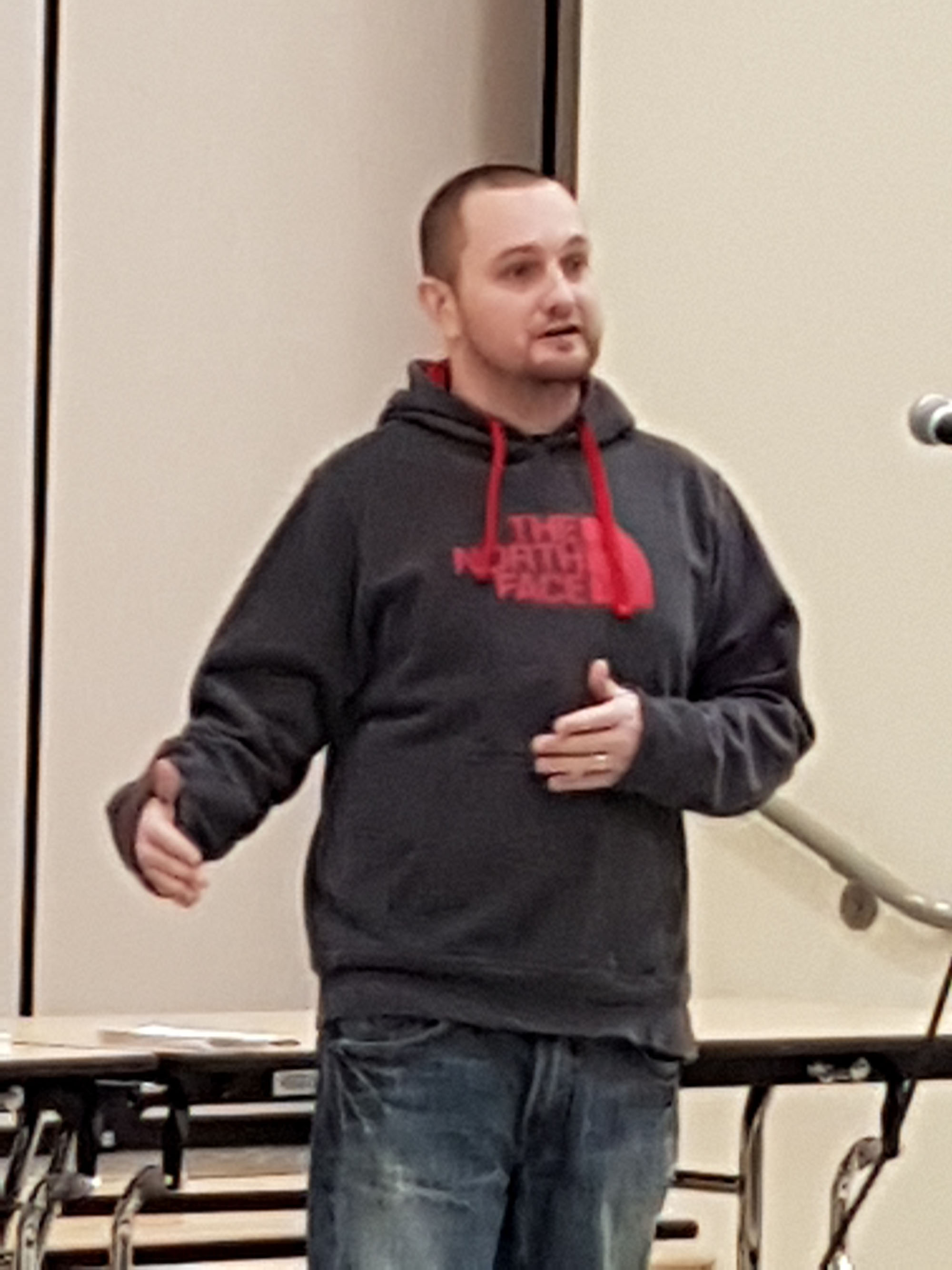

By Jeremiah Bartz Frontiersman.com A football coach using a hockey reference as the centerpiece for his keynote address may

Frontiersman.com With its headquarters in Wasilla, the Frontiersman has been a primary source of news for the Matanuska-Susitna

By Katie Stavick Frontiersman.com The next generation of leaders took flight this week as the Houston High School Class

By Kyle Wilkinson For the Frontiersman Keynote speaker and Carry the Cure President Bill Pagaran’s words boomed through the