Retiring teacher, coach urges Colony grads to ‘find their 68’
By Jeremiah Bartz Frontiersman.com A football coach using a hockey reference as the centerpiece for his keynote address may


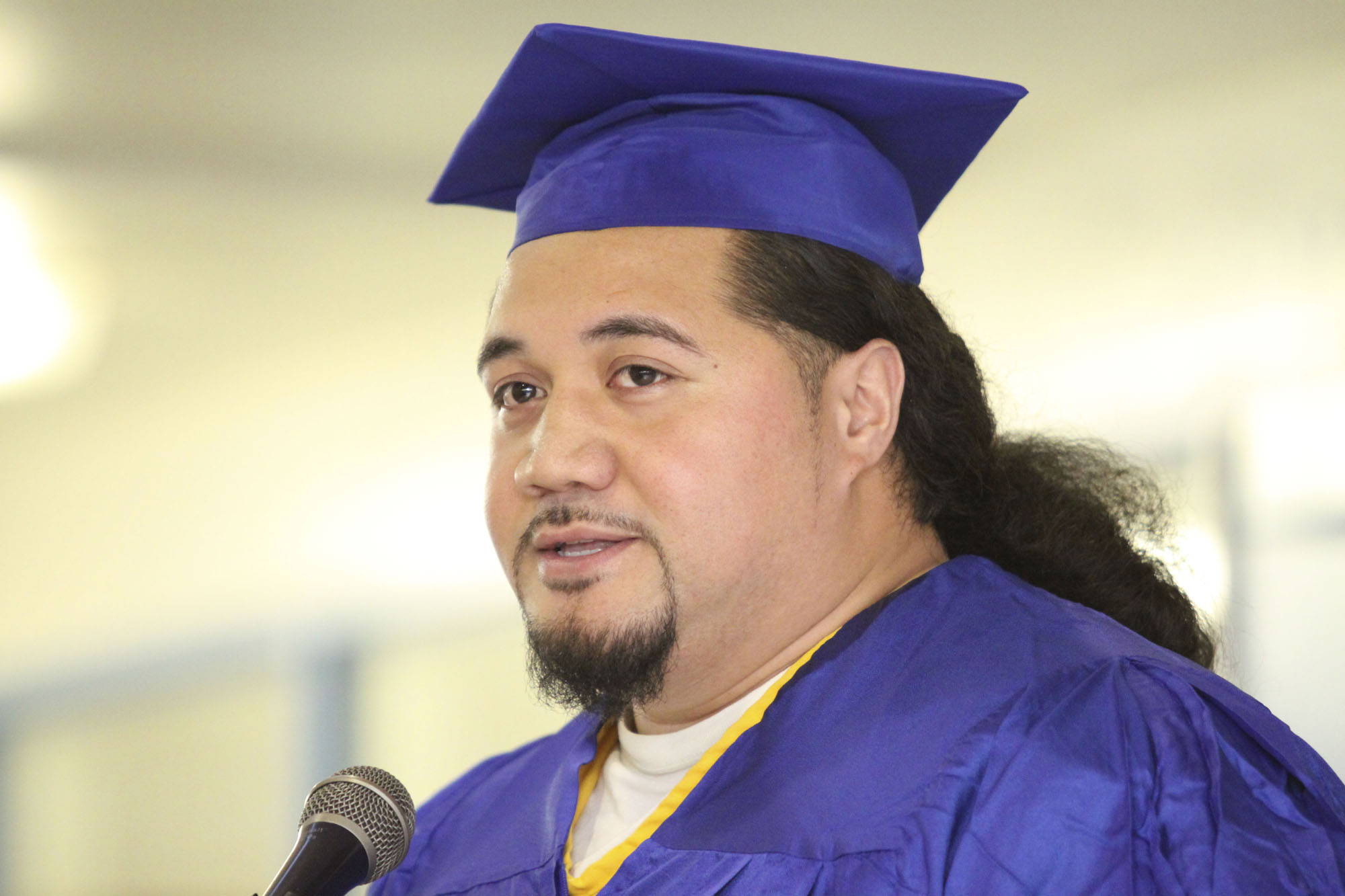
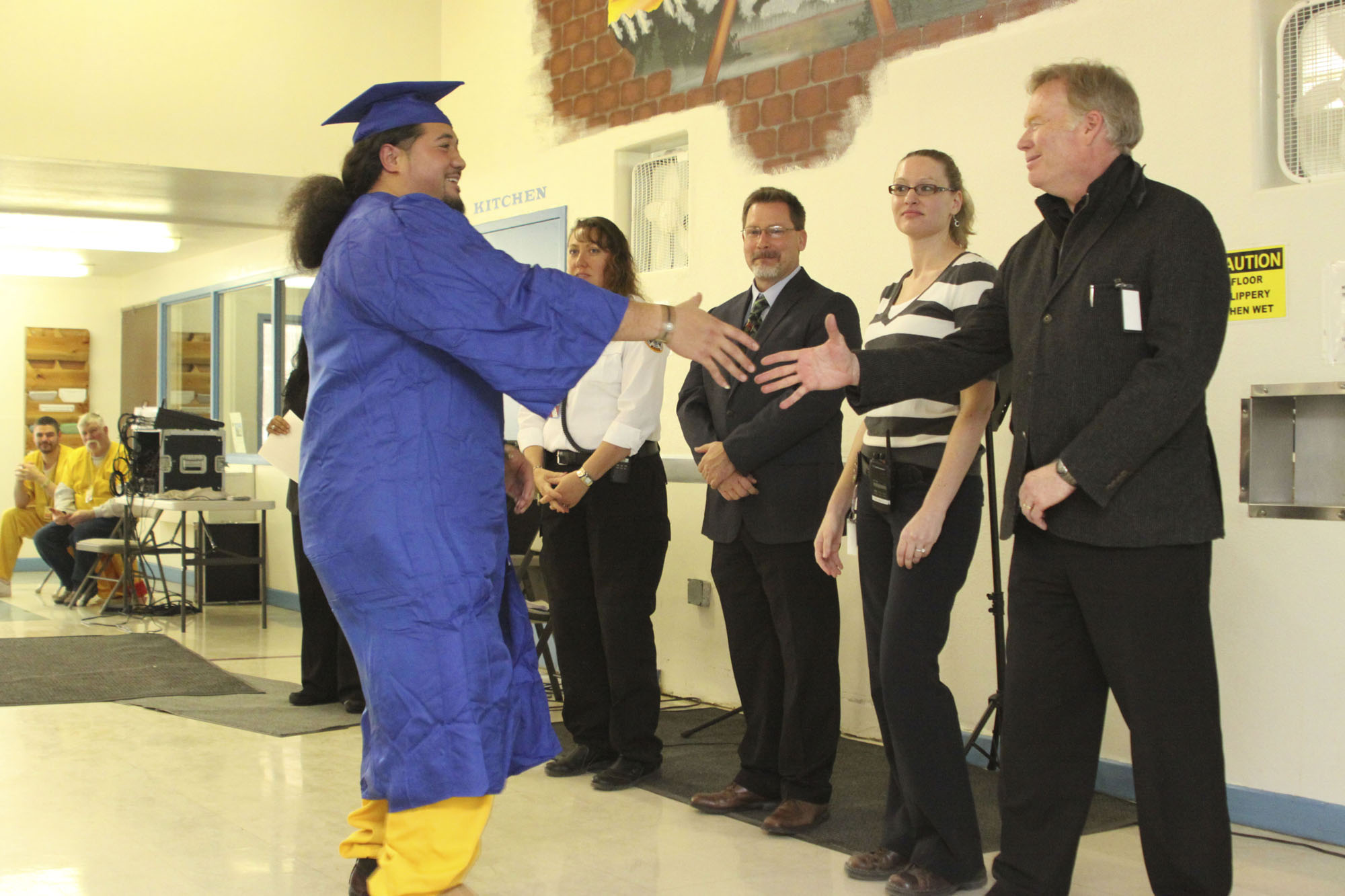
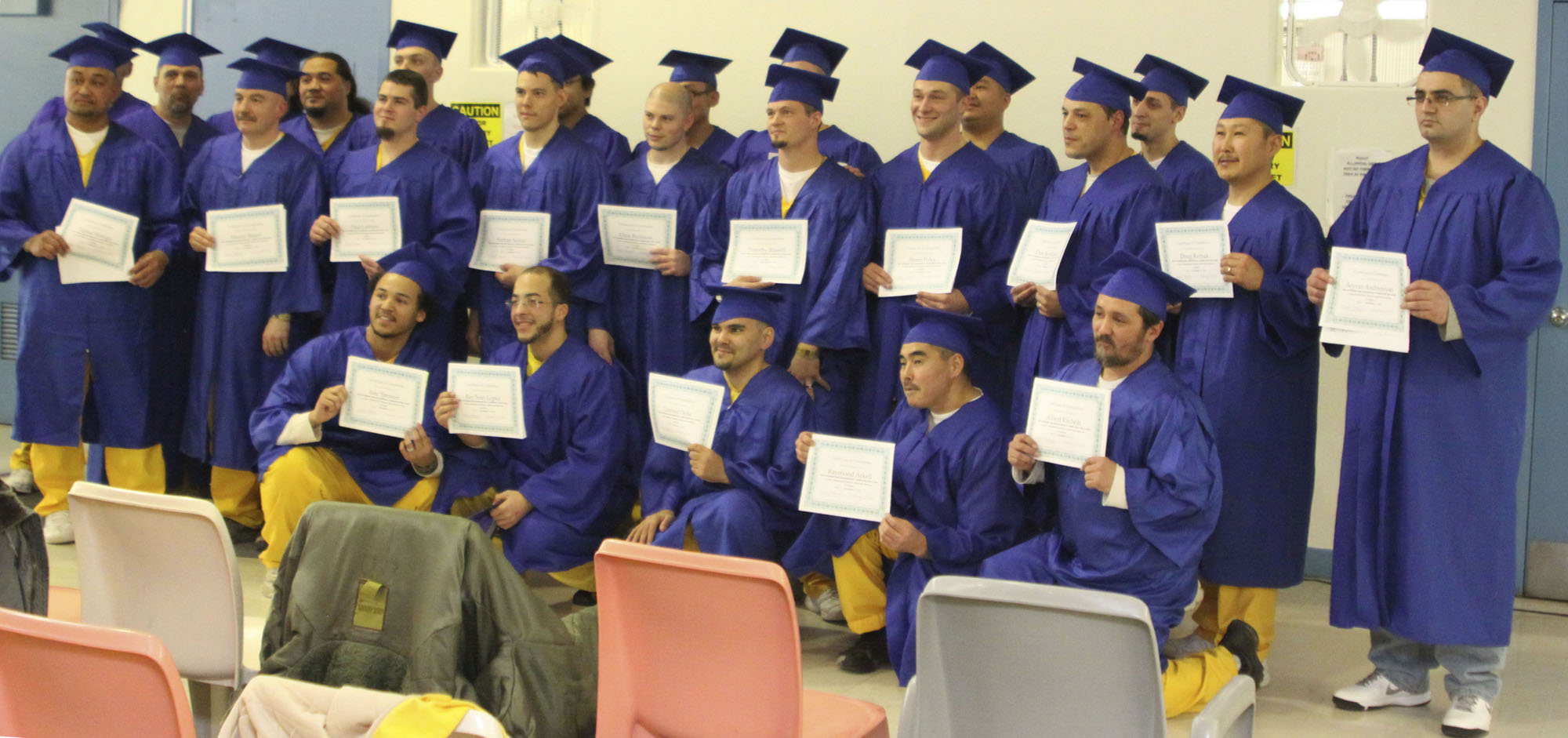
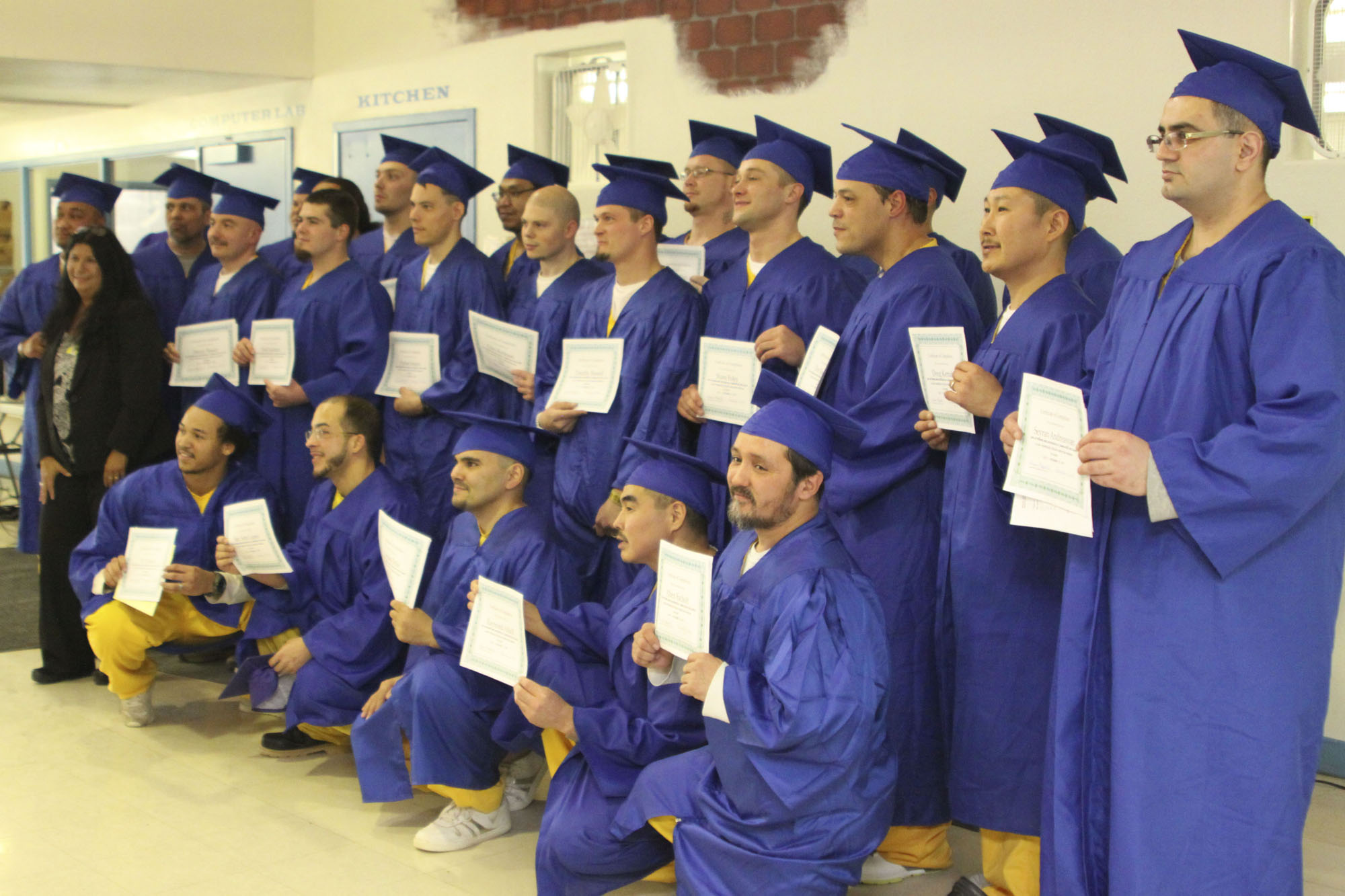
PALMER — But for the splash of orange beneath the v-necks of their graduation gowns and the identical orange pants each wore, the fathers clad in blue caps and gowns Wednesday were indistinguishable from fathers anywhere who share stories and photos to show pride in their children.
Henry Bauer is 43 and in his 20th year in prison.
He was a college student, engaged to the love of his life before their relationship soured and they broke things off before their daughter was born.
Anger and alcohol got the better of him one November night in 1995 and he killed a man. Bauer was convicted of second-degree murder in the death of Todd Jolibois of Port Washington, Wash. Bauer and John Roberts, 21, were convicted of second-degree murder for the slaying of Jolibois, a commercial diver the two met at a Ketchikan bar, according to newspaper accounts from the time.
Alaska State Troopers told the Sitka Sentinel that Jolibois had just returned from a diving job and had a substantial amount of cash in his pocket at the time of his murder.
Bauer was sentenced to serve 21,900 days with 7,300 days suspended. He has served 7,300 days, or 20 years, and has another 14,600 days to serve. That’s 40 years. But there’s hope; he has an appointment with the parole board next year. When he is eventually released, he will be on probation for the next 10 years.
“I am free-er today than I have ever been,” Bauer said Wednesday standing in front of a cafeteria filled with Palmer Correctional Center inmates, more than 25 of whom recently completed the new “Alaska Progressive Prison Parenting Program” — a re-entry program aimed at reducing recidivism.
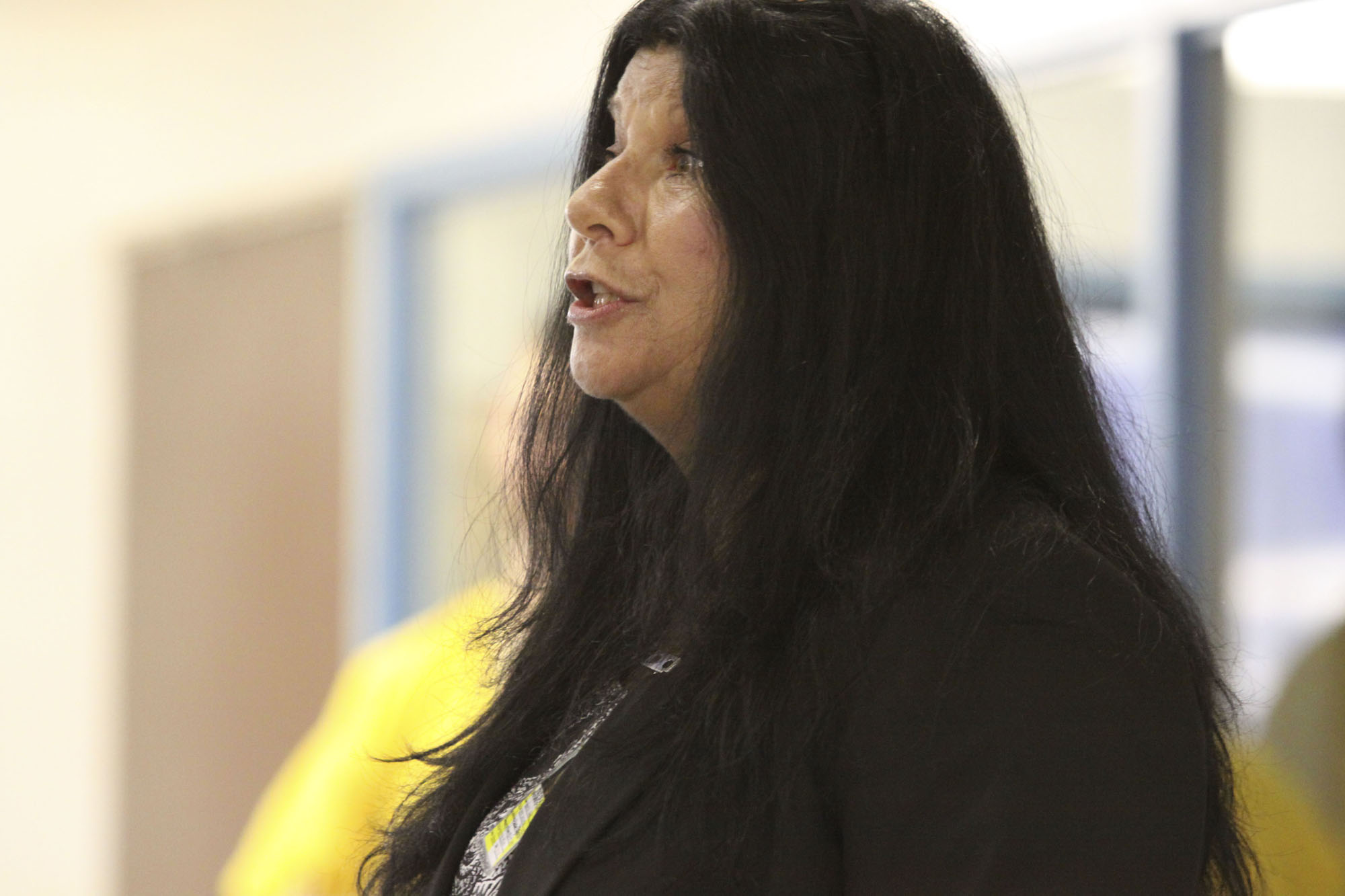
Created by Criminologist and Interventionist Susan Magestro of Anchorage, the five-month program began in July and aims to address recidivism and intergenerational incarceration at five of Alaska prisons, Goose Creek Correctional Center, Hiland Mountain Correctional Center, Spring Creek Correctional Center, Wildwood Correctional Center and Palmer.
“My daughter has a six-times greater likelihood of going to prison — she never even knew me,” Bauer told the crowd at the prison.
He came to prison about the time his daughter, Shay, was born. And though he’s only seen her twice in her 20 years of life, statistically, she and other children with one or more incarcerated parent are six times more likely to go to prison themselves.
Magestro has done interventions with dozens of angry kids with incarcerated parents. Through rough extrapolation she estimated there are more than 5,000 children living in Alaska with one or both parents behind bars. Nationally, she said that number is about 3 million children.
She wanted to help them, but she wasn’t sure how until she began a pilot parenting program at Palmer Correctional Center last year. Working with fathers there, she said an idea jelled: Who better to help these kids than their parents?
“We teach incarcerated parents to parent to their children’s unique needs while they are still incarcerated,” Magestro said. “Who better to parent them than their parents?”
So she began drafting a three-phase program with 10 lessons aimed at teaching parenting skills and strategies along side re-entry planning.
Between 1991 and 2007 there was a 77 percent increase in the number of incarcerated men and a 131 percent increase in the number of incarcerated women, Magestro said. In addition, there was a corresponding increase in the number of children with incarcerated parents, she said.
“Children become collateral damage from the sentence,” Magestro said.
The first of its kind program uses a multi-pronged attack to reduce the number of people who are released, reoffend and return to prison. She said this repetitive cycle creates a sort of truncated grief in children that never heals because the cycle of violation and re-incarceration continues.
She said employment and family connections are key factors that help people released from prison stay out. Her re-entry program works on both fronts by working with prisoners to plan and file pre-release re-entry management plans with Department of Corrections that detail plans for housing, food, clothing, jobs, banking and reconnecting with kids, family and friends.
“Each parent is creating their own plan that includes their children and is put in place before they ever leave,” Magestro said. “A big part of the pre-release case plan is reaching out to the child’s other parent and appreciating them and making amends.
When mothers or fathers are incarcerated, who takes care of their children?
Magestro said most people think the Office of Children’s Services takes custody, but that’s not true. Children don’t automatically enter the foster care system, she said.
Up to one-quarter of children are in faster care, but the most are being raised by a single parent or their grandparents.
“No agency is responsible for these children,” Magestro said.
In her time working with these youths, she said she’s observed a pattern. About one third of children with incarcerated parents are over-achievers and the other two thirds are struggling.
Her goal for this program is to help incarcerated parents intervene and begin helping their struggling children avoid their missteps years before they might be released on parole.
“These are fathers and mother who didn’t know they could be parents behind bars,” Magestro said.
About 250 mothers and fathers participated in the voluntary program this year, she said.
Gary Olsen, with Department of Corrections Division of Offender Habilitation, said based on the program’s early success, the plan is to continue the class.
“It’s such a positive program,” he said. “It’s amazing to see how far it’s come at PCC and the four other facilities.”
Ultimately, the state has an economic interest in reducing the number of people who are released and are re-incarcerated, Magestro said.
A 2011 study by the Alaska Judicial Council looking at recidivism in Alaska for 2008 and 2009 reports that 66 percent of inmates re-offended within three years of release. And 44 percent of those offenses are for new crimes, the highest rate in the nation.
Department of Corrections officials and Alaska legislators — such as Rep. Wes Keller and Sen. John Coghill — site recidivism as a key driver that is filling Alaska’s prisons and putting pressure on the system to build another prison just two years after opening the 1,536-bed Goose Creek Correctional Center at Point MacKenzie, which, it is estimated, will be at capacity by 2016.
Keller, R-Wasilla, co-chairs the Legislature’s Joint Judiciary Committee, which drafted Senate Bill 64, something of an omnibus bill that amends several portions of Alaska criminal law in order to reduce the rates at which inmates in Alaska prisons return to prison or are re-arrested after serving their sentences.
“It’s critically important to find solutions to this, and it’s not just my opinion,” he said during a July 2013 meeting aimed at reducing recidivism.
Henry Bauer prayed for the opportunity to know his daughter. But Magestro’s class taught him it wasn’t about him, he said during graduation ceremonies Wednesday.
“It’s all about helping her and sharing that wisdom I had to learn through life,” Bauer said. “It’s about what she needs. Not about what I need.”
Shay came into his life about four years ago when she wrote him a letter out of the blue. What was his favorite color? Would he like her? Would he write back?
Of course, he wrote back. She wrote letters, they called. She wants to fly up from Nebraska to come see her dad.
“She’s a great kid,” her father said.
Bauer said the program has helped his daughter to build a relationship with her grandparents, too.
As part of the class, parents are required to reach out to their co-parent and their own families and make amends.
“I had a chance to seek forgiveness from her mom,” Bauer said. “Her mom and step-dad raised her and she’s wonderful. I had an opportunity to thank them for that.
“If it wasn’t for Sue taking the time to share these things with me I wouldn’t have the relationship with my daughter I do now.”
Superintendent Tomi Anderson said the program has proven significant for prisoners, their children and their families.
“It’s great in theory, but in application it is even better,” she said.
“This is the hardest class you are ever going to take,” Magestro told parents on the first day of class in July.
Looking back over the last four months, she said parents had learned a lot about themselves.
“I remember your fear,” she said. “But now you believe you can have an impact on our child’s life, that you don’t have to give up parenting. That you can parent now, while you are incarcerated.”
Magestro and Superintendent Anderson congratulated the fathers for completing the voluntary program.
“You are supporting each other father to father and grandfather to father,” Magestro said. “You are making changes not just for your children, but for your families.”
Talaleilei Edwards is a father of two and has been incarcerated for 11 years. He said he’s never had a closer bond with his sons than he does right now.
“This is a step in the right direction,” he said Wednesday.
Rey Soto Lopez was 20 and his girlfriend was two weeks pregnant with their son when he was arrested for murder and felony assault. He was convicted and sentenced to serve 18,250 days, with 7,300 suspended and 1,825 days probation.
He’s seen his son four times in his life.
“Before this class, I spent 15 years thinking about being his friend some day,” Lopez said. “The last five months I’ve actually been his father.”
He’s grateful to DOC and Magestro for the class, he said.
“We’d say ‘it is too late.’ You’d say ‘It’s never too late.’”
“We’d say ‘parenting is hard.’ You’d say ‘Welcome to the club. It’s hard for everyone.’”
Lopez said he thinks fatherlessness was a significant source of a lot of the problems in his life and the class is giving him tools to be there for his son.
“I don’t want to be his friend. I want to be his father,” he said. “I am going to be part of his life.”
Glenn Prince, 68, is the eldest student in the class, a great grandfather sentenced to prison in 2007 to serve 10,950 days with 3,650 suspended for multiple felony counts of sexual abuse of a minor. And when he is released on parole, he will be on supervised probation for 5,475 days.
He has three children. His eldest son is 49. He was 9 years old when his father left home.
“I wish I’d had this class when I was 17,” Prince said. “I want to learn everything I can so when I get out of this place I do the right thing.”
He said his grandson has been to the jail, but he’s out now and his life’s back on track.
“I want the education for my life with my children,” Prince said. “I know I can help him. I don’t want to see anyone come in here.”
Leonard Delie, 29, is from Unalakleet and is the father of a daughter and a son.
He was sentenced to eight years with five suspended and 1,825 days of supervised parole for felony sexual abuse of a minor.
The class helped him forgive, Delie said. Forgive the wrongs committed against him as a child, and the wrongs he has committed as a father.
When his son was 6-months-old, he was adopted by a family from Nome. He will be 6 years old next year. As a father, it brings him joy to see his son smiling and happy. But it also hurts that he is not there to raise his son.
The forgiveness he learned in Magestro’s class made him able to give his son the happiness he never knew as a child, he said.
“I feel like I’ve accomplished a lot, like I’m a different father,” Delie said.
Being incarcerated doesn’t mean you are a bad person, or that you have to be a bad father, he said.
Most of his life, he’s battled suicide and depression and used drinking and drugs as an escape. His last suicide attempt was in 2008 when he shot himself in the stomach.
Delie said he came to a crossroad recently when he decided he wanted to be more than he is now. And that choice has made the difference, he said.
“I am happy that my son is happy,” Delie said. “And one day he may have dreams and chase those dreams.”
Contact Heather A. Resz at 352-2268 or heather.resz@frontiersman.com.






By Barbara Hunt Palmer Buzz It was 6:43 on Friday morning and the Plant Owner was sound asleep when

By Kyle Wilkinson Frontiersman Memorial Day Weekend was filled with a variety of events in Willow. From live music to

By Kyle Wilkinson For the Frontiersman The Susitna Valley Emergency Preparedness Fair will be held at the Willow Community Center

By Barbara Hunt Palmer Buzz Green-Up happened at exactly 9:34 am on Saturday morning in Palmer. This was