Retiring teacher, coach urges Colony grads to ‘find their 68’
By Jeremiah Bartz Frontiersman.com A football coach using a hockey reference as the centerpiece for his keynote address may


KNIK — One of the Mat-Su Borough’s most recognizable vistas has an updated look, thanks to Jon Brautigan and the Knik-Fairview Community Council.
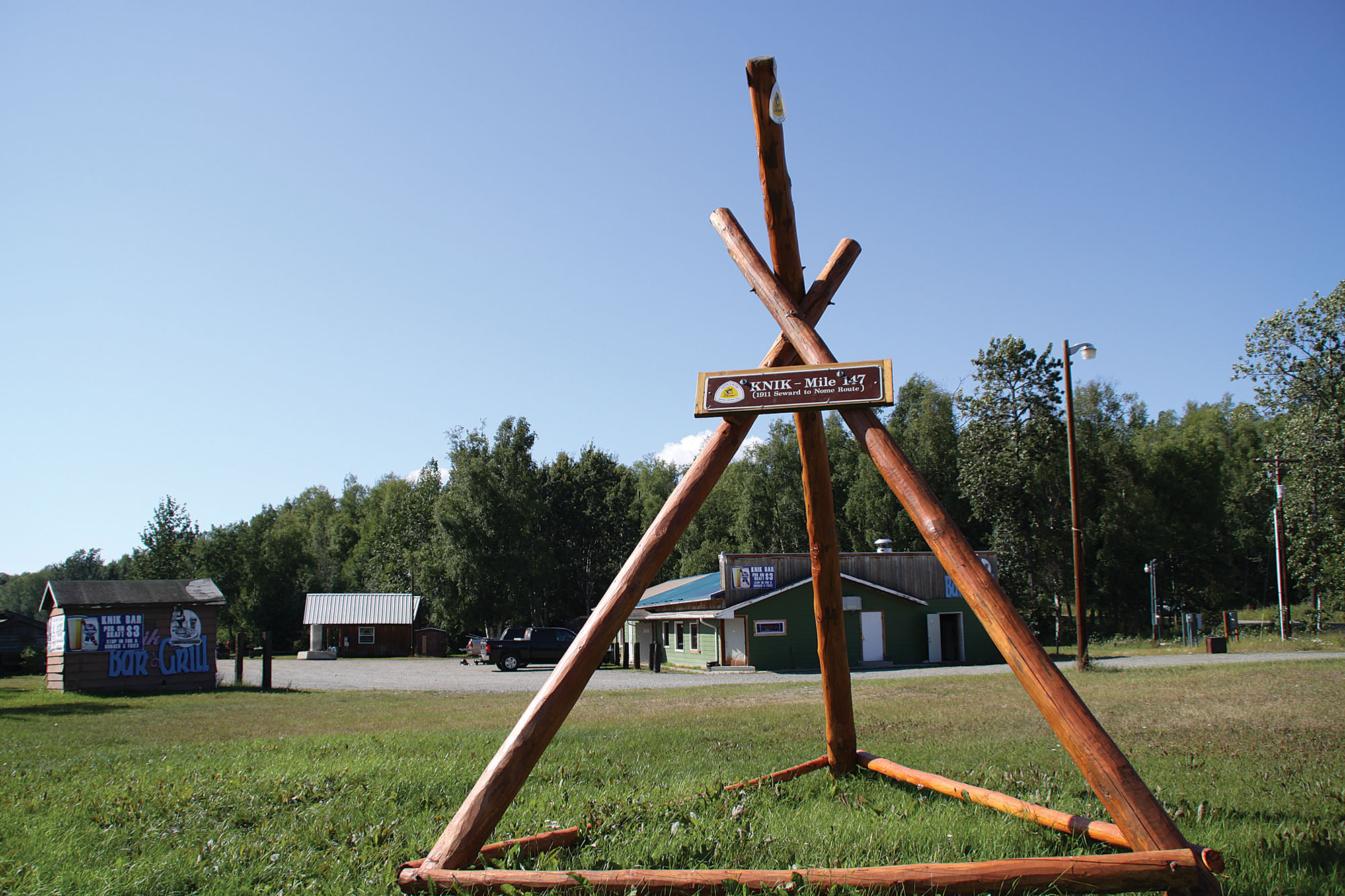
Look to the left as you go down a hill and drop into the Knik Lake area at Mile 13.5, Knik-Goose Bay Road. There you will notice the remains of a Joe Redington Sr.’s old wooden fishing boat, named “The Nomad.” Marching across Cook Inlet along the Iditarod National Historic Trail is a new line of 10-foot tall tripod markers, built and placed by Brautigan.
Brautigan, a longtime member of the Knik Chapter of the Iditarod Trail Blazers, approached the community council about help funding the project, said council president Bill Kendig.
“The whole community is behind it, but Jon is the guy doing the work,” he said. “It wouldn’t go anywhere without Jon.”
Kendig said the community council is working with the Knikatnu Inc. to tie together the area’s three distinct chapters in Alaska history — the traditional culture of the Dena’ina people, the history of Knik and history of the Gold Rush and the Iditarod Trail.
“That pretty much explains Alaska, we’re a blend of traditions and cultures,” Kendig said.
The idea is to develop signage and access to the Iditarod Trail and build it into a year-round asset for locals and tourists, he said.
To that end, a 14-foot tripod and educational kiosk will be located near Knik Lake. The tripod is already in place, and Brautigan said he’s working on the kiosk now.
Brautigan said the Alaska Road Commission began using tripod markers to mark sections of treeless trail more than 100 years ago. So it seemed only natural to re-create such markers to show how the Iditarod Trail bisects the daily lives of many Mat-Su Borough residents.
Iditarod National Historic Trail Administrator Kevin Keeler said the historic Iditarod Trail actually crosses beneath the Knik River Bridge.
“About 30,000 people drive across the Iditarod Trail every day and they don’t even know it,” he said.
Efforts like Brautigan’s help people realize it’s not just a sled dog trail, Keeler said.
Beyond making the trail more visible to passersby, he said the markers also are useful as a teaching tool to show people how markers are used in the backcountry to mark trails and guide travelers.
Similar tripod markers already exist at the beginning of the Iditarod Trail in Seward and at its terminus in Nome.
Brautigan said his plan was to build 11 markers for the section of trail from Knik Lake to O’Brien Creek, but he ran out of markers before he reached the creek. He needs to build a couple more markers to trace the trail to the creek, he said.
During the Gold Rush era, Knik was the hub for the entire region, Brautigan said.
But history passed it by when the Alaska Railroad routed its tracks through Wasilla, he said.
“The railroad changed it all when it went through Wasilla and crossed the Carle Wagon Road out of Knik,” Brautigan said.
Kendig said more work on the trail is planned, once the ground freezes this fall.
The community council has $400,000 to construct a bridge — called the Vi Redington Memorial Bridge — across Fish Creek that will help provide year-round access to a longer segment of trail, he said.
“The man that owned that boat would certainly be proud, Joe Redington Sr.,” Kendig said of Brautigan’s project. “He was all about tripods. He built a lot of them in his lifetime.”
Contact Heather A. Resz at 352-2268 or heather.resz@frontiersman.com.

By Jeremiah Bartz Frontiersman.com A football coach using a hockey reference as the centerpiece for his keynote address may

Frontiersman.com With its headquarters in Wasilla, the Frontiersman has been a primary source of news for the Matanuska-Susitna

By Katie Stavick Frontiersman.com The next generation of leaders took flight this week as the Houston High School Class

By Kyle Wilkinson For the Frontiersman Keynote speaker and Carry the Cure President Bill Pagaran’s words boomed through the