Retiring teacher, coach urges Colony grads to ‘find their 68’
By Jeremiah Bartz Frontiersman.com A football coach using a hockey reference as the centerpiece for his keynote address may


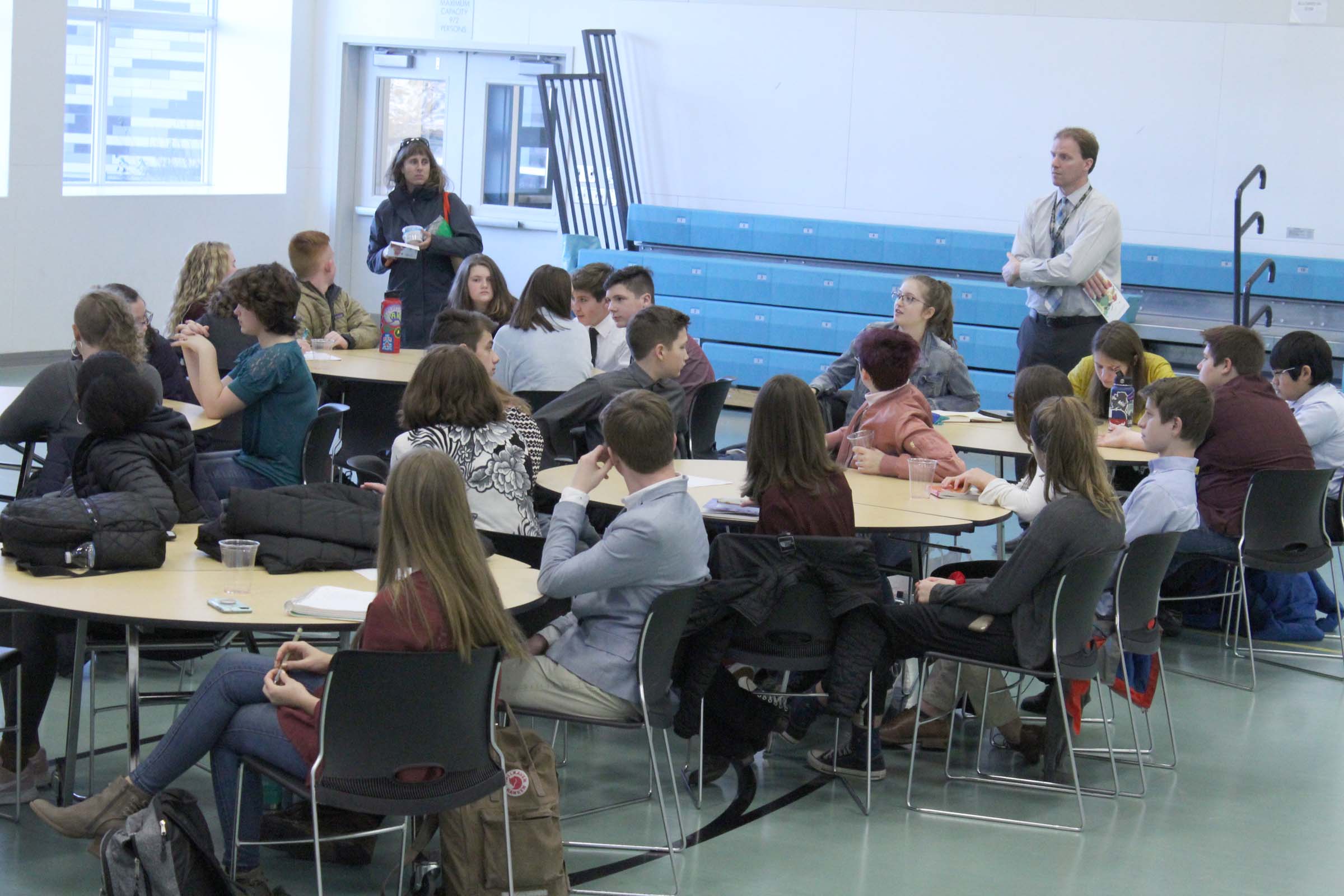
PALMER — A group of 50 students gathered at Valley Pathways School Tuesday to discuss issues and how to change them. While political candidates spent the last few months talking about disenfranchised voters, mental health, and education in rural communities, these student governors are not waiting for the results of an election to get to work on issues that plague the state.
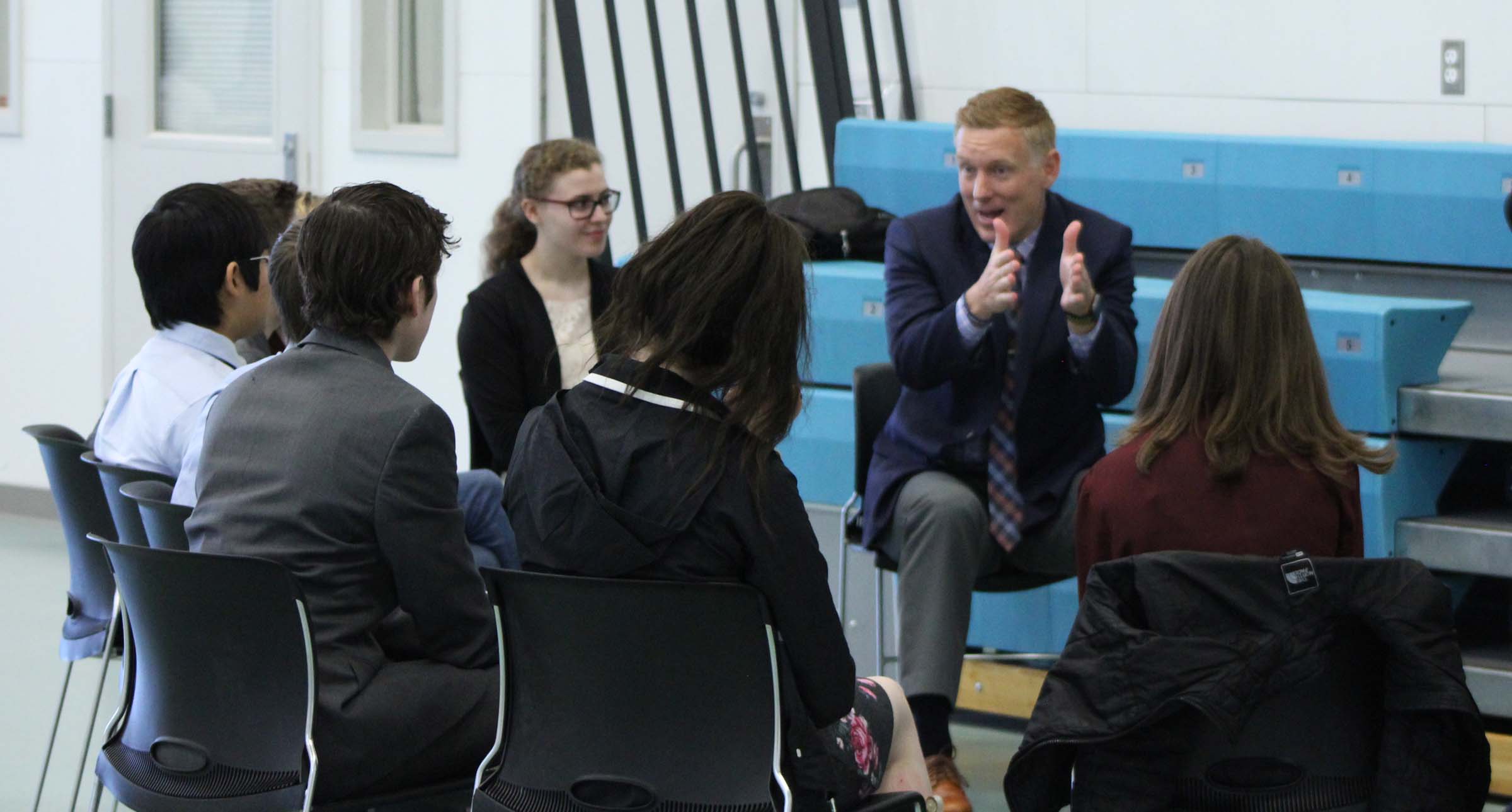
Student Advisory Board is the student government for the entire Mat-Su Borough School District, all 47 schools and 19,000 students. About 50 students representing nearly every middle and high school gather monthly to focus on problems in the state and how to fix them. On Tuesday, students were bused in and met as a large group to discuss a resolution that would lower the minimum voting age in Mat-Su Borough Municipal Elections to 16. The resolution passed, and will be presented to the Mat-Su Borough Assembly. Following discussion on the resolution, the students broke up into committees, just like legislators in Juneau do.
“I don’t feel like Don Young would still be in office if voters cared. Even if they elected somebody way more radical or something, just the same person in the same seat for the second longest in history is a reflection of voter apathy. What we’re trying to do is get rid of that, so I think that’s a big part of what we do here is we want to get people engaged in the process,” SAB President Charlie Michael, a senior at Mat-Su Career and Technical High School, said. “That’s what we’re trying to do is make voting more of a habit. Like, in October, only 13.8 percent of registered voters turned out.”
On Tuesday, students broke up into four committees: the technology and curriculum committee, the activities committee, the engagement committee and the wellness committee. The ideas expressed in committee will form into action, and resolutions will be drawn up by students in an attempt to affect real change. Not all resolutions pass, and not all passed resolutions make it into law, but the process of taking time to deal with what can be fixed and actually do something about it is valuable to the students of SAB.
“You can trace a lot of the curriculum and stuff all back to SAB, ATM’s in schools, open campus lunch, big ideas,” Mayia Gustafson, a senior at Career Tech, said.
Representatives from student governments across the state meet twice a year at the Alaska Association of Student Government conferences to pass resolutions and take workshops. That is where Michael’s minimum voting age resolution was perfected after multiple attempts at passing the resolution in prior conferences. MSBSD schools send large delegations to these conferences, held all over the state, not just to learn and attempt to pass resolutions that will be handed over to elected officials, but to meet and interact with students from around the state who normally would never cross paths.
“We want to bring as many people as possible because we want our voices heard,” Gustafson said.
Much like the state government, the hot-button topic at the last conference was Ballot Measure 1. CTHS Senior Madison Stadem said that debate on that single resolution lasted hours, and students felt passionate about making sure their voice was heard.
“If we have to live here for a long time, we want all of our natural resources to be managed sustainably,” Stadem said.“We debate about a lot more than just new lockers and that kind of stuff, it’s real issues that impact everybody, not just us.”
Stadem hopes to bring a resolution limiting the use of Styrofoam in the restaurant industry to the spring conference. Just as the students that gather monthly represent a diverse community of schools around the Valley, the issues these students tackle is just as diverse. Kennedie Rogers chaired the wellness committee on Tuesday, fostering discussion about safe spaces in schools and how to ensure greater access to counseling for students.
“How can we make this situation better? How can we get counseling after school or before schools, how do we make these safe zones better so students are taking advantage of that and we can get students help more often? We’re discussing how to make safe zones better or to help students be able to go through school and not be overwhelmed, if they are where they can have a place where they can talk to somebody and figure out the situation,” Rogers said.
Justin Ainsworth, MSBSD Executive Director of Instruction, led discussion in the technology and curriculum committee, discussing how the district could offer more Advanced Placement courses to rural students within MSBSD.
“A lot of times we get ideas and start them and we don’t have the discipline and the stick-to-itiveness and the idea dies. Sometimes that idea dies because nothing happened right away. This right now, us talking, is a great start, but you’ve got to keep the idea moving,” Ainsworth said.
The committee discussed how students from Susitna Valley Jr/Sr High School could take American Sign Language courses offered at Colony High School by live-streaming from their classroom in Talkeetna.
“They can then get that face-to-face interaction and can actually ask questions instead of just doing it through an APEX model,” SAB Advisor Anthony Jensen said.
The engagement committee reported the results of a survey that was put out for the entire district and garnered 122 responses. They are looking for more ways to interact with students other than the monthly meetings. MSBSD Public Information Officer Jillian Morrissey sat in on the committee to help SAB try and get the word out.
“Not a lot of people know about SAB, so they have this great group that can actually impact and effect real change, but not a lot of people know about them. They’re trying to figure out how are we going to get the word out so that everyone knows we exist and we work for them,” Jensen said.
The committee discussed hosting a district wide Dodgeball tournament during the spring semester as a way to get their message out to the 19,000 students within MSBSD. Recycling, a major issue in schools dating back to the early 2000s, was another item tackled by SAB with MSBSD’s assistance.
“The results of all their work for the last couple of years is the school district put out for bid and has recycling bins in every school. Those recycling bins have been picked up, because that was always the issue if you recycled,” Jensen said.
Michael started serving on SAB while in middle school, and has also served as the Student Representative to MSBSD. He is prepared to graduate in May, having worked to improve his school district for the last five years.
“The bigger picture is we’re trying to make it so every school is represented as best we can,” Michael said. “A students voice is the most powerful, but I think a group of students voices is even stronger than that.”

By Jeremiah Bartz Frontiersman.com A football coach using a hockey reference as the centerpiece for his keynote address may

Frontiersman.com With its headquarters in Wasilla, the Frontiersman has been a primary source of news for the Matanuska-Susitna

By Katie Stavick Frontiersman.com The next generation of leaders took flight this week as the Houston High School Class

By Kyle Wilkinson For the Frontiersman Keynote speaker and Carry the Cure President Bill Pagaran’s words boomed through the