Retiring teacher, coach urges Colony grads to ‘find their 68’
By Jeremiah Bartz Frontiersman.com A football coach using a hockey reference as the centerpiece for his keynote address may


Among the many titles I carry, the one I identify most closely with is gardener. This may seem strange because as a mother, daughter, wife, friend and volunteer I am involved with relationships and people, yet gardening involves plants and dirt. My children have jokingly accused me of caring way too much about my garden.
I admit that my gardening hobby consumes many of my waking hours from the day I plant the first tomato seeds in March until the last vegetables are harvested, and the last flower beds are laid to rest in September. I plant, transplant, plow, fertilize, weed, water, thin, prune and mulch in a continual effort to make my gardens produce breathtakingly beautiful flowers and a generous harvest of delicious vegetables and fruits. I find joy in this work, but in truth gardening has been my teacher.
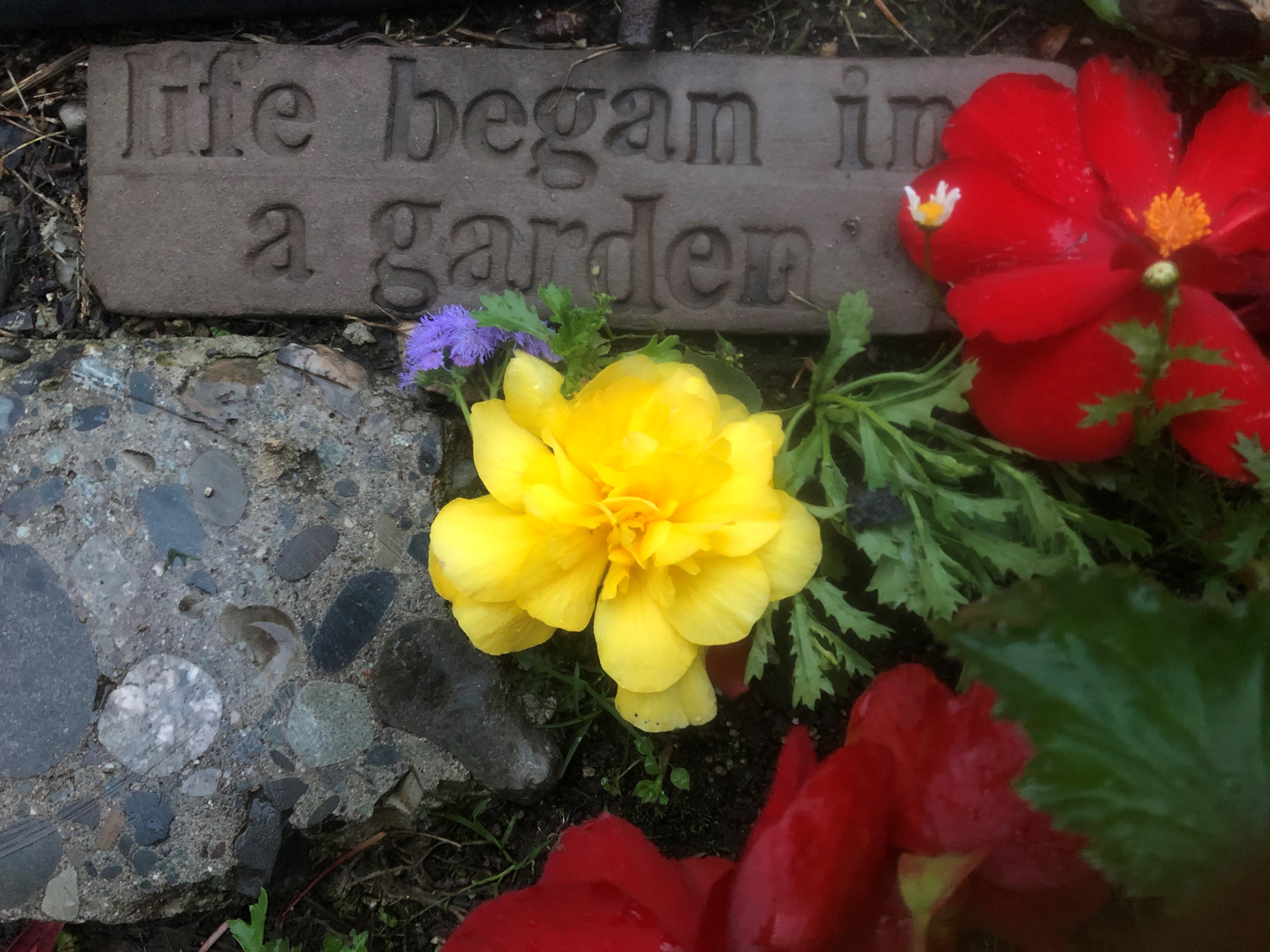
My mother has a little sign posted in her flower bed which reads, “Life Began in a Garden.” This cute piece of garden art is central to what gardening teaches me. Jesus Christ is a gardener. His garden was the first garden on earth. The Lord told our first parents in Eden, “I have given you every herb bearing seed, which is upon the face of all the earth, and every tree, in the which is the fruit of a tree yielding seed,” (Genesis 1:29). And the Lord told them to tend to the garden.
So, I tend to my garden and as I garden, I learn about nurturing plants and about nurturing others.
When I garden I plant in good soil. Christ taught this principle two millennia ago when he gave the parable of the sower, who spread his seeds in stony places, among the thorns and in good ground (Matthew 13:4-8). As any gardener has learned, the expected results for the sower are that the seeds planted in the stony places died for lack of deep roots. The seeds planted among the thorns (I translate that to weeds) are deprived of light and nutrients and failed to thrive while those planted in the good ground produced a generous yield.
I have found that I plant seeds in the garden of my life. When one of my children needs advice or correction, or I have a disagreement with my husband, parent or friend, what seeds do I want to plant and where do I want to plant them? If I want to nourish these relationships, I must plant my seeds in ground prepared with love and mutual trust. Harsh accusing words create stony soil while ignoring the issue (like neglecting to weed) could destroy a loved one, or the relationship I have with them. For some conversations, I must choose the right time, the right place and be patient, knowing that people and relationships, like gardens, take care and time to develop their full potential.
Patience is another valuable lesson I learn from gardening. I am one of the few Alaskan gardeners who insist on growing corn. It is not economical, nor practical. Corn is a long-season crop and Alaska is a short-season state. Nevertheless, the first of May I anxiously wait for a good day to plant out my corn seedlings, protecting them with clear plastic until all danger of late frosts has passed. I watch diligently until the plants begin to tassel in August. The ears appear on the stalks and the silks form on the ears. The ears fill out as the corn kernels grow and swell. I find myself checking the corn daily to see if any corn might be mature. I know that it is not, and yet I strip back the husks of several ears just to see if maybe I can harvest. Each ear I check is inevitably damaged and I am disappointed. When the corn is ready I will know by the full feel of the ears. If I am patient the harvest will come.
Thus, I learn to be patient when expecting harvests in my life. I used to impatiently pry into the developing kernels of my children’s lives, expecting them to be fully formed, prodding them to make the decisions I wanted for them, often doing more harm than good. In due time the children matured. My seven children are now grown with children of their own, working on their own gardens, awaiting their own harvests. My harvest has been generous and beyond expectations.
The Lord has told us much about harvesting. He tells us that we reap what we sow. Where I plant carrot seeds I expect to harvest carrots. When I plant potatoes I never expect to harvest turnips. Likewise, I know that seeds of kindness will grow kindness, charity will grow charity. Conversely, harsh bitter words will never grow trusting committed relationships. My gardens of vegetables and flowers yield an abundant harvest which I share with others and the garden of my life deserves even more care and attention than my gardens of plants
The Lord expects us all to be gardeners on this earth. He may not expect us to plant in literal brown dirt, but every day we are planting in the soil of our lives, and the harvests will come to all.
Carol Kenley grew up in Palmer on a dairy farm. She owns and operates Kenley’s Alaskan Vegetables and Flowers, is a member of the Palmer Lions Club, is on the Board of Directors of Alaska Farmland Trust, volunteers with Loaves of Love nonprofit charity, and until recently served on the board of directors for the Alaska State Fair. Carol is married, has children and grandchildren, and also is a member of The Church of Jesus Christ of Latter-day Saints.

By Darla Petersen Faith Hi! How are you? Good to see ya! What helps you to feel welcome? What do

By Jonathan Rockey Faith Last Sunday, May 24, 2026, was the 7th Sunday AFTER Easter, and celebrated by most liturgical

By Avery Palenske Faith Victor Hugo’s Les Misérables has been a beloved staple of the musical world for decades,

By Kyle Wilkinson For the Frontiersman The Happy Gardener Greenhouse is neatly tucked away in a forest of spruce trees