Retiring teacher, coach urges Colony grads to ‘find their 68’
By Jeremiah Bartz Frontiersman.com A football coach using a hockey reference as the centerpiece for his keynote address may


Wednesday marked the official start of the summer with the Summer Solstice, but most in the Mat-Su have yet to see significant days of sunshine, and it is causing many to wonder if they missed summer.
And while the calendar does say that we are heading into July this coming week, and we can see the snow slowly melting off the mountains and nearly 20 hours of daylight — but blue skies and 70-degree days have been a rarity.
According to Weather Underground, the average high temperature for this time of year is the mid-60’s, and this past week, temperatures have been hovering near those temperatures, as on Thursday, when the high in Wasilla reached 66°.
Last year around this time, temperatures were warmer, averaging a balmy 75°, and the year before was 68°, leading most to think that is what the first days of summer should feel like.
Adding to the misery is the rainy, misty weather.
So far this month, Wasilla has received just over an inch of rain, the most precipitation to kick off a June month in the last several years. The average rainfall totals for June is 0.91.”
Many have tried to make light of the late start, observing that there has already been terminal dust on the mountains, or that 1 day of summer last week was just gorgeous, but for some like Stephen Brown, Professor of Agriculture at UAF at the Matanuska Experimental Farm and Extension Center, the cooler temperatures and rainy conditions are cause for concern.
“We are about a month behind for growing,” Brown says. “The crazy weather is impacting everything from cabbage to apple trees.”
Brown knows his stuff, with expertise in Agriculture and Horticulture, Field Crop Production and Soil Management, Horticulture and Home Gardening, Composting for Home Gardens, Lawns in Alaska, Invasive Plants, Tourism, GPS/GIS, Safety and Alaska Living. He can often be seen teaching various courses at the Extension Farm, such as ‘Chicken University’ and ‘Growing Alaska’s Giant Cabbages.’
“We are coming off of 2 bad years for growing. The previous 2 years have had a cycle of very hot/very cold/rain, and now we are experiencing one of the coldest summers in my 17 years here. It’s unprecedented.”
There is good news, according to Brown.
“With the weather, there may be a push for more people to invest in “hoop-“style green houses. Alaska already has the most greenhouses and hoop houses per capita.” He says that when properly maintained, greenhouses could feed families for most of the year for less than $10,000.
Brown is also hopeful that the weather may lead to better hay crops, which are at a critically low levels.
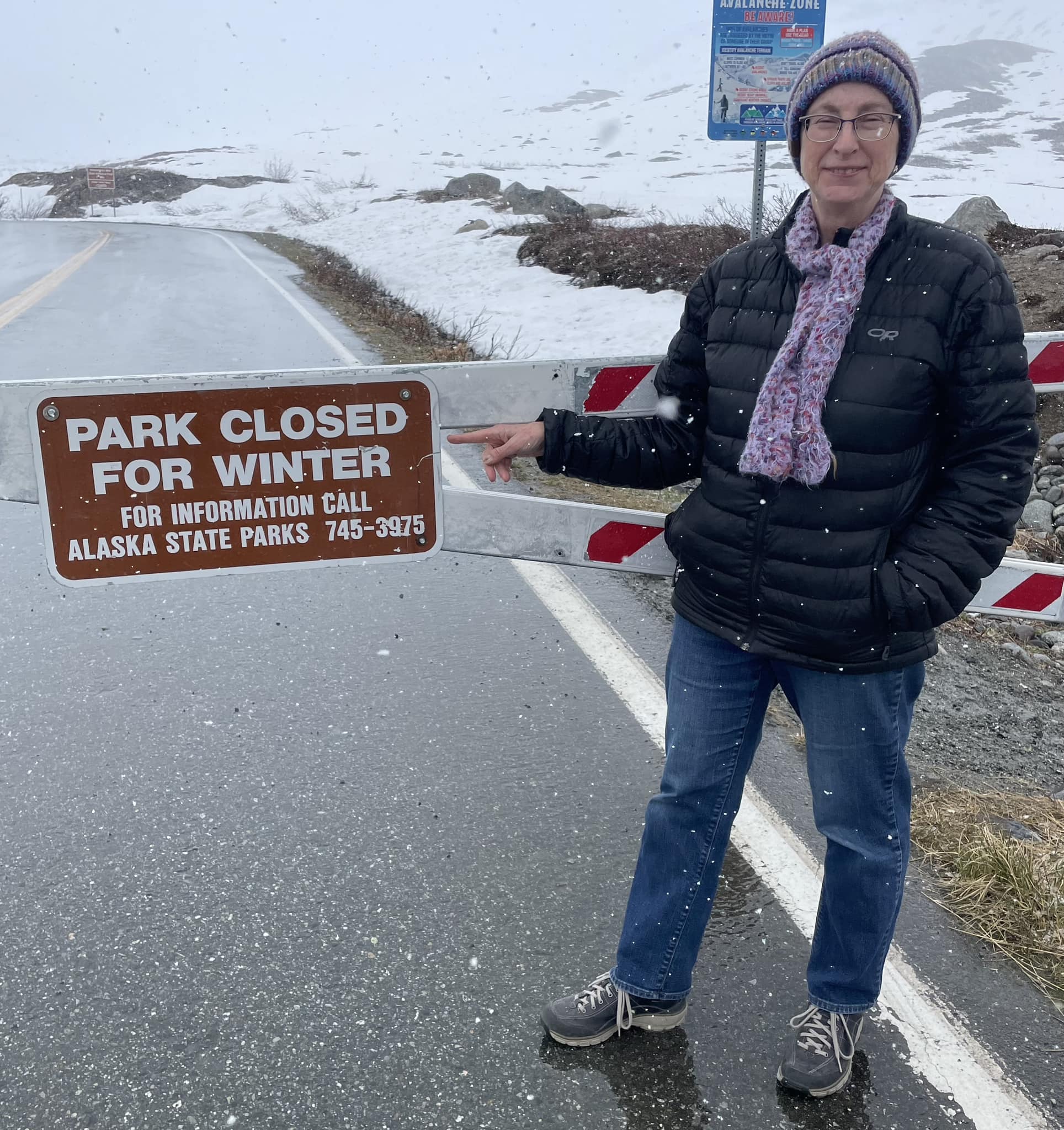
Earlier this month, Brown snapped a photo of his wife while they were hiking near Summit Lake in Hatcher’s Pass, which showed his wife in what appeared to be light snowflakes standing by a closed gate, along with a sign that read, “Closed for winter.” The picture sparked a mini-viral sensation.
“The post hit a nerve with a lot of people and tour companies believing that all of Hatcher’s Pass was closed.
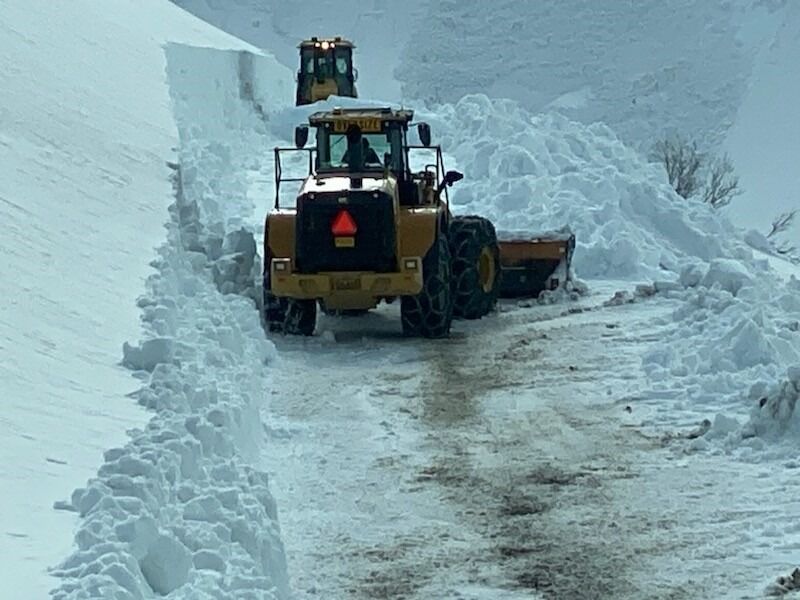
Since then, the Alaska Department of Transportation and Public Facilities has been working to clear and open Archangel Road, posting on Facebook:
“Hatcher Pass (Willow-Fishhook) opened over the summit yesterday (Wednesday) for anyone who missed the post. Still lots of snow up high.”
There is still snow on higher elevations of Hatcher’s Pass, and some have reported soggy conditions, so caution is urged to those seeking to go hiking or exploring.
There was a rare day of sunshine last week when the sun was out most of the day and the temperatures were a beautiful 71 degrees.
For the foreseeable future, daily rain chances, cloudy skies and cooler conditions will maintain a presence in the Mat-Su Borough.
For more information about the Matanuska Experimental Farm and Extension Center, please visit www.uaf.edu/afes/places/palmer

By Jeremiah Bartz Frontiersman.com A football coach using a hockey reference as the centerpiece for his keynote address may

Frontiersman.com With its headquarters in Wasilla, the Frontiersman has been a primary source of news for the Matanuska-Susitna

By Katie Stavick Frontiersman.com The next generation of leaders took flight this week as the Houston High School Class

By Kyle Wilkinson For the Frontiersman Keynote speaker and Carry the Cure President Bill Pagaran’s words boomed through the