Retiring teacher, coach urges Colony grads to ‘find their 68’
By Jeremiah Bartz Frontiersman.com A football coach using a hockey reference as the centerpiece for his keynote address may


Oil prices are again strengthening Alaska’s treasury. Higher oil revenues, thanks to an expected rise in prices and rising production, will bring about $750 million to the state’s general this year and next, the state Department of Revenue announced last Wednesday.
The extra revenue will loosen things up for the state budget, at least for this year, and will help Gov. Mike Dunleavy, who is running for reelection, in his quest for a larger Permanent Fund Dividend.
The longer-term outlook for Alaska’s petroleum industry is still problematic, however.
Fossil fuels are under political pressure worldwide and small companies, traditionally aggressive explorers in Alaska, are having problems.
“They’re having a very tough time raising money,” said Corri Feige, the state Commissioner of Natural Resources.
Major banks and investors groups are newly sensitive to climate concerns. Anti-fossil fuel campaigns by activist groups, particularly for the Arctic, are having an impact.
It isn’t just small independents, either. Investors say they won’t put any money into drilling in the Arctic National Wildlife Refuge or the Arctic offshore.
Even conventional onshore North Slope projects led by larger companied are getting tough questions about environmental performance and interaction with indigenous groups, people familiar with the industry say.
This year Alaska will see one of its slowest winter drilling seasons in years despite oil prices rising to over $80 per barrel. Only two exploration wells are currently planned, down from the six or seven that has been the norm recently.
In the state’s Oct. 2 annual “areawide” North Slope lease sale only two companies submitted bids, and for six leases.
Even the larger companies who operate producing fields on the North Slope are slow to resume in-field work after big cuts last year when the pandemic hit and oil demand and prices crashed.
Alaska’s petroleum industry workforce has dropped to 6,300, less than half the number employed in 2015.
Oil jobs are the highest paying in the state, so the industry’s shrinkage worries the state’s business community.
State officials say banks and equity investors are only getting part of the story, however, and have mounted a campaign to tell the rest of it.
Feige and Lucinda Mahoney, the state’s revenue commissioner, have launched an effort with banks and investment groups to counter the anti-Alaska messaging.
The two commissioners have been meeting with banks and investor group in New York and Houston. Feige said the message she and Mahoney are giving is that Alaska has robust potential for new finds and ample capacity available in the Trans Alaska Pipeline System.
Also, the state’s environmental regulatory framework and North Slope operators’ practices meet investment guidelines of the World Bank and major investment groups.
“Alaska has been meeting and exceeding ESG principles for more than 40 years, and we’re taking a hard look at the reasoning behind some of the more restrictive anti-Arctic investing policies out there,” the commissioner said.
“Without exception, the financial institutions (in the meetings) were unaware of how Alaska does business and how the core principles behind ESG – social responsibility, consideration for and protection of indigenous cultures, and public involvement is behind the decision making around development,” she said.
These are in the state’s constitution, its statute and regulations and are demonstrated in years of best practices by field operators, Feige said.
Mahoney, the state revenue commissioner, is said to have list of banks and investors who have said no to Alaska projects. The two commissioners have clout, too.
Alaska’s sovereign wealth fund, its Permanent Fund., is now worth about $83 billion. Almost every major US investment group has or wants a piece of that. Feige and Mahoney are both trustees for the Permanent Fund. That means phone calls from the two commissioners get returned.
Alaska’s industry faces other problems, though. COVID-19 infection rates are high and that makes companies working in remote locations like the North Slope very cautious, Feige said. Activity is slowly resuming but companies are finding it hard to lure skilled workers back. Operators are also experiencing supply chain problems exacerbated by the North Slope’s remoteness and higher-costs.
But thwe prospects for large discoveries are still there, Feige said. Companies drilling in the recently discovered Nanushuck trend are seeing a 96 percent success rate in finding new oil, she said. Two billion-barrel finds have been made in recent years in the Nanushuck, Feige said.
The commissioner is optimistic: “We’re told by companies that activity levels will be higher next year when the virus and supply chain problems are hopefully under better control,” Feige said.
However, Alaska’s problems can’t all blamed on messaging by activist groups The Alaska industry has suffered some bad breaks in other ways.
ConocoPhillip’s $6 billion Willow project in the National Petroleum Reserve-Alaska, or NPR-A, is now stalled by environmental lawsuits. Also, the Biden administration is unwinding President Donald Trump’s leasing in the Arctic National Wildlife Refuge coastal plain.
The Department of the Interior has suspended actions on leases issued by the Trump administration earlier this year in the refuge.
Rene Santos, with Platts Analytics, say he isn’t surprised at the overall lack enthusiasm for Alaska. Exploring is expensive, the lead times to production are long, and if ANWR and the offshore are off the table, prospects for discoveries aren’t big enough to interest large companies despite the new Nanushuck finds, which have yet to produce and confirm their productivity.
In contrast, companies in the reemerging shale oil plays of the U.S. “Lower 48” are having fewer problems getting financing. “They’re finding it easier, cheaper and the scrutiny over environmental and social performance isn’t as intense,” Santos said.
Some of Alaska’s problems are self-inflicted, too. A state incentive program that backed exploration drilling with cashable tax credits, a boon to small independents, was abruptly ended in 2016, leaving many companies and their banks, suddenly short of funds. More than one small explorer went bankrupt.
Alaska says it will eventually make good on about $700 million still owed small companies on the tax credits, but the Legislature has made payment on the debt at a glacial pace.
A $54 million payment was made in late November, but the payment should have been $114 million under a payoff plan the state agreed to, but has not complied with. No payments were made in the previous two years. This has also tarnished Alaska’s reputation among small explorers and banks.
Feige is still upbeat. ConocoPhillips’ Willow discussions are underway between the company and the US Bureau of Land Management, which manages the NPR-A, on solving problems raised in the environmental lawsuits.
So far the Biden administration has been supportive of development in the national petroleum reserve, in contrast with its position on ANWR.
Meanwhile, some in Alaska think the state and its industry are too focused on past glories to sense new opportunities. Harold Heize. retired senior executive of Atlantic Richield Co. and a former state resources commissioner, thinks Alaska should get with, not fight, the coming energy transition.
Heinze said Alaska should jump on President Biden’s hydrogen bandwagon, for starters, with 35 tcf of proven natural gas reserves on the North Sope that are stranded with no gas pipeline.
Companies could make hydrogen at Prudhoe Bay with the gas to power the huge compressors there used to reinject gas produced with oil back underground, as well as power the oilfields. These facilities are now a huge source of carbon dioxide emissions.
US Department of Energy and University of Alaska researchers are also looking at making liquid ammonia from North Slope gas as a liquid fuel for carbon-free power generation. The ammonia could be shipped through spare capacity the existing trans-Alaska oil pipeline.
As for carbon extracted in making hydrogen and ammonia there are large geologic formations on the slope where carbon could be sequestered and safely sealed by 2,000 feet of permafrost, the frozen rock that underlies all of northern Alaska.
In some other respects Alaska has already moved beyond oil. The state budget, almost totally dependent on oil taxes and royalties a few years ago, is now 70 percent-plus supported by earnings from the Alaska Permanent Fund.
Meanwhile, explorers are perennial optimists. Five of the six leases sold by the state on Nov. 2 were to Bill Armstrong, a Denver-based explorer with a long Alaska track record, and who led the major discoveries in the Nanushuck formation.
Armstrong’s interest is significant and will get the attention of others in the industry. But it’s lonely out there, and tough for anyone trying to raise money.
Richard Garrard, another veteran exploration geologist, said “In my 26 years of exploring the Alaska North Slope the apparent lack of recent interest is unusual and concerning. The lack of exploration drilling this winter is also concerning.”
“I appreciate that much of the onshore area is currently under lease, but I believe the problem might be complicated. With the high price of oil and worldwide (oi) shortages I suspect the state would have expected new interest from other companies and better participation from existing players,” Garrard said.
But in the long run, he feels the problems are man-made and inj the end manageable.
“Everything is negotiable except the geology, and fortunately that is on our side,” he said.
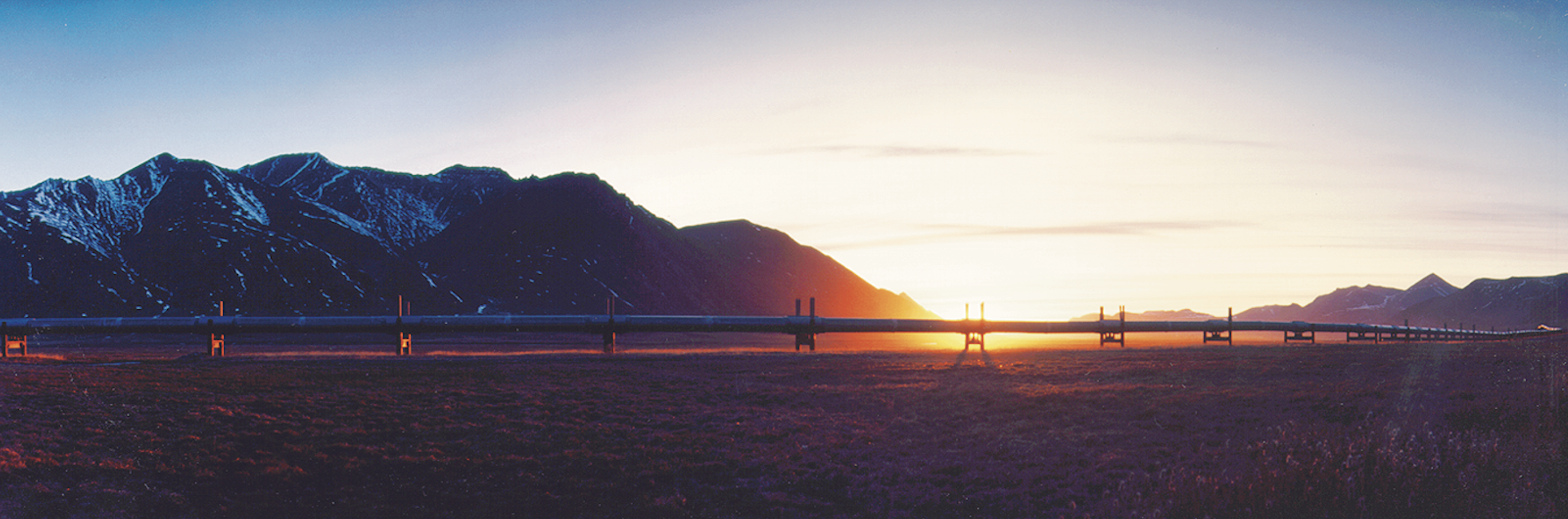
Courtesy of BP

By Jeremiah Bartz Frontiersman.com A football coach using a hockey reference as the centerpiece for his keynote address may

Frontiersman.com With its headquarters in Wasilla, the Frontiersman has been a primary source of news for the Matanuska-Susitna

By Katie Stavick Frontiersman.com The next generation of leaders took flight this week as the Houston High School Class

By Kyle Wilkinson For the Frontiersman Keynote speaker and Carry the Cure President Bill Pagaran’s words boomed through the