Retiring teacher, coach urges Colony grads to ‘find their 68’
By Jeremiah Bartz Frontiersman.com A football coach using a hockey reference as the centerpiece for his keynote address may


PALMER — Carrs-Safeway in Palmer just won the Golden Carrot Award.
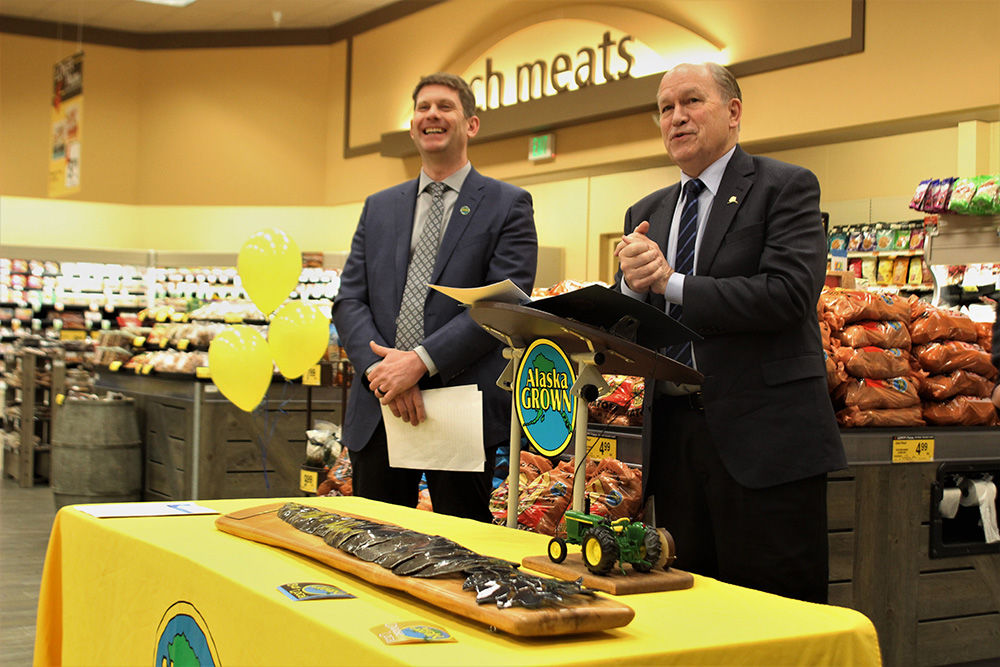
In June, the Division of Agriculture launched a new marketing campaign called the $5 Alaska Grown Challenge. Running until October, local farmers and retailers across the state worked together to promote and sell Alaska Grown products. The challenge was a push to get Alaskans to spend at least $5 a week on local products, be it vegetables, dairy, meat or grains. Various participating retailers including Carrs Safeway, Walmart, Fred Meyer, the JBER Commissary, Save U More, and Alaska Commercial Company were encouraged not only to specially mark the local products, but to make creative displays in the store to highlight the earthy, home grown feel. The stores were evaluated on their displays’ creativity and overall promotion of Alaska Grown. Carrs Safeway in Palmer stood out most to win the coveted Golden Carrot, warranting an award ceremony on Thursday.
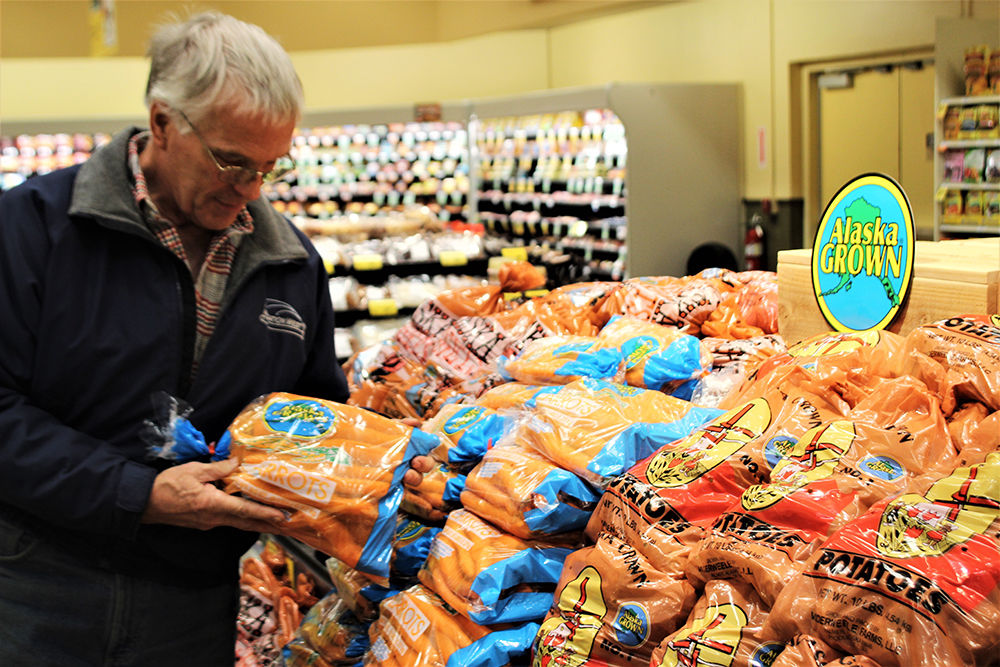
In a crowd of about 30 people in the produce section, appropriately, in front of the Alaska Grown carrot bins, Division of Agriculture Director, Arthur Keyes presented the award to the store. Governor Bill Walker attended to congratulate the staff’s efforts and he advocated for an onward momentum of Alaskans stimulating their own economy with what’s in front of them.
“We don’t need to go out and look for the market; we are the market,” Walker said.
According to Keyes, if every Alaskan spent $5 a week on local products, that would put over 180 million dollars into the local economy. That was one of the core principles driving the effort. Division of Agriculture Publications Specialist, Jennifer Castro said that since a majority of Alaskans do almost all of their shopping at big box stores, making Alaskan Grown a more readily available and openly encouraged option helps consumers make that “local choice.”
“We would love to see more farmers break into retail,” Castro said.
Apparently, the campaign was more successful than anticipated. Many farmers reported to have sold out of their products during the 5 month challenge. A number of farms who didn’t participate in the first year of this campaign have shown keen interest in joining in next year. Castro is hopeful that as time goes on, more Alaskans will make the switch and buy more locally sourced items.
“As the demand increases, so will the number of Alaskan Grown products in Carrs,” said Carrs Safeway General Manager, Reino Bellio.
Keyes commended the staff at Palmer Carrs Safeway, saying they went “above and beyond.” There store featured bright and eye catching displays, the staff wore Alaska Grown shirts, and what set them apart was their handcrafted display in the front lobby.
“It was like walking onto a farm,” Keyes said.
The man behind the ingenious display was Produce Manager, Todd Andrews. He built a replica of a farmer’s market, complete with real dirt and live crops as displays. Andrews replaced the real plants each day to give the display a look of authenticity.
“It looked really cool. People were thinking it was pretty neat,” Andrews said.
Keyes said that this was an incredible first year and now is a great time to be a farmer. He said that Alaska has the “sweetest agriculture in the world.” He praised the higher natural sugars and taste of locally grown carrots like those from Vanderweele Farm.
“This is just the tip of the iceberg,” said Vanderweele Farm owner Ben Vanderweele.
Vanderweele said that people don’t even realize just how many Alaskan crops are out there. Beyond carrots and potatoes, he said that his farm grows at least 15-16 different crops.
Milo Wrigley, owner of Alaska Flour Company said that campaigns like this will help Alaska become more self-sufficient. About 95 percent of the food in Alaska comes from Outside. Wrigley thinks that as more farmers break into the retail market and add a more diverse array of options, the percentage of outsourced food will go down as the Alaskan agriculture’s presence rises, saying it would “chip away at the 95 percent.” He added that since few farmers have markets in the winter time, the retail exposure will help fill the gap.
“This is an opportunity for the local food to take off,” Wrigley said.
Bellio said that with the success of Alaskan food being sold during this challenge, the market for other locally made items is sure to find its way to similar successes. He said that this challenge “highlights the need to purchase locally, not just produce.”

By Jeremiah Bartz Frontiersman.com A football coach using a hockey reference as the centerpiece for his keynote address may

Frontiersman.com With its headquarters in Wasilla, the Frontiersman has been a primary source of news for the Matanuska-Susitna

By Katie Stavick Frontiersman.com The next generation of leaders took flight this week as the Houston High School Class

By Kyle Wilkinson For the Frontiersman Keynote speaker and Carry the Cure President Bill Pagaran’s words boomed through the