Retiring teacher, coach urges Colony grads to ‘find their 68’
By Jeremiah Bartz Frontiersman.com A football coach using a hockey reference as the centerpiece for his keynote address may


PALMER - The Palmer City Council discussed three matters during the Committee on the Whole where the council breaks off from formal meeting organization to hash out ideas and discuss topics on the broader spectrum. The council met before their regularly scheduled meeting to hold a joint meeting with the Airport Advisory Commission and held two COW’s following their regular meeting to discuss Election matters and the culmination of the work of the Remote Seller Sales Tax Commission organized by the Alaska Municipal League. Palmer City Manager Nathan Wallace was proud to report that 2019’s valuation of permits was the second highest year in the last 10. Palmer brought in permits with a total valuation of $29,844,614 in 2019 and collected $176,888.75 in permit fees. The 2019 permitting collections comes in second only to 2016 when Fred Meyer was built in downtown Palmer.
“It just shows how much confidence there is in Palmer,” said Wallace. “It’s a good sign.”
During the brief business conducted within the regular meeting, the council unanimously passed statements of non-objection on liquor licenses for the Caboose Lounge, Iron Horse Liquor and Moosehead Saloon. The council also unanimously approved the alternative allocation method of distribution of FY20 shared fisheries business tax program. The council unanimously voted to nominate Gary Wolfe, Dr. Alex Hills and Betty Pierce for the Golden Heart Lifetime Achievement award. Councilwoman Sabrena Combs respectfully declined her nomination for the award.
ELECTIONS
During the council’s discussion of elections, council members decided to move forward with language from Ordinance 19-011 which was introduced by former Councilman David Fuller and current Councilman Steve Carrington. The ordinance introduced in June of 2019 and tabled indefinitely in October would limit citizens of Palmer from holding office for more than four consecutive terms. A Palmer resident may hold office on the council for two terms and two more as mayor before taking at least one full calendar year removed from office before they would be allowed to pursue office again. With Deputy Mayor Linda Combs and Councilman Richard Best excused from the meeting, little action was taken during the COW’s to determine how to move forward with these complex issues facing the city.
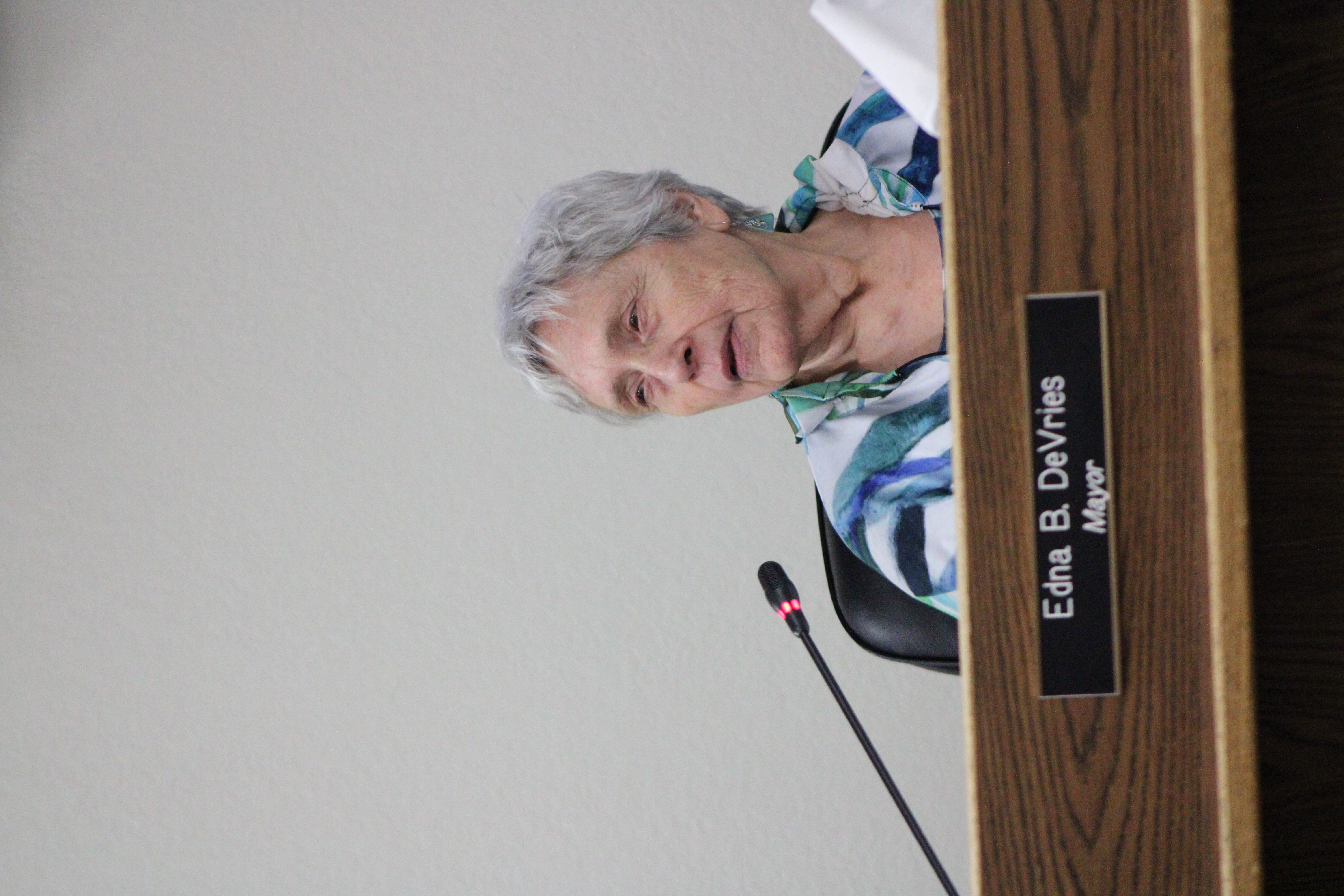
“I would like to hear the full council’s input before we have an ordinance before us,” said Mayor Edna DeVries.
Action that was taken following the discussion of election topics during the COW was Sabrena Combs’ motion to amend Palmer Municipal Code to reflect what is written in the city’s charter, detailing the deadline by which a candidate must reside in the city prior to running for a seat on the council. Among the other topics on elections discussed by the COW, designated council seats were briefly discussed.
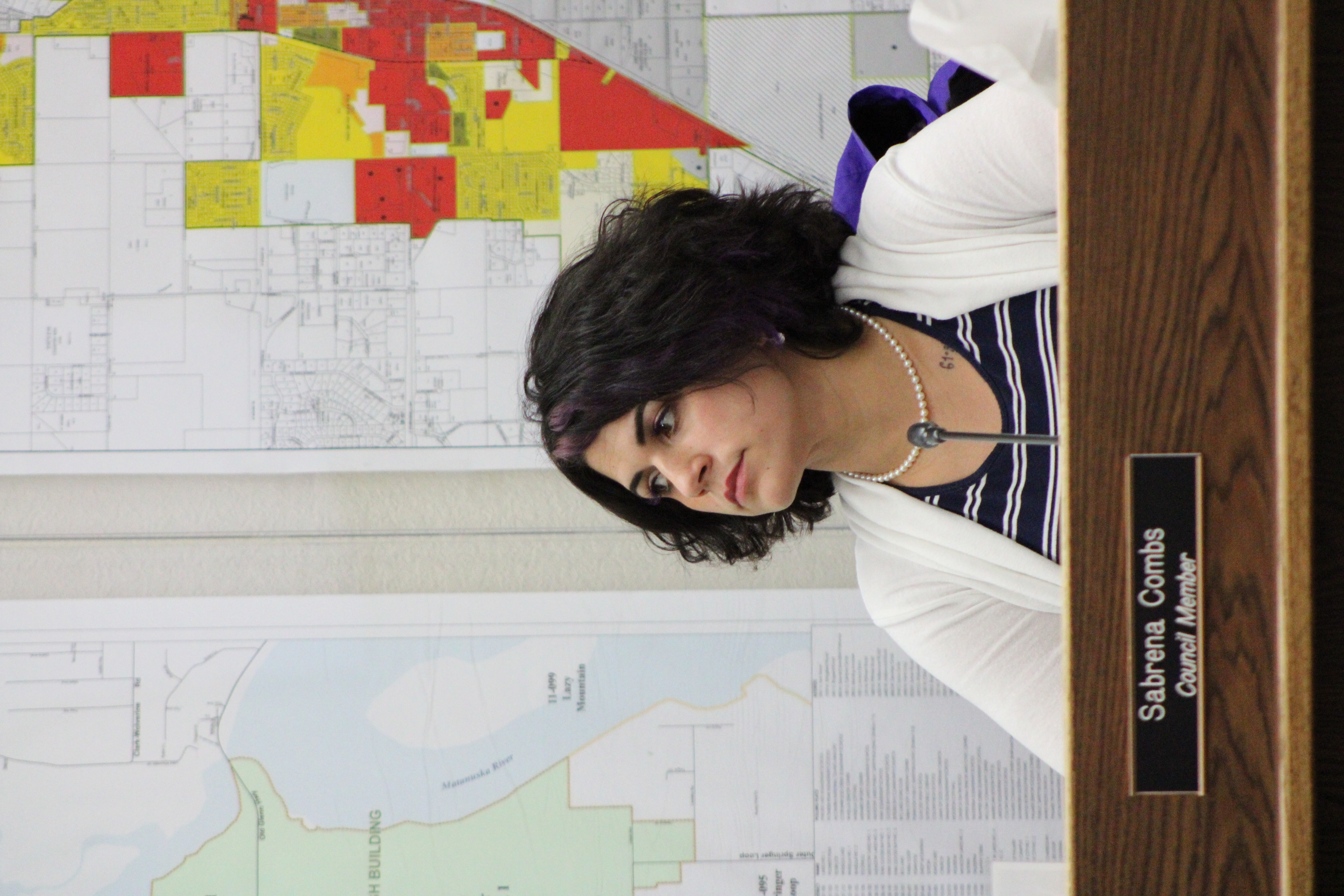
“It’s just my opinion that it doesn’t need to get brought up again. It’s been shot down as recently as last year,” said Sabrena Combs.
City Clerk Norma Alley provided input on the change of election date by the Borough to coincide with the state’s election date in November and the possible cost of enacting a vote by mail such as Anchorage or Kenai. Citing major differences in the sizes of the communities that have already passed a vote by mail measure, Alley believed that a consultant would need to be brought in to accurately determine how much a vote by mail may cost or save the city. Changing election dates from October to November has been discussed by the council intermittently since the Borough moved their elections, forcing Palmer to hire their own election officials and borrow equipment from the borough. The council would not be able to change the date for the 2020 election.
“Them moving into November definitely impacted us financially,” said Alley.
The earliest election the council could change would be in 2021, but the members of the council took no action other than Combs’ motion to amend code to reflect the charter.
ONLINE SALES TAX
Following more than a year’s worth of work conducted by members of AML, the remote seller sales tax commission was formed last November. The culmination of research to determine how to efficiently collect sales tax from remote sellers delivering goods within municipal boundaries as a result of the Wayfair Vs. South Dakota United States Supreme Court decision finally landed in the agenda of the council on Tuesday. The finalized tax code would add a supplemental section to Palmer’s existing tax code, and the city has 120 days from the January 6 introduction of the remote seller sales tax code to adopt the ordinance or be removed from the commission. The parts of code that would be added are strikingly similar to Palmer’s existing code and Wallace said that the intent was to level the playing field for brick-and-mortar businesses competing with remote sellers.
“This isn’t going to be a big boom in my mind. It’s going to be good money, we’re going to see six figures in this but it’s not a multi million dollar prospect for the city and I would venture to guess that I don’t think it’s going to be in the hundreds of millions, much less 50 million for the state just because of how many people don’t live in taxing jurisdictions,” said Wallace.
The cost of collecting and remitting the online sales taxes would come at an 18 percent administration fee, which Wallace said was not pretty. Wallace estimated that about $437,000 in online sales tax revenue could be collected annually in Palmer and asked the council if they wanted to remove the $1,000 sales tax cap that currently exists to continue to keep the playing field level for local and online retailers.
“That kind of leads me into the software that’s behind all this. We got a demonstration of it. It’s pretty slick, if that’s an official term. It’s so slick that we’re going to try and pursue having that for our own brick and mortar reporting,” said Wallace.
The council has until May to adopt the sales tax code or be removed from the commission.
AIRPORT
The Airport Advisory Commission had a joint meeting with the council prior to the regularly scheduled meeting to provide an update on goings on at the Warren ‘Bud’ Woods Municipal Airport. While the council had passed a measure last year to allow for an aeronautical campground at the airport, the council was informed by AAC Chair Ken More that the borough had made a last-minute deal to put a hangar on that land instead, to the surprise of many council members. More detailed the increased traffic at the airport, noting that in the last decade, employment numbers have bustled from under 150 to about 350 during the seasonal Division of Forestry activities at the Palmer airport. Palmer benefits from pilots shopping for fuel at Palmer due to small discounts and the increased amount of fuel sold to Forestry planes during the height of fire season.
“It’s hard to put a thumb on what kind of fire season we’re going to have, but all indications do point that we’re going to have more problems rather than fewer,” said More.
More said that 168 aircraft are now based at the Palmer airport and annual operations have grown from $28,670 in 2007 to an estimated $38,000 last year.

By Jeremiah Bartz Frontiersman.com A football coach using a hockey reference as the centerpiece for his keynote address may

Frontiersman.com With its headquarters in Wasilla, the Frontiersman has been a primary source of news for the Matanuska-Susitna

By Katie Stavick Frontiersman.com The next generation of leaders took flight this week as the Houston High School Class

By Kyle Wilkinson For the Frontiersman Keynote speaker and Carry the Cure President Bill Pagaran’s words boomed through the