Retiring teacher, coach urges Colony grads to ‘find their 68’
By Jeremiah Bartz Frontiersman.com A football coach using a hockey reference as the centerpiece for his keynote address may


At the Palmer High IB Art Show, students stand beside their art, explain and defend it.
“It’s a good opportunity for students to have direct contact with their audience,” said Anna Folsom, IB Art teacher at Palmer High. This gives their art purpose and importance.
The IB art exhibition is the culmination of a two-year process built on developing their voices. “They’re given very open-ended prompts,” Folsom explains, “and they decide what medium they want to use and what to say.” The class runs much like a college Art class with students generating their own themes, studying artists from a global perspective, and building a body of work around themes of their choice.
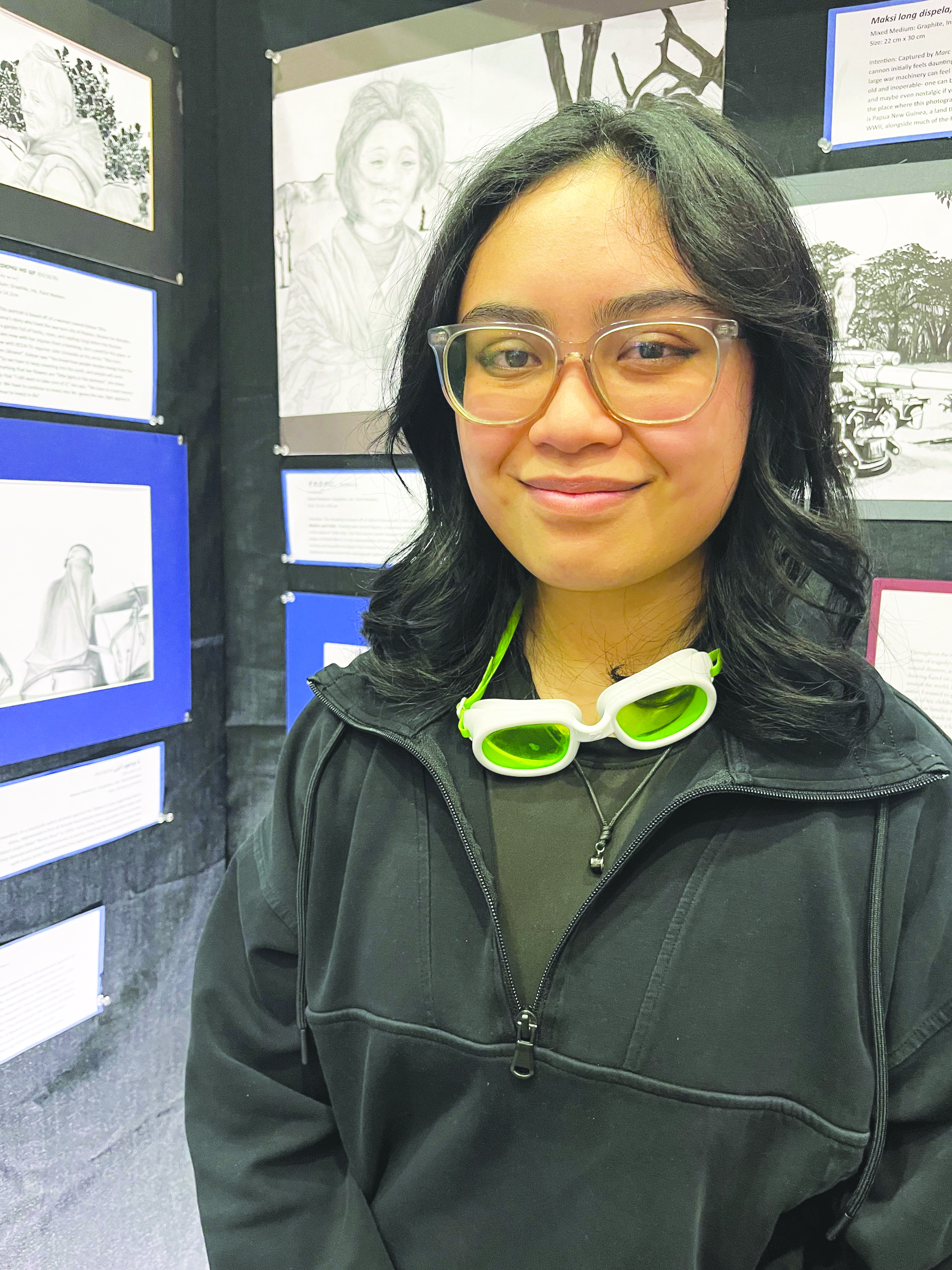
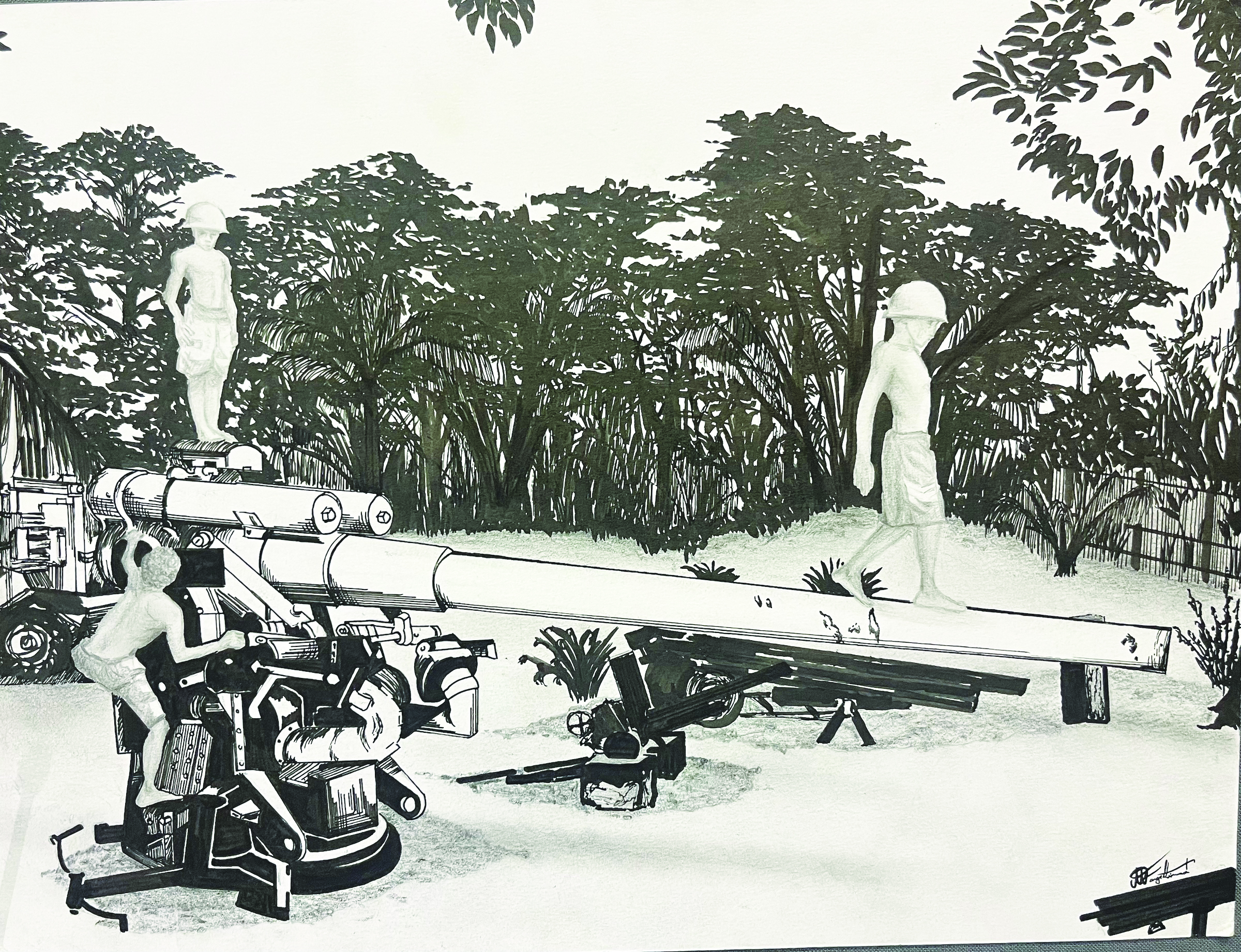
Fagaltinmad said art can be a commentary on human suffering.
“I actually come from a group of islands called Micronesia in the South Pacific,” she explains. During and before World War II, her islands were occupied by Japan. “A big part of that occupation was not being able to speak our language,” says Maruko. “A lot of the people I grew up with actually have Japanese names; that was the norm at that time.” The nickname “Maruko” and her reframing of her peoples past hardships into hope is an enduring theme in her art. “Even though it has a bit of taboo history to it, I choose not to look at it this way,” she says.
Every piece in her exhibition begins with the phrase: “Despite This,” it’s a lens, grounding her art in cultures shaped by hardship, yet finding hope. Maruko is drawn to the hardest edges of history where she is looking for human resilience to suffering.
“I was always driven toward the darker sides of history,” she says. “ I like to show there is hope that comes out of those moments.” That perspective took shape while reading Black Rain in her IB literature class, which recounts first hand experiences of the Hiroshima bombing. “I wanted to take that and expand it to a global framework,” she explains.
“I specifically chose Despite This,” she says, “because despite certain tragedies that humans experience, we are able to come back...we have this natural resilience built into us.”
Even in a world she describes as “destructive and immoral, she believes humanity has reached a point where hardship has, paradoxically, made people stronger. “In my own world view,” she says, “suffering can be a way to enlightenment.” . For her, suffering is a shared human experience that can, as she says, “not only betters yourself, but serves other people, and brings out strength in your life.”
Art shines a light on inner emotions, Pericht said.
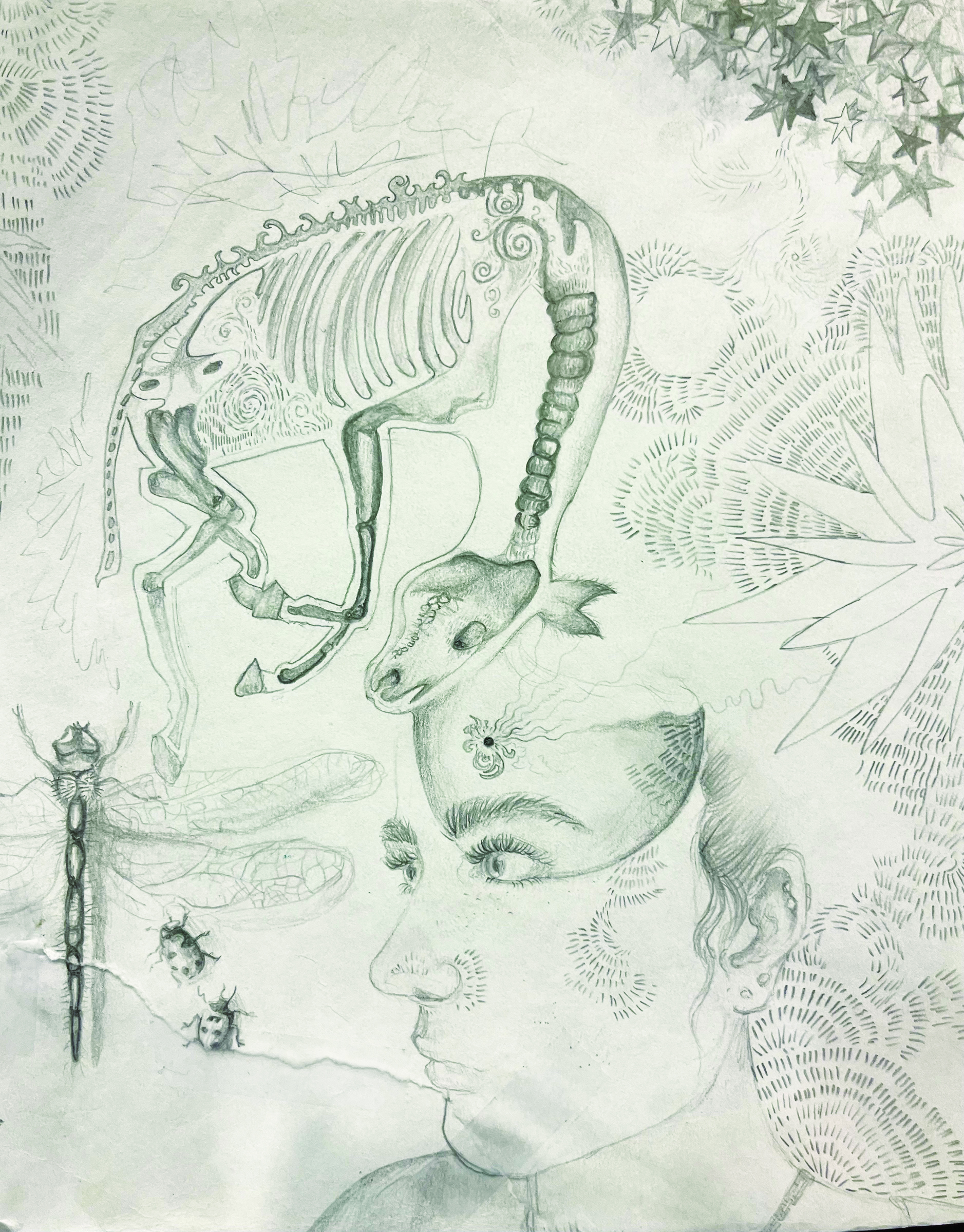
“I struggle with vulnerability...” says Charlotte. “I can’t even tell my family about anything. It’s debilitating.” In her art Charlotte explores her struggle to deal and express her emotions to others, and builds an inner language of her emotions out of images. Because for her, the barrier isn’t just emotion, it's expression.
“I am really bad at reaching out and talking about my emotions,” she says. “So I use art... without having to risk embarrassment or judgment.”
In her reflection series, self-portraits are drawn with fine, restless lines. “The lines are all the thoughts I am having and each line is an emotion,” she explains. “It’s me... reflecting on how I am feeling.”
In ignorance, that tension tightens. A girl contains a horse inside her body, “cramped down,” as Charlotte describes. The horse is part escape and part her imagined identity. “She’s ignoring everything she is feeling,” Charlotte says. “She is pushing the horse away.” The image is controlled, compressed and an admission that not every coping strategy heals.
“When I am struggling with my emotions,” she says slowly, closing her eyes for a moment, “I like to ... visualize...manifest...disconnect.” In those moments, her mind is its own refuge. “I imagine my future...somewhere I’m happy...making art...being at the beach...” Then, laughing, she adds, opening her eyes and looking out the window, “I imagine myself as a princess... or a horse.” She laughs again at the absurdity and comfort these images bring.
Charlotte describes herself as being acutely self aware of her emotions, but unable to express them out loud, art has become a vehicle to release this tension and a companion for her sense of loneliness.
“Someone always has greater problems than me,” she says. “I try to think how good I have it... I can walk, I have legs.” This is a way of holding her pain and keeping herself steady. “I really try to keep myself happy,” she says, “without having someone else as an outlet.”
Solitude, isolation, and feelings of loneliness are an unspoken undercurrent in her work on emotions, “I find myself being lonely sometimes and not having that many people to talk to,” she admits bravely towards the end of the interview. Art helps Charlotte safely cross the bridge towards human connection, where vulnerability is cloaked in shapes, color, and line. Charlotte state, “...the lines are all the thoughts I am having.”
“I feel like I am pretty aware,” If someone else is not able to talk about their emotions... and they feel like the whole world is just on them... my art is telling them that there are ways you can help yourself without having to reach out.”
Simeroth is already designing for what comes next.
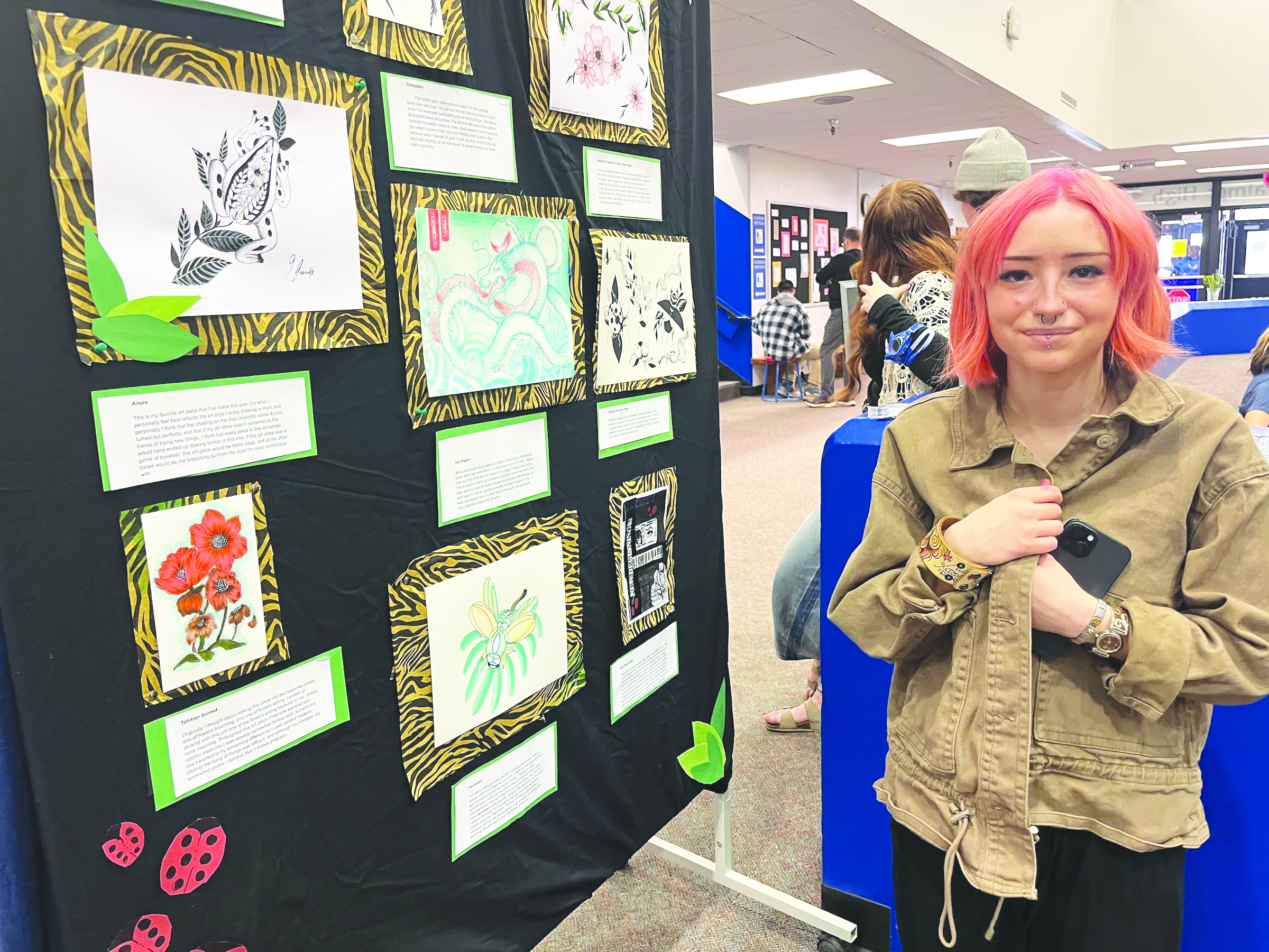
“My theme this year... is working towards a future career in art,” says Skyler. And she’s not waiting. “I’ve been going around to different tattoo shops and getting a feel for what people are looking for.”
That focus shows up clearly in her IB exhibition work; clean, bold designs that could live easily on a flash sheet. “Flash sheets are what they give you if you don’t know what you’re going to get,” she explains. “You have options laid out to choose... it also showcases the tattoo artist’s skill.”
Even without a machine in hand, she’s thinking like a tattoo artist. She’s studied the tools, the process, the physical demands. “The machines; they’re thick, heavy, bulky,” she says. “You’re holding it like a baseball... it’s not the same as drawing with a pen.” She understands that moving from paper to skin takes more than drawing; it takes control, precision, and awareness.
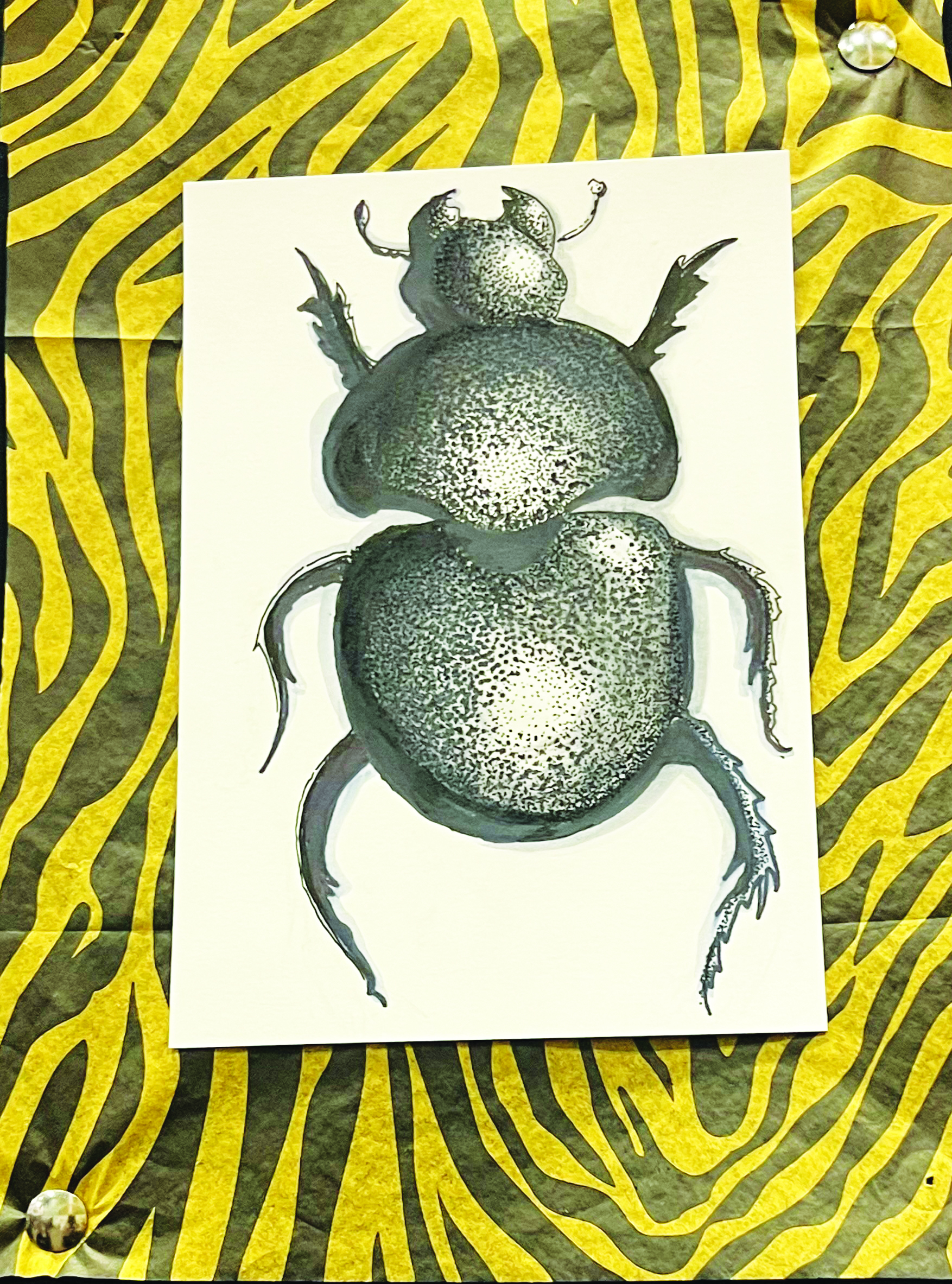
Her foundation is years in the making. “I’ve been taking art classes since I was a freshman and long before that obviously, I’ve always been really interested in art, I took art in middle school, I’ve always really enjoyed pen and paper,” she says. That instinct has recently taken a new turn. “So actually I am fascinated by bugs; that just started this year... I saw a lot of pictures of bugs in tattoo flash sheets at the tattoo places I was visiting... it speaks to me and my art style and what I enjoy doing.”
That style is direct and intentional. “With my particular art style I like to focus on harsh black lines and shadows, I like to play with values,” she says. “Cause I think it can really heighten a piece whereas colors can muddy it and tone down a piece.”
At the same time, she’s thinking practically. “I want to go to college first... have a fail-safe backup plan,” she says, a plan rooted in forestry and her experience with FFA.
At this year’s Palmer High IB Art Exhibition 2026; 28 IB artists stand side by side with their work. The exhibition is a series of exchanges; moments of recognition between family, friends, and strangers hearing for the first time the artists voice. As the artists explain their work, they test their ideas out loud, an affirmation of their hard work, and artistic grit.
Behind each piece is months of sustained inquiry under the mentorship of IB Art teacher Anna Folsom. What lingers for the students is the act of standing beside the work; naming it, defending its themes, and watching it shift the moment it met someone else’s gaze. That rainy Friday night in April;, the school was filled with the authentic voices of IB artists having smart conversations with the Palmer community interested in art and our students.

By Jeremiah Bartz Frontiersman.com A football coach using a hockey reference as the centerpiece for his keynote address may

Frontiersman.com With its headquarters in Wasilla, the Frontiersman has been a primary source of news for the Matanuska-Susitna

By Katie Stavick Frontiersman.com The next generation of leaders took flight this week as the Houston High School Class

By Kyle Wilkinson For the Frontiersman Keynote speaker and Carry the Cure President Bill Pagaran’s words boomed through the