Retiring teacher, coach urges Colony grads to ‘find their 68’
By Jeremiah Bartz Frontiersman.com A football coach using a hockey reference as the centerpiece for his keynote address may


PALMER — At just 22, it was hard to know the full impact of the events Bill Folsom witnessed on Wednesday, Aug. 28, 1963.
Decades have passed since Folsom and six or seven of his friends from Fredericksburg, Va., rode the bus to Washington, D.C., to be part of the March on Washington for Jobs and Freedom.
In the days before social networking sites made organizing easier, an estimated 250,000 people filled the Mall from the Washington Monument to the Lincoln Memorial.
Folsom said he and his friends were about 400 yards from the stage. He recalls straining to catch the speakers’ words and marveling at the clarity and power of Odetta’s voice.
“Buses from all over the country had arrived the day before,” Folsom said. “We got as close as we could. At times the crowd was quiet enough to hear.”
In the 50 years hence, Folsom said he’s heard the speech many times that Martin Luther King Jr. delivered that day. King’s “I Have a Dream” speech is credited with helping to pass the Civil Rights Act of 1964 and the Voting Rights Act of 1965, and was ranked the top American speech of the 20th century by a 1999 poll of scholars of public address.
“I could hear him speak, but I couldn’t make out everything,” Folsom said. “I could actually hear Odetta better than the speech.”
While he would have like to be closer to the stage, it was a thrill just to be there, he said.
“I wanted to let people know how I felt,” Folsom said of his decision to attend. “I saw the treatment of minorities growing up. It just appalled me. I didn’t understand.”
He recalled working as a caddie at the local country club and being called “sir” by black men his father or grandfather’s age.
“That was during the time when black people rode at the back of the bus,” Folsom said. “I saw the injustice.”
As a young man, he said there were a few times he was worried standing up for the civil rights of others might put his own life at risk.
“Whites that were part of the movement were more targeted, in a way,” he said. “I still believe in equality. I believe eventually it will come.”
Contact Heather A. Resz at 352-2268 or
heather.resz@frontiersman.com.
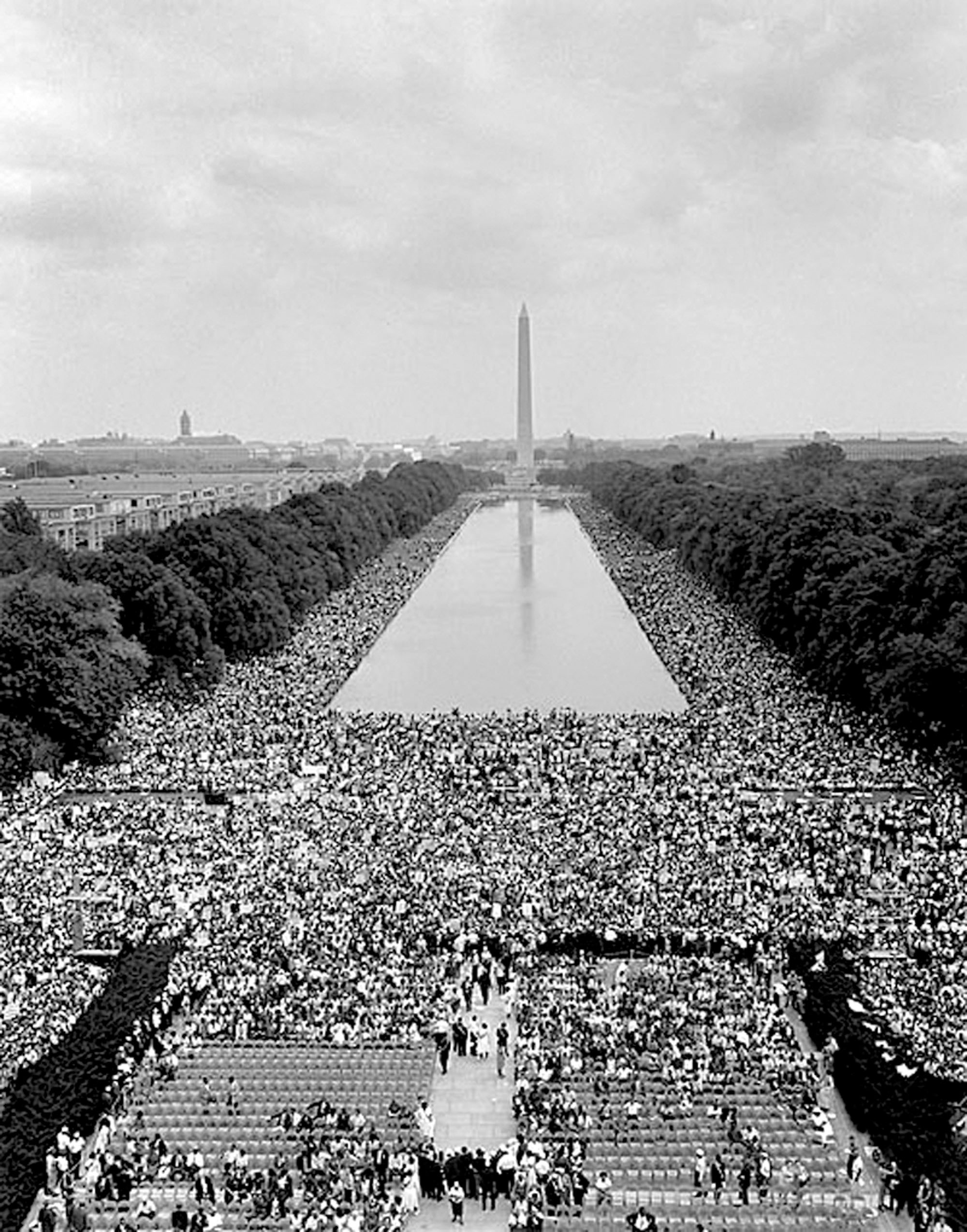
U.S. Government Photo

By Jeremiah Bartz Frontiersman.com A football coach using a hockey reference as the centerpiece for his keynote address may

Frontiersman.com With its headquarters in Wasilla, the Frontiersman has been a primary source of news for the Matanuska-Susitna

By Katie Stavick Frontiersman.com The next generation of leaders took flight this week as the Houston High School Class

By Kyle Wilkinson For the Frontiersman Keynote speaker and Carry the Cure President Bill Pagaran’s words boomed through the