Retiring teacher, coach urges Colony grads to ‘find their 68’
By Jeremiah Bartz Frontiersman.com A football coach using a hockey reference as the centerpiece for his keynote address may


WASILLA — As the days in a Mexican prison wore on, the brother of a longtime Alaska public figure remained upbeat, talking about his favorite movies and the music his wife sent him. He’d always loved movies and music, and now used them to escape the reality around him.
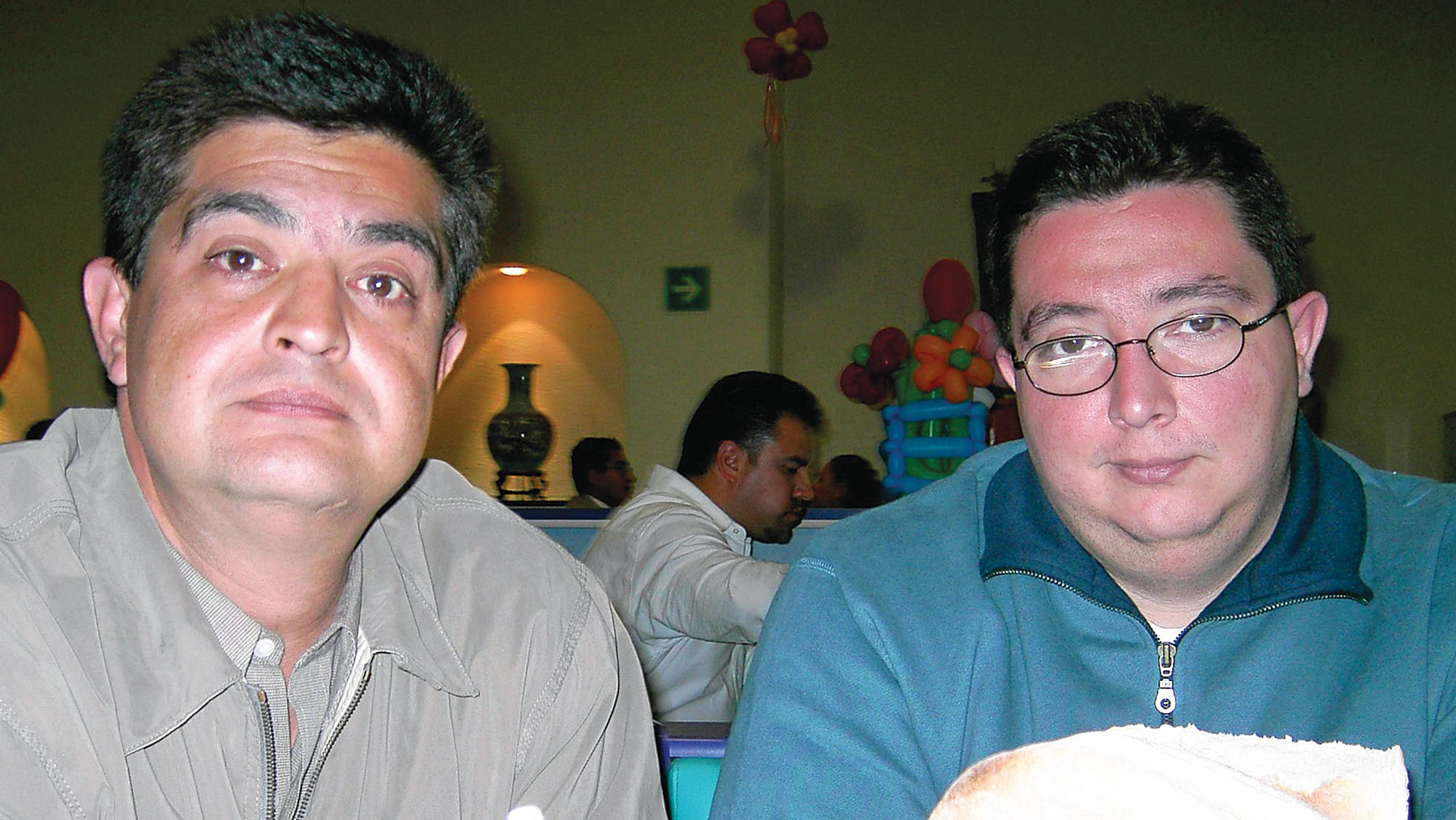
Victor Hugo Cordero, 53, chatted with family on an illicit cell phone obtained on the inside. And his brother said he held on to hope, despite warning family members not to come and visit him, and to cease advocating for him because of the danger posed by a widely publicized gang war between the Sinaloa Cartel and Los Zetas in the state of Durango. They don’t know — or won’t say — which side they think played a role in his incarceration for fear of retaliation, said his brother, Erick Cordero, 40.
Victor had been in prison, and likely tortured, for almost three years, when he died last Monday, said Erick, a former member of the Mat-Su Borough school board. Officials told the family the former Mexican police chief died of a heart attack. The family has reason to suspect that might not be the case, but after a long-term fight with a justice system seemingly disinterested in due process, the family chose to have Victor cremated, rather than ask for an autopsy.
It might be an oversimplification to consider a man’s death a win or a loss, Erick admitted. However, unnamed family members remain behind in Mexico, possibly subject to retaliation, and the family hopes to avoid provoking either side.
“This is a win for the cartel,” he said.
The end of Victor’s incarceration was also a 180-degree turn from the high-profile headlines his arrest generated, Erick remembered. Erick had just started a job at the offices of Alaska Rep. Lynn Gattis (R-Wasilla) after a successful campaign for the Legislature in 2012. On Jan. 13, 2013 Erick Cordero’s phone rang.
“I was full of energy and excited, then I get a phone call from my nephew saying ‘Dad was arrested,’” he said “And he made the news everywhere. Ironically, he dies in jail after three years without a hearing, and it made absolutely no news anywhere.”
The news of Victor’s death, received Oct. 27, was devastating and private. Erick Cordero received a half-dozen unexpected text messages from his sister while at work at A to Z Realty in Wasilla. By then, Erick had resigned his political job to deal with the situation involving his brother.
“Urgente,” the text messages on his phone said, again and again in Spanish.
Urgent.
“Que paso?” Erick typed back.
What’s up?
“Lo mataron,” his sister-in-law typed.
They killed him.
Erick’s head swam, but he forced himself to internalize emotions over a thicket of decisions: Cremation or burial? Autopsy or not? They left for Mexico City immediately. Other family members leaned on him for support.
“I tried to keep as calm as possible,” he said. “But I knew that at any minute, it would click, and I would digest it.”
Erick returned to work Thursday after a funeral in Mexico City that drew 200 people (the funeral director told him he was worried someone would call the fire marshal).
Erick swallowed bottle after bottle of Diet Pepsi in Wasilla’s Mocha Moose Café as he recounted the story. He looked drained but clear-eyed as he talked about his brother: his love of music and movies, his trusting nature, his short career as a spotter pilot searching for drug farms with Mexican law enforcement.
“When I was little I followed him like a shadow,” he said. “When he became a pilot and a cop, I would try to wear his uniform. Of course, I was little and he was huge. I was so proud of him.”
The piloting career ended by chance. Victor had been scheduled to fly a mission and swapped with another pilot, who subsequently crashed and died, Erick said.
“He said ‘You know what? I don’t want to be a pilot anymore,’” Erick said.
Victor flirted briefly with work on an oil platform, then launched a 30-year career in Mexican law enforcement. As a police chief, he would keep food and candy in his office, and give it out to officers who came to visit him, Erick said.
“He liked helping people,” Erick said. “He was very humble in the sense that he gave people things that they didn’t have, at his own expense. We used to make fun of him saying ‘You’re very naïve,’ because sometimes people would take advantage of him. But that was his nature.”
The Army general who asked Victor to assume the rank of police chief was later himself killed, Erick said. Victor’s administration overlapped with the most violent portion of the drug war, when authorities exhumed mass graves containing hundreds of bodies in Durango state, according to media reports at the time. Banners appeared strung up in the streets accusing local officials of corruption — and just as quickly disappeared.
Victor tried to resign twice, once in 2012, and again in 2013, shortly before his arrest. In both cases, local politicians begged him to stay in office, Erick said.
In late 2012, a Durango state attorney general confiscated all of the guns in the police department, and told them they would be returned at certain date. The date came and went, and when the police asked about getting their weapons back, federal police arrested the entire department, including officers, administrative assistants and the chief. About 600 weapons remain missing, according to a November 2014 report by the Inter-American Commission on Human Rights.
For three days after the arrests, no word of his brother’s whereabouts emerged. Finally, an attorney hired by the family managed to find Victor in a local prison, and they established supervised contact twice per week. However, in 2013, threats against lawyers emerged across Durango. So a nonprofit organization, Jovenes Sin Fronteras (JSF), took up the case, according to an article in La Jornada, a major Mexico City newspaper.
Erick said other people who left the prison told them Victor had been starved and beaten, and forced to eat rotting food. He had bruises on his back from being struck with a heavy object, Erick said the men told him.
Lawyers for JSF documented numerous inconsistencies surrounding Victor’s arrest. For example, the police report says the arrest took place on the streets of Gomez Palacio, but video of the arrest shows Victor being arrested at the Gomez Palacio police station. The warrant contains federal, state, and municipal charges, the most serious of which is a federal charge accusing him of participating in organized crime. Victor confessed to all charges and asked to be transferred to prison in Mexico City, according to the La Jornada article, which alleges the confession was made under duress. In response to the guilty plea, the prosecutors withdrew the federal charge, leaving Victor in the state prison where he eventually died.
The newspaper also contends authorities falsely accused him of kidnapping a child in a town across the Rio Nazas from Gomez Palacio.
Erick provided 32 pages of citations and certificates Victor earned over the course of his career. Victor lived in a rented house with modest accommodations, and had a zero tolerance policy for any kind of drug use, Erick said.
“If he were involved with the cartels, he would have had a flashier lifestyle,” Erick said.
While his brother was in prison, Erick launched a petition to bring Victor’s plight to the attention of the U.S. State Department, local legislators — anybody he could find who might help. State Department officials said lobbying on Victor’s behalf was confidential. One petition collected more than 1,500 signatures in support, including letters of support from American politicians translated into Spanish.
And Erick began flying down to Mexico to see what he could do.
“We were spending money we didn’t really have,” Erick said.
The family has established a GoFundMe account to make up the difference, which had raised $2,870 late Friday, at www.gofundme.com/capcordero.
For now, the family is left only with the hope that the cartels will leave them alone, and the memory of the man they knew. They have the last few months of his life, when he could speak freely over the smuggled cell phone. He liked to talk about the songs he loved.
“Toward the last few months, he would just talk about random stuff, like movies and shows and music,” Erick said. “He was allowed to listen to music. His wife would send him the latest music. A friend asked me to describe my brother with two words, and it was movies and music.”
Contact reporter Brian O’Connor at 352-2270, brian.oconnor@frontiersman.com, or on Twitter @reporterbriano.

By Jeremiah Bartz Frontiersman.com A football coach using a hockey reference as the centerpiece for his keynote address may

Frontiersman.com With its headquarters in Wasilla, the Frontiersman has been a primary source of news for the Matanuska-Susitna

By Katie Stavick Frontiersman.com The next generation of leaders took flight this week as the Houston High School Class

By Kyle Wilkinson For the Frontiersman Keynote speaker and Carry the Cure President Bill Pagaran’s words boomed through the