Retiring teacher, coach urges Colony grads to ‘find their 68’
By Jeremiah Bartz Frontiersman.com A football coach using a hockey reference as the centerpiece for his keynote address may


Award-winning Aethereal Coffee, a local roastery based out of Palmer, offers an organic, fair-trade coffee option for those that want to enjoy a clean cup of sustainable coffee.
Husband and wife team Troy McGlashan and Molly Kincaid own and operate Aethereal Coffee with a goal to offer high quality coffee with a clear conscience.
“That’s why I started Aethereal Coffee,” McGlashan said. “To just do single-origin coffee, try to highlight each origin's specific flavors that they're known for, and organic and fair-trade coffee.”
McGlashan started Aethereal Coffee in 2018 with a vision for how coffee from around the world should be sourced, roasted and enjoyed. Offering fair-trade and organic coffee became more and more important to him as he began to understand the hard work that goes into growing and producing coffee cherries in far-away places. Having been in the coffee industry for nearly a decade at that point, McGlashan decided it was time to do something different.
“It started weighing heavy on my conscience that here I was making a living off of other people's hard work,” McGlashan said. “I wanted it to be organic because coffee is pretty heavily pesticide ridden and fungicide ridden. I wanted it to be fair-trade because these workers are carrying 75 pound sacks on the side of a mountain and single handedly picking each cherry to its perfect ripeness and then going back the next day and completing the process…It just started weighing heavy on me that I needed to make a change.”
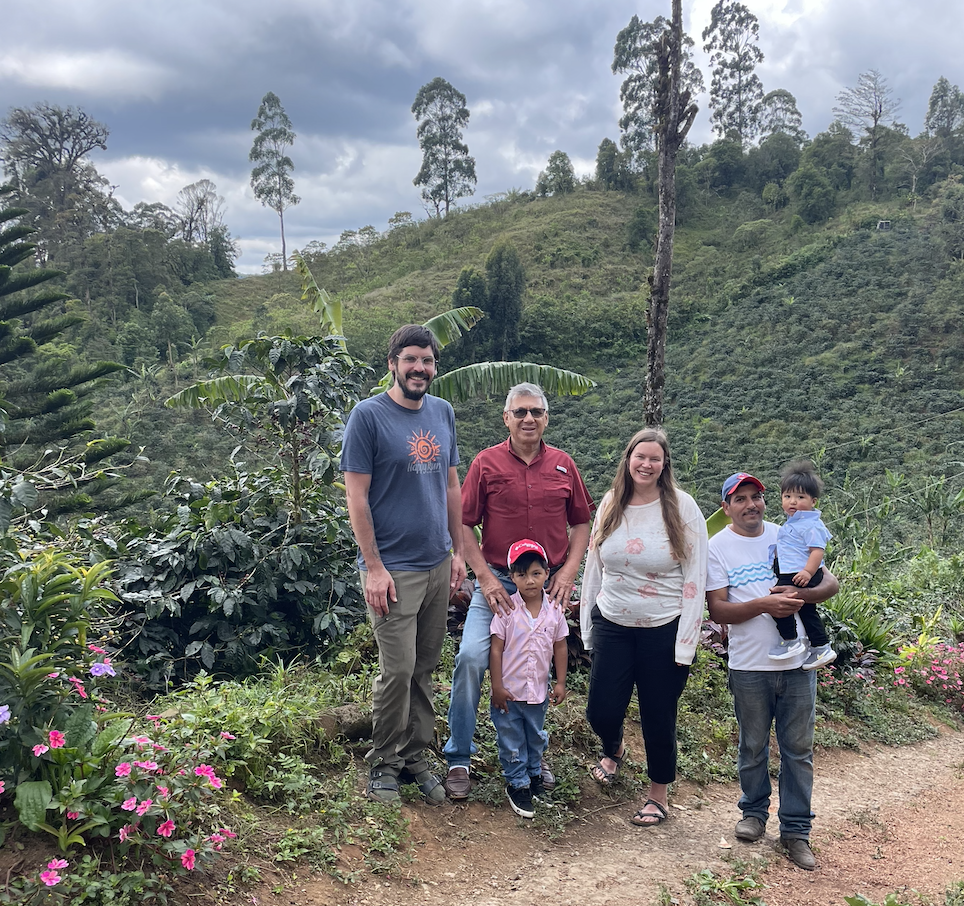
To better understand the process their coffee goes through, McGlashan and Kincaid traveled to visit two of the farms that they source their coffee from on the steep mountainsides in Nicaragua and Guatemala earlier this year. They wanted to see the origins of their coffee and visit with the farmers to determine if they really were treated fairly and conducted safe agricultural practices.
“It was great to finally meet the farmers that I'm getting the coffee from, see their land, see how they're growing it,” McGlashan said.
McGlashan explained the long process of harvesting coffee cherries. Harvesters wake up early in the morning, hiking around steep hillsides and picking ripe cherries one at a time. The pulp is then removed, followed by the fruit and the gelatinous substance that surrounds the bean itself. The beans then dry before being bagged and shipped, resulting in a process that lasts four years from harvest to roasting. Sometimes entire communities and even multiple communities are involved in the labor-intensive process.
Practicing fair-trade ensures that farmers and cherry harvesters are paid a fair wage for their time and efforts and doing so safely and ethically. Fair-trade means direct sourcing coffee from growers to help cut out unnecessary steps when acquiring coffee. Entire communities are benefited when fair-trade practices are being upheld and the environmental sustainability is a product of the process.
Both born and raised Alaskans and Palmer High School graduates, McGlashan and Kincaid married in 2022 and started working on the business together. Kincaid operates the espresso machine at their events and controls the social media and marketing for the company. McGlashan roasts the coffee in the commercial kitchen that they lease from the Colony Inn and brews and sells it at the markets they attend.
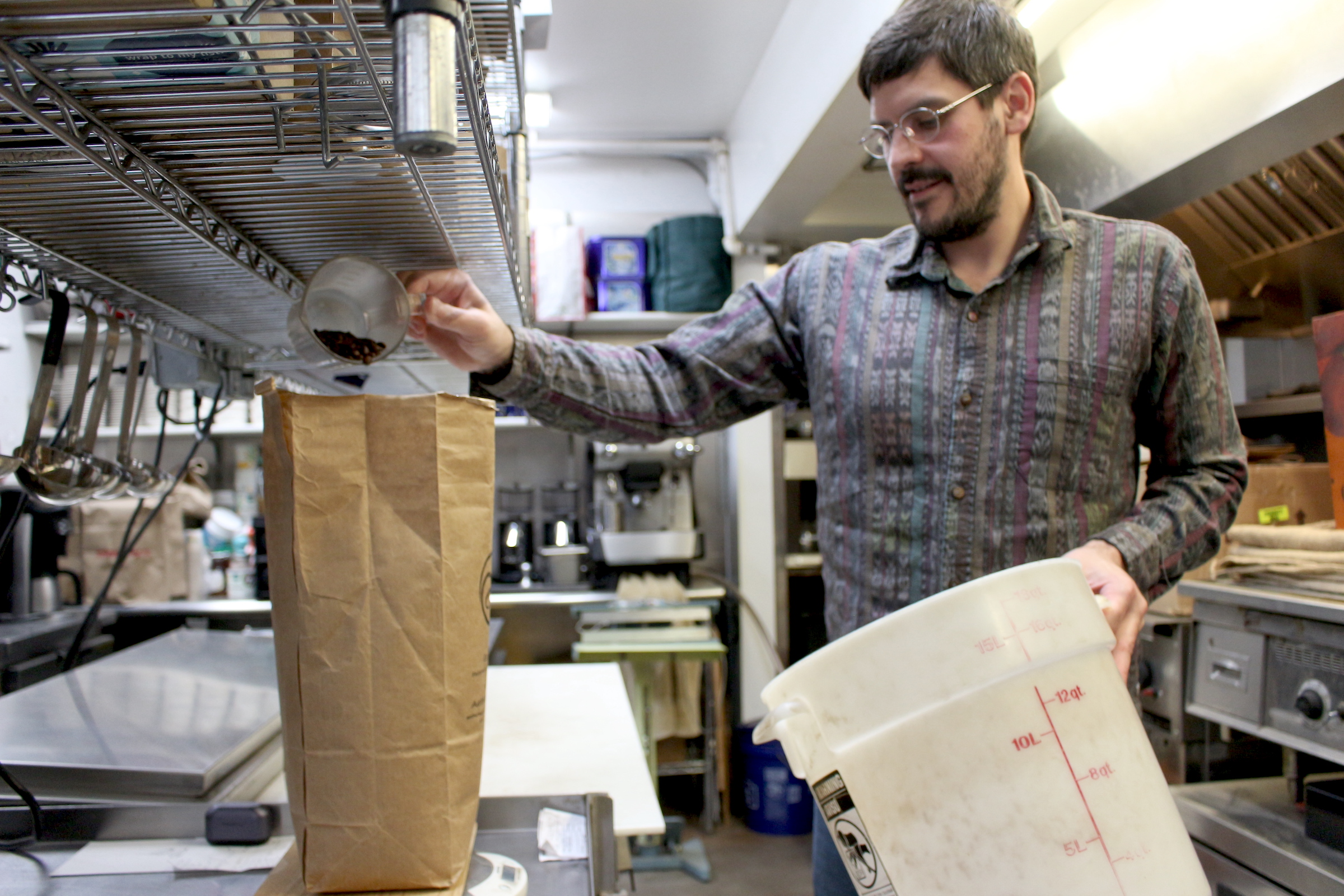
McGlashan’s coffee roasting process is roughly 14 minutes from start to finish. He weighs each batch, approximately 2.5 pounds or raw coffee beans, before dumping them into his fluid bed roaster. The fluid bed roaster forces hot air over the raw coffee beans, causing them to bounce and move and ensures an even roast. McGlashan monitors the coffee beans as they dance in the roaster and darken in color. He negotiates his temperatures and roasting speeds while listening for the series of two “cracks,” or popping sounds that the coffee beans make as they release steam and carbon dioxide. A light chaff is omitted off of the beans and is vacuumed up through a vent as the beans continue to roast. Once his coffee has reached a desired amount of doneness, McGlashan moves the roasted beans to cool for two or three minutes before emptying them into a compostable bag for sale or use at one of the many locations that serves their coffee in Alaska.
In an attempt to become even more sustainable in his business, McGlashan sells his coffee in compostable bags to fight wastefulness and to return soil health back into the Earth.
“We’re supposed to be stewards of this Earth and treat it right,” McGlashan said. “And just to have single use bags - like just throw away and don't worry about it, out of sight, out of mind - It has to go somewhere. And that’s a big deal.”
During his busiest times, McGlashan roasts 200-300 pounds of coffee per week, resulting in over 100 batches. In 2024, McGlashan ordered nearly 8000 pounds of beans to be delivered to Alaska for roasting. When he started the company in 2018, he only ordered 680 pounds that first year. McGlashan and Kincaid acknowledged how expensive it truly is to ship coffee to Alaska and look for ways to order larger quantities at a time while balancing sales estimates and demand throughout the year.
Aethereal Coffee offers roasts with origins stemming from Nicaragua, Uganda, Guatemala, Colombia, Peru, Honduras, Sumatra, Java, Rwanda and Ethiopia. McGlashan also offers an espresso and cold brew blend.
“I’m mostly trying to just highlight each country’s unique characteristics,” McGlashan said.
Aethereal Coffee has taken home several awards from the international roasting competitions held by the Golden Bean Americas, to include the following: Espresso Blend, Espresso - 2018 Silver Medal Winner, Espresso Blend, Organic Espresso - 2018 Bronze Medal Winner, Nicaragua Roast, Pour Over Coffee - 2018 Bronze Medal Winner, Espresso Blend, Milk-Based (Latte) Espresso - 2023 Bronze Medal Winner, Nature Friendly, Milk-Based (Latte) Espresso - 2024 Bronze Medal Winner, Carbonic Maceration, Elite Coffee (Filter) - 2024 Bronze Medal Winner and the Fruit Symphony, Pour-Over Filter - 2024 Bronze Medal Winner.
During their trip to Central America to visit with the farmers that they source their coffee from, McGlashan and Kincaid competed in the Golden Bean World Series competition in Antigua, Guatemala. While Aethereal Coffee didn’t place at the competition, McGlashan said it was validating to even qualify to compete with the small list of qualifying roasters.
“I think it’s cool to just help put Alaska on the map,” McGlashan said.
“When you tell people you’re from Alaska, they’re like, ‘Oh I’m a roaster from Florida, or I'm a roaster from California, where are you from?’ And you say, Alaska, they’re like, ‘Whoa really!?’” Kincaid added.
Competing on an international stage and placing highly is validation that Aethereal Coffee really does stand out against other roasters. McGlashan said striving for the best coffee keeps him sharp and prevents him from getting complacent in his roasting. Attending competitions also teaches him about what types of coffees are trending and what styles other roasters are using.
“People tell me my coffee is good all the time, but I don’t know if they’re just being nice and saying that,” McGlashan said. “For me, it’s just kind of validation, almost like oh, ok, I actually do roast good coffee because I’m competing with a bunch of other roasters throughout the world.”
Alaska is home to a community of coffee roasters, with several based in the Mat-Su Valley. McGlashan said they support each other and interact with one another, but he hopes to build even more relationships with other roasters in the future. He helped host a local coffee roaster competition last year and wants to expand it this year at the Alaska State Fair.
“I'm just trying to build that community,” McGlashan said.”We can’t all roast all the coffee in the world. It’s just not possible. So we might as well work together.”
McGlashan and Kincaid are excited to offer new coffee options this year. They will have a geisha coffee, a brix breaker and experiment with coffee beans that have gone through a carbonic maceration process.
Aethereal Coffee has goals to eventually move into a kitchen of their own, where they can roast and serve coffee to their customers.
“That’s what we’re working towards, is just having our own spot with all the things that we want to serve the community with,” Kincaid said.
Aethereal Coffee hosts a booth every week during the summer at the Matanuska Community Farmers Market and samples two different coffees each time. Aethereal Coffee also attends the Spring Vintage Market at the State Fairgrounds, the Scottish Highland Games, Colony Days, Colony Christmas, Salmon Fest and the State Fair. They also sell coffee on their website.
Turkey Red in Palmer serves Aethereal Coffee and sells their coffee beans. Coffee can also be purchased at Bush’s Bunches Produce Stand, Cold Moon Collective and is served at Kai’s Coffee and Bakery and Bruin Den. Skeetawk also serves Aethereal Coffee in their yurt during the winter season.
McGlashan and Kincaid enjoy sponsoring local events, like the Recycle Revival at Skeetawk, as a way to give back to the community that has had their back since the beginning. They both expressed how welcoming Palmer and the Valley has been to their small business. Their return clientele and growing word-of-mouth popularity are what keeps them growing and innovating in the coffee they roast.
“Troy truly loves what he does and we really appreciate the community supporting us,” Kincaid said.
“It’s just a way for me to help give back to the community that’s supported us so much,” McGlashan said.

By Barbara Hunt Palmer Buzz It was 6:43 on Friday morning and the Plant Owner was sound asleep when

By Kyle Wilkinson Frontiersman Memorial Day Weekend was filled with a variety of events in Willow. From live music to

Farmers markets set to open June marks the beginning of freshly grown Alaska produce showing up around the Mat-Su

By Kyle Wilkinson For the Frontiersman The Susitna Valley Emergency Preparedness Fair will be held at the Willow Community Center