Retiring teacher, coach urges Colony grads to ‘find their 68’
By Jeremiah Bartz Frontiersman.com A football coach using a hockey reference as the centerpiece for his keynote address may


WASILLA — Three years after applying for a grant, Girl Scouts of Alaska are finally getting to interact with their new astronomy equipment.
In 2011, Alaska State House Representative Mark Neuman suggested that the Girl Scouts apply for a Science, Technology, Engineering and Math grant to purchase a Pipehenge Dedicated Site Module and an Earth Space Simulator for Camp Togowoods. This summer is the first season that the equipment has been operational, though the simulator has not been purchased yet.
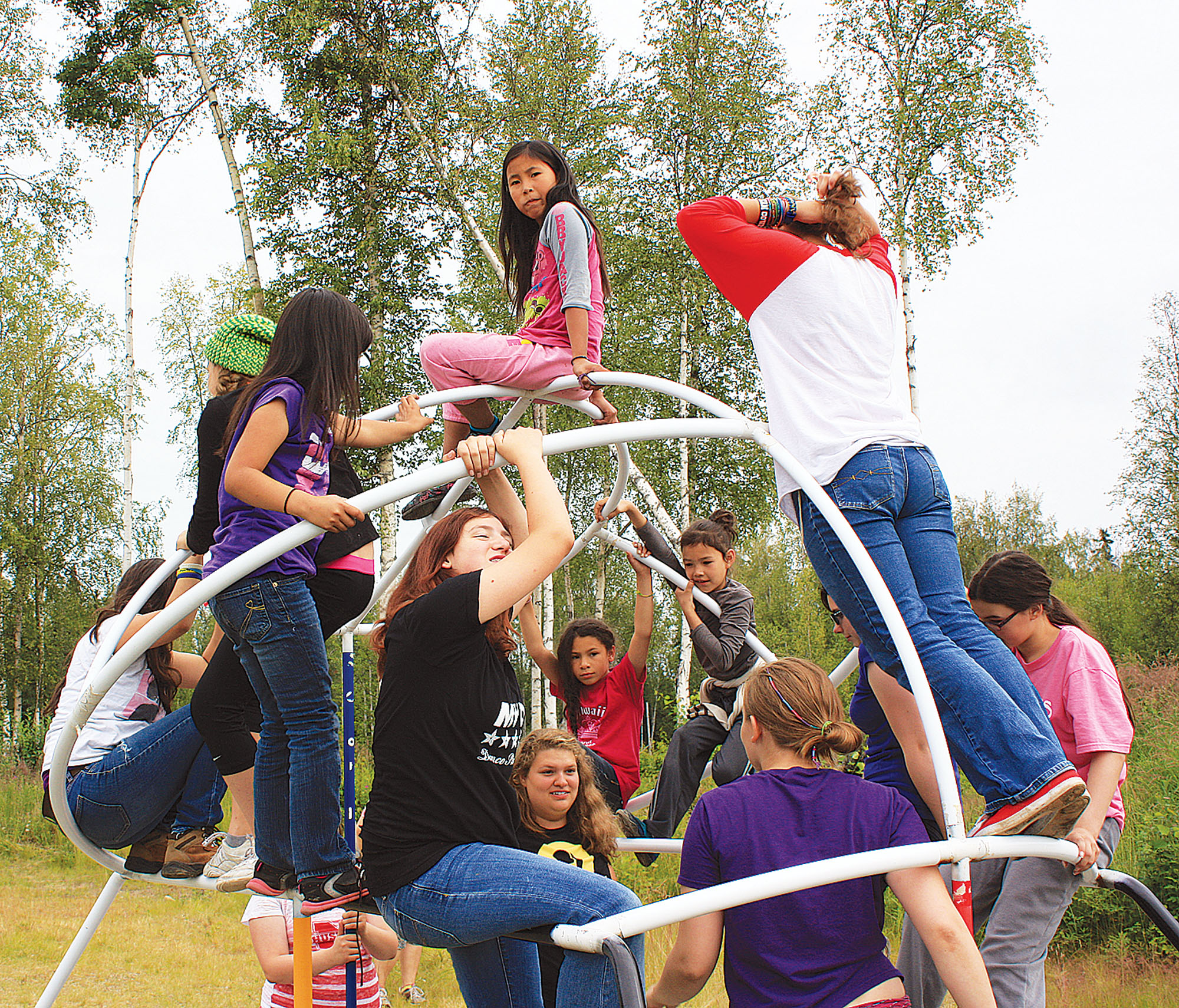
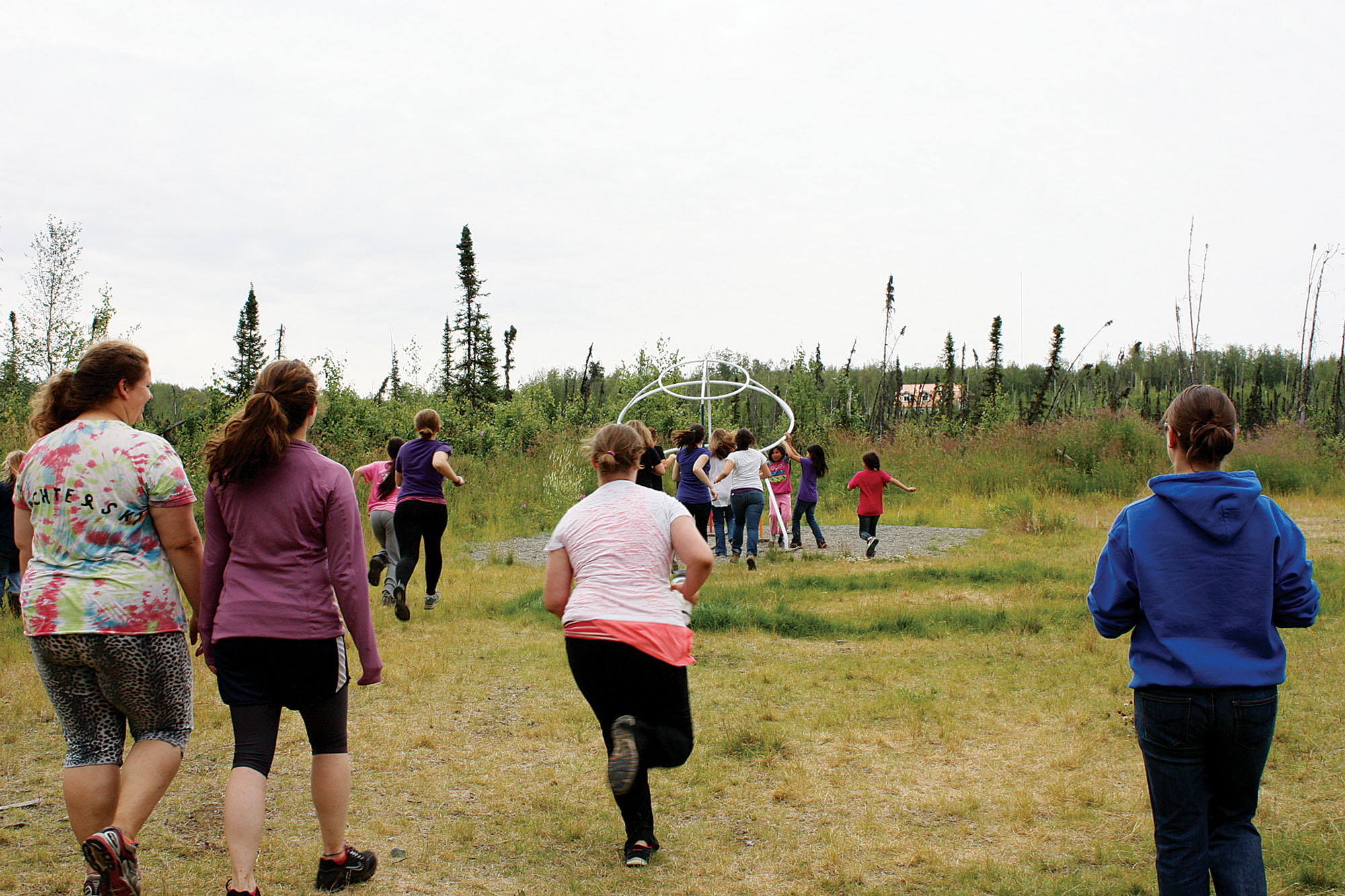
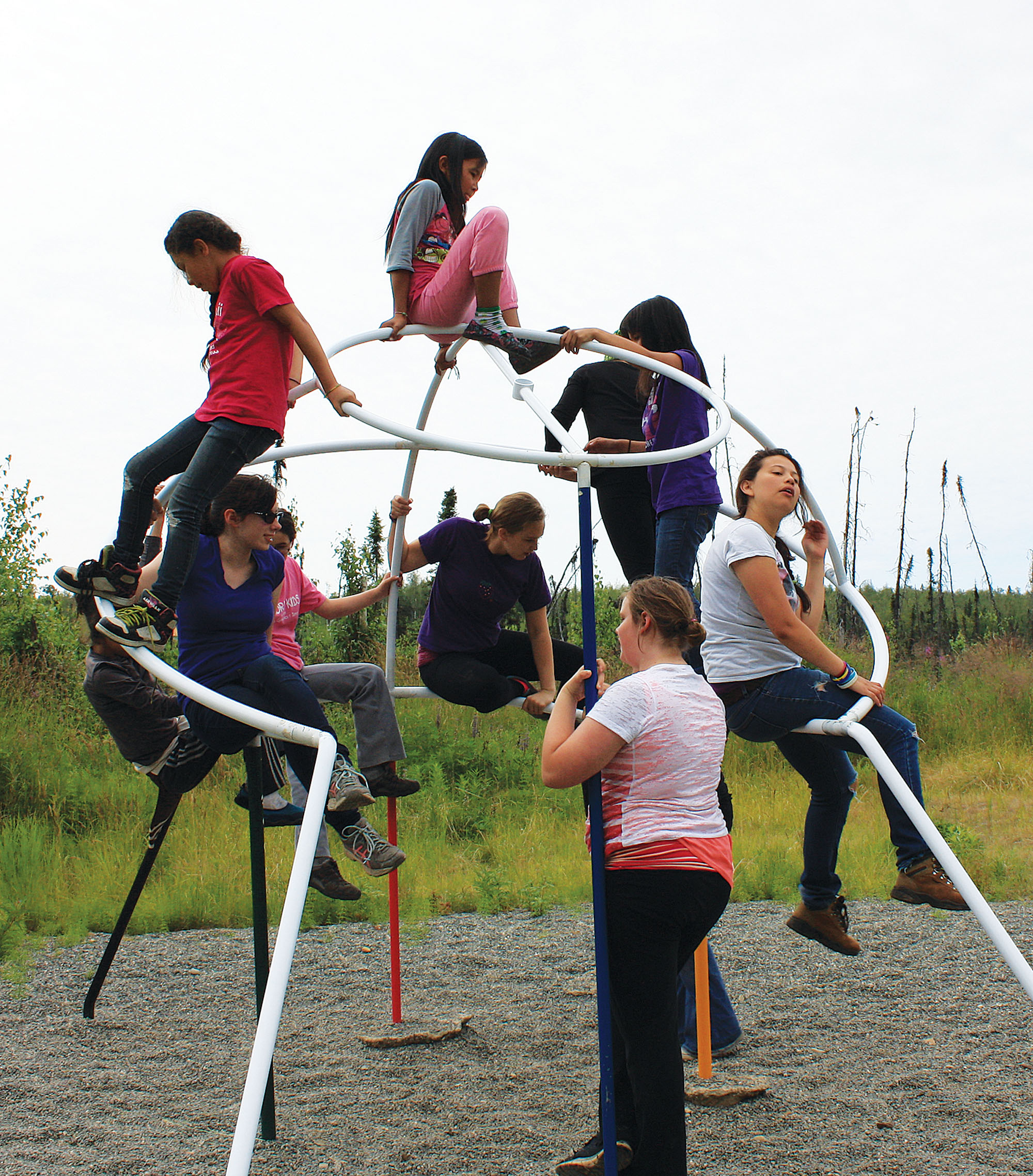
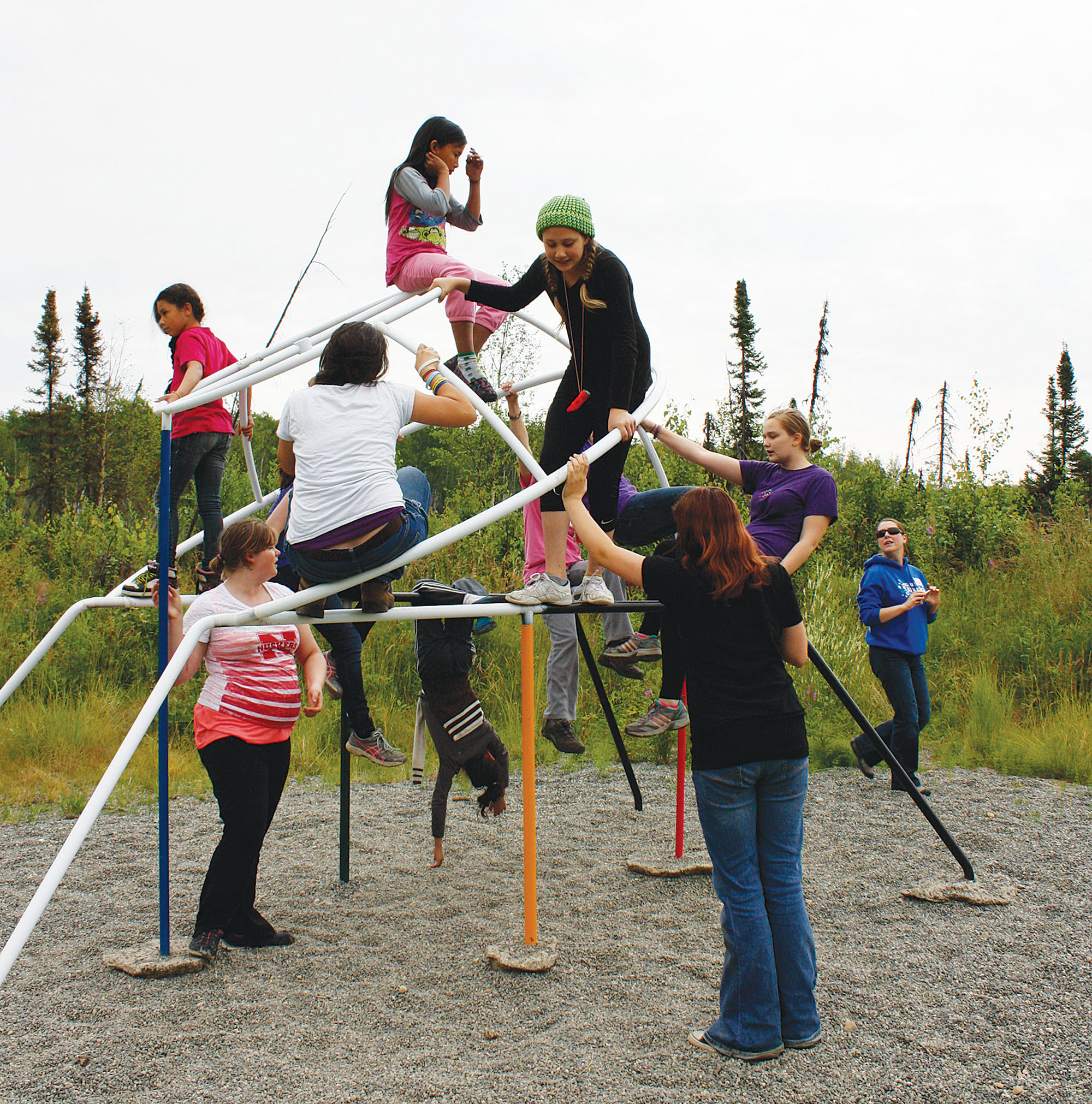
Inspired by a theory surrounding the origin of Stonehenge, Pipehenge is an assemblage of metal pipes that function as a compass, sundial, calendar, observatory, and jungle gym. Each Pipehenge structure is customized to the specific latitude and longitude points of its intended location.
“Pipehenge is an investment in the greatest computer ever created — the developing mind of a child,” said Coordinator of Math and Science in Sweet Home School District, New York, Francine Shea, as quoted on the Pipehenge website.
Pipehenge also serves as a perfect analogy for what Camp Togowoods represents as a site for the Girl Scouts of Alaska: a road sign leading up to the camp reads, “Caution: Future World and Local Leaders at Work and Play.”
Togowoods is a unique location for such a structure, as the sun rises and sets over the nearby Three Mile Lake, so campers can easily trace the path of the sun on the summer solstice using the formeost and longest arc in the structure. Cardinal directions are also marked by upright blue, green, red, and yellow bars. More complex operations and activities involving the module are contained in the Pipehenge Resource Book, which according to the company website will be released on an ongoing basis as new developments in astronomy and astronomy teaching are incorporated.
However, since each Pipehenge is different, activities must be customized to its specific location, which also is in the works for Camp Togowoods. Director Kelly Fitzgerald expects the written programming to be finalized for the winter season, which is the best time to study astronomy in Alaska anyway.
“A big part of camp is just unstructured play time to be creative and have fun. The educational aspect [of Pipehenge] is informal at this point,” Fitzgerald said.
Fitzgerald has directed Togowoods for the past four summers, in addition to teaching biology and integrated science at Bartlett High School during the school year.
Although the programming is still being finished, Girl Scouts of Alaska Director of Communications Carly Horton Stuart emphasized Pipehenge’s potential as an important teaching tool.
“Not only do the girls love to play on it, it also allows us to teach girls about astronomy, a STEM subject. As an organization, Girl Scouts is committed to STEM… Girl Scouts of Alaska reaches nearly 6 thousand girls ages 5 to17, making our organization uniquely positioned to address STEM education and enrichment across the state,” Stuart said in an email to the Frontiersman.
According to inventor Eric Jackson of Auckland, New Zealand, there are currently 12 structures like the one Togowoods houses in U.S. schools and camps, 20 portable modules used by science teacher consultants, and 300 ESS were supplied to the Astronomical Society of the Pacific to sell throughout the United States. Other moduels have been installed in Canada, the U.K., Australia and Norfolk Island.
“As a science consultant for the Auckland Education Board’s 600 elementary schools, I was involved with curriculum development and had to introduce a science activity unit called ‘Shadows.’ While working with several schools getting children recording their shadows on sunny days, we ‘discovered’ that there are two noons every day: regular clock noon and ‘solar noon,’ which is when the sun is on the meridian at your place… It was this ‘discovery’ that you could start astronomy activities during the day when the children are at school that led to the development of an ‘astronomical climbing frame’ that became the registered name of Pipehenge,” Jackson said in an email to the Frontiersman.
For more information about Pipehenge, visit pipehenge.com, or youtube.com/user/pipehenge. For more information about the Girls Scouts of Alaska, visit girlscoutsalaska.org.


By Jeremiah Bartz Frontiersman.com A football coach using a hockey reference as the centerpiece for his keynote address may

Frontiersman.com With its headquarters in Wasilla, the Frontiersman has been a primary source of news for the Matanuska-Susitna

By Katie Stavick Frontiersman.com The next generation of leaders took flight this week as the Houston High School Class

By Kyle Wilkinson For the Frontiersman Keynote speaker and Carry the Cure President Bill Pagaran’s words boomed through the