Retiring teacher, coach urges Colony grads to ‘find their 68’
By Jeremiah Bartz Frontiersman.com A football coach using a hockey reference as the centerpiece for his keynote address may


WASILLA — One commenter dubbed this year’s Iditasport and Iditarod Trail Invitational routes as “a return to the real Alaska,” and now that most of the racers are off the trail, that sentiment seems to ring true.
While a handful of hardy racers are still on the course for Nome in both competitions — which began in late February — most competitors are back home, contemplating a year that saw bitter cold, deep snow and winds in the Alaska Range. The conditions were a factor in a popular route for both races — the 350-mile push to McGrath on the banks of the Kuskokwim River.
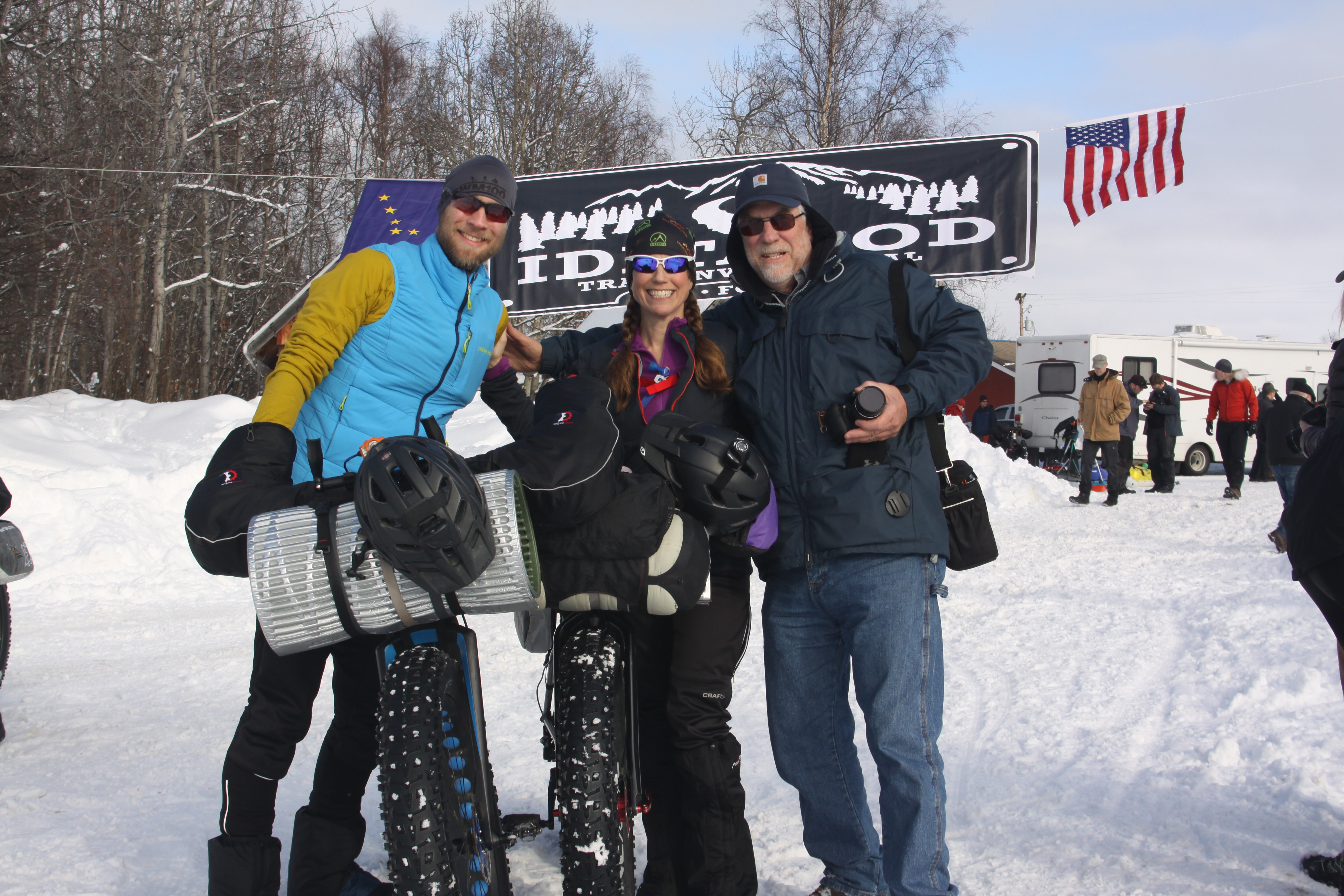
A group of Valley athletes tasted both victory and misfortune on the McGrath course, with Palmer fat-tire bikers Kevin Murphy winning the Iditasport title and Amy Breen topping the women’s field in the Iditarod Trail Invitational.
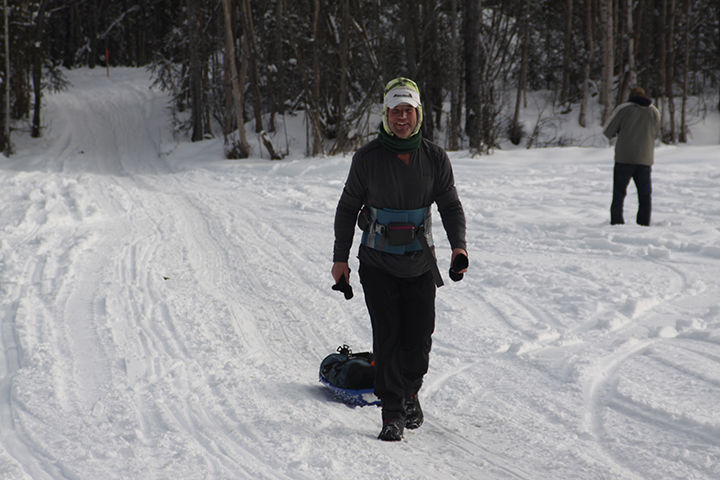
Willow runner David Johnston won his fifth title in as many years in the ITI.
Breen finished in 5 days, 6 hours, 25 minutes, 12th overall in a field of 22 bikers. Idaho’s Jay Petervary won the McGrath route in 3 days, 3 hours, 29 minutes.
Johnston finished with a time of 5 days, 21 hours, 43 minutes. He holds the McGrath foot record, set in 2014 at 4 days, 1 hour, 38 minutes.
Iditarod Trail Invitational race director Kathi Merchant, just back from McGrath, said Thursday that this year’s weather was a return to “more typical conditions” along the course after a string of warm winters in which course records fell and much of the trail was hard-packed and fast.
Some seven bikers remain on the course to Nome in the ITI, Merchant said.
“It was the real deal this year,” Merchant said. “It was windy and cold and there was a lot of sugary snow to push through for everyone.”
Merchant said a stomach virus making its way through the field added to the number of scratches, which totaled 34 this year. Sixty-nine racers started the 1,000-mile trek to Nome, the 350-miler to McGrath or the 130-mile course to Winterlake Lodge.
“It’s already tough enough out there, and on top of that people were getting sick,” Merchant said. “We had to evacuate a couple of the racers off the trail by snowmachine and back to the checkpoints because they were in bad shape.”
Breen’s husband Cody Johnson was one of those scratches after a nerve-wracking dash to reach the Rohn checkpoint after he broke through the ice on the South Fork Kuskokwim deep in the Alaska Range, where afternoon temperatures were in the minus-20 degree range.
Both experienced endurance bikers who moved to the Valley from Fairbanks, Johnson and Breen competed in the 2016 ITI to McGrath. This year’s Alaska Range route was more of a challenge in both added mileage and terrain. Changed by race organizers after the Iditarod Trail Committee moved its restart to Fairbanks, the usual route through Rainy Pass from the Puntilla checkpoint to Rohn was changed to take racers through the Happy River valley to Ptarmigan Pass before heading through Hell’s Gate and down to the South Fork Kuskokwim.
Merchant said the change added 35 miles. Race leaders like Petervary as well as Anchorage riders Tim Berntson and Clinton Hodges III caught a tough stretch of weather on the route.
“The racers were exposed to the wind, cold temperatures and some sugary snow a lot longer,” Merchant said. “They were pretty beaten up between Puntilla and Rohn.”
Johnson echoed that sentiment.
“The reroute, along with persistent new snow just prior to the race, and ultra cold and very windy conditions as we approached the Alaska Range resulted in this race being much more than just how fast someone could cover the distance from Knik to McGrath,” Johnson said in an email.
Breen and Johnson decided to make the push through the Alaska Range together after leaving the Winterlake Lodge checkpoint some 130 miles from the race’s start at Knik Lake.
Johnson followed another racer’s tire tracks across the South Fork Kuskokwim river ice, only to break though into thigh-deep water with a loaded down, 60-pound bike a few feet shy of reaching the bank.
Breen soon came upon Johnson in the water, and the pair decided that a push for Rohn, 20 miles away, was the best call as Johnson tried to fend off hypothermia.
“Once I broke through the ice, there was the physical help from Amy in helping me get my bike out of the river, getting me out of my wet clothes, and holding my bike while I chipped the ice off of my drivetrain so that I could ride,” Johnson said. “But really it was her emotional strength and persistence that saved me out there. It was not an option for me to quit moving toward the checkpoint, even though every part of me was screaming at me to just lay down and get into my sleeping bag. She was completely selfless in sticking with me through a dangerous situation, and getting me to Rohn. I owe her everything.”
Breen said in a Facebook post she tried to keep things on an even keel in the effort to reach the checkpoint.
“I am not completely sure why, but I truly never doubted we would arrive safely in Rohn,” she said. “I do believe I was less drill sergeant and more voice of reason. I would not let Cody think for a moment that he was not going to make it to a warm shelter.”
Johnson said he planed to regroup and return to the race after resting in Rohn, but his gear was just too wet to continue.
“Honestly, it didn’t even occur to me that I would have to scratch from the race until I woke up in Rohn the following morning,” Johnson said, “and had to face the reality that my soaked and frozen clothes and boots were not going to dry out in the cold wall tent.”
Despite the tough conditions for the fat-bike leaders on the trail to McGrath, Breen said her timing seemed to be better.
“I have to say the conditions for riding nearly all of the trail were excellent,” she said. “I somehow hit them just right, except for the last 10 miles into McGrath where the river trail was blown in… The most walking I did the entire race was the last 20 miles into the finish.”
Johnson said he’s already looking forward to next year.
“Right now, I am certain that we will both sign up for the 2018 ITI,” he said. “We’ve batted around the idea of making an attempt at riding to Nome, but at the moment that is still too big for me to wrap my head around. Amy and I just love to ride our bikes, so we’ll spend as much time in the saddle doing day and multi-day rides as possible.”
Contact reporter Steven Merritt at 352-2269 or steven.merritt@frontiersman.com

By Jeremiah Bartz Frontiersman.com A football coach using a hockey reference as the centerpiece for his keynote address may

Frontiersman.com With its headquarters in Wasilla, the Frontiersman has been a primary source of news for the Matanuska-Susitna

By Katie Stavick Frontiersman.com The next generation of leaders took flight this week as the Houston High School Class

By Kyle Wilkinson For the Frontiersman Keynote speaker and Carry the Cure President Bill Pagaran’s words boomed through the