Retiring teacher, coach urges Colony grads to ‘find their 68’
By Jeremiah Bartz Frontiersman.com A football coach using a hockey reference as the centerpiece for his keynote address may


NOME — In all its 44 years, the Iditarod Trail Sled Dog Race has never failed to produce an exciting, humorous or insightful story from a musher, fan, race official or newsperson. Some of those tales from the trail are still being told, along with many new musings made by mushers this year in Nome.
Several racers, including the latest four-time champion, Willow’s Dallas Seavey, spoke about their extra-special bond with their dogs.
“Sled dogs were my classmates growing up,” he said, remembering his days as a home school student on the Kenai Peninsula. “And now they’re my coworkers and best friends. I spend more time with sled dogs than people.”
Fellow four-timer Lance Mackey, of Fairbanks, made a similar claim in “The Great Alone,” the 2015 documentary about his mushing career, saying that he understood dogs better than people.
Willow’s Wade Marrs, who finished fourth in this year’s Iditarod, surmised that quality is part of what endeared fans to Mackey in his heyday. As an up-and-coming musher — he’s sliced his finish place in half every year for the last four years — Marrs said he takes that lesson to heart.
“The dogs love the little kids, and I think that’s a big part of the experience for the dogs — to give them the same love and treatment as a house pet would get,” Marrs said.
At the same time, sled dogs do need more exercise than most house pets.
“They’re just like kids — if you’ve got a rambunctious, wild kid and you leave him sitting in the house all the time, he’s always gonna be … a pain in the butt. But if you take him to the playground every day and wear him out, he’s gonna be a nice little kid.”
Karin Hendrickson, who in November 2014 was hit by a truck while driving her dog team on a trail near the Parks Highway, said she saw how much her dogs loved her during the recuperation period.
“Most of them come into the house for visits on a regular basis,” she said. “They’ll come sleep on the bed with me.”
The 10 dogs that pulled her into Nome this year were a bit of a grab bag, coming from various litters — from carnival-themed veterans Whack-a-Mole and Tilt-a-Whirl to the dogs named for blues legends, like Pinetop Perkins.
Those names can get to be a bit of a mouthful though, so she sticks to nicknames until they do something wrong.
“They get the full name when they’re in trouble,” she said with a smile.
Trouble that’s not self-inflicted, however, is a whole different story.
Willow Hendrickson said it was “very hard to hear” about Jeff King’s dog, Nash, killed by a snowmachine near Nulato this year, and Aliy Zirkle’s team, which was allegedly charged by the same vehicle and driver hours earlier. Seavey called the incident “pretty disappointing,” and Marrs said he was “disgusted” by the events on the Yukon River.
“It even almost made me cry to hear it happened to Jeff’s team,” Marrs said. “Losing dogs in that way is just not right.”
Seavey agreed.
“I know how much time and energy we put into caring for these guys … and then to have something so senseless and not even accidental … it’s just hard to wrap your mind around it,” Seavey said.
Hendrickson said she’s carried a handgun in previous races as a method of self-defense against moose in deep snow years, but never thought she’d need it to ward off humans. Now, it’s within the realm of possibility, she said.
“I brought it with me to the start this year but decided at the last minute not to take it,” she said. “I don’t think I’ll make that decision in the future.”
That’s how great the threat to a dog team impacts a musher, and apparently for good reason — Willow’s DeeDee Jonrowe said a musher’s bond with his or her sled dogs is like nothing else.
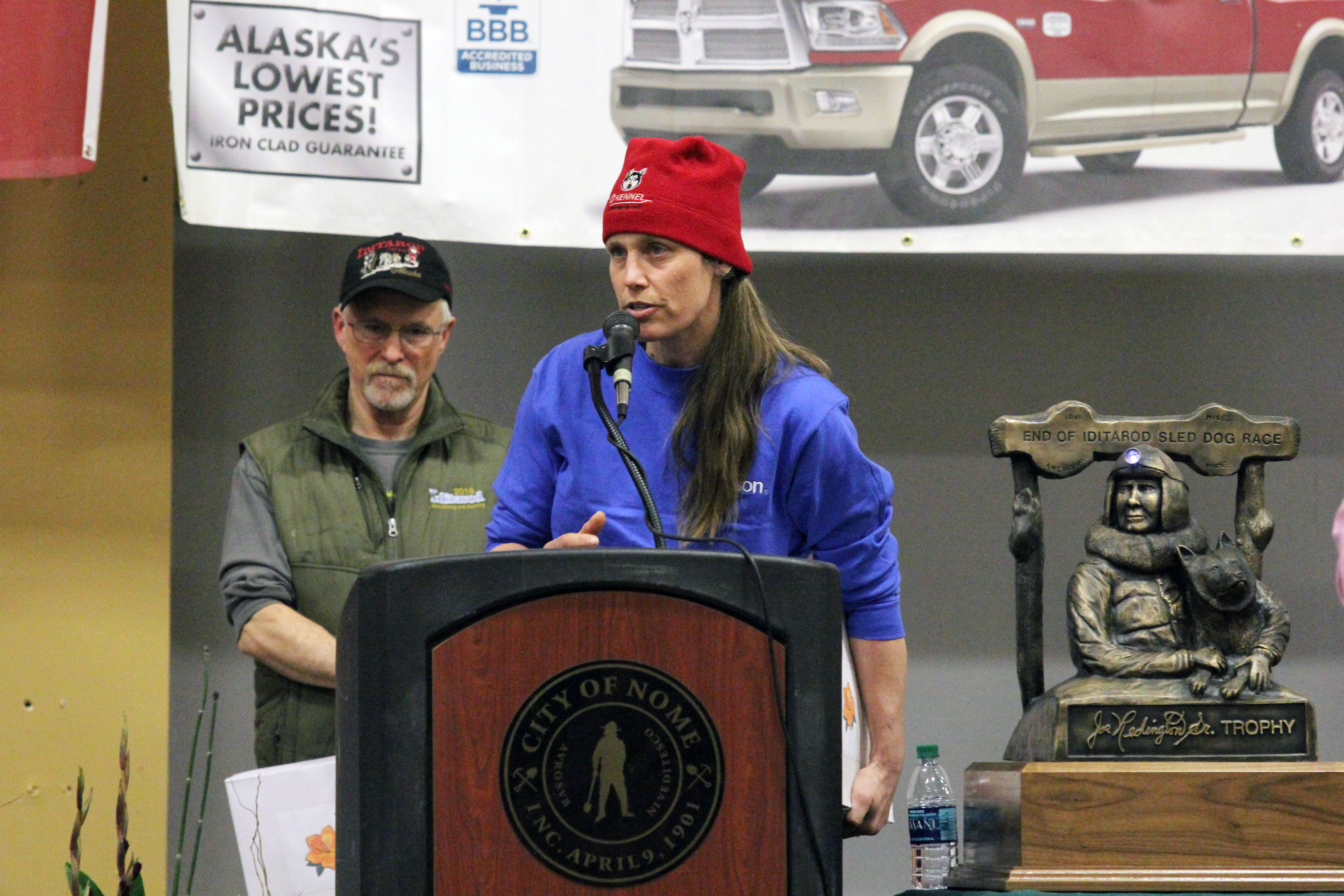
“When you chose them over everything else in life, and they were the one and only thing you wanted to save … that shows you what you think of their position in your life,” Jonrowe said at the post-race banquet.
As most Alaskans know, Jonrowe is one of several mushers who lost virtually everything they owned in the Sockeye fire in June of 2015. But some things have a way of coming back to a person — a favorite fur hat of Jonrowe’s, for example, though lost to the flames, was captured in a photo of her mother taken by a fan, who presented it at the pre-race banquet in Anchorage.
At the post-race banquet, after Two Rivers musher Aliy Zirkle received the Alaska Airlines Leonhard Seppala Humanitarian Award for the 2016 race, the airline also presented Jonrowe with a replica of the same award she won in 1991, which also burned in the fire.
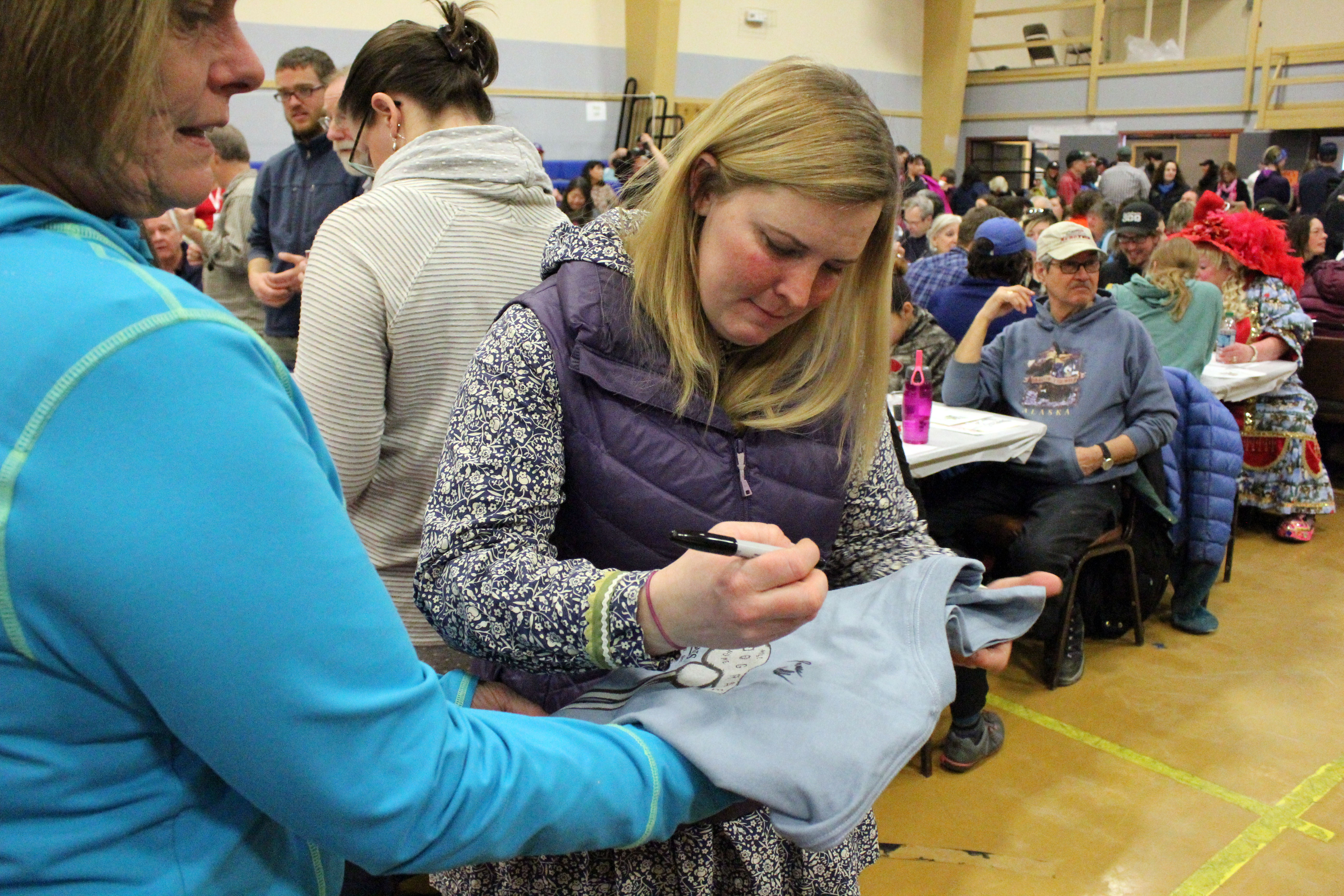
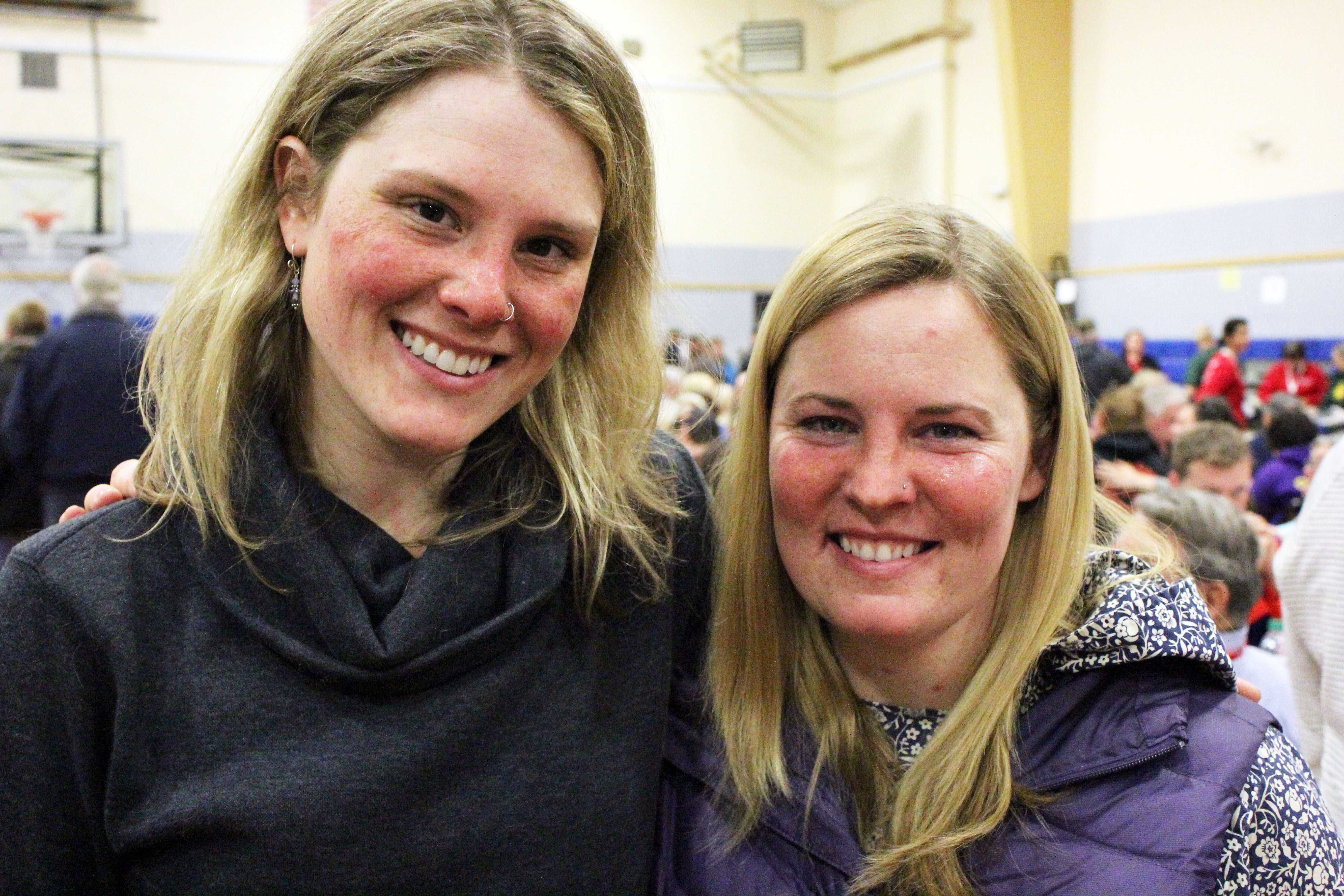
Willow’s Mary Helwig, who received the Red Lantern Award for being the last musher to finish the 2016 Iditarod, was also a victim of the fire. After breaking her sled and getting beat up by the trail on her way into Cripple this year — she and Lisbet Norris traded tips on healing the frostbite, windburns and sunburns on their faces at the post-race banquet — Helwig said she felt like her race was going a lot like her year.
“I felt like I was taking one step forward and two giant leaps back,” she said.
But that wasn’t a reason to get a negative attitude, she said.
“Just because I’m in a bad mood doesn’t mean I have to take it out on the volunteers.”
Scott Smith, who finished 10th this year and is also in the process of rebuilding a home lost to the Sockeye fire, said on the plane ride home from Nome that he, too, “didn’t want to use that as an excuse” not to have a good race.
After jumping up 11 places from last year, it seems like Smith’s mission was accomplished.
Willow’s Matt Failor, who won the Most Inspirational Award after finishing his race in 61st place with an accidentally self-inflicted stab wound to the knee suffered on the trail, had a subtle mission of his own — only it wasn’t exactly his.
Both he and Eureka musher Brent Sass, who finished 20th this year, were separately recruited by a fan through Facebook to carry the ashes of the fan’s son, known only as Brian, to two finish lines: under the burled arch in Nome by Failor, and into Shipyards Park in Whitehorse, Yukon, Canada during the Yukon Quest by Sass.
“It was enough to make me not wanna quit,” Failor said.
Contact reporter Caitlin Skvorc at 352-2266 or caitlin.skvorc@frontiersman.com.

By Barbara Hunt Palmer Buzz It was 6:43 on Friday morning and the Plant Owner was sound asleep when

By Kyle Wilkinson Frontiersman Memorial Day Weekend was filled with a variety of events in Willow. From live music to

By Kyle Wilkinson For the Frontiersman The Susitna Valley Emergency Preparedness Fair will be held at the Willow Community Center

By Barbara Hunt Palmer Buzz Green-Up happened at exactly 9:34 am on Saturday morning in Palmer. This was