Retiring teacher, coach urges Colony grads to ‘find their 68’
By Jeremiah Bartz Frontiersman.com A football coach using a hockey reference as the centerpiece for his keynote address may


WASILLA — Alaskans are good at adapting, some in the duct-tape-and-blue-tarp sort of way, while others use that skill in getting the most out of their outdoor activities.
With the whiplash winter that has descended on the region in recent weeks, those who relish their time outside are relying on that determination to make the most of the season, and one of the biggest winter-weather equalizers can be found in fat-tire biking.
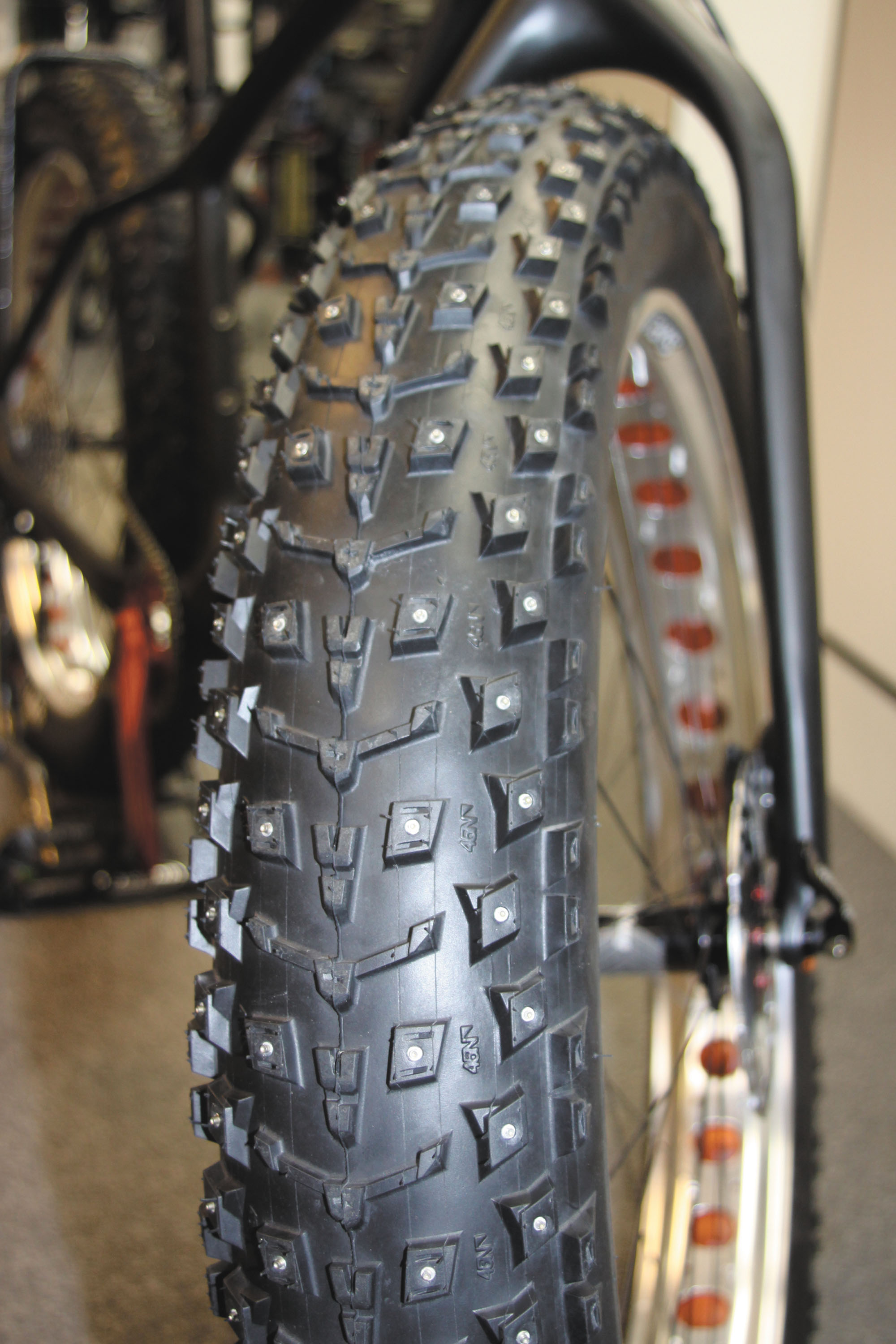
It has become an increasingly popular activity with equipment versatile enough to keep folks outside despite the wide-ranging conditions. A typical fatbike’s wider, low-pressure tires along with a lower gear ratio allow for greater control and stability.
Palmer resident Phil Block not only uses his Surly Pugsley for recreational riding year-round, he is a bike commuter as well, riding to the Valley Mover bus stop, then on to his job in Anchorage.
“Generally the setup of the bike works really well for the riding I do,” Block said in an email. “During the week I outfit it with a rack and panniers to carry my clothes and lunch and on the weekends I strip it down for trail use.”
Block said there have been days when the conditions aren’t the best, especially during the past couple of winters when freezing rain creates a sheet of ice. But, he added, getting around is often easier on a fatbike than a car.
“What I have found is that even on those really bad weather days, when cars have a terrible time getting around, I can, if I make it to the bike trails, make it where I need to go fairly easily – easier than the cars can,” said Block, who switched to studded tires this year.
He enjoys recreational riding as well, and leads a monthly Valley Mountain Bikers and Hikers “Moonlit Miles” ride on local trails. When the snow cover is good, Block said he hits the trails near Mat-Su College and others in the Mat-Su Greenbelt. Block added that when the trail is packed, the new singletrack at the Government Peak Recreation Area is always worth checking out.
“If the snow isn’t so good, I simply ride the multi-use paths,” he said. “One of my favorite early spring rides is to head from my house along the Palmer-Wasilla Highway to the Glenn and out around the Butte and back — a nice 36-mile ride — that is fairly flat and usually not too icy.”
While fatbiking is increasingly popular nationwide, its early innovations can be traced to the Valley, where Palmer resident and trail designer Mark Gronewald is one of the pioneers in pairing the oversized, low-pressure tires with custom frames.
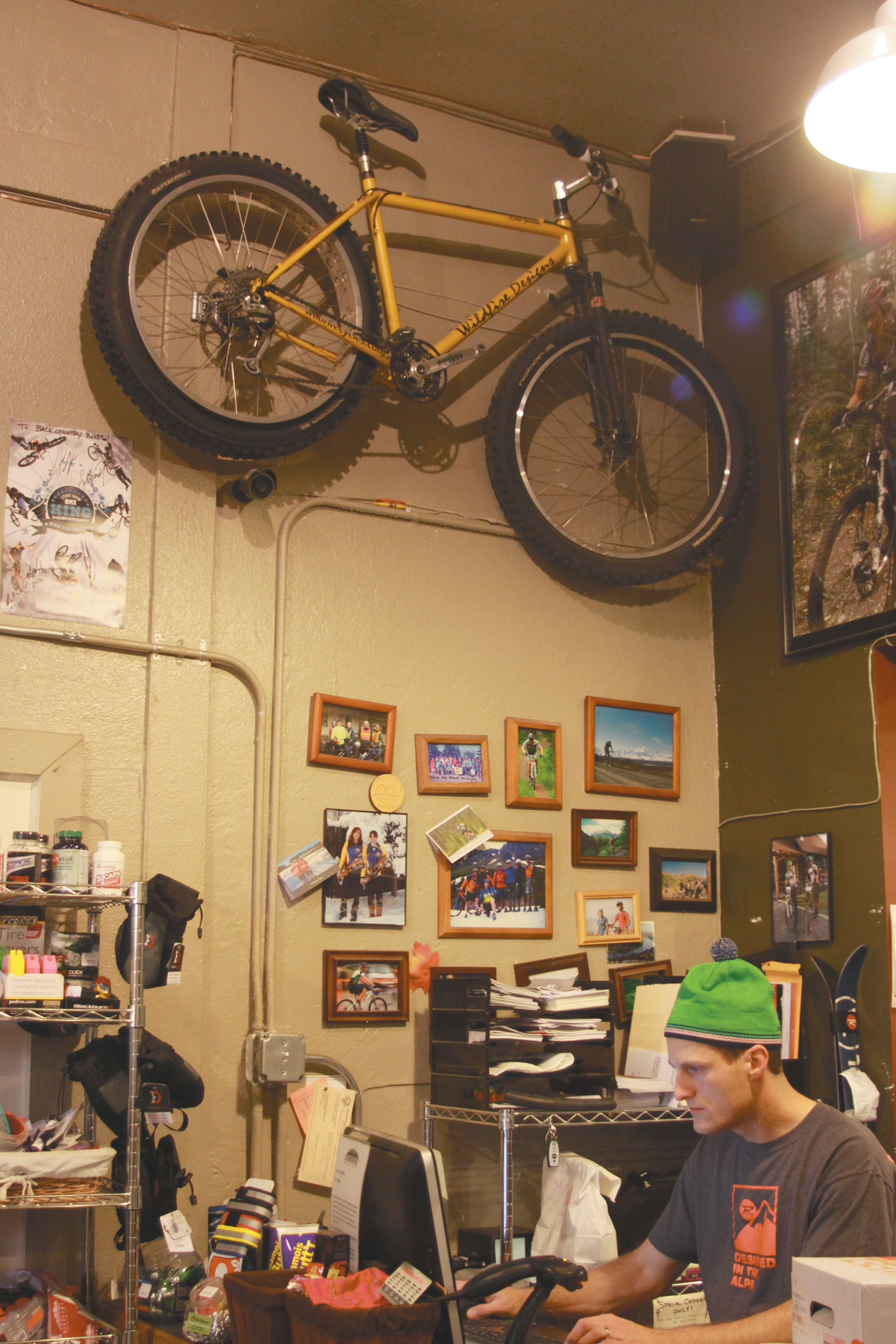
Locally, the bikes continue to be an outdoor favorite, with both Backcountry Bike and Ski in Palmer and Alaska Bicycle Center in Wasilla offering sales and rentals. National retailers like Walmart, Target and Sports Authority also carry the bikes.
Alaska Bicycle Center owner Richard Clayton said his sales have been steady this winter with many riders upgrading to lighter models along with those getting into the sport for the first time.
“We have seen a lot more families getting into fat-biking,” Clayton said. “And a lot of folks are just looking for something new in the winter.”
Looking for something new or different in the winter is a common theme for buyers, said Backcountry Bike and Ski owner Tony Berberich.
“We have six months of winter — people want to get out and exercise,” said Berberich, adding that his early days of piecing together frame sets to sell has been replaced by fatbike models rolled out by well-known manufacturers like Trek, Kona and Felt as well as Alaska-made brands Fatback and 9:Zero:7. Berberich said Backcountry Bike also leads a weekly shop ride for all skill levels.
Wasilla resident Tony Hardwick said he is in the market for a new carbon-frame model as he prepares for the Little Su 50K next year. He said he likes to ride the mushing trails in the Big Lake area and near the Little Susitna River. Other riders cite Willow as a perfect jumping-off point for exploring that area’s web of groomed snowmachine trails.
“It’s a different sensation with the flotation,” Hardwick said of the riding. “The workout is a lot different than the summer — it’s a slower pace and there’s more resistance with the bigger tires. It’s a lot of fun.”
That slower pace translates to more of a social experience in group riding, many say, with the potential to ride side-by-side with others for hours along a wide trail — much of it in winter darkness.
“It is much more group oriented and really there is nothing technical about the riding,” said Backcountry Bike and Ski tech Kevin Murphy. “You don’t base he rides on mileage — they are more based on time. Very few conditions trump us with this (fatbike) equipment.”
Even with the lack of winter daylight, layering up and strapping on a handlebar light and headlamp is usually an easy sell.
“I personally enjoy riding in winter much more than summer – when we have good snow,” Block said. “There is something amazing about being out in the dark, the crunch of the snow, turning off the headlights and just letting ambient light guide the way.”
Contact reporter Steven Merritt at 352-2269 or steven.merritt@frontiersman.com

By Barbara Hunt Palmer Buzz It was 6:43 on Friday morning and the Plant Owner was sound asleep when

By Kyle Wilkinson Frontiersman Memorial Day Weekend was filled with a variety of events in Willow. From live music to

By Kyle Wilkinson For the Frontiersman The Susitna Valley Emergency Preparedness Fair will be held at the Willow Community Center

Frontiersman.com Mat-Su Regional Medical Center was awarded an “A” Hospital Safety Grade for the 5th consecutive grading round