Retiring teacher, coach urges Colony grads to ‘find their 68’
By Jeremiah Bartz Frontiersman.com A football coach using a hockey reference as the centerpiece for his keynote address may


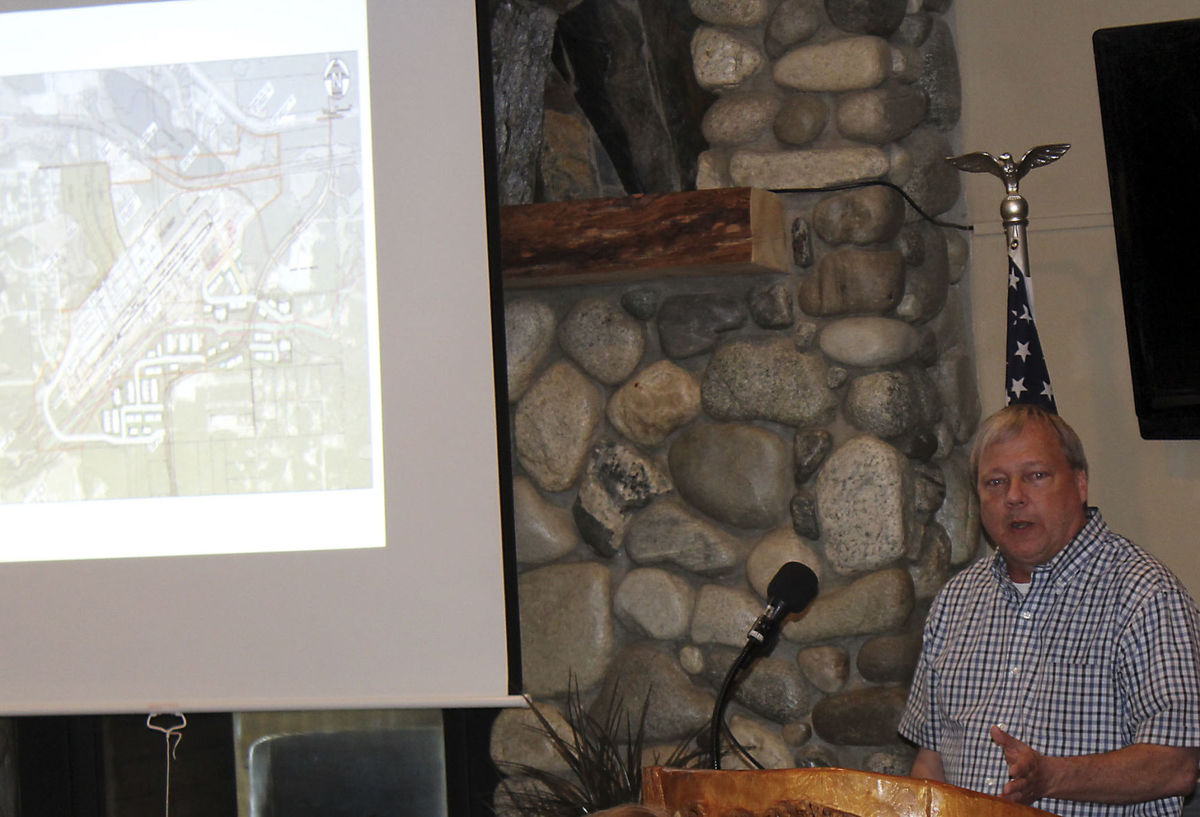
Changes are coming to the Wasilla airport. Archie Giddings, the director of Public Works for the City of Wasilla, says that a $2 million project could be in the works as early as June to expand the 3,700 foot runway to 5,000 feet.
The Wasilla Airport currently services 120 tie-down spaces and Giddings said the city is currently in design to bid a project to the FAA who has green lighted 30 more. The 120 spaces are currently full, and there is a waiting list for tie-down spaces.
“We have a good airspace as far as weather and wind direction so we’re trying to get another 30 spaces added and that’s revenue for the airport and for maintenance,” said Giddings.
Giddings said that when the state relocated the airport in 1993, it laid out land for a potential 6,000 foot runway. At 3,700 feet, Wasilla is currently at about half of what the state envisioned when they moved the site. The FAA has told Giddings that they want to see demand for 30 extra spaces when built, which may lead to further expansion of the runway. Though mostly small aircraft use the Wasilla Airport, there is demand for DC-3 and DC-4 aircraft for larger cargo shipments and small passenger services. Giddings says that even if the runway expands, he does not think the larger aircraft will disrupt the steady flow of smaller aircraft. He sees the project as plausible within the next decade.
“It opens the door up for more business at the airport. We want to see jobs there. We want to have a good mixture of commercial and private activity going on,” said Giddings.
The Palmer Airport has undergone a series of changes to its 6,000 foot runway, and they are not done. The Bud Woods Memorial Airport will soon feature a helipad and an aeronautical campground, pending Palmer City Council approval.
Palmer Airport has made improvements to its runways. Rather than utilizing four or five capital improvement projects, the airport had one cost saving method of sprucing up the airport.
Pavement from the main runway 16-34 was 30 and 40 years old. A 5,000 foot runway was built in the late 70’s, and another 1,000 feet were added in the late 80’s. The pavement held up remarkably well due to a strong sub base material, but average pavement life for runways is 20 years. That asphalt was ground up and used to make better runway safety areas.
Palmer Airport Superintendent Frank Kelly said that by rolling that many projects into one, the Consultants report of $13.623 million was reduced and the final figure was $7.827 million.
“There was no stockpiling storage or importing and exporting of materials. We worked hard to game plan that saved heck of a lot of money. What we ended up doing was to rehabilitate main runway 16-34,” said Kelly. “We completed most all of our object safety plan. We did tree removals with this project as well all of heavy equipment already being on sight made it convenient to do that.”
The Palmer airport is not done upgrading their runways, though. Pavement maintenance on taxi ways and interlinks, crack repair, sealing, asphalt surface treatment and new paint markings are scheduled for this spring on runway 10-28. Kelly hopes to purchase snow removal equipment this fall.
The Palmer Airport could soon be home to an aeronautical campground, as it will go to it’s second reading on Tuesday at the City Council meeting. With the blessing of the Planning and Zoning Commission, the proposed space would convert the zone to accommodate fly in campers.
“Somebody can’t just pull up in their RV and use it. It will be for small tent camping spaces that will be close to flight service station where we have transient aircraft parking,” said Kelly.
Airports have not been immune to the rise in crime around the state. A strong police presence combined with an Airport Watch group have largely kept criminals at bay.
“We’re putting up a lot of additional airport watch signs so they have that awareness. We are in the process of working with MEA to install more lighting on access points and streets around the airport,” said Kelly.
Palmer Airport will not just service fixed wing aircraft. Coming soon, the airport will provide three helicopter parking spaces as well as a lighted helipad. While the original project was priced at $350,000, Kelly said they were able to do it for $50,000 by moving the pad to a different location. The lights are ready to be installed once the Winter weather leaves. Kelly said that with the rise of helicopter use in the last couple years, the Airport wanted to provide a space for them.
“I’m hopeful. We have seen a lot of increase in helicopter activity over last 2 years and the city and airport would like to attract a helicopter operation out here. This is a first step in doing that if you want to attract more helicopter operations. We’re trying to incorporate that into our operating game plan,” said Kelly.
Palmer is waiting on a piece of equipment to finish asphalt treatment. The FAA requires a continuous friction tester which is a tow behind machine that requires 60 degree temperatures for application. Anchorage International has one in state that it will not sublet out to other airports because of sustained need.
Palmer is waiting for one to be shipped up from outside to finish runway 10-28.
“They test that strip and make sure it has the proper friction coefficient before they do the whole runway, and then they test that,” said Kelly.
Despite a rise in prices for tie-down spaces, the Palmer Airport has not seen a dip in patrons. With a $5 increase per month, Palmer charges $30 per month, but paying a year ahead of time saves $50. Kelly is confident in the Palmer airport services. Pilots have taken planes off site for annual inspections or to store them for the winter out of the elements, but that seasonal change is the only Kelly has seen.
“You can go anywhere else and pay a lot more. We are still the low cost provider,” said Kelly.

By Jeremiah Bartz Frontiersman.com A football coach using a hockey reference as the centerpiece for his keynote address may

Frontiersman.com With its headquarters in Wasilla, the Frontiersman has been a primary source of news for the Matanuska-Susitna

By Katie Stavick Frontiersman.com The next generation of leaders took flight this week as the Houston High School Class

By Kyle Wilkinson For the Frontiersman Keynote speaker and Carry the Cure President Bill Pagaran’s words boomed through the