Retiring teacher, coach urges Colony grads to ‘find their 68’
By Jeremiah Bartz Frontiersman.com A football coach using a hockey reference as the centerpiece for his keynote address may


For sheer vision and innovation – some would call it nerve – the Matanuska-Susitna Borough should get an A-plus for promoting its big regional transportation projects even if there aren’t customers at the doorstep, at least yet.
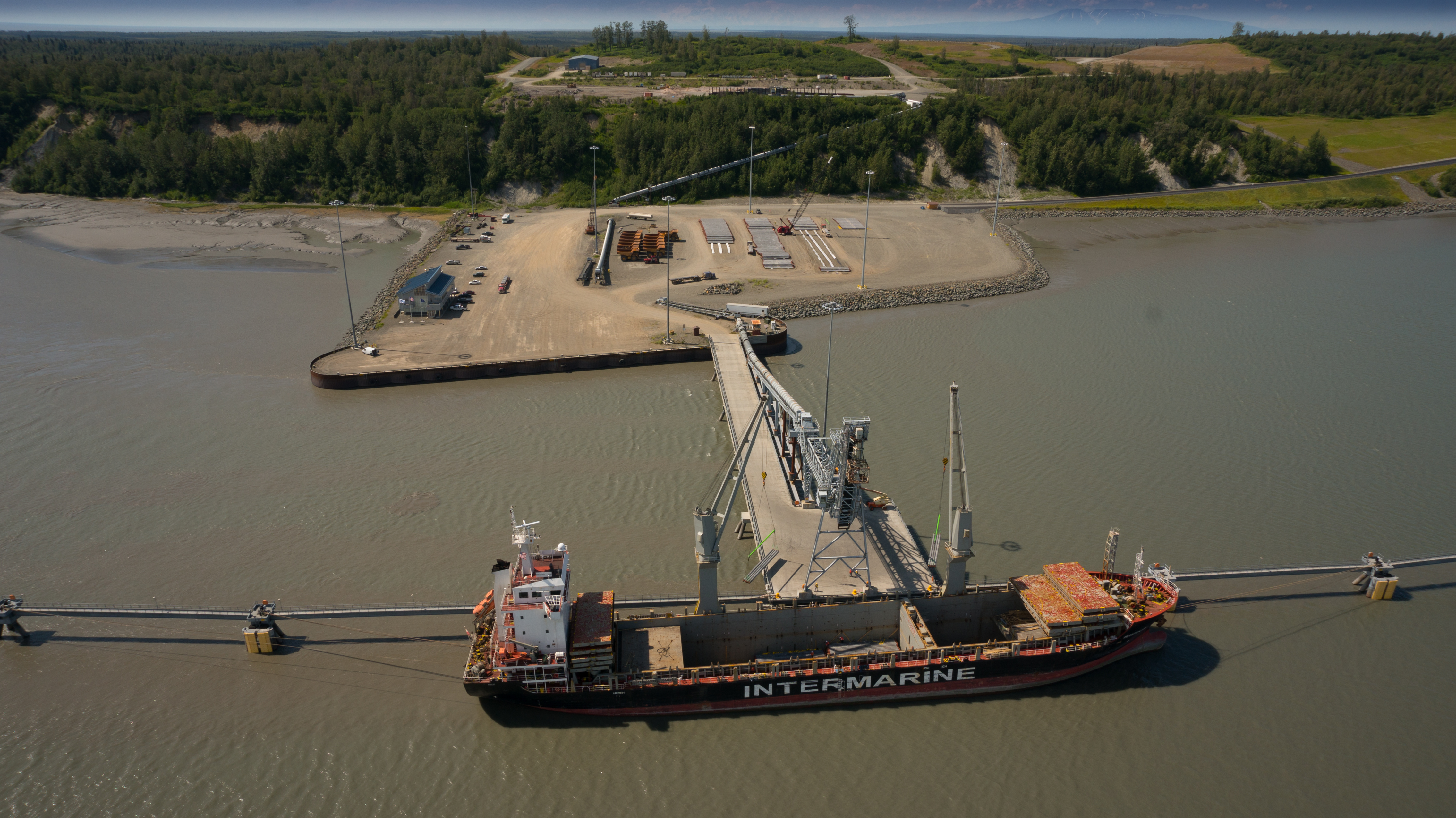
For two of the projects, a downswing in world commodity markets has gummed things up, a matter of bad luck. These are the completed Point MacKenzie port, which can now reach the 60-foot water depth, along with a rail extension to connect the port to the Alaska Railroad near Houston. The rail extension is more than half-completed.
A third project was a cross-Cook Inlet ferry that would give Mat-Su commuters an option to navigating the Glenn Highway very day. The Municipality of Anchorage basically knifed this project by refusing to give Mat-Su a ferry terminal site on the Anchorage side of Knik Arm.
Anchorage, of course, has its own port infrastructure problems with the Port of Anchorage basically rotting and a billion-dollar replacement project having been mismanaged, prompting lawsuits and delays.
The cross-Inlet ferry was actually built. U.S. Navy researchers funded it as a prototype shallow-water vessel (the vessel passed its Navy tests). But with only a terminal on the Mat-Su side the cross-Inlet ferry couldn’t work. The vessel was eventually sold to the Phillipine Red Cross.
Meanwhile, the foundation is being laid for Port MacKenzie to fulfill its promise – eventually – of becoming the export port of choice for minerals, wood, refined products and other industrial commodities from Interior and northern Alaska.
One recent development is that Trilogy Metals, which is exploring high-grade metals deposits in the western Brooks Range of northern Alaska, has selected Port MacKenzie as its best option for shipping concentrates.
Trilogy’s Arctic copper deposit, which is being explored in partnerships with South 32, an Australian company, is one of several promising minerals discoveries in the Ambler Mining District in advanced stages of exploration.
A more near-term prospect for Port MacKenzie itself is a potential timber harvesting project by a company, who has asked not to be identified yet, which would export round logs harvested from Southcentral Alaska forests. Logs would be trucked to the port from the harvest areas but if the rail link were completed logs could be shipped by rail, which could reduce costs.
If the proposed $43 billion Alaska LNG Project were built, which is now looking more favorable with the negotiations underway with Chinese LNG purchasers and investors, the port and rail infrastructure being built could save the project hundreds of millions of dollars.
“We have 185 miles of pipeline that would be built through the Mat-Su and now the U.S. Federal Energy Regulatory Commission has asked Alaska LNG to take another look at Port MacKenzie as the southern terminus of the pipeline and site of a large liquefied natural gas plant,” Mat-Su Borough Manager John Moosey said.
The borough instigated FERC’s request by filing to intervene in January in the Alaska LNG regulatory process on the grounds that Port MacKenzie had been overlooked, to which FERC agreed.
All that said, Mat-Su still has its challenges, Moosey said. One is rounding up the $125 million to complete the 32-mile rail extension. One hundred and eight million dollars have been invested to date, mostly state funds.
The unexpected collapse of oil prices in late 2015 and plummeting state revenues doomed hopes for getting additional state funds to complete the extension.
However, there are now good prospects for getting federal money under an infrastructure program begun by former President Barack Obama and continued by President Donald Trump.
This is an existing program, known as “INFRA grant” that is separate from Trump’s recently-announced $200 billion infrastructure program which must still be approved by Congress.
Mat-Su Borough Mayor Vern Halter and Moosey met with U.S. Transportation Secretary Elaine Chao on Aug. 24 to discuss the borough’s application for federal grants. Alaska Sen. Dan Sullivan, who had arranged the meeting, attended as well.
“We were very encouraged. We expected to get 10 minutes with the Secretary or really five minutes but the meeting went on for an hour,” Moosey said. The presentation included information on Interior Alaska natural resource commodities that could use the port, boosting U.S. exports.
Federal grant administrators accompanying Chao gave the rail extension a good rating in scoring because so much of the construction has been done.
The gravel “embankment,” basically the road-bed for the railroad, is complete except for a small area. The top “ballast” of rock and rails have been installed in one section, at the connection with the existing Alaska Railroad near Houston.
What’s also nearly complete is a one-mile “loop” adjacent to the port where a loaded train could circle and efficiently unload a commodity like ore or coal without the train having to stop. This is the largest rail unloading loop in the nation.
What’s left to be done is the completion of the embankment in one area, placement of the ballast rock and installation of the rails.

By Jeremiah Bartz Frontiersman.com A football coach using a hockey reference as the centerpiece for his keynote address may

Frontiersman.com With its headquarters in Wasilla, the Frontiersman has been a primary source of news for the Matanuska-Susitna

By Katie Stavick Frontiersman.com The next generation of leaders took flight this week as the Houston High School Class

By Kyle Wilkinson For the Frontiersman Keynote speaker and Carry the Cure President Bill Pagaran’s words boomed through the