Retiring teacher, coach urges Colony grads to ‘find their 68’
By Jeremiah Bartz Frontiersman.com A football coach using a hockey reference as the centerpiece for his keynote address may


SHELL LAKE — They are only a couple of inches long now, but if all goes according to plan, the 70,000 wriggling smolt released into the lake on Friday will return for frying pans and freezers along the Susitna River drainage in a couple of years.
Cook Inlet Aquaculture Association is the non-profit behind this effort to repopulate Shell Lake with salmon. Once the lake produced 60,000 to 80,000 smolt a year and saw returns of up to 70,000 adult salmon the salmon in the drainage, but last year, only five sockeye smolt and 133 adult salmon returned; too few to harvest more eggs for the stocking effort, according to the group’s executive director Gary Fandrei.
“When we saw substantial declines we decided to collect eggs so we could restock the lake in the future,” he said.
The aquaculture association has its headquarters in Kenai and serves all of the waterways that drain into Cook Inlet, he said.
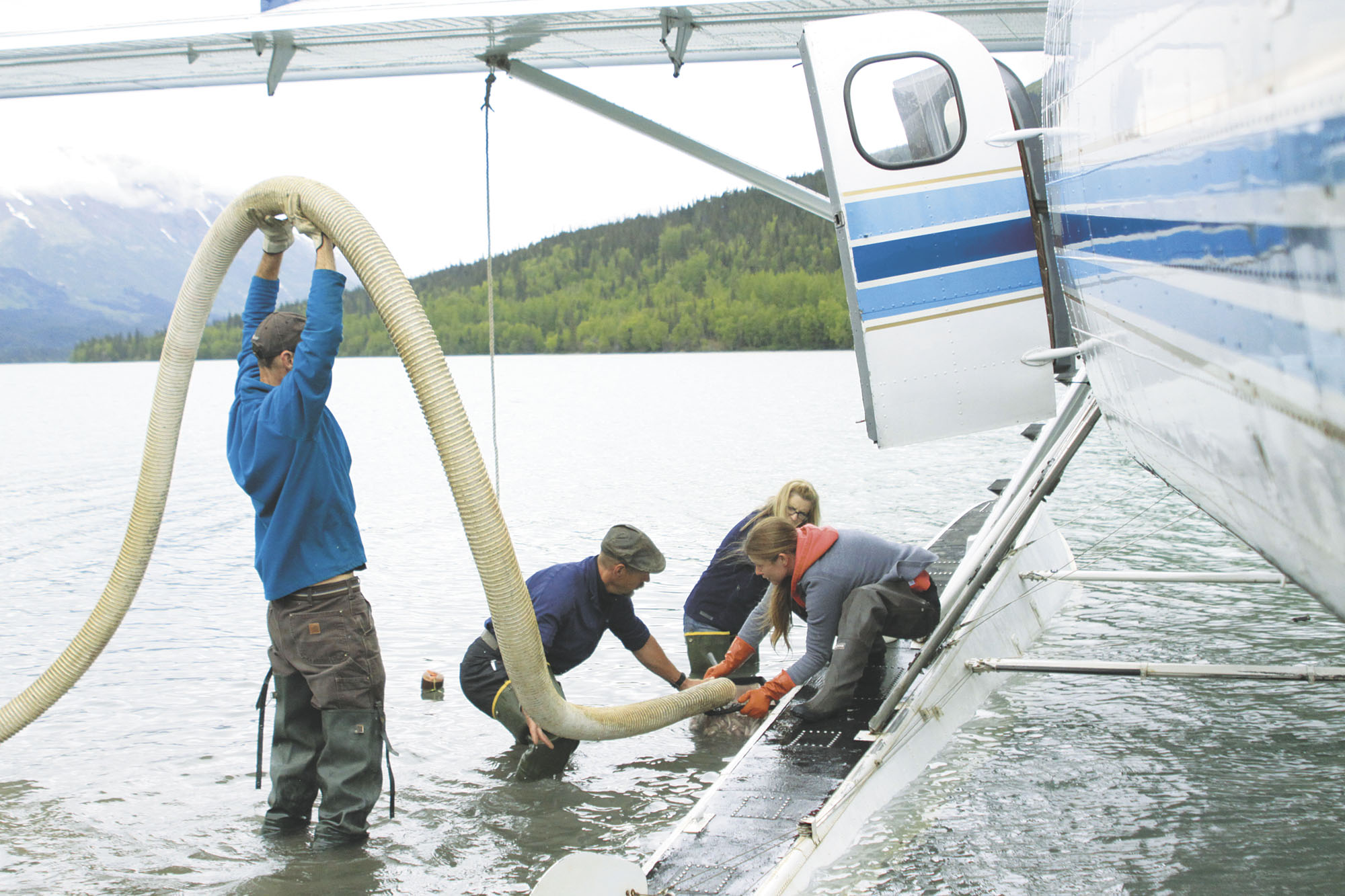
Wednesday and Thursday staff hauled the smolt in a closed tank from the Trail Lakes Hatchery in Moose Pass to meet a float plane from Alaska West Air on Upper Trail Lake that will fly the smolt to Shell Lake in the Skwentna region of the Mat-Su Borough. There, the smolt were placed in a holding pen overnight before being released near the stream — and the smolt counter there — that will lead them to the ocean.
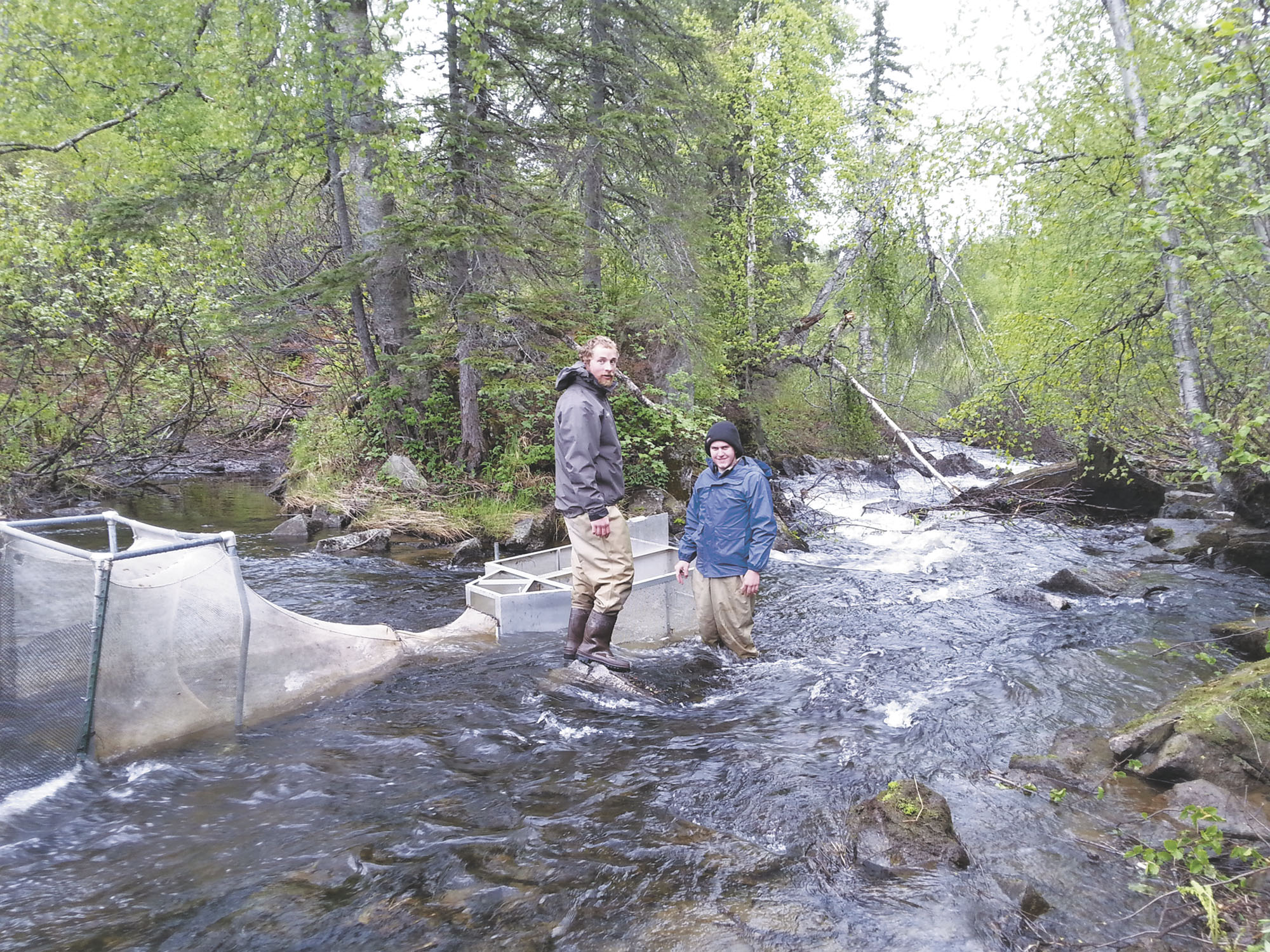
Fandei said the smolt are tagged and will be counted as they swim up Shell Creek. They’ll be counted again in two or three years when they return from the ocean as adults.
“I’m hoping 95 percent of those we release will make it through the weir,” Fandei said.
He said the rehabilitation project on Shell Lake began in 2012 when staff collected the association collected 85,000 green eggs from 34 spawning pairs. These eggs produced the sockeye smolt returned to the lake last week, Fandrei said.
A similar rehabilitation effort was successfully completed on Chelatna Lake between 1988 and 1995, he said.
Over the years, Fandrei said the association released around 500,000 smolt into that lake, which now has healthy, self-sustaining salmon returns again.
“When there was enough fish to do natural spawning, we stopped doing that program,” he said.
Figuring out the factors that led to the lake’s drop in sockeye production is important to solving the mystery of what has happened to the Susitna drainage’s salmon stocks, Fandrei said. But the conditions in Shell Lake are perilous and the association felt a sense of urgency to act immediately before the genetic stock in the lake was lost, he said.
Fandrei said what is certain is that multiple causes have contributed to the decimation of the lake’s salmon returns. Among those factors are northern pike. The invasive species are thick in Shell Lake and part of the association’s effort includes removing the pike with gillnets and through sport fishing. A camp is set up along the stream and association staff will be on the ground there throughout the summer fishing out pike and monitoring the weir, Fandrei said.
He said other likely factors are the oceans’ natural cycles and beaver dams, which impede salmon swimming back to their spawning grounds.
But finding a way to control the pike population is key, Fandrei said. He said fishing them out of the lake isn’t the final solution. The association also is considering other possibilities like reducing or eliminating pike spawning areas.
Folks who live in the region are aware of the effort and also have shared their first-hand experience with the association.
Fandrei said locals told him they were seeing adult fish die before they spawned. So staff investigated.
“They were able to collect some of the fish just as they were dying,” he said.
When they tested the specimens in the lab they found the salmon had parasitic infections that were killing them before they could spawn.
The association isn’t the only group working to solve the mystery of the Mat-Su disappearing salmon stocks, nor is it alone in working to restore the resource, Fandrei said. He said the group works closely with Fish and Game and manages the Trail Lakes Hatchery under a contract with the state.
Brian Bohman represents the Mat-Su Borough on the Cook Inlet Aquaculture board. He said most people in the Valley don’t know anything about the non-profit or the work it does to enhance salmon stocks.
Bohman said the non-profit also is the group contracted to perform many of the studies about the declines to the state’s salmon resource. He said it was association interns counting returning sockeyes that first noted the steep drop in smolt and adult fish in the lake.
“Finding out about that and trying to preserve that original stock is important,” Bohman said.
Protecting and preserving the state’s salmon stocks benefits all user groups, he said.
In addition to the Moose Pass hatchery, Bohman said the association also is responsible for mothballed the Eklutna Hatchery in the Butte. He said funding restraints have kept the hatchery shuttered for years. If the money showed up tomorrow to resume operations there, he said it would take about 10 years before it could begin returning smolt to local lakes.
“The community should know we have a hatchery right here not being used at a time when we have a critical need for fish right here in the Valley,” Bohman said.

By Jeremiah Bartz Frontiersman.com A football coach using a hockey reference as the centerpiece for his keynote address may

Frontiersman.com With its headquarters in Wasilla, the Frontiersman has been a primary source of news for the Matanuska-Susitna

By Katie Stavick Frontiersman.com The next generation of leaders took flight this week as the Houston High School Class

By Kyle Wilkinson For the Frontiersman Keynote speaker and Carry the Cure President Bill Pagaran’s words boomed through the