Retiring teacher, coach urges Colony grads to ‘find their 68’
By Jeremiah Bartz Frontiersman.com A football coach using a hockey reference as the centerpiece for his keynote address may


POINT MACKENZIE — This region of vast birch and cottonwood forest is at the center of supplying two very different markets with an alternative energy source in the coming decades.
And while the details of both projects — and whether they will even pencil out — remain to be decided, Mat-Su Borough officials are hopeful one or both will be a boost to the region’s industrial infrastructure.
Both projects deal in liquefied natural gas from Cook Inlet. The largest, from Japanese company Resources Energy Inc., is a proposed small-scale liquefaction facility that would ship LNG to Japanese markets.
The second, smaller proposed project is being spearheaded by the Alaska Development and Export Authority’s Interior Energy Project, and is focused on supplying Fairbanks with an increased volume of natural gas as a way to lower that region’s high cost of energy and move the Interior city away from burning wood.
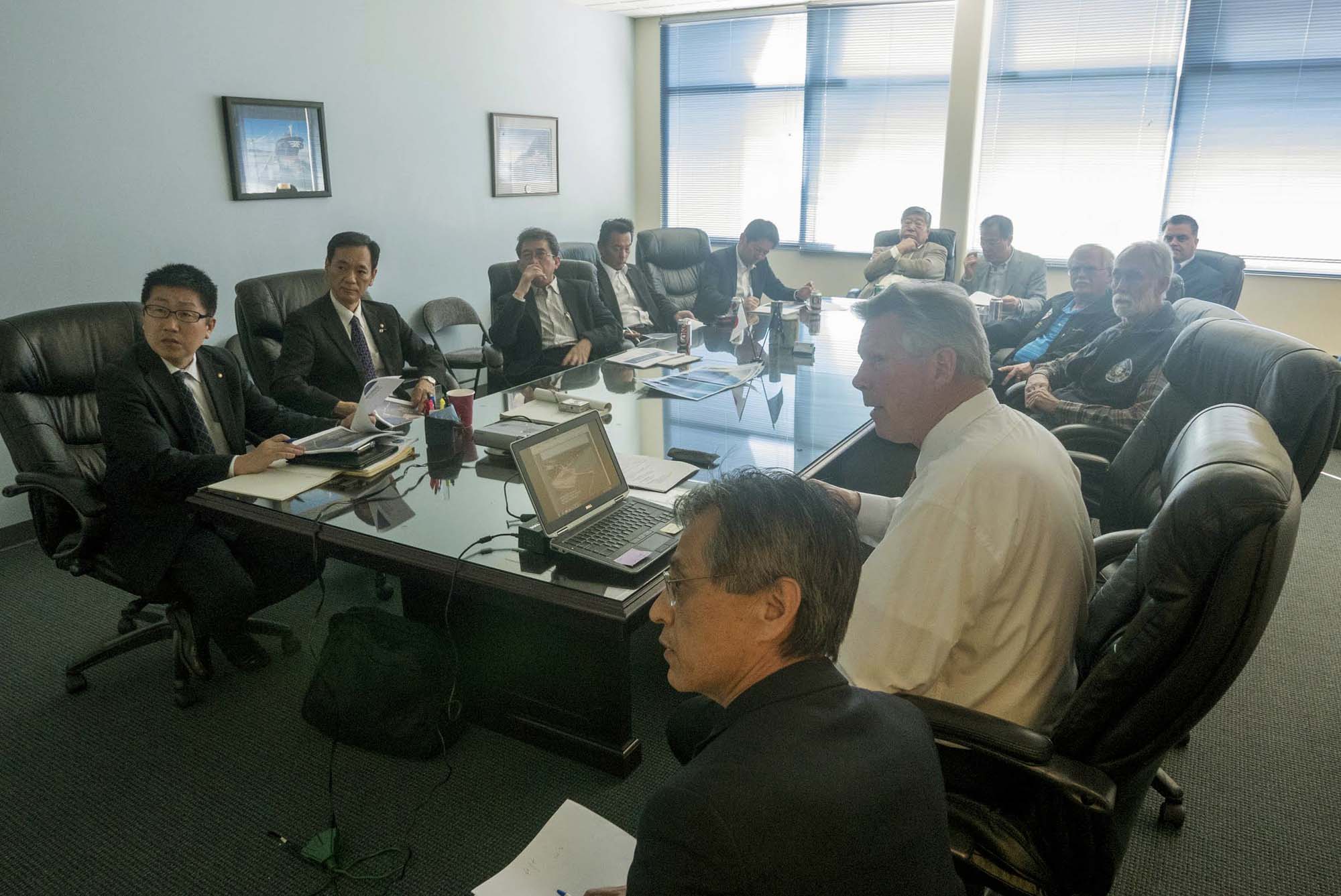
The proposed REI facility was the focus of a May 29 visit to Port MacKenzie by a Japanese delegation that included the mayor of Maizuru City and members of the Kyoto Prefecture.
While far from a done deal, the project could lift the deep-water port from its financial struggles and boost ship traffic.
However, the port still needs some work. After some $2 million in repairs this year, port director Marc Van Dongen said Friday that five of the eight underwater anode sleds used to control saltwater corrosion at the facility aren’t working. The sleds were installed last year.
Van Dongen said the next course of action will be to raise the five sleds and associated cables to inspect them on the dock.
“Once the cause of the problems are discovered, we will determine who is responsible to pay for the repairs or replacements,” he wrote in an email. “We have a one year warranty on both the parts and installation. Because the system worked fine for about five months, it is likely a problem with the sleds or cables rather than with the installation.”
REI is proposing to build a plant that would produce 160 million cubic feet of natural gas per day, or 1 million tons a year, for shipment by LNG tanker. The project calls for building storage tanks, a 15-mile pipeline to connect with the Enstar gas line to the north and a marine loading terminal, said Brian Murkowski, REI’s vice president of government and regulatory affairs. Murkowski is the brother of U.S. Sen. Lisa Murkowski and son of former Alaska Gov. Frank Murkowski. The company also is looking at two receiving terminal sites in Japan, one in Hyogo Prefecture and one in Maizuru, he said Friday.
All told, the price tag will approach $1 billion, according to Murkowski, who added the project would generate between 200-300 construction jobs initially and 20 permanent positions associated with running the plant.
REI was formed in 2012 after the 2011 earthquake and tsunami in Japan caused the nation's nuclear power plants to close, which caused LNG imports to increase and prices to rise. It has offices in Anchorage, Honolulu and Toyko.
Along with the move away from nuclear power after the Fukushima plant disaster, Japan is in the process of deregulating its gas and electric power utilities. REI is trying to position itself to fill certain niche markets in ongoing negotiations with municipalities in Japan. Murkowski said the company also was working with Cook Inlet producers on potential gas contracts.
“In April 2016 Japan began deregulating the electricity markets and next year they will begin deregulation the power markets,” Murkowski said. “This does allow for companies with large power demands to negotiate their own LNG contracts, which does open up new possibilities. As we are a proposing a smaller, niche project we only need a few customers to make it a reality, and we are currently negotiating with a number of them.”
He said first gas from the facility could come by 2020.
The company is considering private land near the port, but the borough is hopeful REI will instead lease 114 acres of port property. REI and the borough signed a Memorandum of Understanding in March that limits other borough leases on the land for 140 days. That timeframe is essentially a pivot point for the company to move ahead with the project.
“We have initiated numerous studies to determine the soil conditions, permitting process, liquefaction technology, plant layout and shipping options and will make a ‘go, no-go’ decision on FEED (Front-End Engineering and Design), hopefully by the fall,” Murkowski said.
“These projects are never 100 percent assured and I don't like to get peoples hopes up too much,” he added, “but we are cautiously optimistic about it and believe that the economics support a very competitive delivered price to Japan and northeast Asia.”
North of the port off Ayrshire Road, an ongoing effort to bring cheaper energy to Fairbanks could lead to a larger scale LNG plant near an existing facility at Point MacKenzie.
The Interior Energy Project, a group led by the state-run Alaska Industrial Development and Export Authority, announced in March the selection of Salix Inc. to build a $68 million liquefaction plant that could produce 3 billion cubic feet per year, or some 100,000 gallons a day. Salix is a subsidiary of Spokane-based Avista Corp., which runs electric and natural gas utilities in Washington, Oregon and Idaho and also owns Juneau’s Alaska Electric Light and Power.
The Interior Energy Project group is currently in negotiations with Salix on commercial terms for the project, according to AIDEA External Affairs Officer Karsten Rodvik. IEP also is currently in negotiations for a gas supply agreement with a Cook Inlet producer.
“The Interior Energy Project team continues to work with Salix to develop new LNG capacity at Point MacKenzie,” said Rodvik, who added that he expected an update on the project at the next AIDEA board meeting, set for June 23 at Wasilla City Hall.
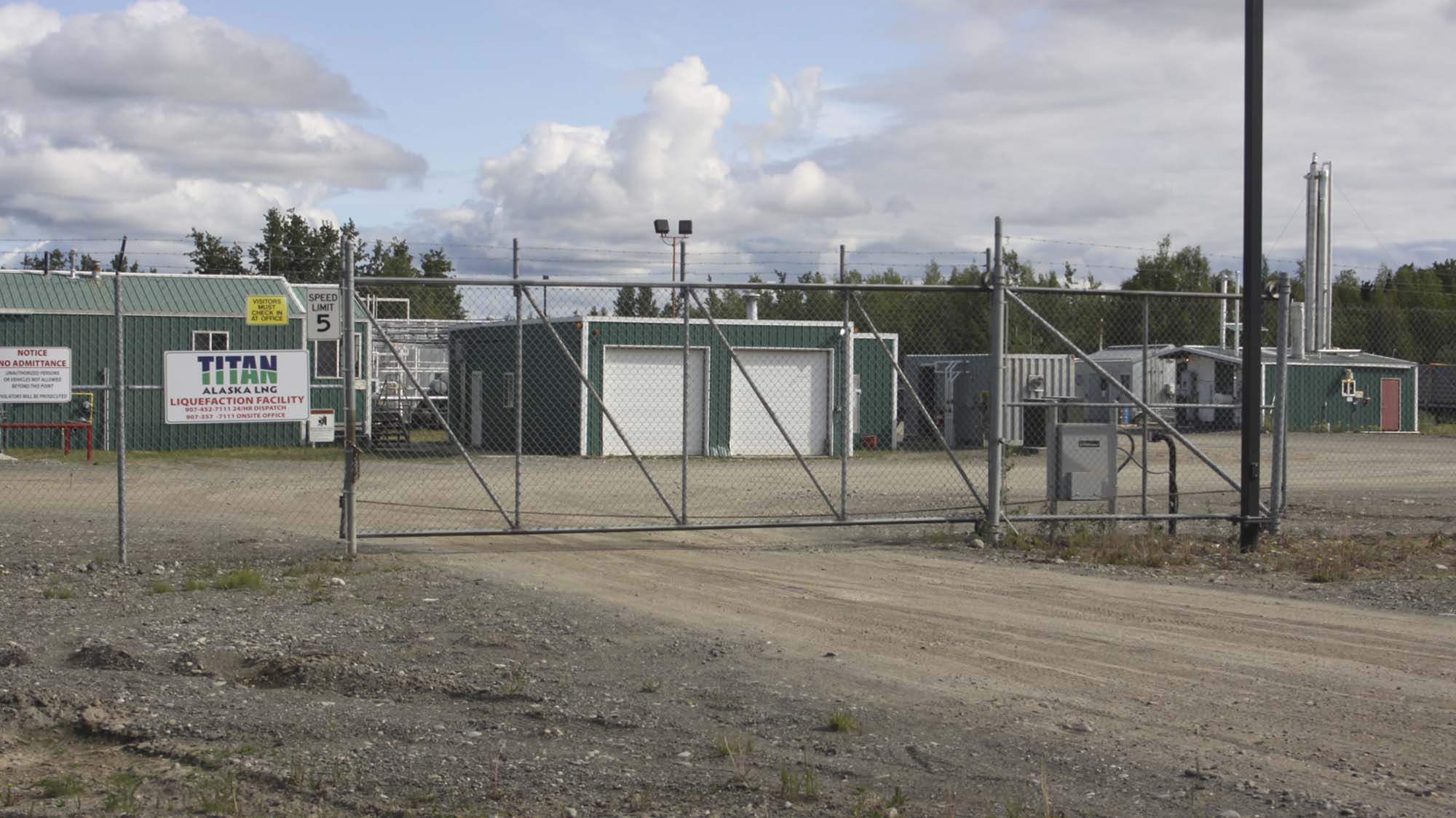
Built in the 1990s, the current Titan LNG plant on Ayrshire Road produces LNG for Fairbanks Natural Gas, which provides a supply service in central Fairbanks that serves around 1,100 customers. Two tanker trucks a day leave the Point MacKenzie facility, according to borough officials. The location also would be near the 32-mile Port MacKenzie rail extension, a project that remains incomplete due to state budget shortfalls. The Alaska Railroad last year became the first railroad in the nation with permission to transport liquefied natural gas by rail.
AIDEA owns Pentex Natural Gas Co., the company that owns Fairbanks Natural Gas, one of two Fairbanks gas utilities.
Salix senior communications manager Jessie Wuerst said Friday that while the company was in the early stages of negotiations with AIDEA, the new plant would most likely integrate the existing Titan plant in some capacity.
“We are working through a lot of preplanning and scope of work types of things with AIDEA,” she said. “It’s early in the process, but we are excited to be in (this) partnership.”
Contact reporter Steven Merritt at 352-2269 or steven.merritt@frontiersman.com

By Jeremiah Bartz Frontiersman.com A football coach using a hockey reference as the centerpiece for his keynote address may

Frontiersman.com With its headquarters in Wasilla, the Frontiersman has been a primary source of news for the Matanuska-Susitna

By Katie Stavick Frontiersman.com The next generation of leaders took flight this week as the Houston High School Class

By Kyle Wilkinson For the Frontiersman Keynote speaker and Carry the Cure President Bill Pagaran’s words boomed through the