Retiring teacher, coach urges Colony grads to ‘find their 68’
By Jeremiah Bartz Frontiersman.com A football coach using a hockey reference as the centerpiece for his keynote address may


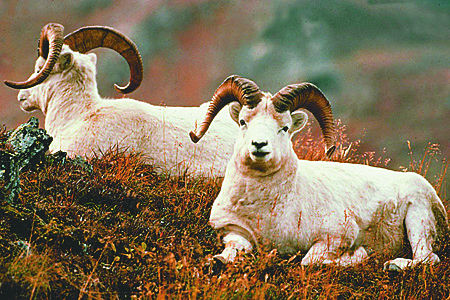
WASILLA — Alaska farmers and hunters are butting heads over a proposed new regulation designed to protect Dall sheep.
The regulation — Proposal 90 — will be debated and voted on at the Alaska Board of Game meeting March 18-28 in Fairbanks. If it passes, it would force sheep and goat farmers to obtain a permit from the Alaska Department of Fish and Game. It would also force anyone raising sheep or goats within 15 miles of wild sheep habitat to have their animals contained in a department-approved facility (such as a double fence) and tested for disease once such tests are available for free. Farmers outside the 15-mile zone could obtain a permit online with no fencing or testing requirements.
According to sheep hunters, the measure would ensure Alaska’s sheep populations don’t fall victim to respiratory illnesses that can spread from domestic to wild animals. In other parts of the country, such illnesses have devastated some populations of wild sheep.
“Our focus is really to just protect wild sheep,” said Kevin Kehoe of the Alaska Wild Sheep Federation, which submitted the proposal to the board.
Kehoe said there have been no known cases in Alaska of disease spreading between flocks of domestic sheep and wild animals — but that doesn’t mean it can’t happen.
“This is to prevent something from happening,” he said. “We’re just trying to be proactive.”
Supporters of the rule say it’s part of a movement nationwide to prevent diseases from spreading between the animals, and that similar regulations have been imposed in 20 other states.
Although sheep and goat farming isn’t big business, there are several flocks in the Mat-Su Valley — virtually all of which is within 15 miles of sheep habitat. Although sheep are shy and tend to prefer big mountain habitat, it’s possible they could wander near flocks in the Pioneer Peak and Lazy Mountain areas.
“The big concern is the ones that are located right up against sheep range,” he said.
Kehoe said hunters don’t have an axe to grind against farmer, and argued the measure would be relatively easy for farmers to comply with and is a common-sense rule that would allow farmers to continue their operations.
“The win-win scenario is we protect wild sheep and we still allow domestic growers to continue,” he said.
Mat-Su Valley sheep farmers aren’t buying that argument. Many have taken to social media to oppose the proposal, saying the rule would further hamper their ability to thrive in an already difficult market.
“It’s going to be another nail in the coffin,” said Palmer farmer Jenny Wren.
Wren raises sheep for the purpose of selling lambs to local 4-H Club kids, who then raise the lambs themselves. She started her flock because she’s a big supporter of 4-H (she’s a third-generation participant in the nationwide farming education program) and wanted to see the next generation of farmers learn how to care for the animals.
“My goal is to help kids and help this program,” she said.
Farmers have already been struggling to keep the state’s lone USDA-certified meat packing plant open for business, and Wren said the sheep proposal feels like just another hurdle for the tiny industry to overcome.
“It’s just one thing after another,” she said.
Wren said concerns about disease are overblown. Like Kehoe, she said there have been no documented cases of domestic-to-wild transmission in Alaska, and doesn’t think the new rules are needed.
“There’s very little interaction between wild sheep and our domestic flocks,” she said.
Wren said if the new rules of passed, she’d likely decide to dispose of her flock rather than get a permit.
Local Future Farmers of America chapter president Jarrett Tormey raises sheep near Lazy Mountain. He couldn’t say for sure if the rules would force him to stop raising sheep, but he’s definitely concerned about the proposal.
“From what I’m hearing I’m not sure how I would deal with it,” he said.
Tormey said his sheep often graze on his neighbors’ property. He said the animals are beneficial because they provide cheap lawn care by cutting grass and adding fertilizer.
“The neighbors love having sheep in their yards,” he said.
He uses portable electric fences to contain his animals, and doesn’t think he could comply with the proposed rules.
“I wouldn’t be able to afford that fencing,” he said. “It would not be very good for my operation.”
Like Wren, Tormey thinks the proposal would have a big impact on young farmers learning the trade because lambs would no longer be readily available and kids wouldn’t be able to buy expensive fencing.
“Any young farmers, it would put a tremendous hurting on them,” he said.
And without young farmers, Tormey said there isn’t much future for Alaska’s local food industry.
“It would be hindering that younger generation,” he said. “They’re our future farmers.”
Wren said the issue is important for Alaskans because the state is highly dependant on outside sources of food. Without a robust farming industry, she said, the state can never be secure in the event of a natural disaster or other major calamity.
“Alaska cannot sustain itself for food without the infrastructure in place and that infrastructure is producers, a slaughter facility and education,” she said.
Farmers have a trickle-down impact on the economy by buying supplies, feed and equipment from local vendors. Force farmers out of business, she said, and that will hurt local business.
“What it’s going to hit is the economy all the way down through. People are not going to be buying feed, not buying hay, fencing,” she said. “If you keep your dollar local you see a tremendous return, but if you don’t have those dollars in the economy it’s just going to go way. It’s not just the sheep people this is going to affect.”
Kehoe said he’s sympathetic to farmers’ concerns, but thinks the proposal is a workable way to keep Alaska’s sheep populations healthy and free of potentially deadly disease, and said he wants to work with farmers to ensure both groups can coexist and thrive.
“We certainly have nothing against sheep growers,” he said. “Our desire is to sit down and talk and see if we can find less onerous solutions. We’ve got to come together and realize this is a real threat.”
Contact Frontiersman editor Matt Tunseth at 352-2268 or email news@frontiersman.com

By Jeremiah Bartz Frontiersman.com A football coach using a hockey reference as the centerpiece for his keynote address may

Frontiersman.com With its headquarters in Wasilla, the Frontiersman has been a primary source of news for the Matanuska-Susitna

By Katie Stavick Frontiersman.com The next generation of leaders took flight this week as the Houston High School Class

By Kyle Wilkinson For the Frontiersman Keynote speaker and Carry the Cure President Bill Pagaran’s words boomed through the